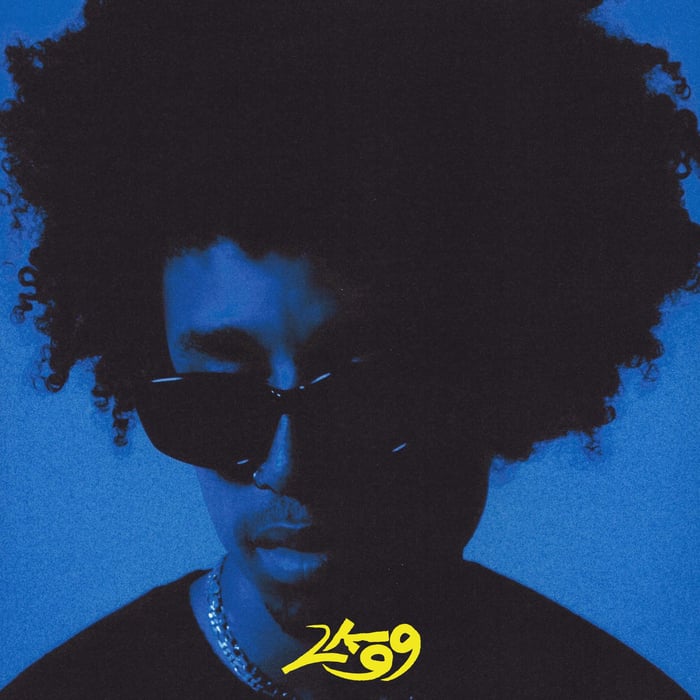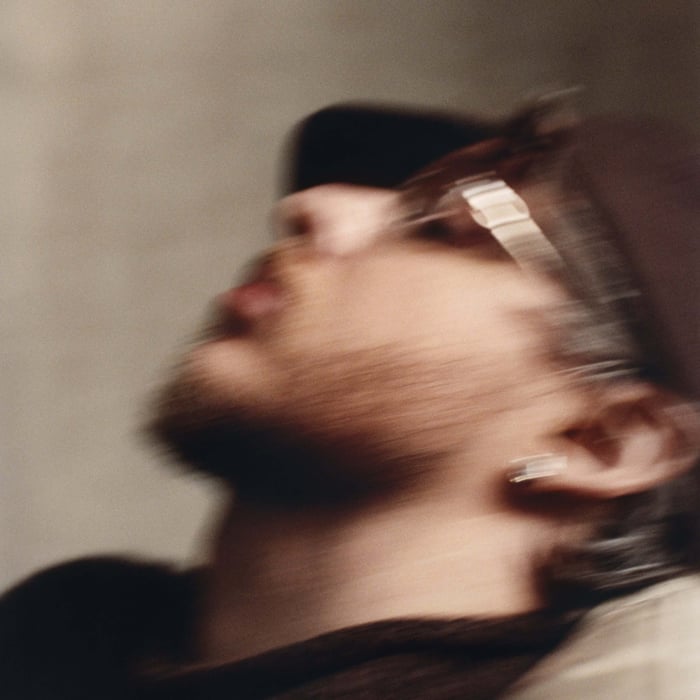
Jack Harlow Monica Album: Nine Songs, Zero Raps—On Purpose?


 See more Architeg Prints stories on Google.
Jack Harlow Monica Album: Nine Songs, Zero Raps—On Purpose?
Jack Harlow’s Monica album takes a bold turn away from rap, offering nine neo-soul tracks focused on complex emotions and independent women, but its vocal limitations and uneven songwriting leave it feeling more like a journal reading than a fully realized record.
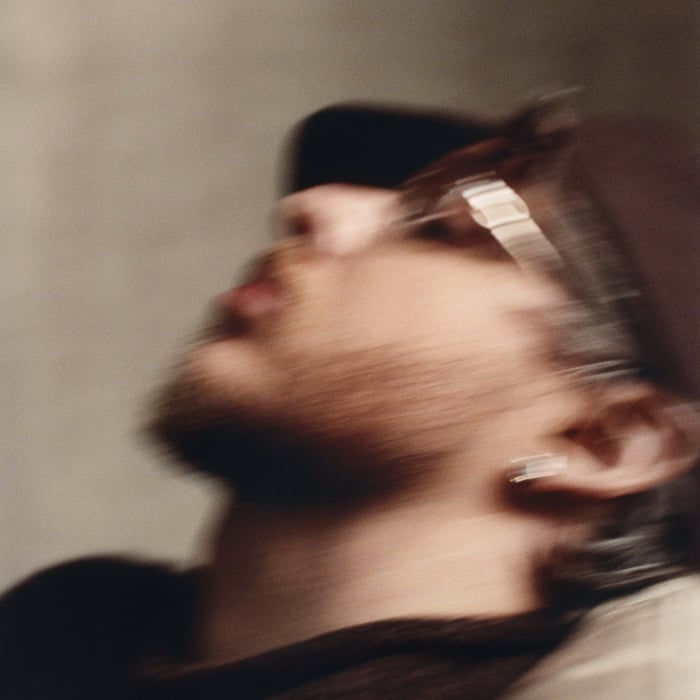
This album doesn’t “switch lanes”—it abandons the car
I put on the Jack Harlow Monica album expecting at least some rapping to show up eventually, like a friend who’s always late but swears they’re “five minutes away.” It never arrives. Nine tracks. Singing the whole time. And the big twist is that the twist is the point: he wants you to sit in the discomfort of hearing him try to mean something without the safety net of punchlines.
If you’re wondering how we got here, same.
“How….. Did….. We…. Get here?” — Deborah Cox (paraphrased)
And yeah, I can already hear the counterargument: “Artists evolve.” Sure. But this feels less like evolution and more like a deliberate self-dare—like he took the one thing people reliably say about him (“he can rap”) and removed it to see what was left.
The rollout he deleted is basically the prologue
Here’s what’s quietly wild: this record shows up after a whole different version of his era got tossed in the trash.
Between Jackman. and Monica, he dropped four singles and then acted like they never happened. One was “Hello Miss Johnson,” a bossa nova-leaning rap built around meeting a girlfriend’s mom. Another, “Tranquility,” lived only on YouTube and included him bluntly saying he wasn’t chasing hip-hop credibility—and admitting he didn’t think he’d made anything incredible. “Set You Free” was a relapse-adjacent breakup track about drinking again. “Just Us” with Doja Cat showed up, did its lap, and vanished from the album plan.
None of that makes the tracklist. Not even as bonus tracks. That’s not an accident; it’s a line in the sand. He’s basically telling you: that guy isn’t invited to this conversation.
Then he moves to New York, records at Electric Lady Studios, and posts a teaser where he’s petting a Labradoodle while a circle of women (including Taylor Rooks) talk about whether men lose power by saying “I love you.” He mostly sits there and listens, which—depending on your tolerance—either reads like growth or like a carefully staged audition for emotional credibility.
You can still find the teaser here: https://youtu.be/slSuw79M1fE
And then on his 28th birthday, he drops nine tracks with no rapping at all. That’s not a casual choice. That’s a dare.
“Monica” is a title that refuses to explain itself
The album’s named after the R&B singer Monica, but here’s the thing: there’s no Monica character in the lyrics. No muse reveal. No narrative payoff. At first I thought I’d missed a reference—like maybe a hook hides her name, or a bridge winks at it. On second listen, I stopped looking. The title feels like a decoy that forces you to focus on what’s actually happening: he’s surrounded by women in these songs, but none of them are his.
That’s the album’s real fixation. Not romance. Not sex. Not even heartbreak, exactly. It’s the sensation of wanting someone who already built a life where wanting you isn’t required.
And he describes these women with the kind of careful specificity that sounds like he’s trying not to scare them off:
- independent
- employed
- sleeping on their own
- checking into hotels
- making their own money
Not one of them is sitting around waiting for Jack Harlow to arrive and “change everything.” That’s the fantasy he’s used to being able to sell. This record keeps refusing to sell it back.
The women aren’t cruel—he’s just late to the point
A thread runs through the songs: he keeps approaching women who already chose solitude, distance, or self-possession, and he treats that like a problem to solve instead of a boundary to respect. That’s not villain behavior. It’s more like watching someone knock on a door that clearly says “Do Not Disturb,” then acting surprised when nobody answers.
On “Lonesome,” he’s stuck on a woman who stays to herself and works on her own projects. The details feel like admiration, but they also feel like a complaint disguised as praise—which is a trick a lot of people pull when they don’t want to admit they’re intimidated.
On “Prague,” there’s an ocean between them, and he’s weirdly grateful because if she were closer the feelings would swallow him. That’s one of the album’s most honest tells: closeness isn’t the goal; the idea of closeness is. The distance keeps the obsession clean.
On “Living Alone,” he’s addressing someone who has basically mastered being by herself. He tells her he hates to impose. He can’t postpone. He wants to love her until his name is etched on a stone. And she responds, “What are you on?” He backpedals: “My fault, I’m just gone. So gone. Off you.”
That little exchange is the whole record shrunk down to pocket size: he lunges toward devotion, gets checked, then pretends he wasn’t trying that hard.
And honestly, I’m not totally sure he realizes he’s doing it.
His friends are the Greek chorus, and he ignores them anyway
The album even includes the part where the people around him say the quiet part out loud.
On “All of My Friends,” they tell him he falls in love too fast, too often, too intensely. They tell him he comes on strong. They basically recommend caution, or therapy, or at least a deep breath. He hears them and keeps moving exactly the same way, calling it intuition, insisting this one is different, claiming that if he had this person he’d never want love again.
That’s a classic emotional gamble: betting your future stability on a stranger’s potential affection. It’s romantic in theory and kind of exhausting in practice.
Then “Against the Grain” gives him another version of the same refusal—this time from a woman looking him dead in the face while warning him about the trouble he’ll bring. She doesn’t even dramatize it. She just clocks him. And he keeps trying.
The funniest (and sharpest) placement is “Move Along,” which is only five lines sung by Cory Henry—not Harlow—and it flips the message into a warning label: move along, you’ll find trouble if you wait for me, I’ll break the heart you gave so easily. It sits right in the center like a sign he printed for himself and then walked past for the rest of the runtime.
That’s not subtle. That’s self-awareness with selective enforcement.
The production is the real lead vocalist
Here’s where the album mostly wins: the sound is consistent in a way modern releases rarely bother with.
Aksel Arvid produces seven of the nine tracks, and it pays off. The drums stay muted and unhurried. The bass lines keep things smooth instead of flashy. Ravyn Lenae’s background vocals show up on four cuts and never yank focus—which is exactly why they work. She blends in like the second voice in a room that makes a conversation feel real.
I’ll say it plainly: I kept thinking she should’ve been allowed to sing way more. Possibly the whole thing. The record already treats Harlow like a narrator hovering at the edge of the scene; giving the strongest singer a bigger role would’ve made that dynamic feel intentional instead of accidental.
Cory Henry plays organ and piano on “My Winter,” and that track is where the neo-soul warmth finally hits. It’s drowsy and late-night, like the music is trying to lower your voice for you. That vibe fits because the song is basically about emotional indecision dressed up as romance.
“Lonesome” is co-produced by Rogét Chahayed with Angel López and Clay Harlow, and it has the most sophisticated melodic build here. The chorus is made of clipped observations—sleeping on your own, staying to yourself, working on your own projects—and each line lands as admiration and grief at the same time. It’s a smart trick: he praises her autonomy while mourning that it doesn’t require him.
But then there’s the issue the album can’t dodge.
Harlow’s voice isn’t good.
He can carry a melody. He phrases well enough to stay afloat. The thinness doesn’t always ruin the moment. But he’s never going to be the reason you replay these songs. The beats and keys are doing the heavy lifting, and he’s basically hanging on like a guy trying not to spill a drink at a party he wasn’t invited to.
When it works, it’s because he accidentally tells the truth
“My Winter” is the sharpest song on here. Not because he sings it beautifully—he doesn’t—but because the concept is ruthless in its simplicity. He tells one woman she’s his winter, another is his summer, and when one arrives he craves the other. He admits he lies next to one while thinking about the other, calls it a curse, nods at the “grass is greener” idea—except the real hook is the production being more memorable than his delivery.
It’s one of the few times the album stops posing as a love record and admits it’s about appetite.
“Lonesome” hits hardest in its second verse when he compresses an entire relationship collapse into a few lines: trying to have it both ways, her discovering one of his traits, her taking the elevator out of his place. That elevator image is physical and cold. You can see it. No metaphor needed. She’s literally descending away from him while he stays stuck upstairs, frozen in the spot where he thought charm would solve everything.
That moment made me revise my first impression a little. I initially pegged this album as Harlow cosplaying vulnerability. But lines like that feel less like cosplay and more like a guy admitting he doesn’t know how to stop himself.
The ending’s “happy” story isn’t happy—it’s instructional
The most surprising moment on Monica is the spoken outro on “Against the Grain.” After a whole record of women declining him, a real couple tells the story of how they got together: met Friday, called Saturday, went out Sunday, movie then dinner, then Thursday, then Saturday, then Tuesday, then every day, then marriage.
No drama. No chase. No push-pull. Just proximity turning permanent.
Dropped at the end of an album full of resistance and distance, it doesn’t read like a sweet ending. It reads like a reminder of what he can’t seem to access: love that doesn’t require persuasion. Love that doesn’t need a sales pitch.
If anything, it quietly roasts the rest of the tracklist. Not cruelly—just by existing.
Where the album falls short is exactly where it thinks it’s being brave
Monica doesn’t fail because it’s “soft.” It fails when it confuses earnestness for completion.
“Say Hello” has a pretty chorus, but there’s not much underneath it. The repetition—“I’m giving up control of you”—doesn’t deepen, it just reappears, and the verses are too bare to compensate. It’s like he found a nice phrase and assumed that counted as a song.
“Living Alone” circles its own point for too long. It keeps returning to the same request to meet, the same apology for imposing, the same insistence that he can’t postpone. At a certain point, the sincerity starts to feel aimless, like the song is stalling because it doesn’t have a sharper second idea.
And “Prague,” for all its good intentions, reaches for something bigger than its melody can carry. The third verse—waking up, taking up petunias, admitting he might be a few years younger—aims for tenderness, but the tune never quite locks in. I wanted it to land. It just kind of… floats.
None of these songs are disasters. That’s almost the problem. They’re nearly effective, which makes the missed opportunities louder. The production is strong enough that you can hear what a legit vocalist could’ve done with these exact tracks. And I don’t say that to dunk on him—I say it because the album itself keeps pointing at that gap.
It’s hard to take certain lines fully seriously when the performance can’t cash the emotional check the writing is trying to write.
Conclusion
The Jack Harlow Monica album is what happens when a charismatic rapper tries to win you over without his sharpest tool. The best moments (“My Winter,” “Move Along,” the elevator detail in “Lonesome,” the spoken outro) feel like unguarded flashes—real self-knowledge slipping through the cracks. The weaker tracks feel like drafts he refused to revise because the act of being earnest started to feel like the message.
Our verdict: People who like late-night neo-soul textures and don’t mind a limited singer doing emotional monologues will enjoy this more than they’ll admit. People who came for rap, punchlines, or even just a hook that actually hits the ceiling are going to feel like they paid for a concert and got a journal reading instead—and not the spicy pages.
FAQ
- Is the Jack Harlow Monica album a rap album?
No. There’s no rapping across the nine tracks—he sings the entire time. - Why did he scrap the earlier singles?
The four singles released between Jackman. and Monica don’t appear here, and the album feels intentionally separated from that version of his sound. - What’s the deal with the title “Monica”?
It’s named after the R&B singer Monica, but no woman named Monica appears in the lyrics, which makes the title feel more like a mood-marker than a character. - Which tracks hit the hardest emotionally?
“My Winter” and “Lonesome” carry the clearest emotional detail, and “Move Along” works like a blunt warning in the middle of the record. - What’s the most surprising moment?
The spoken outro on “Against the Grain,” where a real couple casually describes how their relationship became permanent—no drama, just momentum.
If this album’s vibe got under your skin, that usually means the visuals did too. If you want something tangible from it, you can shop your favorite album cover poster at our store: https://www.architeg-prints.com
 | DISCOUNTGET 30% OFF*Use code on your next order:
|
* This post may contain affiliate links, meaning we earn a commission if you make a purchase through these links, at no additional cost to you.