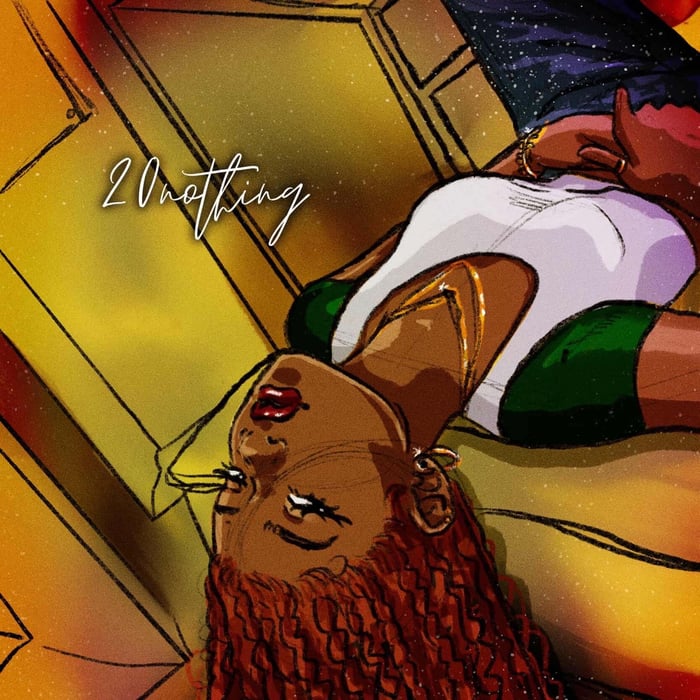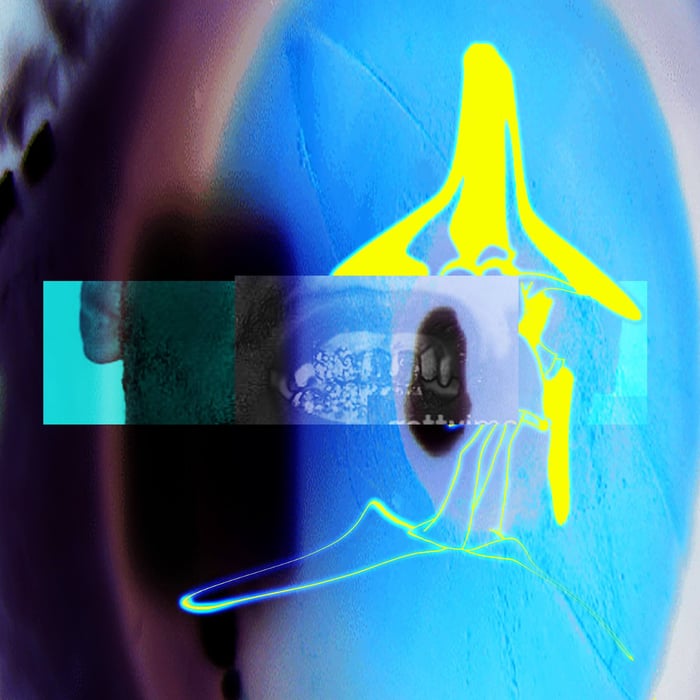
I Guess U Had to Be There Album Review: ELUCID & Sebb Bash Don’t “Vibe”


 See more Architeg Prints stories on Google.
Album Review: I Guess U Had to Be There by ELUCID & Sebb Bash
ELUCID and Sebb Bash turn I Guess U Had to Be There into a blunt little movie of daily life—Home Depot, belts, politics, and all the stuff rap usually dodges.
You can tell within a minute when an album is trying to impress you. This one isn’t. I Guess U Had to Be There feels like it’s trying to corner you in a park and talk until you stop pretending you’re fine.
How This Album Even Exists (And Why That Matters)
Here’s the part people skip: intent. This record doesn’t sound like two artists casually swapping files; it sounds like two people deciding, early, that they’re making a full statement and refusing to let it get “playlist-friendly.”
The connective tissue starts with The Alchemist—who, frankly, isn’t known for tossing around producer praise like free stickers. While ELUCID was finishing Haram in L.A., he kept clocking the beats Alchemist would play between sessions and asking who made them. The answer—Sebb Bash—kept coming back with a kind of finality: best producer he knew. That endorsement has weight because it isn’t gushy; it’s utilitarian, like: this is the person who actually does it right.
Beats got sent during the I Told Bessie era. Two stuck. Then the real-world part happened: ELUCID and Sebb Bash linked in New York through mutual friends and… didn’t record anything. They just smoked in the park, ate sandwiches, talked. Honestly, that’s the most important “studio session” detail here. It explains why I Guess U Had to Be There sounds deliberate without sounding overcooked—like the album was agreed upon as a mood before a single bar got written.
I’m not totally sure every listener will care about that backstory, but you can hear the difference between chemistry and coordination. This is chemistry.
ELUCID Going “More Rap” Isn’t a Retreat—It’s a Knife
Moving from abstract fog to concrete scenes can look like an artist simplifying. I don’t think that’s what’s happening. ELUCID pushes into a more rap-oriented mode here, and it doesn’t make the writing safer—it makes it sharper because he’s planting the lines in places you can picture.
Armand Hammer often feels like drifting through concepts. I Guess U Had to Be There stomps through locations. It’s flat-footed on purpose. ELUCID isn’t hovering above the world describing it like an omen; he’s inside it, annoyed and awake.
On “Make Me Wise,” the specifics hit first: buying garden shears at Home Depot, noticing refugees in the parking lot waiting for day labor, getting high before noon, snapping at a shopkeeper to watch his mouth. That’s not set dressing. It’s the point. It’s ELUCID insisting that “the everyday” is where the whole country hides its violence—under fluorescent lights and errands.
He’s talked about pulling inspiration from Charles Burnett’s films during these sessions, and that influence actually makes sense in the listening: poetic language that doesn’t float away from ordinary life, but tightens around it. On the same song, he’ll call himself America’s last drive-in cinema and the minister of culture—then drop a clear political observation like it’s just another item in the cart. No drumroll. No “important message” voice. That lack of ceremony is basically the album’s attitude: if you need me to underline it, you weren’t listening anyway.
A reasonable person could argue ELUCID is giving up some mystery by being this literal. I thought I’d miss the abstraction more. On second listen, I didn’t. The clarity is its own kind of menace.
“Coonspeak” Is the Album’s Meanest Trick—and One of Its Best
Some titles announce themselves like warning labels. “Coonspeak” does that, then forces you to sit with what you assumed it would be. Taking a slur and using it as a frame is risky, and I kept waiting for the track to either soften the blow or turn into a lecture. It doesn’t. It wears the word out from the inside across both passages—like friction, like insistence.
The first part throws images that feel almost spiritual—Donny Hathaway on a balcony with iridescent wings—then slides into refusals: no entertaining false flagging, no pretending any occupation is forever. The second half gets grimier and more grounded, like he’s rubbing burnt cork into a modern machine: smeared on laptop computers, still clocking in, still having “credit” even when calling out sick. It’s the kind of writing that doesn’t just critique a system; it shows you how the system lives in your calendar and your body.
If I’m nitpicking, the track’s intensity can feel so unbroken that it flattens the emotional contour—like ELUCID refuses to exhale even when the beat gives him room. But maybe that’s the thesis: the people he’s talking about don’t get the exhale either.
“Fainting Goats” and the Baldwin Sample: Saying the Quiet Part Out Loud
This is where the album stops being “interesting” and starts being accusatory.
“Fainting Goats” uses a James Baldwin sample, and it isn’t there as a tasteful intellectual garnish. The sample lands like a door slamming: the final devastation is not being permitted to articulate anything; the dream scenario for power is a silent labor force. That’s the premise, laid out plainly, and ELUCID picks up right after it.
Then he turns his attention to liberal hand-wringing—the kind that produces language instead of outcomes. He treats it like a fog machine: it fills the room, looks dramatic, changes nothing. There’s a line of motion in the writing too, this sense of climbing a tree before meaning gets flattened. It’s not “hopeful.” It’s survivalist.
And the album keeps doing this: it puts big ideas inside small, tangible moments so you can’t pretend they’re just academic. It’s harder to dodge a critique when it shows up in your day-to-day posture.
“Alive Herbals”: The Hook That Won’t Let You Pretend You Didn’t Hear It
“Alive Herbals” is one of those tracks where the hook keeps cutting through ugly imagery—hangings, hurricanes, bleach for the sheets—and it does it with a weird tenderness. The repeated feeling is: baby, I’ll be home soon. Tapped out, needs a week, but he’ll be home.
That’s an arguable choice, by the way: putting something that emotionally domestic against such brutal reference points. Some people will hear it as grounding; others will hear it as whiplash. I hear it as ELUCID refusing the usual rap trick of acting unaffected. He’s not acting tough here; he’s acting tired.
There’s also one blunt, seven-word statement sitting right in the middle of the record’s worldview: white people have to get white people together. No flourish, no metaphor, just the kind of sentence that makes certain listeners suddenly need to “go check something in the other room.” It’s not there to be inspirational. It’s there to be unavoidable.
“Equiano” and the Album’s Definition of Power (It’s Not the One You Expect)
“Equiano” is named for Olaudah Equiano, and it brings in Shabaka Hutchings—on flute, no less. The track swings between references that feel like they’re designed to destabilize you: chaos, a Hamsterdam nod, a vomitorium… then the grounding of saltfish and bake breaking fast.
What’s sneaky here is how it reframes “power.” It doesn’t land on force. It lands on health—Black power as being on the good foot, not just being the loud foot. That’s a perspective you don’t hear often in rap because it isn’t instantly cinematic. It’s practical. It’s almost annoying in how grown it feels.
Shabaka’s presence fits because this record treats collaborators like they arrived at the exact right second, not like they were booked to inflate the tracklist. Nobody sounds parachuted in.
Family Keeps Leaking In: “I Say Self,” “First Light,” and the Car Seats
Here’s where I had to revise my first impression. Early on, I clocked the record as mostly political and observational—hard-eyed, street-level stuff. But the longer it plays, the more family details keep slipping into frame, not as sentimental “balance,” but as proof of what’s actually at stake.
“I Say Self” turns its title into a governing phrase. ELUCID asks what kind of slave he’d be—an ugly question, the kind you don’t ask unless you’re willing to hear the answer. He slaps his cigarette on the gatefold, claims a Sauce Money ’98 flow, and says it like he means it, not like a cute reference.
“First Light” has him wearing his collar when he’s poeting and when he’s not. That detail matters because it suggests the “role” never fully comes off; artistry and daily life are the same outfit. And then there’s this quiet, almost comedic-normal detail: two car seats sitting next to a high-grade tree on “I Say Self,” and nobody blinking. That’s modern life in one still image—parenting next to coping mechanisms, completely normalized.
Then “Fainting Goats” hands the final lines to his daughter: she shows up every day, makes her woman smile, and she’s been saying it’ll be Happy Daddy’s Day for a month. If you think that’s just a wholesome closer, you’re missing how strategic it is: after steel pipe guys, open markets, bulletproof Jeeps—suddenly the most convincing “future” on the record is a kid rehearsing affection.
Guests Who Actually Add Pressure: billy woods and Estee Nack
billy woods appears on “The Lorax,” and he does what he always does: makes the world feel crowded with consequences. Coyotes loping through canyons. Rappers fighting their fans. Then that line to his daughter—all dogs bite—and he means it. Not as paranoia, but as a final, friendly warning: the world isn’t obligated to be gentle.
His closer hits both warm and terminal at once: you can’t replace us with them, and I’m telling you as a friend. That’s the kind of line that doesn’t beg to be quoted; it just sits in your chest.
Estee Nack shows up on “Hands n Feet” and matches ELUCID’s aggression instead of softening it. The references come sharp—Billy Bathgate, herringbone necklaces—and there’s a crack about going over heads like an Israeli drone. It’s not there for shock; it’s there because the song is about height and distance and what it means to speak in a way people pretend not to understand.
If you don’t like your rap dense, this is where the album will start feeling like homework. I don’t mean that as a flex. I mean it literally: it asks more than casual attention.
“Parental Advisory” Ends It Like a Bruise You Keep Pressing
The album ends with “Parental Advisory,” and it doesn’t “wrap up.” It tightens. The hook asks questions that aren’t rhetorical: why is at the end of a belt, did the strap wake you from your sleep, how’s it hurt you more than it hurts me. The point is that the logic of punishment is always dressed up as love—ELUCID only trusting someone if there’s blood drawn, confusing wrath for being cared for.
He’d rather this belt than that one. That’s a sick sentence, but it’s a real one.
And the details get gross on purpose: tracing where the skin broke by himself, choking on his own snot with Welch’s Rolls. That little brand-name specificity is doing heavy lifting—it’s saying: this isn’t mythology, it’s a childhood with snacks and humiliation and bodily mess.
Then a spoken word passage closes it with clinical language about corporal punishment: how it rewires a child’s brain, changes cognition, wears down the immune system, and how the effects often don’t show until after puberty. That juxtaposition—belt/snot/candy next to neuroscience—is the album’s whole approach in miniature. It’s not interested in one “mode” of truth. It wants street memory and medical fact sitting in the same chair.
There’s also an echo of advice from Ka: do the work that moves you first. This feels like that work—uncomfortable, specific, and unwilling to be neatly packaged.
Conclusion
I Guess U Had to Be There isn’t trying to be liked; it’s trying to be recognized. ELUCID and Sebb Bash make an album where the mundane details—store runs, car seats, cheap snacks—carry the same weight as history and ideology, because that’s how real life works when you stop romanticizing it.
Our verdict: People who actually like rap as writing—who enjoy sitting with images that don’t resolve neatly—will love this. If you need choruses to “lift” the mood, or you treat lyrics like background texture, this album will feel like being handed a receipt for your own attention span.
- Is I Guess U Had to Be There more accessible than ELUCID’s other work?
It’s more direct in scene-setting, yes—but the ideas are still dense, and it doesn’t slow down to explain itself. - What’s the most immediate track on first listen?
“Make Me Wise” grabs fast because it’s full of concrete moments—Home Depot, parking lots, quick conflict—before you even realize how loaded it is. - Do the features feel like distractions?
No. billy woods and Estee Nack raise the pressure instead of waving for attention, and Shabaka Hutchings fits the album’s mood like he was always part of it. - Is the album mainly political?
It’s political the way daily life is political here—through work, speech, family, and punishment—not through slogans. - What’s the toughest moment to sit with?
“Parental Advisory,” easily. It doesn’t dramatize trauma; it makes it tactile, then turns around and names the science behind it.
If this album lodged in your brain the way cover art sometimes does, you can always grab a favorite album-cover poster for your wall at our store — a quiet way to keep the feeling of I Guess U Had to Be There in the room without replaying the belt sounds.
 | DISCOUNTGET 30% OFF*Use code on your next order:
|
* This post may contain affiliate links, meaning we earn a commission if you make a purchase through these links, at no additional cost to you.