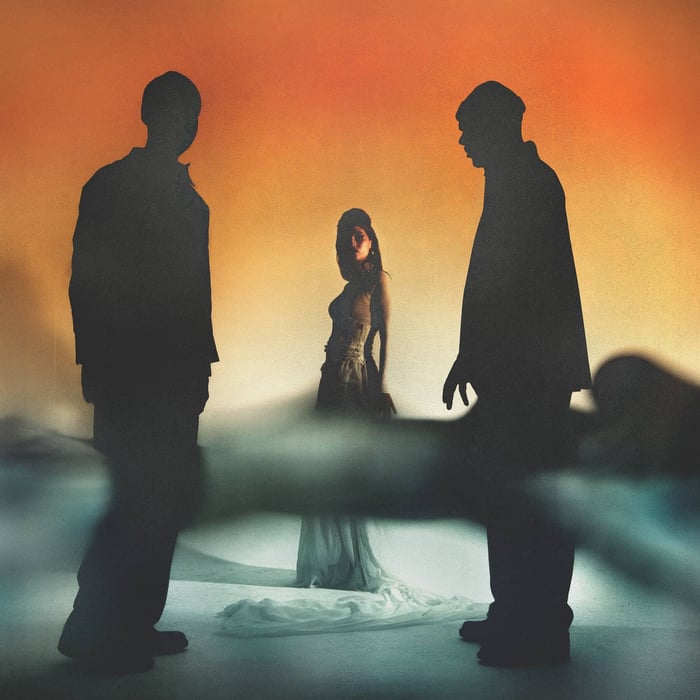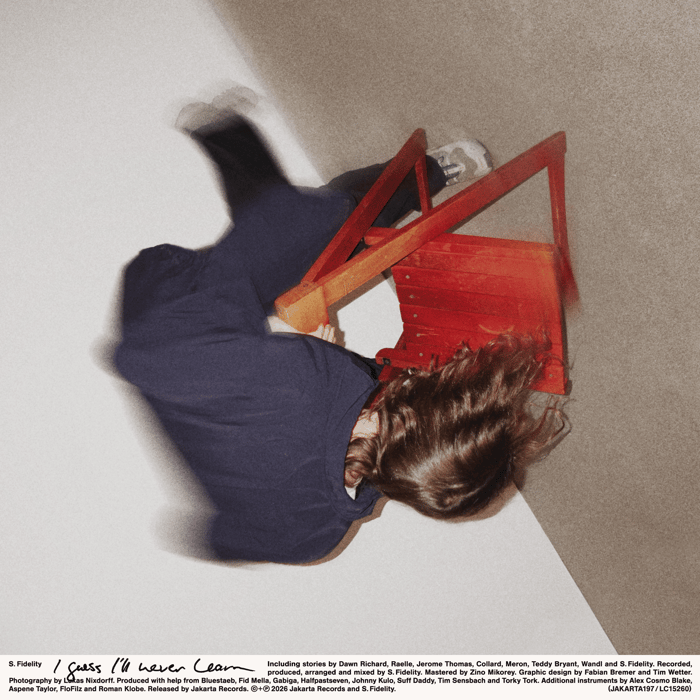
I Guess I’ll Never Learn Album Review: Sexy Heartbreak on a Schedule


 See more Architeg Prints stories on Google.
Album Review: I Guess I’ll Never Learn by S. Fidelity
I Guess I’ll Never Learn turns lust into logistics: seven voices, one loop of wanting, getting, losing, and crawling back—warm, controlled, and quietly brutal.
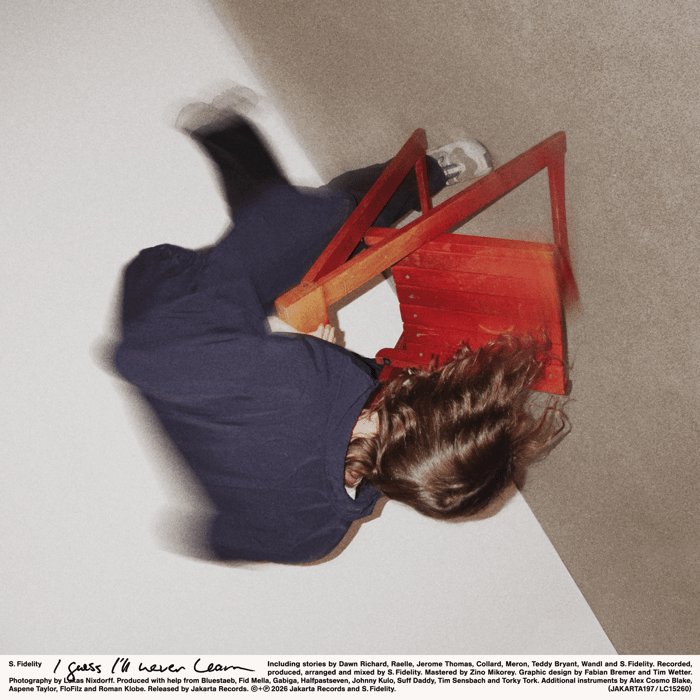
A record that stops showing off and starts confessing
Some albums try to impress you with range. I Guess I’ll Never Learn tries to trap you in a feeling and keep the door locked.
S. Fidelity comes off like someone who grew up competing over taste—burning compilation CDs with friends where the whole sport was pulling out records nobody else knew. You can hear that collector brain in the choices here, but what’s different is he isn’t doing the “look how many genres I can juggle” routine anymore. This is his third release on Jakarta Records, and it plays like the first time he decided that restraint is a flex too.
I kept thinking about how his earlier Fidelity Radio Club (2021) wore a radio-show concept on its sleeve—contributors hopping between hip-hop, house, jazz, funk. Here, the concept isn’t “variety.” It’s one subject, stretched across 13 tracks and seven vocalists: wanting someone, having them, losing them, wanting them again. The production is warmer and more patient, and the pacing has this no-dead-air discipline—ideas don’t linger long enough to get stale, but they also don’t get cut off mid-sentence.
And yeah, on my first listen I assumed that “single subject” thing would feel monotonous. Weirdly, it doesn’t. The repetition is the point. The loop is the villain.
“Limelight” opens the door with a smile—on purpose
Before the record starts getting complicated, it lets Teddy Bryant stand at the entrance and be almost suspiciously earnest.
“Limelight” is all promise and warmth—let me change your life today energy. It’s the simplest emotional pitch on the entire album, and that’s exactly why it’s useful. If S. Fidelity started with the paranoid or the chaotic stuff, the later collapses wouldn’t hit as hard. This opener is the “normal” baseline, and I’d argue it’s also the weakest song precisely because it doesn’t have much inner conflict. But that plainness is structural: it’s the clean tablecloth before somebody flips the dinner table.
You can disagree, but I don’t think it’s meant to be anyone’s favorite. It’s meant to make you relax.
“Play” is lust with the safety rails removed
From there, Dawn Richard kicks in the door with “Play,” sounding like she’s already halfway through the night—no introductions, no coy staging. The vocal doesn’t circle the desire; it plants a flag in it. When she says:
“We like to fuck / we like to play, babe”
— Dawn Richard, “Play”
…it’s not shock-value. It’s a thesis statement. The track runs for four minutes with basically no defensive posture. She wants rules broken, privacy optional, the whole meal—less romance, more permission.
And the record makes a big decision here: it doesn’t punish her for that directness with some melodramatic darkness. The beat stays warm. The groove stays welcoming. That’s S. Fidelity telling you what kind of album this is—sex and longing presented as ordinary behavior, not a moral crisis.
The part that surprised me is how the song keeps its momentum without sounding frantic. It’s appetite, but not desperation. That distinction matters, and not every producer can hold it.
Jerome Thomas: the sweet voice saying the selfish thing
Next, Jerome Thomas takes a similar charge on “So Good,” but he tweaks the emotional temperature. He sings “I’m picking up that body like I stole it,” which should read like pure bravado, yet the tone carries sweetness that undercuts the line. When he lands on “it’s the best I ever had,” he doesn’t sound greedy—he sounds grateful. That’s the trick: the lyric acts tough; the voice admits vulnerability.
Then “24h (Joyride)” comes back around and complicates the pleasure like a bad conscience. Here’s the scenario as it plays out: a woman wants stability—daily calls, a strong base, a home. Thomas answers plainly, “I don’t want you for life / But I want you tonight.” And the song doesn’t frame him as a cartoon villain. He’s not cold. He’s specific.
What really sells it is the music underneath: slow-building keys and drum patterns that never fully settle. It mirrors the offer: a 24-hour promise with no structural foundation. Jet flights, then the trip expires. The groove keeps moving, but it never relaxes into “this is safe.” That feels deliberate, like the arrangement itself is refusing to commit.
I’m not totally sure whether the track wants you to sympathize with him or judge him. It might be doing the annoying thing where it wants both. But the ambiguity is honest—even if it’s inconvenient.
“Limbo” is where the album admits it’s not fun anymore
The pivot point is “Limbo,” and Collard plus MERON drag the mood into a different room entirely. It opens with the confession: “I wish I was somewhere else right now.” That line matters because it isn’t “I wish you were different.” It’s “I can’t stand being me in this moment.” That’s a deeper kind of stuck.
Collard’s delivery sits between singing and talking, like he’s trying not to dramatize a situation that’s already dramatic. And when he reaches:
“I could die in pursuit of you / I’ve already crashed twice, it’s true / I’m already baptized in you”
— Collard, “Limbo”
…the weight stacks up fast. Those rhymes don’t feel like clever writing; they feel like someone repeating a thought until it becomes a belief. If you think the album is just “sexy vibe music,” “Limbo” is where that illusion gets revoked.
I’ll go further: this is the moment the album quietly tells you the central theme isn’t romance—it’s compulsion.
Raelle’s three-track arc is the real plot
Raelle appears on three of the 13 tracks, and she gets the most internal writing of any voice here. It’s not just that her songs are good; it’s that they function like chapters.
On “Siena (64kbit/s),” she admits she can’t choose herself over the other person—can’t stop losing herself in them. It’s not presented as poetic tragedy. It’s presented as a habit she can’t quit.
Then “Crimson (64kbit/s)” keeps that lo-fi compression tag, and both tracks sound like you’re hearing them through a phone speaker left on a nightstand. That texture choice isn’t cute; it’s claustrophobic. It’s intimacy flattened into bandwidth. On “Crimson,” she asks to be let into someone wholly, not partially, and that one line hits because it’s so plain:
“You held me like I had something good in me.”
— Raelle, “Crimson (64kbit/s)”
By the time “Grey Mirror” arrives, she flips: “You took my power / I’m coming for your blood.” The same person who couldn’t stop dissolving into somebody else now starts tearing apart everything she loved, spreading her poison, demanding validation for the pain.
You could argue it’s an overcorrection—rage as a costume. But I don’t hear it that way. I hear someone trying to feel real again, even if the only available emotion is violence. And the way S. Fidelity spaces these three tracks across the record lets the anger arrive with history behind it, not as a random “now I’m mad” switch.
S. Fidelity’s own voice: minimal words, maximum tell
S. Fidelity sings on two tracks, and honestly, they’re the most revealing spots on the album. Not because he’s the best vocalist—he isn’t trying to be—but because his writing refuses to clean itself up.
“When Dumb Thoughts Learn How to Walk” is built almost entirely from three phrases: “on my way out,” “let it go,” and “break the surface.” He stacks and layers them until they blur into texture, like someone rehearsing an exit in the mirror and forgetting to actually leave. It’s simple to the point of being stubborn, which is why it works. If he’d written a full verse, it might’ve turned into “songwriting.” This stays as psychology.
“Two Steps on the Water” is mostly instrumental, with vocal fragments surfacing—scattered, unguarded, like the mic caught him mid-thought and he didn’t bother to redo it. It feels less like a performance and more like leakage.
If you’re listening for “artist personality,” these are the tells. The guest vocalists carry the narratives; S. Fidelity’s tracks carry the fog.
“Bobby Hollywood” is the one clean breath—and it’s strategic
“Bobby Hollywood,” another instrumental, brings in Alex Cosmo Blake on guitar and gives the LP its one clean breath of air. It’s not “happy.” It’s just less emotionally crowded. No one is pleading, bargaining, threatening, or negotiating terms. The track’s existence implies S. Fidelity understands something important: if every song is a confrontation, the listener goes numb.
So he inserts an interlude-like space where you can unclench your jaw.
It’s also a quiet flex—like, “I can make this album move without vocals too, but I’m choosing not to showboat.”
“Glass on the Floor” is the album’s ugliest scene (and it’s supposed to be)
“Glass on the Floor” is the hardest track to sit through. Collard returns, and everything that was stuck in “Limbo” has broken. The writing turns into a series of impacts:
“Another hang time / Another landslide / Your fingers brush mine / For the last time.”
— Collard, “Glass on the Floor”
Then comes the bargaining with God: “If hope doesn’t float, and we no longer cope / then I’ll pray for a deity that I can cling to.” That’s not poetic distance—that’s panic dressed as theology. It’s the most defeated moment across all 13 songs.
Here’s the cruel part, and I’m convinced it’s intentional: Collard opened his first appearance unable to leave, and now closes his second unable to stay. That’s sequencing as emotional sabotage. The album places his ruin like a checkpoint you can’t skip.
If I have one mild gripe, it’s that this track is so heavy it risks flattening the album’s earlier sensuality into “everything is misery, actually.” I don’t think it breaks the record, but it does briefly tip the balance.
The title track ends in surrender, not closure
After that, Wandl’s title track arrives like an exhale. It’s all release: “Hold it tight, let it go.” “Real love is free.” “Every day I spend with you is a blessing.” It’s the simplest language on the record, and it rides the slowest pulse—FloFilz’s strings curling underneath like a hand trying to calm you down.
And I’ll be honest: my first impression was that this would feel like a motivational poster after the wreckage of “Glass on the Floor.” On second listen, it lands more like resignation than wisdom. Not “I learned.” More like: I’m tired of fighting the loop, so I’m calling it love and walking away before I change my mind.
That’s why the album title works. “I Guess I’ll Never Learn” isn’t a cute shrug. It’s a diagnosis.
Seven singers, seven climates—and the production refuses to homogenize
The casting is the bet here, and it pays.
- Teddy Bryant opens with uncomplicated promise (and yes, that simplicity is the point).
- Dawn Richard and Jerome Thomas carry appetite—and its limits.
- Collard carries paralysis and then ruin across two turns.
- Raelle moves from self-loss to rage across three appearances.
- Wandl closes in surrender, not triumph.
- And S. Fidelity, on his own two cuts, contributes confusion—the kind that doesn’t clean up into a neat verse.
The technical chain matters because you can hear it in the texture: vocals recorded through a Sontronics valve mic into an Apollo Twin X, processed in Ableton. Across seven singers, the tonal differences are wide enough that each voice enters carrying its own weather. What keeps it cohesive is the production’s refusal to shove everyone toward the same emotional “mix position.” The beats don’t bully the vocalists into uniformity.
That’s the quiet creative decision at the heart of the album: let the contradictions stay contradictory. Wanting someone can sound like play, prayer, limbo, revenge, or gratitude—and the record doesn’t pretend those are different stories.
As a full listen, it feels like the cycle spins exactly once. No wasted song. No filler apologies.
Conclusion
The real trick of I Guess I’ll Never Learn is that it uses warmth to deliver bad news: desire doesn’t resolve, it repeats—just with different voices saying the same thing from different angles.
Our verdict: People who like relationship songs that actually admit the messy parts—terms, time limits, power flips, emotional hangovers—will lock into this. If you need your love stories to end in clarity, or you prefer your sexy tracks to stay sexy without turning into existential paperwork, you’ll get impatient fast.
FAQ
- What is the core theme of I Guess I’ll Never Learn?
Wanting someone, getting them, losing them, and then wanting them again—played like a loop you can’t outsmart. - How many tracks and vocalists are on the album?
Thirteen tracks, seven vocalists, plus S. Fidelity himself singing on two songs. - Which songs feel like the emotional centerpiece?
“Limbo” and “Glass on the Floor” hit like the album’s spine—stuckness first, then collapse. - Why do some tracks have “64kbit/s” in the title?
Those songs (“Siena (64kbit/s)” and “Crimson (64kbit/s)”) sound intentionally lo-fi—like overhearing intimacy through a phone speaker. - Does S. Fidelity’s production keep the album cohesive across different singers?
Yes, because he doesn’t force the voices into one tone; he lets each vocalist bring their own sonic “weather” while the beats stay patient and warm.
If this album lodged itself in your head, you might want that feeling on your wall too—album art as a reminder, not a shrine. You can shop a favorite album cover poster at our store: https://www.architeg-prints.com
 | DISCOUNTGET 30% OFF*Use code on your next order:
|
* This post may contain affiliate links, meaning we earn a commission if you make a purchase through these links, at no additional cost to you.