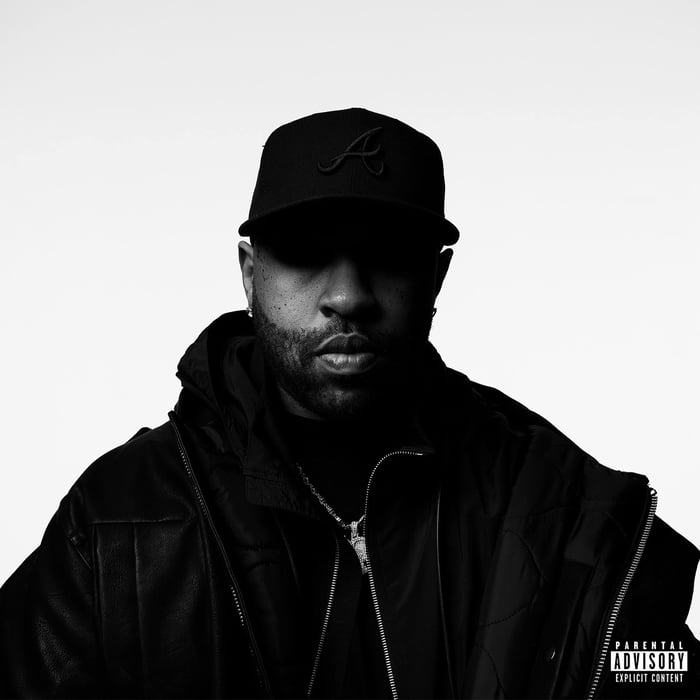
Mike WiLL Made-It’s R3SET Review: A “Reset” That Keeps the Old Dirt


 See more Architeg Prints stories on Google.
Mike WiLL Made-It’s R3SET Review: A “Reset” That Keeps the Old Dirt
R3SET review: Mike WiLL Made-It returns with an Atlanta roll call—sharp money talk, real grief, and a little too much autopilot in the backseat.
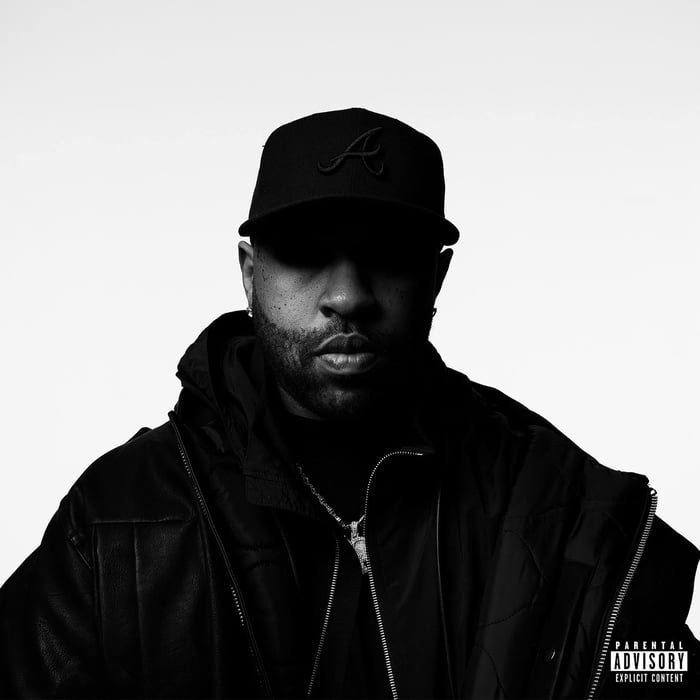
The “Reset” is actually a reunion… after a hard drive funeral
You can feel the origin story humming under this whole record: Mike WiLL Made-It had both his main hard drive and his backup stolen around 2017, and the silence that followed doesn’t sound like “taking a break.” It sounds like someone deciding they already proved their point.
By then, the flex was complete—Grammy already on the shelf for “Humble,” huge placements like Beyoncé’s “Formation” and Rihanna’s “Pour It Up,” Rae Sremmurd already stamped and shipped. The victory lap turned into real estate, turning an Atlanta studio into the Made It Way compound, and—this detail matters—gambling on 2K instead of building new worlds out of drums. Nine years is long enough for momentum to rot.
So R3SET lands as the third Ransom installment, and this R3SET review basically boils down to one blunt truth: this isn’t a comeback album, it’s a directory. Four generations of Atlanta rap show up—people he signed, produced for, grew up with, or simply shares oxygen and history with. Some arrive starving. Others arrive smiling like they’re at a cookout where the grill is technically lit, but nobody’s watching it.
“ATL (APP3CIAT3 TH3 LOV3)” drops you into the city without asking permission
The opener makes the intent obvious: if you don’t know Atlanta, you’re going to learn it through street names like they’re gospel.
21 Savage rides a Faith Evans sample and just starts naming places—Moreland, McAfee, Panola, River Road, Callister, Alison Court—like he’s tagging a map with a Sharpie. And the thing is, that specificity does the heavy lifting for the whole first half. It’s doors kicked in, women collected, hanging with the buddies, and a cold little relationship detail about a woman who falls for street guys because she’s lonely—whose man takes her phone when he sleeps. That’s not “plot,” that’s behavior.
Then it gets uglier: somebody gets shot in the head riding in a car people thought belonged to someone else. No dramatic pause, no cinematic framing—just the kind of mistake that only feels realistic because it’s so stupid.
Part II flips the mood: co-produced by London on da Track, the beat loosens into something hazier, and 21 pivots to Percs and big checks. It’s less gripping, but it’s also the point: the song starts as a guided tour and ends as the fog you get when you stay too long.
My first impression was that the record might be stuck in nostalgia mode. On second listen, this opener convinced me it’s doing something sneakier: it’s not reminiscing, it’s reasserting territory.
The album’s best moments are about money, because money forces details
A lot of albums talk about money. R3SET does too—nearly every one of the fifteen tracks circles cash in some form—but the difference is when the writing gets concrete enough to feel like receipts.
“MON3Y TALK$” is three different philosophies in one parking lot
This is where the record locks in. On the Zaytoven co-produced “MON3Y TALK$,” Killer Mike delivers the most sharply drawn verse on the whole album. He doesn’t brag about wealth like it fell from the sky. He says he made millions rapping about trapping—and made ten times what he ever made actually doing it. He puts you at the store with crack prostitutes and junkies. He watches prescription addiction turn a boss into a flunky. And then he drops a kidnapping story that plays like a short film: a guy gets taken by his own uncle over ransom money the father refuses to pay because he’s that cold. The uncle ends up dead, it hits Channel 2 news the next day, and goons are getting paid in the living room.
Mike WiLL is smart enough to not overproduce this. He lets the Junior M.A.F.I.A. “Get Money” sample run underneath like a conveyor belt—because the verse itself is the spectacle.
Then T.I. steps in talking about dropping a Lamborghini with a “bad bitch” inside it, popping off until his bankroll reaches Elon territory. Young Dro follows with the bluntest line of the three: he’s wealthy strictly off selfishness. Same beat, three angles:
- money as proof of survival (Killer Mike)
- money as scoreboard and theater (T.I.)
- money as personal religion (Young Dro)
A reasonable listener could argue it’s tonal whiplash. I’d argue that’s the actual design: R3SET keeps showing you that cash doesn’t unify anybody—it just gives them a shared language to argue in.
“@ 874” turns money talk into paranoia and family math
Right after that, Hunxho takes a quieter route on “@ 874,” and it’s still about money—just money as threat.
He brings up a RICO charge that couldn’t send him down, and you can hear the resentment in the framing: tried to charge him because of his past, because he’s Black. He talks like someone already living with the possibility that success won’t protect him. He might never win a Grammy. He could get sent back and not see his family again. That’s not poetic. That’s a stress response.
2 Chainz slides in and makes it personal in a different way: he fronted his uncle some grams and the uncle ran off—then threatened to whip his ass if he kept asking for the money back. That’s the kind of betrayal you only tell if you’ve replayed it a thousand times. He’s seen forty pounds on a coffee table. He knows young guys who’ll kill you in front of Grady Hospital. And then—this is the part that makes the verse sting—he admits he needs love, and if he doesn’t get it, he’ll take it.
That last line is the album in miniature: R3SET keeps presenting tenderness as something the characters can’t hold without turning it into control.
“OFG!” is J. Cole acting bored… and accidentally honest
When J. Cole shows up on the bass-heavy “OFG!,” he does something that normally irritates me: he lets the verse wander like he’s scrolling through his own brain in public.
He shouts out Lionel Messi and admits he just started watching soccer. He asks why they put a girl in the hood, why they try to cancel him. He says he needs to catch up on Rick and Morty. He misses giving sex to a hater’s girlfriend. He calls his mind a crime scene. He says he’s over forty and maybe told every story already. He’s watching a Vlad interview with Yung Joc when someone calls his phone—and he lets it ring because he doesn’t want to be friends. He name-drops Pac, Biggie, Bob Marley, Snoop, The LOX, then tosses in a Sam Bankman-Fried reference like he’s trying to prove he still reads the internet.
“I don’t got no problems / Only opportunities for growth…” — J. Cole, “OFG!”
He sounds bored and unguarded at the same time—half convinced the “growth” talk is corny, half meaning it. I kept waiting for a clean punchline or a tidy theme, but it never arrives. Oddly, that’s why it works. The details are specific enough to feel true: a 42-year-old rapper learning soccer late, letting the phone ring, admitting he can’t chase women at the club anymore and calling himself an artist instead of a boss.
Someone could say it’s rambling. I’d say it’s the rare moment on R3SET where a big name doesn’t perform “importance”—he just exists.
The back half goes quiet on purpose, and it’s the album’s most human move
Halfway through, R3SET shifts into something softer, almost like the party ended and people are finally talking in normal voices.
CeeLo Green on “ALL I KNOW” asks the question the album won’t
“ALL I KNOW” is gospel-inspired, but it’s not polished like church—it’s more like somebody pacing in the parking lot after service.
CeeLo sings about cutting himself out of stone, putting his heart in his chest, becoming God in the flesh—then asks the question that actually matters: “I still believe in God, but does God believe in me?” He keeps failing, keeps returning, keeps relearning. He says his dreams are his real life and when he’s awake it’s make-believe. He even wonders if he’s just talking to imaginary friends he created to feel appreciated.
He sounds both sure and scared of the answer, which is exactly why it lands. If you don’t like spiritual doubt in your music, you’ll call this melodramatic. I think it’s the rare moment on the album that isn’t trying to look hard, rich, or legendary.
Sid Sriram and Lil Keed form the record’s clearest three-track emotional run
Sid Sriram’s “AAA” sits in the middle of this stretch and begs someone not to leave. It’s devotion that feels slightly desperate, like it’s trying to hold the room together with its bare hands.
Then “IN MY H3AD” hits, and it hits different because Lil Keed is gone—he died at 24. The track was released on what would’ve been his 28th birthday, and you can hear the loneliness baked into the performance: fighting demons alone, holding things back from people.
He says, “This shit ‘posed to been said but I held it back from you.” He raps about enjoying his daughter’s laughter, ditching Instagram for reality, showing someone the Bentley life. There’s also that line—“When the smoke clear I’ll have a hundred milly”—and I don’t know how you’re supposed to hear it without flinching, because the smoke didn’t clear. The future tense becomes a ghost.
If that sequence was intentional—devotion (“AAA”), grief (“IN MY H3AD”), faith spiral (“ALL I KNOW”)—it’s the most coherent stretch on the album. And if it wasn’t intentional… well, it still tells the truth. Sometimes sequencing is just the producer admitting what the project is actually about.
When OJ da Juiceman shows up, Mike WiLL stops being an organizer and starts being a person
“STOV3 LIT” is catchy in that grimy, functional way that doesn’t care if you approve.
OJ da Juiceman is basically a direct callback to apartment buildings—back when Mike WiLL first linked with Gucci Mane and started building his career. OJ raps about fish scale and Kermit frogs jumping out the pot, the stove eye messed up, straight trap cooking with zero decoration. No luxury packaging, no moral essay—just process.
These are the moments where you can actually feel Mike WiLL’s hand steering:
- pulling in Killer Mike for a verse with actual scenes, not slogans
- letting Lil Keed’s voice sit in the room without over-framing it
- using OJ da Juiceman as a memory trigger instead of a random feature
That’s the R3SET I wanted more of: not “Atlanta compilation,” but “Atlanta scrapbook with teeth.”
The album also drifts into autopilot, and pretending it doesn’t would be silly
Here’s the mild problem: R3SET is long, and not all of it earns that length.
“D33P3R” slides into sex-song boilerplate—the kind of track where the vibe is doing the work because nobody bothered to write a reason for it to exist. And “MY WAY,” even with women leading it, coasts mostly on attitude without giving any of its three rappers enough room to turn that attitude into something specific. It’s like the song is posing for a photo instead of moving.
This is where the producer disappears and the formula takes the wheel. The album doesn’t fully collapse, but it does sag. I’m not totally sure if Mike WiLL wanted that looseness—like “this is a hang, not a thesis”—or if he simply didn’t cut hard enough. Either way, the weaker tracks feel like dead air between good conversations.
The saving grace is that the best songs earn their place so strongly that the filler becomes tolerable. Not “good,” just tolerable—like staying in the room because the people you came for are still talking.
Where I land: solid, with a few real needles in the hay
If I’m putting a simple label on it, this R3SET review lands around solid—the kind of record that has several moments I’ll replay, and several stretches I’ll skip without guilt.
Favorite tracks
- “OFG!”
- “MON3Y TALK$”
- “IN MY H3AD”
Conclusion
R3SET isn’t a clean “return” narrative—it's Mike WiLL Made-It proving he can still curate Atlanta like a living ecosystem, even if he sometimes lets the playlist run too long. When the writing gets specific—addresses, betrayals, kidnappings, faith questions—the album turns vivid. When it leans on ready-made formulas, you can practically hear the room checking their phones.
Our verdict: People who like rap when it names names, places, and consequences will actually like this album—especially listeners who want Atlanta to sound like a city, not a brand. People who need every track to justify itself (or who flinch at compilation-style pacing) will not; you’ll call it bloated and you won’t be entirely wrong.
FAQ
- Is this a Mike WiLL Made-It producer showcase or a rap album?
It plays like a rap album curated by a producer—features first, mood second, with Mike WiLL’s best moments coming from smart pairings and restraint. - What’s the most “Atlanta” moment on the record?
The opener with 21 Savage naming streets feels like getting dropped at an intersection and being told to figure it out. - Does the album have emotional weight, or is it all flexing?
It has real weight on the back end—CeeLo’s doubt and Lil Keed’s posthumous track shift the whole air in the room. - What’s the biggest weakness?
A few tracks slide into autopilot—sex-song and attitude-only material that doesn’t add new information or feeling. - Where should I start if I don’t want to play the whole thing?
Try “MON3Y TALK$,” then “OFG!,” then “IN MY H3AD” to catch the album’s range without the slower stretches.
If you’re the type who treats album art like part of the experience, it’s worth putting your favorite cover on the wall—same music, louder presence. You can grab a poster-style print at our shop.
 | DISCOUNTGET 30% OFF*Use code on your next order:
|
* This post may contain affiliate links, meaning we earn a commission if you make a purchase through these links, at no additional cost to you.