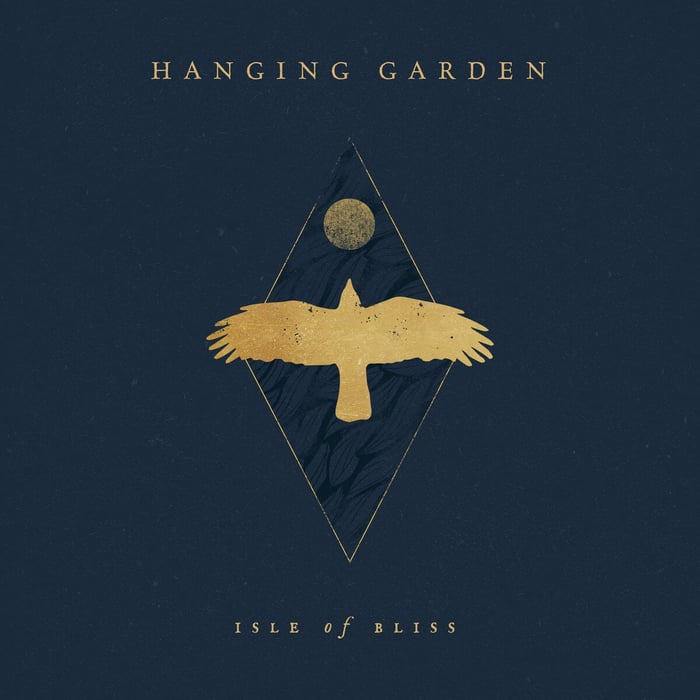
Isle Of Bliss Review: Hanging Garden Goes Darker (and Actually Means It)


 See more Architeg Prints stories on Google.
Isle Of Bliss Review: Hanging Garden Goes Darker (and Actually Means It)
Isle Of Bliss isn’t “a heavier phase”—it’s Hanging Garden deciding the pretty parts should bleed a little.
A record that walks in wearing black and doesn’t apologize
Some albums flirt with darkness like it’s a costume. Isle Of Bliss shows up like it already lives there—and it brought tools.
Hanging Garden have been at this since 2004, surviving several lineup changes and still managing to sound like a band with a singular mood problem: they can’t stop writing melancholic melodies that feel expensive. The difference now is they’ve stopped treating heaviness like a special effect. Album number nine doesn’t just “add metal.” It drags their atmospheric doom into a death-doom trench and dares the listener to call it a phase.
And yeah, the band is still a Finnish seven-piece, still obsessed with lush texture and mournful pull—but the intent feels sharper here. Not “let’s broaden our sound.” More like: let’s make the same kind of beauty, but with teeth.
From the first track, the album tells you what it’s doing
The opening is the moment you either buy in or you don’t. “To Outlive The Nine Ravens” doesn’t ease you into anything; it spins up with this swirling, majestic atmosphere, like the ceiling of a cathedral rotating above your head. For about a minute I thought, okay, so it’s going to be elegant doom with a darker filter. Then the blast-beat edge shows up and corrects that assumption immediately.
This is the first big decision the album makes: keep the layered synths and the delicate melodic framework, but push a harder engine underneath. It’s not wispy gothic doom drifting by in slow motion. The gutturals have real weight, and the riffs aren’t here to decorate the sadness—they’re here to threaten it.
A reasonable listener could argue they’re just borrowing death metal tricks. I don’t hear it as borrowing. I hear a band realizing their “atmosphere” always had anger in it and finally giving that anger a body.
The real trick: it stays melodic while getting heavier
Here’s what surprised me: Isle Of Bliss doesn’t abandon melody to prove it can hit harder. The album keeps serving cascades of melancholia—that big, sinking feeling Hanging Garden do so well—but now it’s coupled to a kind of visceral harshness that makes the emotion feel physical instead of poetic.
That’s an arguable claim, sure. Some people hear harsh vocals as a wall between them and the feeling. But on this record, the harshness doesn’t block the emotion—it sharpens it. When the clean parts arrive, they don’t feel like “relief.” They feel like the calm part of a panic attack, which is to say: not calm at all.
What I kept noticing is how the band use their textures as a stage for impact. The synth layers and gloom-lit ambience don’t float above the riffs; they frame them so the heavy moments land with more authority. It’s a power move, and it works.
The title track: catchy on purpose, not by accident
The album’s middle stretch doesn’t coast, and the title track “Isle Of Bliss” is one of the clearest statements of the new approach. The guitars hit an anthemic, catchy zone—hooks you can actually remember—without turning the song into radio-metal or anything that bland.
The vocals are a big part of why it works. The performance cuts between symphonic-leaning cleans and guttural lows so naturally that the contrast feels like one character speaking in two voices. The rhythm section underneath stays relentless, giving the whole track this forward shove like it’s trying to push you through a locked door.
And the production—this matters—stays clear. Every layer gets room. That can be a problem in doom-adjacent music (clarity can sterilize), but here the mix feels like a deliberate flex: we’re going to be huge and still readable. A reasonable listener might prefer a murkier, filthier sound for death-doom. I get that. But Isle Of Bliss isn’t chasing filth. It’s chasing impact with definition.
“The Death Upon Our Shoulders” is where the sledgehammer lives
If the title track is the album’s “we can write hooks and still be heavy” argument, “The Death Upon Our Shoulders” is the “we can crush you when we feel like it” rebuttal.
This song is one of the clearest examples of the album’s ebb and flow approach. It’s not nonstop assault. It breathes, it pulls back, it lets the darker air gather. Then, when the heavy parts arrive, they hit harder because you weren’t already numb.
That’s the sledgehammer effect: restraint as a weapon. It’s easy to be heavy for seven minutes. It’s harder to make heaviness feel like an event. This track does.
I’m not entirely sure everyone will love that pacing, though. If you want constant pressure, you might interpret the “flow” moments as the band hesitating. I didn’t hear hesitation—I heard control. Still, I can’t pretend the slower turns always feel equally essential. There were a couple transitions where I wanted the band to either commit to the lull or cut it shorter.
A window back to the older shape: “Her Waning Light”
For anyone walking into Hanging Garden for the first time, “Her Waning Light” plays like a guided tour through the band’s earlier instincts. It leans further into captivating harmonies, cleaner vocal deliveries, and multi-layered instrumentation that feels built to fill a wide horizon.
What’s impressive is that it doesn’t feel like an out-of-place “soft track.” It meanders away from the album’s heavier core, but it still belongs in the sequence because the mood remains consistent: mournful, detailed, and slightly grandiose in the way goth-leaning doom tends to be when it’s done with real conviction.
Here’s my mild gripe, though: this song also highlights how much the album depends on texture to do emotional lifting. When Hanging Garden lean too heavily on that lushness, the danger is that the sadness starts to feel decorated rather than lived-in. “Her Waning Light” mostly avoids that trap—but it flirts with it. On second listen, I liked it more, because the layering felt less like ornament and more like architecture. But my first pass, I’ll admit, I was waiting for a sharper turn that never came.
This isn’t a reinvention—it’s a darker upgrade
The headline is simple: for album nine, Hanging Garden sound like they still have plenty in the tank. Isle Of Bliss doesn’t come off like a band rehashing old tricks or playing it safe inside a pre-built identity. It’s the opposite: the record feels like the band looked at their own signature—melancholy, atmosphere, rich production—and decided it needed a more sinister edge to stay honest.
And that’s the part I think some listeners will argue with. You could say: they were already fine, why go heavier? My read is that they didn’t go heavier to impress anyone. They went heavier because the emotional content of their music has always been intense, and intensity eventually demands a heavier vocabulary.
When it lands, it’s heavyweight power, precision, and that specific Hanging Garden pull: enrapturing melancholy that doesn’t just mope, it grips. When it doesn’t land, it’s usually because the album occasionally trusts its own grandeur a little too much—like it knows it’s spellbinding and expects you to agree.
But overall, the blend here—doom wrapped around ferocious death qualities—stays compelling front to back. I didn’t feel the band half-committing. This is a full lean.
Release details and where the band wants you to look
Isle Of Bliss is set for release on March 20th via Agonia Records.
If you want to keep up with the band directly: HANGING GARDEN are on Facebook.
So yeah, I’d still call it a 9/10 kind of swing
Numbers are always a little silly—like trying to measure fog with a ruler—but if you forced me to pin it down, Isle Of Bliss lands around a 9/10 for what it’s trying to do: take a band known for mournful elegance and successfully weld it to something harsher without losing the heart.
Isle Of Bliss sounds like Hanging Garden looked at their own beauty and decided it wasn’t enough unless it could also bruise. The synths still glow, the melodies still ache, but now the riffs and gutturals make the sadness feel dangerous instead of merely pretty.
Our verdict: If you like doom that actually commits to heaviness—and you don’t need your melancholy served on a lace doily—you’ll like Isle Of Bliss. If you only want the band’s softer gothic drift and get annoyed when blast beats show up to ruin the vibe, you’ll hate this album and call it “unnecessary,” which is basically the point.
FAQ
- What is the core sound of Isle Of Bliss?
Isle Of Bliss mixes Hanging Garden’s atmospheric, gothic-leaning doom with a heavier death-doom bite—gutturals, bigger riffs, and more aggressive drumming. - Which track best introduces the album’s heavier direction?
“To Outlive The Nine Ravens” lays it out immediately with layered synth atmosphere but a more dominant, heavier drive. - Is there still material for fans of the band’s earlier melodic style?
Yes—“Her Waning Light” leans into harmonies, cleaner vocals, and epic layering that nods clearly to their back-catalog vibe. - Does the production favor heaviness or clarity?
Clarity. The mix is built so every layer reads cleanly, even when the rhythm section is relentless. - When is Isle Of Bliss released and through which label?
It’s set for release on March 20th via Agonia Records.
If you’re the type who treats album art like part of the ritual, you can grab a favorite album cover poster for your wall over at our store: https://www.architeg-prints.com — it’s a nice way to let the gloom follow you home.
 | DISCOUNTGET 30% OFF*Use code on your next order:
|
* This post may contain affiliate links, meaning we earn a commission if you make a purchase through these links, at no additional cost to you.