Comfortably Suffering Review: Duncecap & Samurai Banana’s Anxiety Gym


 See more Architeg Prints stories on Google.
Comfortably Suffering Review: Duncecap & Samurai Banana’s Anxiety Gym
Comfortably Suffering is a 30-minute tug-of-war between internet rot, private dread, and the weird comfort of staying miserable on purpose.
You don’t “vibe” with this album—you get audited by it
Some albums want to lift you up. Comfortably Suffering mostly wants to point at your phone, point at your brain, and go, “So… this is what we’re doing now?”
Ten years is a long time between collaborative full-lengths, and you can hear the gap in the temperature. Duncecap and Samurai Banana originally came out of a scrappy Long Island hip-hop collective called WATKK, and they didn’t stop working while they were apart. Samurai Banana—Providence-born, Brooklyn-based, turntablist, theremin player—kept busy: an instrumental solo record, more production, more DJ work for other MCs. Duncecap went the other way: six projects with six different producers, bouncing between Backwoodz Studioz and self-released drops, and each one sounded a little more… worn at the seams.
So when they reunite on Comfortably Suffering, the feeling isn’t “welcome back.” It’s “okay, you’ve clearly been stewing.” I went in expecting the same tenderness that ran through their 2016 debut Human Error, but it’s been soured into something more confrontational. And sure, there’s fury—real fury—but what kept grabbing me was the fatigue behind it, like anger that’s had to do too many double shifts.
“Content” isn’t a song title—it’s an accusation
The first big tell is how directly this record talks about the internet colonizing personhood. Not metaphorically. Not politely. Duncecap just lines up the pipeline and reads it out like a receipt you didn’t ask for.
On “Content,” he turns modern selfhood into a production chain: emotions go into journals, journals become memoirs, memoirs become newsletters, newsletters become opinions, opinions become reviews, insecurities become captions, ideas become jokes. Even family photos get downgraded into “fodder.” That word hits because it’s so unglamorous—like your life is livestock feed.
Then he says the quiet part out loud: “I didn’t make art to feed an algorithm / I didn’t make music to please an algorithm.” And instead of standing there heroically, he admits he’s still doing it—commodifying the work, “using every piece of this deer in the headlights.” That’s the part that stings: the album isn’t pretending it’s above the system. It’s admitting it’s inside the system, and it hates itself for learning the rules.
I wasn’t totally sure on first listen if he was condemning everyone else or just narrating his own spiral. On second listen, it’s clearly both—and that’s why it works. It’s not a sermon. It’s a confession that refuses to clean itself up.
“Doomscroll” makes the feed sound like a haunted mall directory
From there, “Doomscroll” flips the same subject from the consumer side, and it’s almost funnier—if you enjoy the kind of humor where you laugh because the alternative is staring at the wall.
He catalogs the feed like a never-ending row of blinking signs: “guru, life coach, victim, scholar, thirst trap, shitpost, status update going live in an hour.” It’s the modern parade of personalities, each one selling a version of significance. A sample drops in about colonizing every free minute of our lives, and then Duncecap admits he tries to leave the phone at home, tries to lock himself away from his apps… but “somehow it finds my hand and watches me ‘til I am trapped.”
The line that stuck with me is the phone as a guillotine that turns out to be a butter knife. That’s not just clever—it’s the album’s whole point in miniature. The doom device promises dramatic consequences, but the real damage is quieter: dull pressure, repeat exposure, slow draining. Death by a thousand gentle taps.
And here’s an arguable take: this record understands the internet better than most “online critique” rap because it doesn’t make the internet sound powerful—it makes it sound pathetic. The feed isn’t a dragon. It’s a grubby little habit with good lighting.
“Rome In a Day” drops the bluntest line on the whole LP
The emotional center of the album—at least for me—is buried mid-record on “Rome In a Day.” It has the most jarring admission here, and it doesn’t arrive with cinematic buildup. It just shows up like a text you don’t know how to answer.
Friday night: “I don’t wanna be alive / Eat ‘cause I gotta, I wanna get high.”
Sunday night: “I still wanna die / Slept for a day and not energized.”
Between those two confessions, he rattles off what he calls “multi-flasking”—weighing everything out, building and destroying and rebuilding, talking about “the beautiful struggle, the seed, and the birth,” then withering and pruning, hands in the dirt. And then that cruel refrain that resting only counts if it serves more work.
This is where I had to revise my first impression. At first I heard the anger and figured this was Duncecap sharpening his knives. But the deeper cut is that he’s furious because he can’t rest without turning rest into labor. That’s not just burnout. That’s a worldview infection.
“Ashtrays Overflowed” is gallows humor with lint in its pockets
The adjacent chapter is “Ashtrays Overflowed,” which covers similar ground but with a more sardonic angle. He watches a roach blow away on a beautiful day—tiny image, weirdly vivid—and describes himself as “paralyzed by the amount of choices,” promising himself fun like it’s a chore he’s behind on.
Then the hook lands like the world’s grimmest participation trophy: “Officially stressed out, but at least I have a song.” That’s the album admitting what it’s doing: turning stress into product, product into proof-of-life. I don’t even mean that as a diss. It’s honestly one of the only surviving coping mechanisms people are allowed to monetize without shame.
Still, mild criticism: sometimes the album leans so hard into the “look how trapped I am” framing that it risks making the trap feel cozy. Like, yes, the hook is great—but it also flirts with treating misery as a brand perk.
“Playing Therapist Only Gets You Clients” turns empathy into a scam (even when it’s sincere)
The darkest pivot comes on “Playing Therapist Only Gets You Clients.” Duncecap positions himself as the person everyone confides in—the listener, the mediator, the emotional utility belt. He calls out the hero complex behind that posture, dragging the “pop psych soundbites” and the search for traps like a bat signal: here comes the savior.
Then he does the more uncomfortable move: he turns the accusation back toward himself. The song doesn’t let him stay noble. It implies the role is addictive—being needed, being “the strong one,” being the bricklayer of everybody else’s mess.
I kept waiting for the track to offer a clean moral—stop doing this, set boundaries, heal, blah blah. It doesn’t. It just shows the behavior and the cost, and that refusal to tidy it up is the point. This album doesn’t want self-care. It wants honesty, even if honesty is ugly.
Samurai Banana’s beats keep the record trudging on purpose
All of this would be unbearable if the production tried to dramatize it. Samurai Banana makes a smarter choice: he keeps the music mid-tempo, dusty, and controlled.
The grooves sit in that low-90s BPM pocket—rarely climbing beyond it—which locks the record into a trudge that fits Duncecap’s headspace. Dusty samples, fuzzy synths, and the kind of producer restraint that knows when to pull the beat back instead of stacking more stuff on top. That’s crucial because Duncecap’s writing already crowds the room; the beats give him space to pace.
- “Burn Baby Burn” opens with a spoken sample about cleansing fire, then drops into a heavy, lurching loop while Duncecap rants about not trusting words or people.
- “Oh No” moves quicker, with a staccato snare pattern that gives his diss verses somewhere sharp to land.
- “Great Dane” hits with a menacing low-end thump that leaves room in the mix for chaos without turning into mush.
And here’s a claim some people will fight me on: Banana’s restraint is the album’s real superpower. Maximal beats would’ve turned these songs into theater. Instead, the production acts like a grim treadmill—steady enough that you can’t pretend you’re “just vibing.”
Also, the album doesn’t pad itself. Thirty minutes, twelve tracks. It gets in, says the thing, and leaves.
When Duncecap stops aiming inward, the album gets meaner—and sharper
The moment Duncecap turns outward, the record’s edge changes shape. It stops sounding like self-reporting and starts sounding like prosecution.
“Oh No” goes after a specific person with surgical spite: “You’re a pufferfish scared, skin thin and cold / Full of hot air with a desperate soul.” He asks whether they’re “a bad politician or a grifter,” then walks through the routine of stepping away from someone who refuses to change. The writing isn’t abstract here. It’s action-oriented. It’s breakup logic applied to a human parasite.
Then “Be Upset” broadens into politics, and he barks: “Punch a fascist, what is the hold up? / Follow through, it’s all in the shoulders.” He paints boiling frogs turned into new soldiers—an image that basically says indoctrination is slow cooking.
k-the-i??? shows up with a guest verse that gets denser and more abstract, threading colonization, monetization, and genocide into a chain of images that refuses to settle into one clean argument. Personally, I like that it doesn’t land like a TED Talk. But I can see someone hearing it as evasive. The verse feels like it’s trying to name everything at once, and sometimes that’s indistinguishable from naming nothing clearly. That tension is part of the record’s mood: overwhelmed, still talking.
“Burn Baby Burn” is the most overheated cut of these three—lyrically and sonically—and it’s the one place where Duncecap’s insistence on metaphor gets heavier than the beat can carry. The track wants cleansing fire, total purge, scorched earth. The production stays grounded. The result is compelling, but a bit lopsided—like watching somebody yell at a wall that refuses to yell back.
The guest verses aren’t features—they’re pressure changes
The features matter because they don’t show up to decorate. They show up to shift the air.
On “Great Dane,” Fatboi Sharif does what he does: baroque, unreadable, stacked with references like “postcard and perplexed page master pistol whipping” and “Doctor Doom at the pet zoo.” He has no interest in meeting you halfway. And honestly? That works here, because the album is already about disorientation. Sharif’s verse sounds like the feed itself—image after image, meaning teased, never resolved.
Old Grape God opens “Sell Sand” with the loosest, most confident verse on the record. He talks about recharging in motion, each chapter denser than the last, and admits “easy being honest when you assume no one’s listening.” That line is sneakily brutal—because it implies honesty is safest when it’s invisible.
Then Duncecap brings the song back to the album’s core question with a line that feels like the thesis, buried on purpose: “You really want a milli, bud? / Or the feeling you have power over being completely fucked?” That’s not just about money. It’s about control—about preferring the illusion of agency even when the situation is awful.
And yes, the song framing—selling sand to the ocean—is exactly the right level of absurd. The album knows it’s describing a ridiculous economy of attention, pain, and posturing, so it chooses a ridiculous metaphor and commits.
“Invisible Walls” is the album telling on itself one last time
Near the end, “Invisible Walls” begins with a question that feels like someone leaning in close: “When’s the last time you leapt blindly?” And then it inventories defense mechanisms like a paranoid checklist.
Lines like “Ejector seat muscle memory” and “My brain’s protected barring arm” make avoidance sound physical, trained, automatic. He calls himself “the handwritten note, the river of death,” admits to gaslighting himself, then the song basically tells him to lift his head out of the hole.
What surprised me is that the album doesn’t resolve anything. It just keeps circling:
- wanting out vs wanting more
- selling sand vs scrolling feeds
- not wanting to be alive on Friday night vs having a song to show for it
And the title doesn’t pretend this is a paradox to solve. Comfortably Suffering says the quiet part loud: the suffering is the comfort, the comfort is the suffering—and he knows how that sounds. He says it anyway.
I walked away thinking the album’s main flex isn’t anger. It’s that it refuses the usual redemption arc.
Comfortably Suffering doesn’t hand you closure. It hands you a mirror that keeps reflecting the same day from slightly different angles—work, scroll, rage, numbness, repeat—until you notice you’ve been calling the loop a personality.
Our verdict: People who like their rap as a running internal monologue—with dusty loops, tight runtime, and zero interest in motivational speeches—will actually love Comfortably Suffering. If you need hooks to sparkle, or you want politics delivered as clean slogans, this will feel like being trapped in a group chat with somebody who’s correct and exhausted.
- Is Comfortably Suffering more angry or more sad?
It’s angry on the surface, but the sadness is the engine—especially when he talks about rest feeling illegal. - What’s the album’s main theme in plain English?
Comfortably Suffering keeps poking at how the internet turns life into product, and how even resisting that can become part of the job. - Do the features fit the album’s mood?
Yes—Fatboi Sharif amplifies the chaos, and Old Grape God brings a rare moment of loose confidence that still matches the record’s unease. - Is Samurai Banana’s production flashy?
Not really. It’s controlled, dusty, mid-tempo, and intentionally trudging—like the beats are refusing to romanticize the spiral. - What tracks hit hardest?
“Content” and “Rome In a Day” feel like the core statements, while “Playing Therapist Only Gets You Clients” twists the knife in a different way.
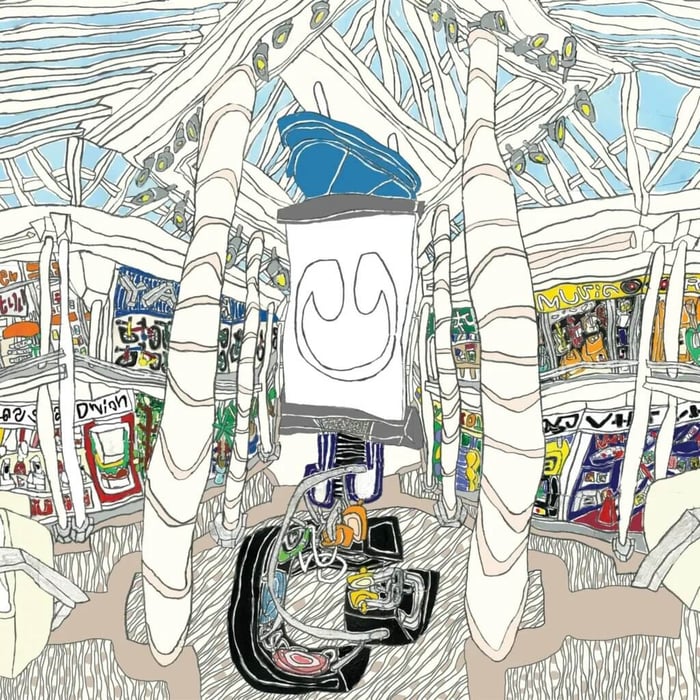
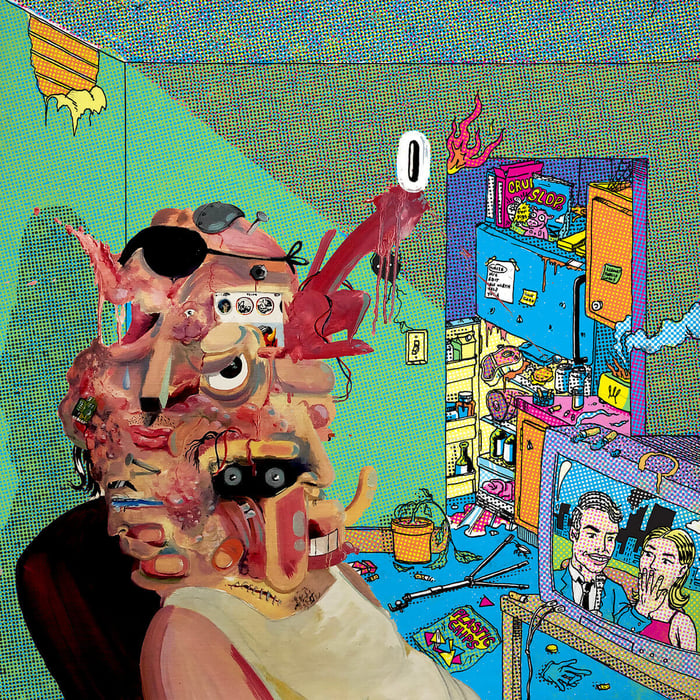
If this album’s cover is now burned into your brain, that’s not a bad thing to hang on a wall—same discomfort, less doomscrolling. You can shop favorite album cover posters at our store here: https://www.architeg-prints.com
 | DISCOUNTGET 30% OFF*Use code on your next order:
|
* This post may contain affiliate links, meaning we earn a commission if you make a purchase through these links, at no additional cost to you.