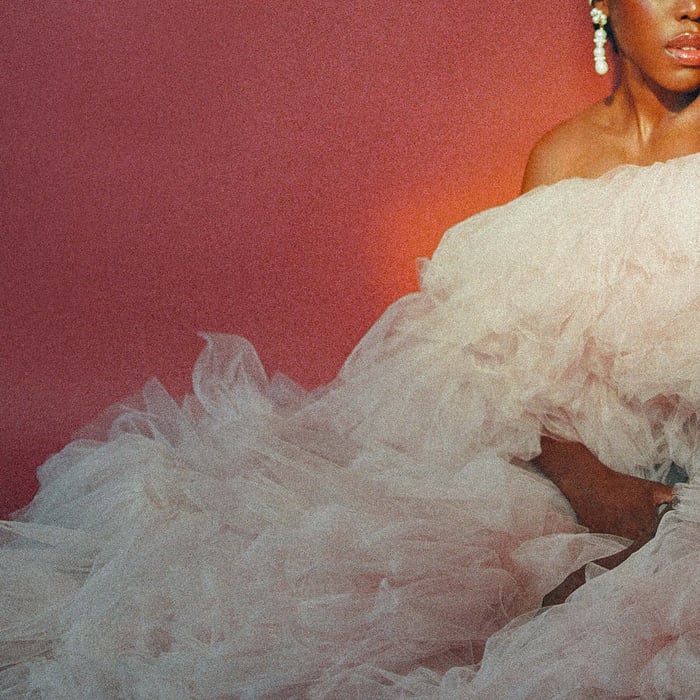
Good Intentions Review: Ego Ella May Turns Polite Pain Into a Problem


 See more Architeg Prints stories on Google.
Good Intentions Review: Ego Ella May Turns Polite Pain Into a Problem
Ego Ella May’s Good Intentions doesn’t “heal”—it points at the bruise and asks why you’re still smiling.
Start Here: This Album Doesn’t Want to Comfort You
Some records try to be a safe space. Good Intentions is not that. It’s more like getting cornered by your own thoughts in a quiet kitchen at 2 a.m.—not because the music is loud, but because the writing refuses to let you wriggle out.
And yeah, at first I thought the title was going to be ironic in a tidy, “look how clever I am” way. On second listen, it’s harsher than that: the album is basically arguing that good intentions are how people excuse the damage they didn’t feel like cleaning up.
“Potluck Baby”: The Language You Don’t Speak Still Haunts You
The album’s emotional bullseye lands around “Potluck Baby,” where a phone call turns into a gut punch. The moment Igbo comes through the line, the whole song tightens—because she can hear her own history and still can’t enter it. She tries to follow the words, can’t, and the anger doesn’t even pretend to be polite.
That’s the thing this track understands (and plenty of diaspora songs dodge): missing language isn’t some abstract sadness. It’s humiliation. It’s rage. It’s being stuck nodding along while people laugh around you, repeating the one phrase you know—“o dị mma,” I’m fine—because you’d rather fake fluency than admit you’re locked out.
What makes it worse is how the song refuses to pick a single villain. The blame floats between generations: the immigrant parents who assimilated, the environment that rewarded assimilation, and the kid left holding the bill. When she wonders who’s responsible for “what they were promised when they came,” it doesn’t sound like a gotcha. It sounds like somebody finally saying the quiet part: you can love your parents and still resent the choices that shaped you.
There’s also a physical memory buried in the track—warmth in the blood, heat on the shoulders—something that feels like the “before,” the place that exists in the body even when the mind can’t access it. Then she snaps back to “this red, white & blue,” and suddenly the whole song is about contradiction: green grass on top, chokehold underneath. If that feels like an overstatement, fine—but the song earns it by being specific instead of grand.
From General Anger to Names and Addresses
Here’s where Good Intentions separates itself from a lot of “conscious” records: it doesn’t keep the politics vague so everyone can clap. Compared to her earlier work (especially “How Long ‘Til We’re Home,” which wrestled with feeling too African for Britain and too British for Africa), the frustration here stops being atmospheric and starts being directed.
“We’re Not Free” is the clearest example. It goes straight at Keir Starmer’s government, and it doesn’t do that thing where an artist tosses a headline into a verse and calls it bravery. The line about “Tories out, but policies remain” is blunt because it’s supposed to be. And when she points at trans rights being “up for debate again,” the track isn’t trying to sound informed—it’s trying to sound fed up. That’s a difference a listener can hear.
Melo-Zed’s production helps the message land without turning it into a marching chant. There’s an acknowledgment of Starmer scrapping the Rwanda deportation scheme, but the gratitude gets immediately questioned: was it morality, or was it money? And when the song turns toward public spending—“The money’s spent / On what? No-one knows”—it doesn’t feel like a policy seminar. It feels like living in a house where the heat doesn’t work and being told the adults have it handled.
What surprised me is how the song refuses to pick a lane between spiritual retreat and political engagement. Part of her wants to step back—“It’s above me, it’s with God”—and tend to the earth, keep a “sovereign heart.” Then the still, small voice cuts through: you’re not free until everyone else is. The track holds both impulses at once and basically admits neither one fully saves you. That’s an arguable choice—some listeners will want a cleaner stance—but I think the indecision is the point. Real people don’t get to be ideologically tidy when they’re exhausted.
Love Songs That Don’t Trust Themselves
The love on Good Intentions is not romantic in the way playlists want. It’s anxious, conditional, and almost suspicious of its own happiness.
“Don’t Take My Lover Away” (produced by Alfa Mist) is written into a health scare, and you can hear that fear shaping the tenderness. She calls her husband “Venus as a boy,” traces his nose at night, talks about their lives intertwining until “I’m him & he is I.” It’s intimate in a way that feels lived-in, not performed.
And then she admits the ugly part: she knows the fear is irrational. She just can’t stop feeling it. That confession matters because it tells you what kind of narrator you’re dealing with—someone who can name the flaw while still being trapped inside it. If you’ve ever tried to “logic” your way out of dread and failed, this song will feel uncomfortably accurate.
Then “Tarot” flips the table. She gets a reading and hears the kind of sentence that can ruin a week: the reader says her partner isn’t the one. The song doesn’t become a melodrama; it becomes a spiral. “What am I supposed to do now? / Break your heart, and run?” is the question of someone who doesn’t want to be ruled by an outsider’s prediction but also can’t un-hear it.
There’s a flash of imagined fortune—green, money flowing—and Joni Mitchell’s “River” shows up in her mind (“Gonna make a lot of money / And I’m gonna quit this crazy scene”). TAVE and Beat Butcha give the track a soundscape that feels slightly off-center, like the floor is tilted. And the most human detail is that she tells herself to take it with a pinch of salt… while clearly not taking it with a pinch of salt.
Put “Don’t Take My Lover Away” and “Tarot” side by side and you get the album’s emotional borders:
- on one side, love begging for protection because it expects loss
- on the other, love doubting itself because someone drew a card
You could argue the tarot premise is silly. I kind of did at first. But the song isn’t asking you to believe in tarot—it’s showing how fragile certainty is when you’re already scared.
The Title Track: A Prayer That Doesn’t Pretend to Know the Ending
“Good Intentions” (the song) is May praying out loud, and it doesn’t feel staged. She asks for understanding and sincerity, wants her friends to know she’s a listening ear, and—importantly—she asks for her enemies to fall. That’s not “love and light.” That’s a real prayer, the kind people say when they’re done pretending they only want peace.
Her brother jumps in with “fire, bun dem all,” which is funny in the way family honesty is funny: somebody always says what you won’t say in public.
Then the song admits the truth underneath the whole record: she doesn’t know what’s coming. She’s not alone in not knowing. And instead of resolving that uncertainty, it shifts into a Buddhist metta chant—“May I be happy / May I be healthy / May I be safe / May I live life with ease”—and extends the same wish outward.
This is where the album’s spiritual vocabulary gets almost deliberately wide:
- Christian scripture energy on “We’re Not Free” (that still, small voice)
- metta chanting here
- tarot on “Tarot”
- dream visitation on “Hold On,” where someone with a clean soul appears needing a word they’ve never heard
- a plea to Mary on “Back to Sea”
The arguable part: some people will call this “eclectic spirituality.” I think it’s more blunt than that. It’s coping. It’s a drawer full of tools, and she grabs whatever might work because pretending one tradition fixes everything would be a lie. Still, I’m not totally sure every listener will buy the seamlessness—sometimes the transitions between spiritual languages feel too smooth, like she’s trying to make a single quilt out of fabrics that don’t naturally match. But even that slight mismatch feels honest: real life isn’t consistent.
“Footwork” and “What You Waiting For”: Permission to Stop Being Serious
After all the grief, anger, and fearful tenderness, “Footwork” shows up like a window cracked open.
It’s the loosest moment: 2 a.m., Detroit house blaring, someone passing a joint, a stranger across the room, and May letting herself be unguarded. She sings, “Tonight I’m Rick James / I’m high,” and it lands as a confession: she’s out of character. Not the woman doing deep internal audits like that’s protective gear.
The line “Beau said ‘come dance, the gods recommend’” is what cracks the album open. It’s absurdly simple advice—move your body—and it works because it undercuts the record’s heavier instincts. If you think dance tracks on introspective albums are cop-outs, you might roll your eyes here. I don’t. I think Good Intentions needs this scene so it doesn’t suffocate inside its own seriousness.
“What You Waiting For” hits a similar nerve but from a different angle: motivational, almost like she’s addressing herself in the mirror. In another life you’d be winning—that’s how you see it. And the hooky urgency (“If not now, when?”) sounds like the belief she had to summon to make this album at all.
The mild criticism: I do think these tracks risk sounding like “palette cleansers” if you’re listening casually. They work best when you hear them as self-defense—moments where she refuses to become only a vessel for pain.
“Sister”: The Album’s Hardest Conversation
Nothing here cuts deeper than “Sister,” because it’s not abstract. It’s a direct address to a woman stuck in a bad relationship.
The story details are ugly in their normalness: she fell for him at 25, and a decade later she’s repulsed but still there. He’s content doing nothing, presenting as impotent in the emotional sense—like he’s opted out of being a partner. She takes him back anyway. She perfects her public smile so nobody sees the mess. At night she cries and asks herself what she’s doing.
The chorus asks, “What you being a saint for?” and it doesn’t come off like blame. It comes off like somebody shaking you by the shoulders because whispering hasn’t worked. And the song doesn’t pretend leaving is easy—there are children involved, and she says outright she’d never reduce it to something simple. But she also refuses to let that become an excuse for staying trapped.
Then comes the generational curse angle: bloodshot eyes, third time this week; if she speaks, she sees her mother’s fate repeating in her own life. Even the father praying to break the curse can’t make it feel light—especially when the lyric lands on the word “easy,” weighted with the knowledge that it won’t be.
This is where Ego Ella May’s writing gets sharper than her debut—not because she suddenly learned politics or pain, but because she stopped generalizing. She’s naming the room, the face, the pattern. Good Intentions sounds like an artist who gave herself permission to be unhurried—and used the extra time to write harder.
Where I Landed (And What I Didn’t Expect to Feel)
I went into Good Intentions expecting a tasteful, contained jazz-adjacent record with some social commentary. What I got was a set of songs that keep arguing with each other: faith versus action, devotion versus doubt, inheritance versus chosen identity, dancing versus spiraling.
And I’ll admit I’m not 100% sure the album always sticks the landing when it stacks so many kinds of belief—scripture, metta, tarot, Marian prayer—into one emotional language. But I can’t call it confused. It sounds like someone trying everything because nothing is guaranteed to work.
If I’m picking personal standouts, the tracks that stay lodged are:
- “Don’t Take My Lover Away” (fear disguised as tenderness)
- “Potluck Baby” (language loss as a living wound)
- “Sister” (truth-telling without spectacle)
Conclusion
Good Intentions doesn’t posture as wisdom. It’s closer to a diary written in clear handwriting—so clear it’s almost rude. Ego Ella May isn’t smoothing anything over: not family history, not government hypocrisy, not love’s paranoia, not the way women inherit patterns they didn’t choose. If you want “comfort,” look elsewhere. If you want a record that tells the truth and lets the truth stay complicated, this one will sit with you.
Our verdict: People who like their soul-jazz flavored with real-life contradictions will actually love Good Intentions—especially listeners who’ve ever felt split between homes, or between belief systems, or between staying and leaving. If you need your politics tidy, your spirituality single-brand, and your love songs to promise everything will be fine, this album will annoy you in the exact way it intends to.
FAQ
- Is Good Intentions more personal or more political?
It’s both, and it refuses to separate them—“We’re Not Free” speaks outward while “Potluck Baby” and “Sister” hit where politics becomes private damage. - What’s the emotional core track?
“Potluck Baby” feels like the album’s exposed nerve: language loss, inherited choices, and the rage of realizing what you can’t get back. - Does the album lean into one spiritual tradition?
No. It pulls from Christian imagery, Buddhist metta chanting, tarot, dreams, and Marian prayer without treating any of them like a gimmick. - Are there any lighter moments?
“Footwork” and “What You Waiting For” are the pressure valves—dance floor energy that keeps the record from collapsing into pure heaviness. - What song hits hardest lyrically?
“Sister,” because it doesn’t romanticize struggle. It describes a relationship pattern with the kind of detail that makes it hard to look away.
If this album put a specific image in your head—cover art, a favorite lyric scene, that whole “2 a.m. house music” mood—you can always turn it into wall company. Shop your favorite album cover poster at our store: https://www.architeg-prints.com
 | DISCOUNTGET 30% OFF*Use code on your next order:
|
* This post may contain affiliate links, meaning we earn a commission if you make a purchase through these links, at no additional cost to you.