Underscores U Review: a Love Text So Addictive It’s Annoying (In a Good Way)


 See more Architeg Prints stories on Google.
Underscores U Review: a Love Text So Addictive It’s Annoying (In a Good Way)
Underscores U turns craving into a pop engine—slick, messy, and weirdly intimate. This underscores U review unpacks what it’s really chasing.
Let’s be honest: this album is a thirst text with a perfect haircut
There are pop records about desire, and then there are pop records that behave like desire—looping, interrupting themselves, doubling back, acting like they didn’t care and then absolutely caring. Underscores U does the second thing. Even the title pulls that trick: “U” is shorthand for underscores, sure, but it’s also the little dodge people use when they don’t want to say someone’s name out loud. It’s cute, it’s evasive, it’s efficient. And it shows up constantly here like a nervous tick.
This is the part where I admit I hesitated at first. I went in expecting a bigger conceptual maze—the kind of elaborate framing that can make an album feel like a whole town with its own weather. Instead, U feels intentionally narrower: a concise psychodrama where “I” and “U” get reduced to symbols, like the album is trying to do algebra with feelings. Early on, the “I” basically tells on itself:
get the thing, immediately regret the thing, immediately want the thing again.That’s the capsule. That’s the loop.
And I’ll say it plainly: the decision to ditch the heavy framework and go straight for pop immediacy isn’t “simpler.” It’s more predatory—in the best way. This album wants to be replayed the way a bad idea wants to be repeated.
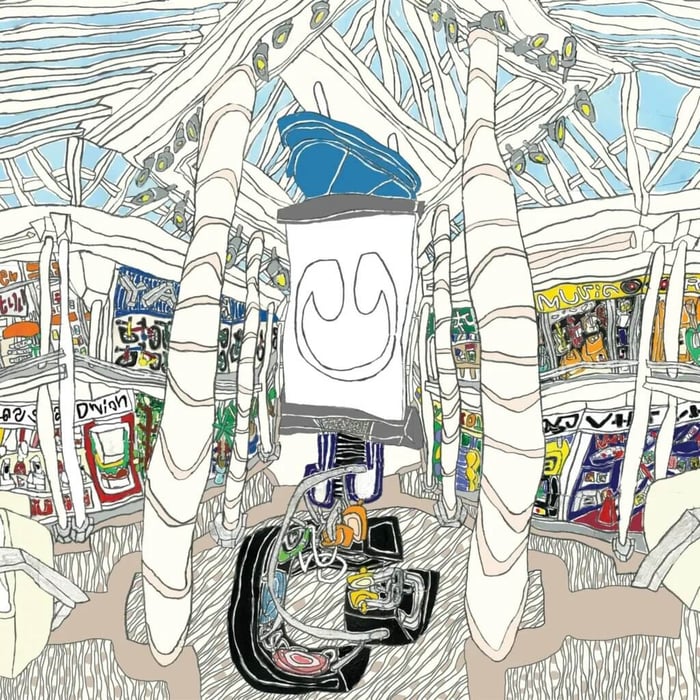
1. Tell Me (U Want It): the opener that acts like it’s already mid-spiral
It starts with a blunt little greeting—“Hey!”—like the album just grabbed your sleeve. Then there’s this flicker of sound, and a chopped-up voice landing the thesis: “It’s U.” Not “it’s me.” Not “it’s us.” It’s the object, named like a target.
The beat staggers and wobbles, and the breathing is so conspicuously referential it practically winks—like the track’s dragging a classic pop memory into a darker room. The protagonist’s behavior is already becoming a problem for people nearby; an “Amanda” warns her she’ll regret this later, and the warning lands with the force of a sticky note on a speeding car.
Here’s my arguable take: the song is basically dubstep cosplay, but that’s exactly why it works. It “zips” the way lust does—hyper-focused, then suddenly chaotic. And the fake-out ending that restarts with a laugh? That’s not just a production trick. That’s the album telling you it’s going to keep coming back, even when it “ends.” The outro turns gnarly enough to show the teeth under the gloss. Desperation, but make it danceable.
2. Music: when the album admits it’s addicted to the feeling of a perfect song
The transition into ‘Music’ is like watching someone swap their chaotic group chat persona for their private-note-app self. There’s a line about an iPod stuck on replay, which feels important—this isn’t shiny future-tech romance; it’s old-device obsession, the kind that gets trapped in a loop because looping is the point.
The track treats the fantasy of “the perfect tune” like a stand-in for a relationship. Not in a grand poetic way—more like: this is the only language that doesn’t betray me. And yeah, it tiptoes near therapy-speak, then flinches away from it, like self-awareness is fine as long as it doesn’t become a lecture.
Arguable claim: this is the album’s most revealing track because it’s the least plotty. It doesn’t need a narrative twist. It just needs to recreate the sensation of sound blasting out of tiny headphones and suddenly making your whole life feel editable. When the vocal stretches into that muuusiic moment, it’s not cute—it’s the album showing you how “I” turns into pleasure when it stops pretending it’s in control.
3. Hollywood Forever: fame as flirtation, with the edges intentionally left unburnt
‘Hollywood Forever’ has an obvious point of comparison if you live in the same musical neighborhood—hyperpop-adjacent acts, big neon hooks, the temptation to scorch everything until it’s crispy. And yet: underscores resists frying the edges.
That restraint is the actual statement. Even when the lyrics toss off something like “the fury in your eyes, staring at my broken electronics,” the production refuses to turn it into a distortion meme. The bounce stays sleek, controlled, impeccably managed—like the song is wearing sunglasses indoors and pulling it off.
Arguable claim: the control is the flex, not the drop. The inevitable drop does hit, but it hits like a practiced move, not an accident. And when she asks, “Don’t you wanna come be famous with me?” she doesn’t sound delusional. She sounds like she already checked the mirror and liked what she saw.
4. The Peace: longing mapped by cigarettes and geography
This is where the album strips down and suddenly gets bold about it. ‘The Peace’ reduces the arrangement to tightly harmonized vocals and a kind of negative space that still feels hot. It doesn’t drift into ambient prettiness; it stays pointed.
We get this travelogue of desire—Brooklyn to Coachella to Europe—except the real journey is how the voice changes as she moves through it. There’s a grunt before the line about being unable to escape the vibe while sleeping on a couch, and that grunt does more than a paragraph of explanation could. It’s the sound of someone trying to act casual while being absolutely consumed.
Arguable statement: this track proves the album’s “escapism” isn’t about hiding—it’s about compressing emotion until it sparks. The intimacy here almost exists outside the music, like it’s happening in the air between phrases. Then it “pops” back into hook form anyway, because this record can’t help itself.
5. Innuendo (I Get U): the not-single that behaves like the album’s smug secret
In a just world, this one would be everywhere in summer playlists, rattling clubs and car speakers. The fact it isn’t even framed like a marquee moment is either confidence or mischief. I lean mischief.
It bops, glides, and glitches in a way that feels more satisfying than the opener, mostly because it’s more honest about what it’s doing. The tension from ‘The Peace’ gets shoved into an explicitly sensual direction. When the song slinks low, you can practically see it bracing for the dance break—and when it finally opens up, it’s the most euphoric pivot so far.
Arguable claim: this is the album’s clearest “want vs. get” bridge. It closes the gap between “U” and “I” the way lips closing can reveal more than words ever could. It’s flirtation as engineering.
6. Lovefield: the ballad that strains on purpose (and yeah, that’s the point)
‘Lovefield’ opens like it’s going to give you a calm, sincere heart-to-heart. Then it immediately can’t resist going maximalist anyway—because of course it can’t. This is the record’s most obvious reach for catharsis, and I’ll be mildly critical here: it can feel a bit forced, like it’s trying to earn its emotional climax on a tight schedule.
But the thing is… the strain is exactly what makes it land. It’s reaching for romantic fantasy—winter soon, “Twilight” pale, getting a license, going to Florida—then cutting back to blunt sincerity:
It hurts for me to wait on U / I bet you’re waiting on me too.The push-pull is the hook.
Arguable statement: this track dodges “obligatory ballad” status because the progression is weird enough to feel lived-in, not standardized. It also builds directly off ‘The Peace’—not musically in a copy-paste way, but emotionally, like it’s taking that smoky longing and trying to turn it into an actual sentence.
On second listen, I stopped hearing it as the “soft moment” and started hearing it as the album’s most desperate maneuver: trying to make a fantasy behave like a plan.
7. Do It: late-2000s pop worship, with texture instead of cheap nostalgia
‘Do It’ is pure sugar rush in the chorus—the kind that makes you involuntarily make a face like, ugh, fine, you got me. It nods hard to late-2000s pop, but it keeps a little snark in its back pocket so it doesn’t come off as cosplay.
I genuinely expected this one to wear out fast. By the time the album actually landed, I thought the initial thrill would fade. It didn’t. If anything, I underestimated how replay-proof it is—because the maximalism here has texture, not just volume. It’s not bombast for its own sake; it’s detail stacked like glitter that refuses to vacuum up.
There’s a pre-chorus line that frames the whole album’s addiction:
everything’s on the line; “you” could ruin everything or make “me” somebody new.That mutability is the thrill—desire as a renovation project.
Arguable claim: this is the album’s best straight-up pop hook, and it wins because it doesn’t apologize for being fun. After proving she can give “the real thing” emotionally, the album earns the right to shrug and dance anyway.
8. Bodyfeeling: the guitars arrive like a preemptive rebuttal
Near the end, guitars step forward like the album is anticipating the critique: Where’s the “band” feeling? Where’s the body in all this digital obsession? And it’s a smart choice, because nothing says “physical” like a groove that sounds like people in a room pushing air.
The track isn’t just “rock influence” pasted on; it’s a reminder that the whole record has been about visceral reaction all along. The singer circles around bodily sensation, and the groove hints at something deeper than at least one side of the relationship wants to admit.
Arguable statement: this is the album admitting it has a spine, not just a sparkle. It suggests a foundation under the emotional theatrics—like, okay, this isn’t only fantasy; it’s also chemistry you can’t mute.
There’s also a sly generational wink in the air here, like: who said younger pop can’t do existential flirtation with the lights on?
9. Wish U Well: anticlimax as the only honest ending
This song accidentally sent me down a rabbit hole—yes, including a random internet thread titled “Can I, as a Christian, listen to Post Malone?”—which is funny, but also sort of perfect. ‘Wish U Well’ flirts with bro-country aesthetics in a way that feels suspiciously closer to earlier underscores energy, like the album is letting its previous self peek through the blinds.
If that sounds like a mismatch, it kind of is. And I’m not fully sure whether the genre dabble is meant to feel comforting or ironic. But thematically, it does the job: it brings the story to resolution without pretending resolution is satisfying.
The ending is deliberately anticlimactic—
This ain’t what I had imagined / That’s just how it happened.No grand speech, no cinematic closure. And yet she still insists on feeling the full weight of it—not “closure,” but the gravity of losing you.
Arguable claim: the lightness is the twist. By the time the song floats into that airy space, you can imagine the persona outgrowing the fixation on “U.” Not because she “healed,” but because the world got bigger than the obsession.
What U is really doing: turning language into a loop you can’t exit
The funniest contradiction in underscores U is that it’s both reductive and strangely precise. It simplifies people into pronouns—I and U—then uses that simplicity to show how complicated obsession actually is. Every time “U” appears, it’s like the album is tapping the same bruise to see if it still hurts.
And it does. Repeatedly.
On my first pass, I thought the album’s tight focus might make it feel smaller. I don’t think that anymore. The “escape” here isn’t leaving reality—it’s leaving dignity for three minutes at a time and calling it pop.
Conclusion
U doesn’t try to be a universe; it tries to be a reflex. It’s the sound of wanting something, getting it, regretting it, and immediately wanting it again—until the wanting becomes the only stable part of the story.
Our verdict: People who like pop that’s glossy and emotionally unflattering will latch onto this. If you enjoy hooks that act like bad decisions with good lighting, you’ll have a great time. If you need your albums to sit still, provide clean closure, and stop texting “U” like it’s a personality, this one’s going to feel like a sugar crash with extra punctuation.
FAQ
- Is this underscores U review saying the album is a breakup record?
Not exactly. It’s more like a record about the loop—wanting, getting, recoiling, repeating—whether or not the relationship technically ends. - Which track has the strongest pop payoff?
‘Do It’ has the chorus that hits fastest and sticks longest. It’s loud, but it isn’t empty. - What’s the most surprising moment on the album?
The way ‘The Peace’ gets intense without getting huge. It proves the album can grip you without throwing confetti. - Does the album ever stumble?
‘Lovefield’ strains for catharsis a bit—on purpose, I think—but the reach is still part of why it works. - Where should I start if I’m new to underscores?
Start at ‘Tell Me (U Want It)’ for the thesis, then jump to ‘Innuendo (I Get U)’ to hear the album smirk.
If you want a physical reminder of this album’s glossy little spiral, consider grabbing a favorite album cover poster for your wall at our store: https://www.architeg-prints.com. It suits music that refuses to stay in your headphones.
 | DISCOUNTGET 30% OFF*Use code on your next order:
|
* This post may contain affiliate links, meaning we earn a commission if you make a purchase through these links, at no additional cost to you.