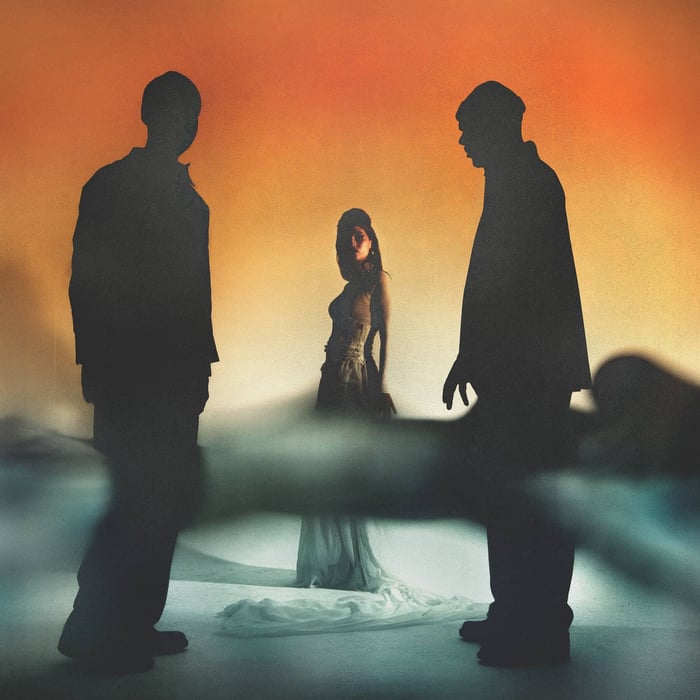
Selah Sue’s Movin Album Review: Jazz Guys, Big Feelings, No Exit


 See more Architeg Prints stories on Google.
Selah Sue’s Movin Album Review: Jazz Guys, Big Feelings, No Exit
Selah Sue’s Movin album doesn’t “heal” neatly—it rehearses survival in real time, with jazz drums that refuse to behave and lyrics that don’t dress up pain.
You can tell within minutes when a record is trying to sell you closure. This one doesn’t. The Movin album sounds like someone choosing to stay in the room with their own thoughts—no matter how awkward the silence gets.
How this album even happens (and why that matters)
Here’s the first thing I clocked: this project doesn’t feel like a normal “career move.” It feels like an interruption that turned into a plan.
Stéphane Galland—Belgian jazz drummer, cofounder of Aka Moon, and a longtime live drummer for Ibrahim Maalouf—gets carte blanche for the 2025 Jazz Middelheim festival in Antwerp. He pulls in his son Elvin, a classically trained pianist who pivoted into production and has credits with Damso and Manu Katché. So far, that’s a very “serious musicians doing serious musician things” setup.
Then they need a vocalist. Selah Sue gets nudged to go by her husband. And the part that changes the whole vibe: she almost doesn’t show because she hasn’t been well for months. That detail isn’t PR seasoning—it’s basically the album’s engine.
She ends up in Elvin’s living room listening to instrumentals they’d been stockpiling during lockdown, and something clicks. The early demos stick. The original plan is an EP, but it swells into Movin’, recorded over a few months across studios in Brussels and at her home near Leuven.
Every track gets mixed by Russell Elevado—the analog-leaning engineer tied to D’Angelo’s Voodoo and Black Messiah, Erykah Badu’s Mama’s Gun, and Jon Batiste’s We Are. And if you know those records, you know what that implies: warmth, space, grain, and a kind of “human air” that digital cleanup usually deletes.
Selah Sue has built past albums with rotating producer rosters. This time, she’s basically betting on one tight unit. To me, that’s not a logistics choice—it’s her picking a smaller room on purpose, because a smaller room forces you to tell the truth.
The Gallands’ whole trick: refusing to be “pop professional”
The next beat is where the record shows its teeth: Stéphane Galland’s drums don’t “behave.”
On “Another Way,” the kick and snare sit behind the beat in a way pop radio would try to correct. But that drag isn’t laziness—it’s leverage. It lets Federico Pecoraro’s bass guitar carry the downbeat weight, so the groove feels like it’s being held up from underneath instead of pushed forward from the top. That’s an arguable choice, sure, but I think it’s the album’s first real statement: momentum is optional; gravity isn’t.
Elvin’s Rhodes hangs in the midrange like smoke—never bright, never trying to “win” the song. And the interesting part is how often it stays a half-step behind Selah Sue’s melody, so the harmony feels implied instead of underlined. It’s like the chords are being suggested politely, which is a ridiculous way to treat pain lyrics—and yet it works.
Elevado’s mix is warm and wide, and I mean wide in the old-school way: you can feel space between instruments where a more conventional session would shove in reverb, compression, or some glossy smear to make it “professional.” Here, the rooms leak through. You hear the bleed. The album keeps reminding you it was performed, not assembled.
On “Break Me Free,” the drums tighten toward trip-hop: the hi-hat clamps shut, the groove pulls back, and Selah Sue strains forward against it. That push-pull is the whole point. It’s not a “nice pocket.” It’s a pocket that keeps trying to swallow her.
Then “Ready to Play” snaps into a more frenetic pocket—A-flat minor, but weirdly playful about it. Stéphane shifts to a ride cymbal pattern with jazz comping underneath, dropping rhythmic curveballs that feel like someone changing the rules mid-game just to see if you’re still awake.
If you came here for clean pop drum programming, you’re in the wrong building. The Gallands are making the time feel lived in, and that choice is what makes Selah Sue sound less like a frontperson and more like a person.
The depression narrative isn’t vague—it’s historical
Now the part that makes the record harder to shrug off: the depression isn’t written like an aesthetic. It’s written like a timeline.
Selah Sue started antidepressants at eighteen. Both sets of her grandparents were psychiatric patients. In 2021, she stopped medication, tried microdosing psilocybin, and by mid-2022 she publicly said she was “going through hell.” After six months off the pills, the depression returned. She went back on.
That arc matters because the album doesn’t treat depression as a single bad season. It treats it like a returning weather pattern.
“Another Way” comes from one of those collapses, and the writing doesn’t bother pretending to be poetic about it. She aims the words at the illness like it’s a person standing in the doorway:
“You push me down when all I wanna do is erase you
You break my soul and leave me lost in what you created”
then the plea: trusting someone—anyone—“to find another way to make it easy… to make it right… to make a life good.”
It’s blunt enough that on my first listen I thought, Is this too plain? But on second listen, that plainness started sounding like the whole point. When you’re actually in it, you don’t write ornate metaphors—you repeat the one sentence that still feels usable.
“Break Me Free” pushes further inward: “Voices say I’m worthless, tearing at my brain / Lost inside this circus, feeling only shame.” It nails that specific disorientation where your thoughts stop being “you” and become hecklers. I’m not totally sure everyone will want to sit with that in headphones—sometimes it’s a little too good at recreating the spiral—but that’s also why it lands.
And then “Into Forever” shows up as the scariest moment on the record, not because it’s loud, but because it says the quiet part without blinking: finding a way to die while still alive, wanting to fade away, asking for “infinity” like it’s an exit sign.
There’s no cinematic build. No inspirational pivot. Just the thought, stated. That’s gutsy, and it’s also uncomfortable in the way real admissions are uncomfortable.
The second half turns the lights on—sort of
After you’ve sat in that first-half heaviness, the record shifts temperature. Not into “happy,” exactly—more like functional. Like someone remembered they still have errands.
“Ready to Play” reframes survival as a game you can stop competing in. It asks, “how you gonna win it when you hold on too tight?” and then basically shrugs at the whole contest: step out of the race, flow into space, it’s all just a game. The vocabulary shifts from clinical to physical—freedom, toplessness, diamonds on a dress, highs—but it doesn’t feel like shallow hedonism. It feels like someone testing out sensations again, like touching objects to prove they’re real.
A reasonable listener could call that tonal switch inconsistent. I think it’s more honest than consistent. Depression doesn’t fade out with a neat crossfade; it loosens its grip, then tightens it again when you least expect it.
“You & Me” is a love song built on the simplest skeleton imaginable: “I found a way to get lost in you / I found another day to make it through.” That repeated “I found a way” phrasing comes back across verses, and it works because it sounds like someone practicing belief. Like repeating a phrase out loud until it stops sounding like a lie.
“Guiding You” aims outward—toward a child, almost certainly one of her sons (Seth or Mingus). The lines are direct: she only wants the best for you; when you feel lost, I’ll be right in front of you; time spins fast; no one loves you more than I do.
And this is where the string quartet enters for the first time: Sofia Capraro on alto violin and Micaela Ferrão on cello are named, and the arrangement stays low under the vocal. It adds body without trying to steal focus. It might be the gentlest thing on the album—and arguably the bravest, because tenderness is harder to sing convincingly than anguish.
“Movin’” and “In a Minute” refuse the usual recovery storyline
From here, the album gets clearer about its real argument: it’s not about getting “past” pain. It’s about moving with it.
The title track “Movin’” sits at the record’s center and says it plainly: “I’m moving with the pain until it’s over, over.” That “with” does so much work. It’s the opposite of a victory lap.
She sings, “I always walk the thin line between the lost and free,” and later repeats the structure again, “between the fake and real.” The doubling feels like she’s testing the sentence twice to see which version is truer—or maybe admitting they’re the same line on different days.
“In a Minute” runs the same idea faster, like a nervous laugh you can’t quite stop: falling apart, rising again; breaking a heart, loving again. The songs don’t promise a finish line. They basically look you in the face and say: the cycle is still a cycle, even when you learn its pattern.
I’ll admit, there’s a stretch here where I kept waiting for one more left turn—some melodic risk, some structural surprise that would shove a track into a new shape. It doesn’t always come. But that might be the album’s stubbornness: it won’t dramatize what already feels dramatic.
The closer comforts someone else—and that’s the tell
By the time “Nothing to Fear” closes the album, the strings return, and the tone turns reassuring: lighting someone up, guiding them, telling them there’s nothing to fear.
But the important detail is who that reassurance is for. It’s directed outward, at someone else. And that’s the album’s sly reveal: the person offering comfort and the person who needed it are the same woman—just on different days.
That’s not “self-help.” That’s a document of split-screen living.
The album’s limitations are real—and kind of the point
It would’ve been easy for Movin’ to be a small, forgettable record: 36 minutes, no features, no obvious singles, built around a Belgian singer and two jazz musicians most American listeners won’t have context for.
And honestly, the lyrics do circle a familiar set of images—haze, waves, flames, darkness turning into light. On a first pass, a few songs share enough harmonic DNA that they blur together a bit. I’m not saying it becomes mush, but there’s a moment where you might think, Wait, am I still on the same track? That’s my mild gripe.
Also: Selah Sue’s writing is plainer here than it was on Persona, where the voice-dialogue concept gave her more structural variety. Here, directness is clearly the point—but once or twice, that choice costs her a song that could’ve swerved somewhere unexpected.
And yet the band holds it together. Stéphane Galland plays with an economy and patience most pop session drummers would never tolerate. The grooves don’t chase you; they wait you out.
What surprised me most is how the album ends up sounding like improvement you can actually hear—not as a “glow up,” but as a person getting better by singing into a room where two other people are paying attention.
Personal bottom line (and yes, I changed my mind once)
At first I thought the album was going to be “jazz guys soften a pop singer.” Then I realized it’s the opposite: Selah Sue’s blunt emotional framing forces the jazz instincts to stop showing off and start listening. The restraint is the flex.
Favorite tracks (the ones that don’t let go)
- “Another Way”
- “Guiding You”
- “Into Forever”
Conclusion
Movin’ doesn’t sell a cure, and it doesn’t cosplay as a breakdown either. It sounds like Selah Sue choosing a tight circle—Stéphane and Elvin Galland, Federico Pecoraro’s bass, Russell Elevado’s warm analog space—and using that circle to tell the truth repeatedly until it starts to hold.
Our verdict: People who like their soul music with messy timing, real silence, and lyrics that don’t flinch will actually like this album. People who need big hooks, obvious singles, or a clean “I’m healed now” ending will get impatient and start checking the tracklist like it owes them rent.
FAQ
- Is the Movin album more pop or more jazz?
It leans pop in vocal focus, but the drums and harmony choices are jazz-minded enough to keep it from behaving like standard pop. - Does the album tell a clear story about mental health?
Yes, and it’s unusually specific: medication history, a stop-and-return cycle, and lyrics that address the illness directly rather than vaguely. - What’s the biggest sonic signature on Movin?
The “behind the beat” drum feel and the smoky Rhodes chords that suggest harmony instead of spelling it out. - Are there any features or big guest moments?
No features. The most “guest” energy comes from the string quartet that enters later and stays intentionally understated. - What if I found some songs blur together on first listen?
That can happen—the harmonic palette repeats. A second listen helps, especially if you focus on how the drums change shape track to track.
If this album put a specific image in your head—cover art, a lyric line, that feeling of “moving with the pain”—a poster of your favorite album cover isn’t a bad way to keep the spell around. You can browse options at our store: https://www.architeg-prints.com
 | DISCOUNTGET 30% OFF*Use code on your next order:
|
* This post may contain affiliate links, meaning we earn a commission if you make a purchase through these links, at no additional cost to you.