MT Jones Joy Review: “Joy” Is a Calm Flex Disguised as Romance


 See more Architeg Prints stories on Google.
MT Jones Joy Review: “Joy” Is a Calm Flex Disguised as Romance
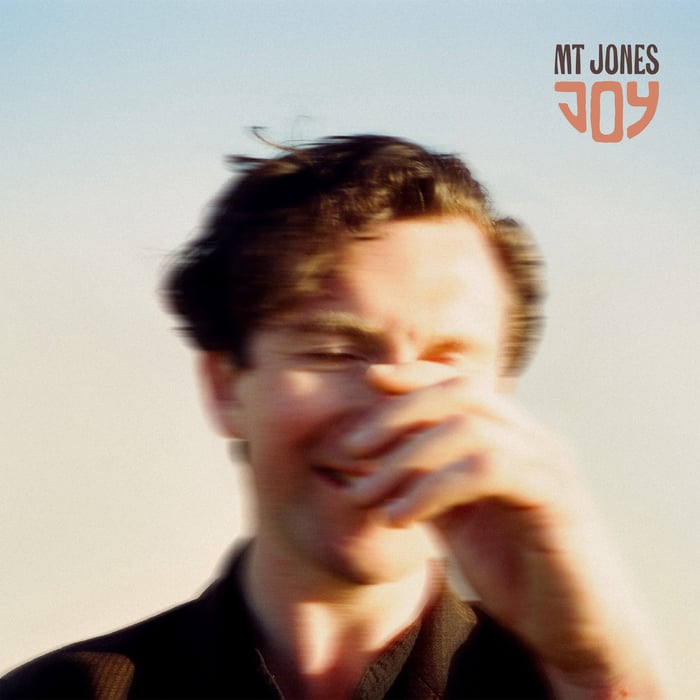
MT Jones Joy sounds like a debut that’s already learned restraint—low-slung grooves, lived-in soul, and just enough regret to keep the shine honest.
A record that smiles… without showing its teeth
Some albums try to impress you. Joy mostly tries to sit next to you on the couch and win by not making a big deal about itself—which, frankly, is a power move.
MT Jones doesn’t sing like someone begging for attention. He sings like someone who’s spent years learning exactly when not to reach for the spotlight, and only recently decided he’s allowed to take it.
The backstory you can actually hear in the choices
Here’s what’s obvious the moment the songs start stacking up: this is sideman brain turned into a frontman album. Jones spent his twenties playing behind other people—bass, keys, gigging wherever the work was. You can practically hear the muscle memory: the instinct to keep parts in their lane, to leave air for a vocal, to make the groove do the heavy lifting instead of the ego.
He did the proper training route too—classically trained by eighteen, then LIPA in Liverpool, then London chasing the “write for a living” idea until the math stopped mathing. The detail that sticks with me isn’t glamorous: weekend cover gigs to keep a London flat he could barely afford. That’s not mythology; that’s rent.
Then he ends up back in Liverpool, lockdown hits, and he’s recording songs inside the house he grew up in. Those songs—after nine singles worth of runway—become Joy, his debut album, produced entirely by Jonathan Quarmby. And yeah, that “entirely” matters, because this record sounds like one set of ears kept it disciplined.
Production that refuses to shout (and that’s the point)
Moving from the life story into the sound is easy because the sound is basically the life story: careful, economical, and allergic to showing off.
Quarmby’s production leans hard into live instrumentation—piano, bass, drums, and horns that pop in like punctuation rather than headlines. Nothing is trying to be the main character for long. The arrangements sit low, like they’re intentionally staying out of the way of Jones’s voice. Tempos hover in a pretty tight range too; the album doesn’t sprint, doesn’t really crash, doesn’t yank you around for drama.
At first I thought that narrow tempo lane might make the middle blur. On second listen, I realized that’s part of the trick: the record isn’t chasing variety, it’s chasing control. It wants you to notice small differences—how a groove leans, how a chord lands, how long a note hangs—rather than handing you a new costume change every track.
The influences are right there, not even hiding: Motown and Stax fingerprints without the wax-museum cosplay. Jones has obvious north stars in Stevie Wonder, Ray Charles, and Donny Hathaway energy—big soul songwriting, melodic clarity, emotional directness. But it doesn’t tip into pastiche because the recording stays clean, modern enough, and weirdly unfussy.
A lot of these tracks feel like they were recorded with musicians who trusted the take. Not “perfect,” not sterile—more like, “yeah, that one had the right feel, don’t ruin it.”
“Tastes Like You” and the art of leaving space
This is where the sideman instinct pays off. “Tastes Like You” pushes a springy uptempo groove, but it doesn’t overdecorate. The kit stays spare, the pocket stays confident, and Jones slides into falsetto like he’s stepping onto a moving walkway—effortless, not athletic.
The important part is what isn’t there: no big stack of distractions fighting for attention. That restraint suits him. His voice is a smooth, full-bodied tenor with an easy upper range, and he uses that range like a storyteller uses pacing. When the arrangement leaves a gap, he fills it. When it doesn’t, he doesn’t force it.
That’s a grown-up decision, and it’s all over MT Jones Joy.
The love songs circle one emotional address on purpose
Most of Joy lives in a pretty consistent romantic zone—devotional, grateful, sometimes lightly confused. You can practically map it:
- “I Don’t Understand” stares at the absurdity of falling in love when life was fine.
- “Gentle Reminder” promises return routes like a travel itinerary—bus, bike, plane, train.
- “On Your Own” frames love as repair work: she’s fixing him up like brand new.
- “Nothing I Can’t Do” is the classic “with you beside me, doors open” pledge.
- “Her Name Is Joy” turns her into seasonal light—she walks in and the room becomes spring.
On paper, yeah, it overlaps. A weaker singer would absolutely lose me by the fifth or sixth song that’s basically “you’re great and I’m grateful and also stunned.” And I’ll admit: I kept waiting for the record to trip over its own sweetness.
But Jones doesn’t blow it, mainly because he sells conviction without overselling it. He doesn’t sound like he’s trying to convince you; he sounds like he’s reminding himself. That subtle difference keeps the romance tracks from turning into Hallmark fog.
Quarmby helps by sneaking in small production wrinkles that change the temperature without changing the thermostat. The uptempo bounce in “Tastes Like You” feels different from the warm two-step underneath “Changes Like the Weather.” It’s not variety in the loud obvious way—it’s variety in the “different lighting in the same room” way.
And the lyrics keep shifting the situation even when the emotion stays steady: one moment he’s selling his car to buy her pearls, another he’s counting the hours until the sun goes down, another he’s dancing like nobody’s watching. Same feeling, different angles. The album gets away with it more often than it should because the melodies are sturdy enough to carry that repetition.
When the album stops flirting, it gets a spine
Here’s the blunt truth: Joy becomes more interesting the moment it stops being polite about love.
“So Lost” drops the romance and puts Jones somewhere emotionally claustrophobic—a town that’s “too forgiving,” money changing shape (pennies to pounds), waking up but barely living. That’s the first time the album feels like it’s looking outward instead of inward. And that line—“I’m not that kid in Neverland”—lands because it’s specific in a way the devotionals usually aren’t. It’s a grown person saying, I’ve outgrown this place, and I’m mad at myself for still being here.
That’s not just mood. That’s plot.
Then “Easy” takes a completely different risk: an ex, but without the dramatic revenge framing. No bitterness. Just memory. Getting messed up in the grass, wondering if he’d still call her “babe,” hoping she’s taking it easy. The detail about “three sugars in her cup” is the kind of throwaway specificity that makes a song feel lived-in instead of written. It’s not a poetic flex; it’s a real human memory, the kind you don’t announce—you just accidentally admit it.
Both tracks prove he can write past the devotional mode when the subject pushes him somewhere less comfortable. Honestly, I’m not totally sure he wants to live in that discomfort yet, but when he visits it, the record sharpens.
“Why I Cry” wins because it stacks regret like evidence
The best song here is “Why I Cry,” and it doesn’t win by being the loudest or the saddest. It wins by accumulating meaning until the groove feels inevitable.
Jones takes one emotion—regret over losing someone—and keeps building it with lines that add specific failures instead of vague sadness. The repeated “When I had you…” phrasing works because each entry actually changes the picture:
- taking life for granted
- love being all around and not noticing
- never thinking he’d have to lay it down
It’s not just “I miss you.” It’s “I built this loss myself, brick by brick.” When he calls it his Waterloo, the scale finally clicks—not as melodrama, but as the moment he realized he’d already lost.
And the groove earns its weight. It doesn’t just decorate the regret; it drags it forward. The hook rides on top of that momentum without needing to explain itself. That’s how you write a soul song that isn’t cosplay: you make the rhythm do the persuading.
“You Don’t Love Me Now” is self-incrimination dressed as smoothness
“You Don’t Love Me Now” hits the same emotional territory from the opposite direction. Instead of looking back with clarity, it’s watching things fall apart in real time and realizing you weren’t paying attention.
The phone is dead. Inspiration ran dry. He didn’t even notice the weather changing—and now she’s “hiding in the rain.” Those details don’t feel like random poetic props; they feel like a person building a case against himself.
There’s a line buried later—“I can blissfully revise priorities to beg your pardon”—and it’s such a strange, almost bureaucratic sentence that it should yank you out of the song. Somehow it doesn’t. He tucks it into the third verse like he knows it’s the kind of thing you say when you waited too long to learn what mattered. It sounds like a man trying to apologize using the same brain that got him in trouble: overthinking, reorganizing, arriving late.
That’s the record at its most human.
“Changes Like the Weather” works because it describes a person, not a vibe
A lot of the romantic cuts ask you to feel what Jones feels. “Changes Like the Weather” actually earns its spot by giving him a character to describe instead of a feeling to announce.
His partner blows hot and cold—calls him up, has him running home, then says she wants to be alone. He trusts her and doubts her, and he can’t live without her. It’s contradiction, but not the vague “love is complicated” kind. It’s specific behavior, specific whiplash.
The warm shuffle underneath gives him room to ride that push-pull without overselling it. And that’s key: the track doesn’t beg you to empathize. It just lays out the cycle and lets you recognize it, maybe uncomfortably.
If I have one mild complaint about Joy, it’s this: sometimes the carefulness turns into caution. A few more moments of real mess—musically or emotionally—would’ve made the album bite harder. But maybe that’s the point. Maybe Jones isn’t trying to bite yet. He’s trying to prove he can hold a song together from the front, the same way he used to from the side.
So what is “Joy” actually doing?
It’s doing something sneakier than “here are my love songs.” MT Jones Joy is basically a restraint clinic disguised as sweetness.
This is the work of a musician who learned, for years, how to support other people’s songs—when to tuck under a vocal, when to leave space, when to trust the groove—and then realized he’s got plenty of his own. The voice is real. The production is careful and well-judged. And the album’s best moments happen when it stops being purely devotional and lets regret, restlessness, and contradiction scratch the surface.
If the next record pushes into less comfortable territory more often, it could hit harder. This one already makes a convincing case that he belongs at the front of the stage—even if he’s still arranging his confidence neatly before he wears it out in public.
Conclusion
Joy doesn’t chase spectacle; it wins by control. The romance is deliberate, the grooves are patient, and the best tracks prove MT Jones can write beyond devotion when he lets real friction in.
Our verdict: People who like soul that stays classy, melodic, and quietly detailed will actually love this—especially if you enjoy hearing a singer not over-sing. If you need chaos, big tempo swings, or drama on every chorus, you’ll get bored and start checking your phone like it personally betrayed you.
FAQ
- What is the core sound of MT Jones Joy?
Live-instrument soul with clean, restrained production—piano, bass, drums, and occasional horn accents, built to spotlight the vocal. - Does the album lean more upbeat or slow?
The tempos sit in a fairly narrow band; even the brighter songs feel controlled rather than explosive. - Which song hits hardest emotionally?
“Why I Cry,” because it stacks specific regrets over a groove that doesn’t let the feeling stay abstract. - Are all the songs about romance?
Mostly, yes—but tracks like “So Lost” and “Easy” step outside the devotional lane and give the album more backbone. - What’s the one thing that could’ve made the album stronger?
A few more moments of discomfort—either in subject matter or musical risk—would’ve added bite to all that polish.
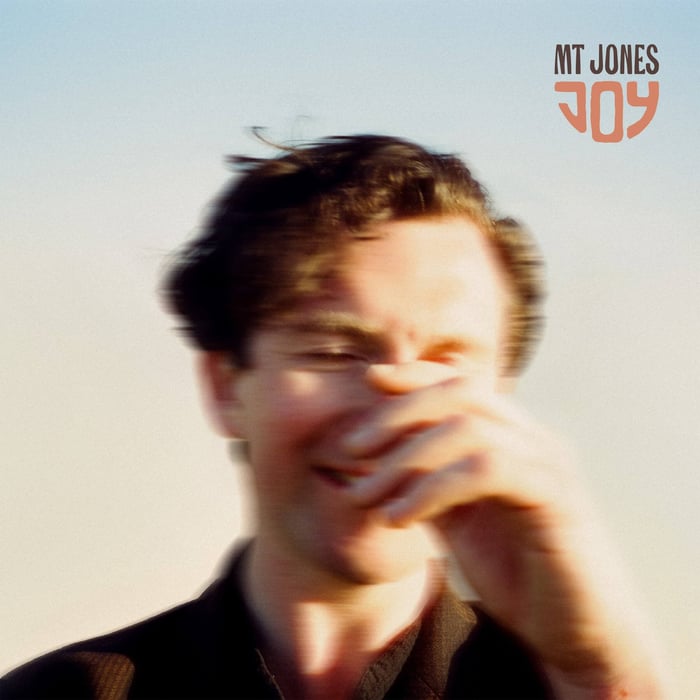
If this album’s cover is stuck in your head the way its grooves get stuck in your ribs, you can always hang that feeling on your wall. Shop your favorite album cover poster at our store: https://www.architeg-prints.com/
 | DISCOUNTGET 30% OFF*Use code on your next order:
|
* This post may contain affiliate links, meaning we earn a commission if you make a purchase through these links, at no additional cost to you.