Infinity Song Album Review: Gorgeous Harmonies, Mildly Unhinged Money Anxiety


 See more Architeg Prints stories on Google.
Infinity Song Album Review: Gorgeous Harmonies, Mildly Unhinged Money Anxiety
Infinity Song album turns busker-perfect harmonies into breakup weather reports—and sometimes the sunshine feels suspicious.
A record that starts by grabbing you by the throat (politely)
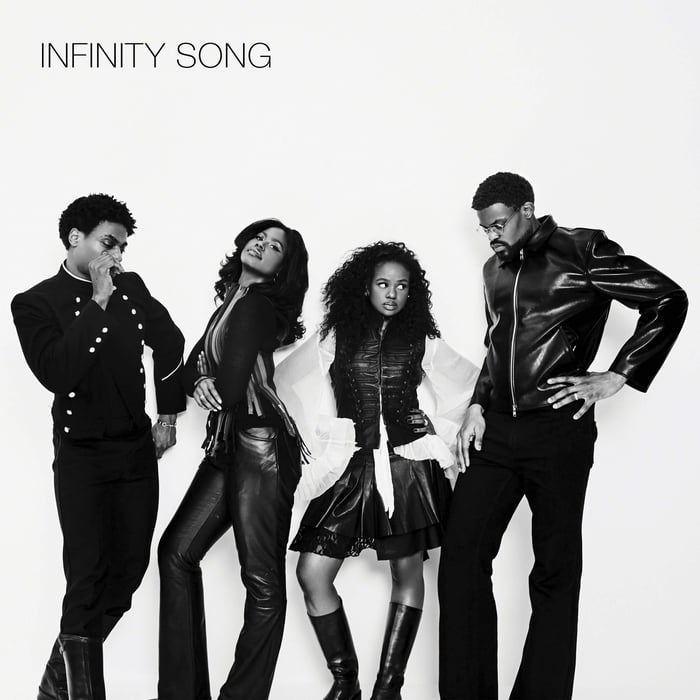
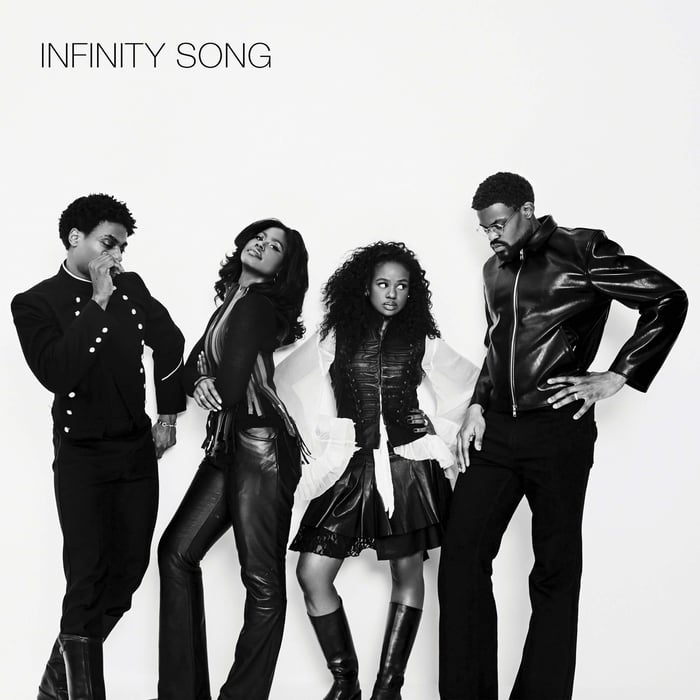
This is one of those albums that doesn’t “introduce” itself so much as step into the room already singing—stacked voices, tight corners, no wasted air. The Infinity Song album isn’t trying to impress you with volume. It’s trying to win by alignment, like four people snapping a puzzle together mid-chorus and daring you to call it an accident.
And yes, it’s beautiful. But beauty isn’t the point here. Control is.
The origin story you can hear in the mix
You can practically hear the group learning their craft in public—big, echo-friendly spaces where harmonies have to cut through chatter and foot traffic. The whole Infinity Song album behaves like it was trained in loud rooms: vocals first, always, with the band hovering a half-step behind like it knows better than to step on the good part.
The most telling choice is where the sound lives. Everything hangs out in the low and low-mid range, rounded instead of sharp, so nothing gets brittle. That means the drums don’t need to overcompensate, and they rarely do. The percussion stays disciplined because the harmonies are the main event—and the group seems to know the fastest way to ruin themselves would be “rocking out” over their own blend.
That’s an arguable decision, by the way. Some people will hear restraint; others will hear the band being kept on a leash. I mostly hear intention.
Leaving isn’t a theme here—it’s the plot
Here’s what actually sticks: this album keeps returning to departure like it’s a bruise the tongue can’t stop poking. The songs that linger aren’t about love in the abstract. They’re about leaving, being left, and the weird aftertaste of remembering where you came from while admitting you can’t go back.
“Michigan” turns nostalgia into geography you can’t swim to
“Michigan” is drenched—lakes, rivers, the feeling of water that remembers you even when you’ve moved on. It’s not just a postcard. There’s worry under it, like the place itself is already gone, or at least inaccessible in the way childhood always becomes inaccessible. The line about it being “a kindness” to leave the last place they were kids lands like a confession you only admit when you’re trying to sound brave.
The arguable part: I think “Michigan” isn’t missing a state. It’s missing a version of the self that only existed there—and the song knows it. That’s why it aches without begging.
“Sayonara” makes success sound like homelessness
“Sayonara” drags that loneliness west and lets it rot in a nicer outfit. The narrator comes off worldly, maybe even comfortable, and still basically homeless—grass not greener, just different grass with better lighting. Then it collapses into one small request that makes everything else feel like set dressing: leave the porch light on, I want to come home.
It’s a smart trick: the song spends time acting like it’s about movement, then admits it’s about the one place the voice can’t reach.
“Running Away” turns closeness into a bruise
“Running Away” is where the album gets personal in a less scenic way. Instead of lakes and rivers, it’s emotional distance—someone keeping “an arm’s length” between them. And the bridge is the kind of line that changes the temperature in the room: once the shoulder to cry on, now the corner someone gets trapped in when they lie.
That’s not a metaphor; that’s an argument in slow motion. If you’ve been in that situation, the harmonies don’t feel “pretty” anymore. They feel like a group of witnesses.
Money shows up, and suddenly the harmonies get self-conscious
A lot of harmony-forward groups lean on warmth as a default emotion. This album doesn’t always let itself do that. When money enters the writing, the vocals start sounding like they’re trying to stay composed in public—which, frankly, is exactly what the lyrics are describing.
“All of My Friends” is a rich-person song written from the curb
“All of My Friends” hums with that specific tension between how your life looks and what it costs. There’s detail-work here that feels lived-in: separate checks at restaurants, thrift-store clothes worn confidently enough that nobody clocks them, the train beating friends in black cars, a doorman the narrator recognizes.
Then the hook drops: “All of my friends think I’m rich.” And the whole thing flips. The warmth blooms right under the admission that the image is a performance—“I don’t let them see me sweat.” That’s when the vocal blend feels the most communal, like they’re harmonizing around a secret.
And then… the album does something I didn’t expect: it goes so literal it almost faceplants. At one point, a credit score is announced—553—out loud. I’m not saying the honesty isn’t real. I’m saying it’s one of the only moments on the Infinity Song album where the writing stops singing and starts posting.
I could be wrong, but it felt like a line designed to “prove” relatability instead of letting the scene do it.
When the rhythm section gets permission to move, the album suddenly sweats
Most of the time, the band stays in that low, rounded pulse—supporting the stack, not competing with it. But a couple songs push the bottom end harder, and it changes the album’s posture.
“Hurricane” finally lets the bass throw elbows
“Hurricane” is where the bass gets unleashed and the drums sound urgent enough to count as pressure. The groove is messy in a good way—like a crowded two-step where shoulders bump and nobody apologizes. The leads trade the mic until the chorus stops belonging to any one voice at all.
Lyrically, it’s infatuation as weather you refuse to escape. The “eye” of the storm is supposed to be the safe spot, and the song still chooses drowning in the memory of love over entertaining the idea of giving someone up. It’s dramatic, sure, but it’s convincingly dramatic—like the song knows it’s making a terrible decision and does it anyway.
Arguable claim: this is the moment the Infinity Song album sounds most like a band, not just a vocal phenomenon.
“Blossom” weaponizes softness
On the other end is “Blossom,” where everything turns warm in an easy-listening way and the vocal arrangement moves with a gospel slowness. The rhythm section becomes a level surface—flat enough for the harmonies to set down their suitcase and unpack.
And the writing? Mean. Not loud-mean. Controlled-mean. It’s a breakup song that’s designed to haunt the recipient with the memory of who carried who. The line about reaching for the sun and remembering who held you close lands like a smile you don’t trust. Then the final word—storm—gets held until it turns into identity: “I am a storm.”
That’s not subtle. But it doesn’t need to be. The song earns its threat by staying calm.
When the writing gets direct, the album starts acting like a text thread
Here’s where I had to adjust my first impression. Early on, I thought this album was going to live entirely in atmosphere—water, weather, longing, the usual poetic fog. But then a couple tracks get brisk, almost impatient, like they’re tired of metaphor and ready to point.
“One Foot Out” is a deadline disguised as a chorus
“One Foot Out” goes straight at someone commitment-averse. No scenery, no soft landing. The lines are chopped down to match the urgency: say it like it is, tell me something real. And the chorus makes the threat explicit: if it’s not right now, it’ll never be again.
Arguable claim: the bluntness is the hook, not the melody. The song works because it refuses to be graceful about indecision.
“Stranger Danger” jokes until it panics
“Stranger Danger” is funnier and more frazzled—someone talks to them, gets walked to the train, interrupts their favorite song, and the chorus spits taunts over a shoulder: deluded, really stupid; kinda ugly, please don’t touch me.
It’s messy on purpose. Then the bridge pivots and suddenly the jokes sound like a safety mechanism: you could be a killer on the run, you could try to put me in your trunk. That’s the real song hiding under the punchy delivery.
This track is one of the album’s best moves: it admits fear without dressing it up like poetry. If you don’t like that kind of tonal whiplash, you’ll call it inconsistent. I think it’s the opposite—honest.
The water-and-weather obsession is real… and sometimes it backfires
Images of water and weather show up constantly across the Infinity Song album. When the songs keep it physical—rivers, lakes, storms—you feel the body inside the metaphor. When the writing hands the metaphor over completely, the spell weakens.
“Deja Vu” moves fast, and that’s the problem
“Deja Vu” is the lightest, quickest track here—a premonition about a new boyfriend that’s basically: I’ve seen this movie, I know the ending. First you’ll say you love me, then you’ll leave; you’ll think I’m special for only a week.
The issue isn’t the cynicism. The issue is it states the cynicism instead of letting it creep in. Then it stretches that one idea into a long “till there’s no time, till the sun won’t shine, till the world ends” kind of ending. It’s big language for a small emotional motion.
And here’s the sneaky part: the album’s overall warmth is so evenly applied that “Deja Vu” can sound almost as substantial as the heavier songs, even when it isn’t. The soft glow flatters everything, including the thinner writing.
I’m not fully sure if that’s a flaw or just the group’s superpower getting in its own way. But it’s the moment I kept wishing the album would risk an uglier sound—just once—to make the lighter track feel lighter.
“Break Out” is the one track that looks forward instead of back
“Break Out” is the clearest signpost toward what this group could become if they keep letting the band breathe. It’s the brightest and most open song on the album, and it’s the only time the dynamics are allowed to actually soar.
It starts from a quiet confidence—hibernating in the dark, waiting out the lag time—then the payoff hits: coming to the light, opening eyes, it’s time. After an album full of leaving and longing and porch lights, this one feels like walking outside without checking the weather app first.
Arguable claim: “Break Out” isn’t just a standout; it’s the album admitting it doesn’t want to stay trapped in nostalgia forever.
The tracks I kept going back to (for better or worse)
I’m not pretending every song hit me the same way. The ones that kept pulling me back were the ones that fused concept and detail—where the harmonies weren’t just pretty, they were carrying stakes.
- “Michigan” — the past rendered as water you can’t bottle
- “All of My Friends” — a financial mask slipping mid-chorus
- “Stranger Danger” — comedy turning into a very practical fear
And yeah, I replayed “Hurricane” too, mostly because it finally lets the low end act like it has a pulse of its own.
Conclusion
The Infinity Song album is a harmonies-first world where the band politely waits its turn, and where leaving becomes a recurring injury you keep touching to see if it still hurts. Sometimes the writing is devastating; once or twice it gets a little too literal; and when it finally opens the windows on “Break Out,” you realize the whole record has been holding its breath on purpose.
Our verdict: People who like vocals that interlock like stained glass—and lyrics that treat heartbreak like weather—will actually love this album. People who need big riffs, messy drums, or chaos in the mix will get impatient and start begging the band to do something “louder,” like a neighbor tapping the wall during a choir rehearsal.
FAQ
- Is the Infinity Song album more about vocals or instrumentation?
Vocals, easily. The instruments mostly behave like supportive furniture—useful, tasteful, and rarely the center of attention. - Which song shows their emotional range best?
“Stranger Danger” swings from jokes to real fear without asking permission, and that tonal pivot says a lot about what the album’s willing to admit. - Does the album have a central lyrical theme?
It keeps circling leaving—places, people, versions of the self. Even the warmer songs feel like they’re written under a porch light that’s still on. - What’s the most “band-forward” moment?
“Hurricane.” The bass and drums finally get to shove the song forward instead of just framing the harmonies. - Any weaker spot worth knowing?
“Deja Vu” moves fast and feels lighter, but it leans hard on stated cynicism and big apocalyptic phrasing that doesn’t fully earn its runtime.
If you’re the kind of listener who treats album art like part of the music, you can always grab a favorite album cover poster for your wall over at our shop: https://www.architeg-prints.com. It fits the vibe—clean, bold, and quietly dramatic.
 | DISCOUNTGET 30% OFF*Use code on your next order:
|
* This post may contain affiliate links, meaning we earn a commission if you make a purchase through these links, at no additional cost to you.