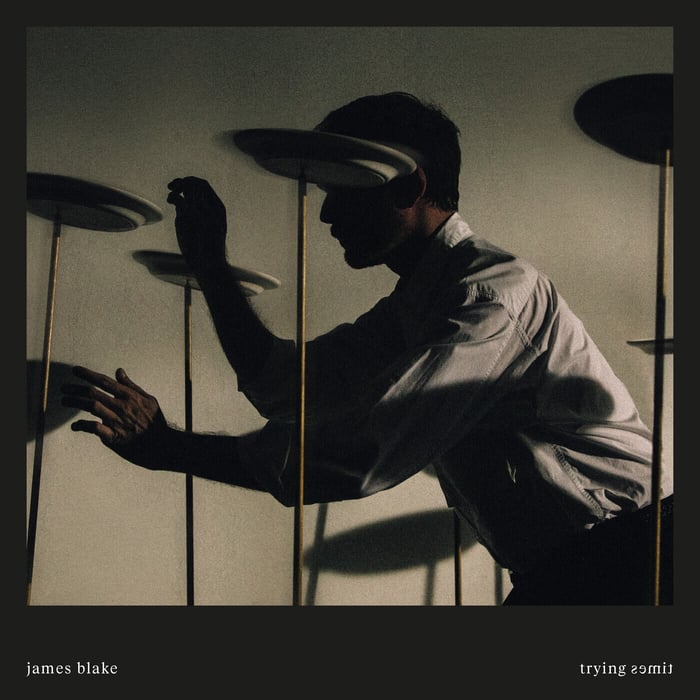
James Blake Trying Times Review: Heartbreak Therapy, No Refunds Allowed


 See more Architeg Prints stories on Google.
James Blake Trying Times Review: Heartbreak Therapy, No Refunds Allowed
James Blake’s Trying Times turns private collapse into blunt songwriting—less club escape, more “here’s the problem,” and it doesn’t blink.
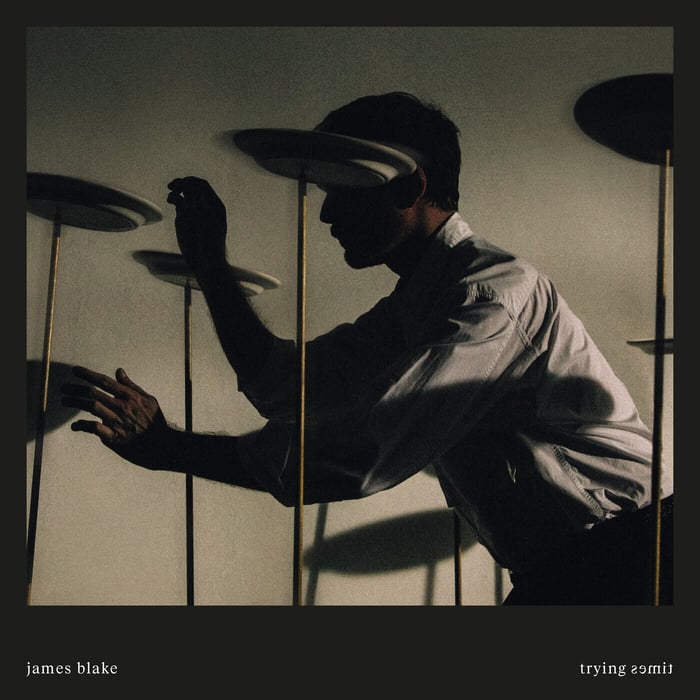
A record that stops performing and starts confessing
You can hear it in the first minutes: Trying Times isn’t trying to impress you. It’s trying to survive you.
James Blake’s last decade-plus has had a weird job description: become the guy other megastars call when they need a certain kind of bruised harmony, pitched-down vocal gravity, and piano chords that sound like they’re apologizing. Meanwhile, his own albums—often better than the songs he’s helping prop up—get treated like “critically respected” furniture. Comfortable. Off to the side.
On Trying Times, he sounds like someone who got tired of being useful and decided to be plain instead. This is his seventh album, and it’s his first independent release, and that matters—not as trivia, but because the whole thing carries the vibe of an artist removing middlemen from between himself and the ugliest parts of the day.
And yes, it’s a hard pivot from Playing Robots Into Heaven (2023). That album leaned into club structures in a way that split people right down the middle. Trying Times shares basically no musical agenda with it. Where that record chased motion, this one sits down and admits what’s actually broken.
Arguable claim: Blake didn’t “switch styles” here—he stopped hiding behind style at all.
When love dies, he doesn’t romanticize the body
The next turn is obvious once you’re in it: most of this album is about a relationship coming apart, not in a cinematic way, but in the slow, humiliating way where you still have groceries in the fridge.
“Death of Love” opens with a pointed choice: he starts with “Hineni”—a Hebrew word that basically means “here I am,” the kind of response you give when you’re being called and you can’t pretend you didn’t hear it. That’s not decorative spirituality. That’s Blake setting the scene: someone is asking for presence, and he’s answering, even if he’s not sure it’s safe.
Then the song presses on the idea of good faith—whether love is being offered honestly or just acted out because the script says you’re supposed to. Later, he gets painfully specific: he pleads not to be abandoned over one bad hour. That detail matters. It’s not “don’t leave me.” It’s “don’t leave me for one moment that didn’t represent me.” That’s the kind of bargaining you only do when you already feel the door swinging.
And then he drops an image that I couldn’t shake even after the track ended: devotion compared to bees returning empty-handed from plastic flowers. Not “flowers that died”—plastic. Fake nourishment. Everyone did the work; nobody got fed. It’s a cruel metaphor because it implies you can do everything “right” and still end up with nothing, because the entire environment was a lie.
Arguable claim: this album’s heartbreak hits harder because it refuses to sound poetic when it could—Blake uses poetry like a flashlight, not decoration.
“Didn’t Come to Argue” is two people losing in opposite directions
Here’s where the album starts doing something sneaky. “Didn’t Come to Argue” doesn’t just describe conflict; it stages the emotional mismatch that causes it.
The first half has Blake basically admitting to a kind of social and existential vacancy—no friends, no direction, no real care where the road goes. He describes himself trapped in time, like a butterfly behind glass: something that once moved freely but now can only be observed, pinned by circumstance. There’s even a throwaway line about having flown “in the park,” which is an oddly small memory—like freedom has been reduced to a fenced patch of green.
Then Monica Martin enters and flips the temperature. She delivers a chorus that shrugs at heartbreak like it’s a bad app update: annoying, but not life-ending. Underneath, Blake adds a muttered contradiction about taking someone’s hand while also admitting he has no plan to actually take it. That’s the song in a nutshell: two people occupying the same space, speaking different emotional dialects, each one convinced they’re being reasonable.
I’ll admit, on first listen I thought Monica Martin’s presence might soften the track too much—like the song was going to retreat into tasteful melancholy. But on second listen, that contrast is the whole point. Her coolness doesn’t heal him; it exposes how alone his panic really is.
Arguable claim: the “argument” isn’t the problem in this song—the problem is that one person still thinks arguments are a sign the relationship matters.
“Make Something Up” is the album’s most uncomfortable truth
Now the track that’s hardest to sit with: “Make Something Up.”
The second half lands in a very specific scenario: he’s on a bridge, hearing voices compelling him toward something he explicitly says he doesn’t want—death. And then he asks a brutal question: what’s the word for wanting to live and still being pulled toward not living?
“And when I’m stood up on that bridge
And the voices compel me
Even though I don’t want to die
What’s the word for that?”
That’s not a lyrical flourish. It’s a language failure. He’s describing a contradiction so real it breaks vocabulary, and he’s asking the listener to feel the gap.
Earlier in the song, he sketches life’s sudden role reversals: a car becomes a hearse; the sick becomes the nurse. Each time, the point is the same—nobody rehearses for these transformations. And the chorus, with its airy suggestion to “make something up,” stops sounding whimsical once you realize what it’s trying to cover. It’s not imagination. It’s emergency improvisation. It’s what you say when the real words are too sharp to hold.
I’m not even totally sure how to “rank” a song like this, because it isn’t trying to entertain. It’s trying to name something without smoothing it out. And the fact that he leaves it unresolved—no neat lesson, no reassuring recovery montage—feels like the bravest decision on the whole record.
Arguable claim: this track isn’t “dark”—it’s precise, and precision is what scares people.
Dave shows up and drags the album into heavier air
Just when the album could’ve stayed inside relationship grief, “Doesn’t Just Happen” opens a different door—and Dave walks through it like he’s bringing weather.
His verse arrives loaded, and it doesn’t pause to make sure you’re comfortable. He starts by confessing that being a good man isn’t easy, and that he tends to do things the hard way. Then he stacks admissions like he’s trying to outrun them: his girlfriend hates him deep down (and maybe he hates himself too), memories of robbery in the mornings, therapy framed through a mob-boss reference. It’s not scattered; it’s the sound of someone tracing a straight line through a crooked life.
The real pivot is how he connects street violence, dirty money, and spiritual desire in one run—ending on the idea that everyone wants to make it to heaven, but it doesn’t just happen. That phrase matters because it hijacks Blake’s chorus and mutates it. In Blake’s mouth, it’s about romantic effort—love requires work. In Dave’s mouth, it sounds closer to judgment: salvation isn’t automatic either.
After Dave, Blake returns with a bridge that quietly tries to bring the track back to the relationship: maybe someone stopped putting in time somewhere along the line. But the scale has already changed. Dave didn’t “feature” on the song; he expanded it until the walls moved.
Arguable claim: Dave doesn’t “steal the show” here—Blake hands him the keys because the album needs a voice that sounds like consequences.
When Blake looks outward, he doesn’t preach—he notices
After all that interior wreckage, two tracks glance up and out.
“Just a Little Higher” is probably the most plainspoken I’ve ever heard Blake when he’s talking about anything beyond his own heart. He hears something wrong both in the city he was born in and in the countryside. That’s a smart move: it avoids turning the problem into an easy urban/rural cartoon. Then he points at the real toxin—people receiving different information, unable to get on the same side because they aren’t even standing on the same facts.
He goes further into displacement and distrust: people hiding where they’re from, people leaving because “we set on fire.” And then he pulls back from telling you what to think. He basically says: who am I to dictate belief—just make sure you believe your eyes. That line isn’t a political program. It’s a survival technique for a time when reality feels editable.
“Through the High Wire” covers similar ground but from the angle of narrative rot: people love a story, whispers change, and those whispers keep changing until everyone falls from glory. He’s not arguing policy; he’s describing social physics—how rumor and storyline warp shared life.
Arguable claim: these songs work because Blake refuses to cosplay as an activist; he just admits the social world feels as unstable as his relationship world.
The album’s minimalism sometimes cuts deep—and sometimes cuts too much
So here’s the part where Trying Times doesn’t get a free pass from me.
A few songs run thin, and “Rest of Your Life” is the clearest example. It introduces a genuinely beautiful question—what are you doing the rest of your life?—and for a moment, it feels like a doorway to commitment, fear, hope, all of it. But then the phrase “of your life” gets repeated so many times that the song starts to feel like it’s buffering. By the time it backs off with a breezy “no pressure,” I can’t tell if that’s a clever self-protection move or just the track running out of writing.
Now, the same sparseness hits far better on the title track, “Trying Times.” There, he compresses an entire admission into a handful of lines: he’s breaking, he hides it well, and he can’t afford to replace the shell. That’s not just sadness—that’s class and cost entering the emotional picture. He isn’t saying “I’m fragile.” He’s saying, “I’m damaged, and repair is expensive.” That’s a different kind of honesty, and it lands because he doesn’t overwork it.
The general pattern is this: when Blake uses minimalism to sharpen meaning, it’s lethal. When he uses minimalism to avoid development, the room goes empty. And yes, I realize some listeners will call that “restraint.” I call it occasionally unfinished.
Arguable claim: the album’s worst moments aren’t the saddest—they’re the ones that mistake repetition for intimacy.
Where it actually sticks (and why it matters that it’s independent)
By the end, the record’s best scenes are the ones that take a risk with plain speech:
- “Make Something Up” gives language to a specific, frightening mental contradiction and refuses to tidy it.
- “Doesn’t Just Happen” uses Dave’s verse as a moral wrecking ball, then lets Blake return with quieter relationship debris.
- “Trying Times” says “I’m breaking” without turning it into a performance.
If you’re waiting for the big glossy payoff—the towering crescendo, the “single moment,” the polite catharsis—you might feel teased. But I think that’s intentional. This album acts like someone who’s done bargaining with the listener. No label-polished arc, no dramatic redemption. Just the mess, described accurately.
And for what it’s worth: I came in expecting the post-*Playing Robots Into Heaven* aftermath to keep leaning into rhythm and club logic. Instead, Trying Times yanks the chair out and sits you in the quiet. I didn’t think I wanted that. Turns out I did.
Arguable claim: Blake didn’t make this album to be replayed in public—he made it to stop lying to himself in private.
Favorite tracks (the ones that do the most work)
I’m not doing a points system, but I know where this lands for me: it’s firmly in the “great” zone, mainly because its strongest moments feel necessary rather than stylish.
My favorite tracks:
1. “Trying Times”
2. “Make Something Up”
3. “Doesn’t Just Happen”
Arguable claim: if those three tracks don’t hit you, the rest of the album won’t convince you—it’s not designed to.
Conclusion
Trying Times sounds like James Blake stepping out of the role of high-end emotional consultant for other people’s hits and finally narrating his own damage without a translator. It doesn’t chase momentum; it insists on clarity, even when clarity hurts.
Our verdict: People who like their heartbreak songwriting blunt, minimal, and a little spiritually haunted will actually love this album. People who want James Blake to stay in club-mode, or who need every sad record to come with a motivational exit sign, are going to get impatient and start checking their phones.
FAQ
- Is James Blake Trying Times a breakup album?
Mostly, yes—love collapsing is the main thread, but a couple songs widen the lens to social distrust and displacement. - How does Trying Times compare to Playing Robots Into Heaven?
They barely overlap: Playing Robots Into Heaven leans into club structure, while Trying Times sits still and writes plainly about what’s wrong. - What’s the most intense moment on the album?
“Make Something Up,” because it describes suicidal compulsion in a specific scene and refuses to resolve it neatly. - Does the Dave feature change the album’s tone?
Completely. Dave’s verse on “Doesn’t Just Happen” adds moral weight and real-life consequence that the rest of the album only hints at. - Which songs should I start with if I’m new to James Blake?
Start with “Trying Times,” “Make Something Up,” and “Doesn’t Just Happen.” They show the album’s emotional range without requiring patience for the thinner moments.
If you’re the type who treats album artwork like part of the listening experience, you can always grab a favorite album cover poster for your wall over at our store: https://www.architeg-prints.com
 | DISCOUNTGET 30% OFF*Use code on your next order:
|
* This post may contain affiliate links, meaning we earn a commission if you make a purchase through these links, at no additional cost to you.