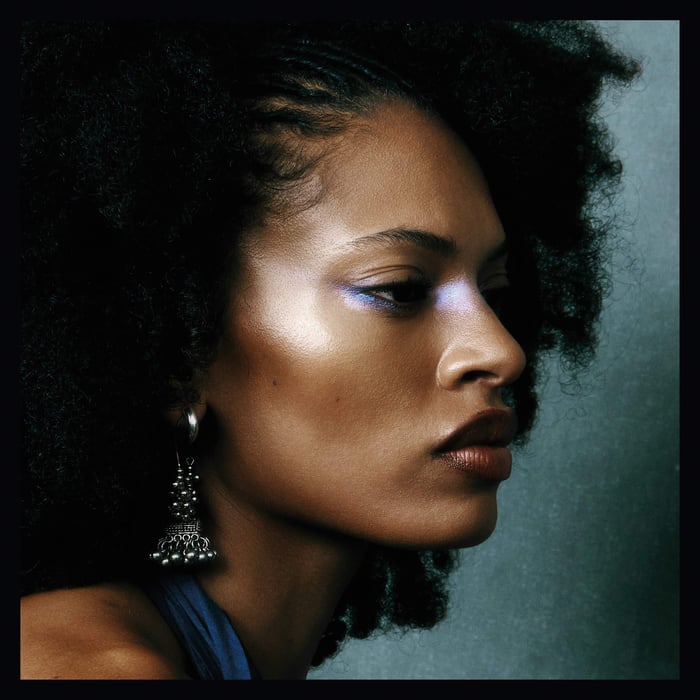
Live at Glasshaus: Annahstasia’s “Live” Album That Refuses to Behave


 See more Architeg Prints stories on Google.
Live at Glasshaus: Annahstasia’s “Live” Album That Refuses to Behave
Live at Glasshaus strips Annahstasia down to breath, strings, and demands—then dares a room of strangers to hold the landing.
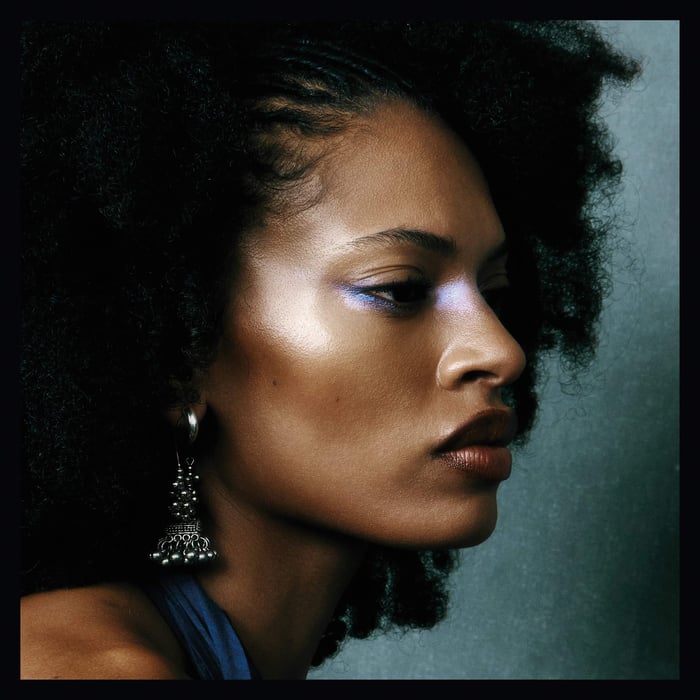
A live record that doesn’t want to be “nice”
Some live albums feel like souvenirs. Live at Glasshaus feels like a test: of nerves, of attention, of whether you’re actually listening or just letting “pretty” wash over you.
This happened three months after Tether—her first full-length, and the version of herself that sounded like she finally stopped negotiating with the tape machine. Then she walked into a Brooklyn studio called Glasshaus, brought a chamber ensemble, and sang those same songs again for about a hundred strangers. No studio padding. No tidy do-overs. Just the moment—plus the risk that the moment doesn’t catch you.
The real trick: these aren’t “arrangements,” they’re re-built memories
Here’s what makes the night feel intentional instead of just “a live session”: Aaron Liao (her musical director) doesn’t dress the songs up. He re-forms them out of scraps—live voice memos, half-melodies, little bits of cadence she’d grabbed mid-thought, mid-afternoon—then turns that raw material into something you can actually sit inside.
The instrumentation tells you what kind of room you’re entering:
- cello
- flute
- clarinet
- soprano saxophone
- Rhodes
- Prophet synth
- two guitars
- upright bass
- drums
And then, just to keep you from settling into one aesthetic, there’s a banjo on some tracks and an organ on others.
The result isn’t “bigger.” It’s weirder. When her voice bends here, it doesn’t bend into a compressor and a safety net—it bends into open air. And you can feel the crowd’s role in the physics of it: the hundred guests either hold the note up by being present… or it drops. That’s the real pact of Live at Glasshaus.
“Take Care of Me” opens with a dare, not a greeting
The first thing that hit me: half this record keeps asking for things by name—not poetically, not coyly. It’s not “longing.” It’s instruction.
“Take Care of Me” starts with a line that isn’t trying to be likable:
“Take off your shirt
I need to see if you’re made of clay and dirt.”
—Annahstasia
That’s not flirtation; it’s inspection. She follows it with the real confession: she’s porcelain on someone’s highest shelf, basically admitting she’s set herself up in a position where falling is the default outcome unless somebody intervenes. And she repeats “before anyone” five times, then keeps shaving it down until it stops sounding like context and starts sounding like a demand stripped to the nerve.
My first impression was that it might be theatrical—like she was putting on a persona. But on second listen, the repetition doesn’t read as drama. It reads as someone simplifying their needs because politeness hasn’t worked.
“Satisfy Me” isn’t romance—it’s a blunt instrument
The pivot into “Satisfy Me” feels like she’s pushing the same instinct in the opposite direction. It’s basically two words and no cushioning. No backstory. No “here’s why I’m like this.” Just the refrain coming down again and again like a stamp.
And the funny (or brutal) part is the premise behind it: she hears through the grapevine that someone “wasn’t having a good time,” and instead of comforting them, she interrogates it. Where did you go wrong? Did you have the answers all along? That’s not empathy; that’s need disguised as investigation.
She even admits the power imbalance without announcing it: she can “see clearly” from the outside looking in. The hook keeps insisting, but the subtext keeps slipping out—she dreams freely because she’s never actually satisfied. The song doesn’t solve that contradiction. It just loops it until the loop becomes the point.
“Stress Test” is the album admitting it enjoys the burn
From there, “Stress Test” lands like a statement of method. She tells someone she built them wooden houses to store their dreams… then burned them down to see them come outside. It’s almost cartoonish as an image, and yet it sounds uncomfortably specific—the kind of metaphor you don’t invent unless you recognize the impulse.
And the chorus tallies the cost in a way that feels like an ultimatum dressed as symmetry: down the middle, same weight, “just a little while she breaks,” and you’re getting in either way. By the time she’s repeating “I’m inside you” at the end, she’s not arguing anymore—she’s stating a condition like it’s weather.
I’m not totally sure if the line is meant to be comforting, threatening, or both. The unsettling part is that the performance doesn’t clarify it. It just holds the stare.
“Sunday” and “Saturday” turn devotion into a negotiation
After that heat, “Sunday” comes in quieter, but I don’t think it’s softer. It’s just subtler with the blade:
“Maybe in a different timeline / I was the perfect girl for you.”
That’s a gorgeous line because it refuses to be resentful out loud. It implies the resentment anyway.
Then “Saturday” stops pretending ambiguity is the mature option. Every line is a want. Not abstract wanting—specific roles:
- the one you call in the afternoon
- the one on the cutting edge
- the one that gets you out of bed
But the detail that sticks is the one she buries: in the middle of all that devotion, she tells the person they’re not even the heaviest stone she’s thrown. That’s a wild thing to admit while you’re offering yourself up as a daily ritual. It makes the love sound real, and it also makes it sound… strategic.
“If you give me your hours, I’ll trade yours for mine.” That’s not romance. That’s barter with a pulse.
“Evergreen” is reassurance that turns into an accusation in real time
“Evergreen” starts like a pact. Split the emotional labor:
You be simple and I’ll be blind.
You be gentle and I’ll be kind.
It almost sounds like a couple handwriting rules on the fridge so they stop hurting each other.
But by the final minute, she’s shouting:
“I’m always on your mind / I’m wasting your time.”
Same phrases, totally different job. The reassurance curdles into accusation right in front of you. And because this is Live at Glasshaus, there’s no production trick to smooth the transition. You hear the emotional gear shift clunk into place.
If the album has a thesis, it might be this: the words don’t change—your meaning does, depending on what you’ve decided you’re owed.
“Untamed” is where the sweetness finally admits it’s furious
“Untamed” reaches older and angrier than the love cuts. It’s the song where she stops talking like the “good” version of herself.
She wants the freedom of a boy unchained—hair wild, stark as the night, no fear of hallowed ground. Then she goes further and says the thing most people won’t say out loud: she wants the freedom of a man. The freedom to take as he demands, to take whatever he can. Chest bare in the blistering sun, naked as the day she arrived, no fear of a wandering eye.
Twice she says, “I haven’t asked for much.” The restraint in that line—five small words—fighting against the size of what she’s describing is exactly the tension. Then the phrase “to take what he demands, to take whatever he can” starts building and repeating until it grows teeth.
I’ll admit: this is where I hesitated. Part of me kept waiting for the song to soften its claim or clarify it into something safer. It doesn’t. That’s the point. It’s not making a polite argument; it’s exposing a craving for power and consequence.
“Villain” flips the command inward: take it back
After “Untamed” reaches outward, “Villain” goes straight for the internal damage. It works the opposite nerve, but it’s still built on command—just aimed at the person who planted the poison.
Take it back.
Take back the doubt and insecurity you put in me.
Take back the anger and fury.
Take back the single-judging-jury mentality.
Take back this life and memory.
And the punchline is that she still hears a voice inside her head calling her the villain of the story. The song doesn’t sound like a villain talking. It sounds like someone exhausted from being cast, over and over, in a role they didn’t audition for.
“Slow” refuses certainty, and that refusal is the hook
Then comes “Slow,” which she co-wrote with Obongjayar. The origin story matters because you can hear the closeness baked into the writing: two people huddled around a single ribbon microphone in a London Airbnb living room, eyes locked. Intimate to the point of discomfort.
But at Glasshaus, it’s her time—her space to widen the song until it becomes a room question, not a private one.
“Time breeds time / And violence breeds more silence,” she starts, then asks where they are—because this isn’t heaven, so where is she going?
And the hook does something most hooks are too insecure to do: it doesn’t pretend to know.
“So where do we go from here
It’s not our job to know
I heard it on the wind
To go slow.”
—Annahstasia
That “it’s not our job to know” lands like a refusal to perform confidence for anyone. Some listeners will call it vague. I think it’s braver than that: it’s someone declining to lie just to make the chorus feel resolved.
“Unrest” lists the evidence that everything’s fine… then names the problem anyway
“Unrest” shares that same refusal to settle. She runs through the rational checklist:
Why worry when the sky didn’t fall in?
The moon still sets and the sun still rises.
She stacks proof that nothing is wrong—your hands still feel my skin, our eyes still touch—then admits the thing that doesn’t care about evidence:
It’s the same unrest sitting in my chest.
That’s a specific kind of honesty: the kind that annoys people who think feelings should respond to logic like obedient pets.
“Be Kind” is the most “furnished” song—and live proves it
In her catalog, “Be Kind” feels like the most furnished track she’s recorded, and hearing it live only proves how much stuff is inside it. The details are physical: a pile of CDs in the corner, sharing the ground with a tree. A “ghetto diamond” catching her eye because it’s rare and different.
Then she throws you into this oddly mythic memory: she danced for three days in the arms of a lover she met in the growing phase—someone who stayed through growing pains. And she lets herself want something un-aspirationally huge: rest in a California king bed, arms outstretched, dreams bleeding from her head into the sheets.
The song keeps furnishing the room with identity fragments: maybe she’s the chosen one; maybe she’s someone’s lost and rambling son. And then she’ll leave them standing in a land she deserted for a better hand.
This isn’t “world-building.” It’s more like she’s inviting you to walk through the furniture of a life—then daring you to call her inconsistent. Because inconsistency is the point: she’s showing you how many selves it takes to survive.
The deal arrives in the chorus, then the condition flips:
“Don’t make me care less
Don’t make me heartless.”
—Annahstasia
That’s not a plea to be treated well. That’s a warning about what she’ll become if you keep pushing.
“Believer” is where the album stops posturing and just asks
“Believer” says the quiet part out loud:
“You make my life harder / Why can’t you be easier on me.”
She needs them to believe in all her possible possibility (a phrase that sounds like it’s tripping over itself because hope is clumsy). But every round she wins, they turn the wrong way. She wanted them in her arms to celebrate a long day.
Then she hits the wound: maybe she can’t take them all the way. And does that mean she’s only loyal if they stay the same?
And then the center breaks open:
“I get lonely
And I know you get lonely too
Can I be lonely here with you?”
—Annahstasia
She admits she’s a better dreamer than a friend sometimes. She admits she only wants to play pretend sometimes. But she needs them to believe she’s trying her very best—don’t write me off like all the rest.
And when “Can I be lonely here with you?” comes back again and again—ten, twelve, maybe fifteen rounds—it stops sounding like a lyric and starts sounding like the actual air in the room. The song doesn’t so much finish as it keeps going past the point where anyone could responsibly answer.
One mild complaint, though: that repetition is so effective it almost becomes a trap. I can feel the intent—filling Glasshaus with the question until the walls hold it—but a slightly tighter ending might’ve hit harder instead of numbing me into the loop. Still, I’d rather have an artist over-commit to an idea than politely gesture at one.
Conclusion
Live at Glasshaus isn’t a victory lap after Tether. It’s Annahstasia dragging those songs back into the light, stripping off the studio’s safety gear, and making the audience responsible for what happens when a voice reaches and nobody catches it.
Our verdict: People who like live records that feel a little dangerous—and lyrics that ask for things too directly—will eat this up. If you need your songs neatly resolved, or you want “vibes” without confrontation, you’ll bail halfway through and call it “too intense,” like intensity is a scheduling issue.
FAQ
- What is Live at Glasshaus—a concert recording or a rework?
It plays like a live rework: the Tether songs are re-arranged for a chamber-sized ensemble and performed in front of around a hundred people, with no studio safety net. - Who rearranged the music for the Glasshaus performance?
Aaron Liao, acting as musical director, rebuilt the material from Annahstasia’s live voice memos and melodic scraps. - What instruments shape the sound of this performance?
You hear cello, flute, clarinet, soprano sax, Rhodes, Prophet synth, two guitars, upright bass, and drums—plus banjo on some tracks and organ on others. - Which track feels the most emotionally unresolved on purpose?
“Believer,” because the repeated “Can I be lonely here with you?” doesn’t land as closure—it lands as the question taking over the room. - Is this album mostly love songs?
It’s mostly need songs. Some are devotion (“Saturday”), some are power hunger (“Untamed”), some are internal reckoning (“Villain”), but the through-line is demand more than romance.
If this album put a specific image in your head—banjo next to synth, a room holding its breath—you might want that feeling on your wall. We keep tasteful album-cover poster prints over at https://www.architeg-prints.com.
 | DISCOUNTGET 30% OFF*Use code on your next order:
|
* This post may contain affiliate links, meaning we earn a commission if you make a purchase through these links, at no additional cost to you.