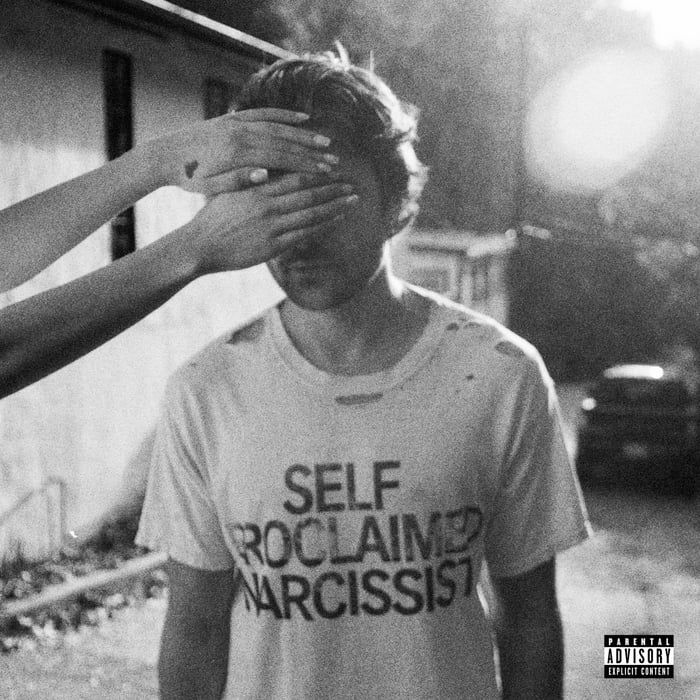
Self Proclaimed Narcissist Album Review: Broke in Laurel Canyon, Still Loud


 See more Architeg Prints stories on Google.
Self Proclaimed Narcissist Album Review: Broke in Laurel Canyon, Still Loud
Self Proclaimed Narcissist turns poverty, romance, and self-awareness into a diary that refuses to “heal”—and that’s the whole point.
A Record That Shows Up With No Face and No Apologies
This is the kind of album that makes you lean in—not because it’s whispering, but because it’s saying the quiet part out loud like it’s normal.
Self Proclaimed Narcissist (the album) by Self Proclaimed Narcissist (the artist) doesn’t arrive with the usual identity scaffolding. No tidy persona. No obvious “brand.” Just a name that basically dares you to roll your eyes. I expected the whole thing to be a gimmick at first, like the title would be a shield. But once the songs start stacking up, the title reads less like a punchline and more like a diagnosis he’s already accepted.
The sound matches the circumstances it’s clearly written inside: guitar-forward, close-mic confessionals, the vibe of somebody recording because they have to, not because the budget says they can. And the setting feels specific in that slightly grim way LA can feel specific—sidewalks, smoke, money stress, the kind of everyday desperation that doesn’t look dramatic until you’re the one living it.
Arguable take: the anonymity isn’t “mysterious” so much as practical. This record acts like the point is the mess, not the messenger.
The First Punch: “Do Dreams Still Happen?” and the Album’s Real Villain
Once the album drops “Do Dreams Still Happen?”, it basically tells you what it’s going to keep doing: let a bleak thought slip into the song the way it slips into a day.
The track lands an early line about wishing the wildfires had taken him—said so plainly it doesn’t even try to earn sympathy. It’s not framed like a big capital-M Moment. It’s tossed into the mix with everything else: rent pressure, scrambling for part-time work, sliding back into habits on Hollywood pavement. That’s what makes it stick. The song doesn’t cue you to gasp. It just keeps moving, which is exactly how intrusive thoughts work when you’re broke and tired and still pretending you’re “fine.”
Arguable take: this is an ambition album, but it’s not about chasing a dream—it’s about watching the dream get crushed under overdue rent.
What surprised me is how fast the record makes money feel like the main antagonist. Not “fame.” Not “love.” Not even “addiction,” at least not directly. It’s the basic math of living—how quickly it turns you into someone you don’t recognize.
“Space (I’m So Broke)” Makes Poverty the Plot, Not the Backstory
If there’s a centerpiece here, it’s “Space (I’m So Broke),” because it’s the most brutally detailed thing on the album. Not “I’m struggling” in a poetic way—more like: this is what I ate, this is what I couldn’t buy, this is what it did to my relationships.
He’s down to the point where cigarettes feel like a luxury item. His mind is racing. He tells her it was never about her—except it kind of is, because being broke changes how you stand next to someone. He watches her watch him, eating the same meal for weeks. She stays anyway, until she doesn’t. And when she finally pulls him aside, it isn’t a dramatic breakup speech. It’s more like a basic ethical correction: this situation is unfair.
The hook twists the knife: he wishes he’d stayed, but he assumes she probably wishes he were dead, so he keeps his distance.
That’s the album in a single ugly equation: love plus shame plus poverty equals distance. Not because anyone’s evil. Because reality is.
Arguable take: the album’s most romantic gesture is also its most self-destructive one—stepping away “for her” while making sure she knows he’ll never stop spinning about it.
Mild criticism, though: sometimes the writing is so locked into the same few physical symbols—cigarettes, sidewalks, weed, late rent—that you can feel the walls closing in a little too literally. I get it; that’s the room he’s in. But a couple songs lean so hard on the same objects that I started craving a different angle, even just for air.
“New Man,” “My Boo,” and “You & I”: The Breakup Loop He Won’t Quit
A lot of this album is one long refusal to pretend he’s moved on.
“New Man” is set seven months after a breakup, and he’s still sending messages into silence. He admits the obvious stuff—he broke her heart, he saw the tears, he ruined it. She’s with someone else now, and the song’s central question is both childish and painfully human: can the new guy do what I couldn’t?
The track doesn’t act like he deserves forgiveness. It’s not a redemption arc. It’s just craving, plus the humiliating awareness that craving doesn’t make you a better person. He winds up looking for her at the bottom of a cup, which is exactly as glamorous as it sounds.
“My Boo” keeps the theme but changes the framing: isolation as a relationship-ending event. He couldn’t let her see him “a certain way.” He couldn’t make it past July. It plays like someone convincing themselves they were sparing her when they were really sparing their ego.
Then “You & I” opens by admitting it feels like something died—which should be a reset point, emotionally. But instead the song spends its verses acting indifferent in a way that immediately gives itself away. He talks about substances making him feel less. He throws in the gym reps. He laughs at her new man. And then—because of course—he still offers himself back whenever she calls.
Arguable take: the album title, Self Proclaimed Narcissist, isn’t an apology. It’s a warning label he refuses to remove.
And here’s where I’m not totally sure what to make of it: is this self-awareness supposed to be a first step, or is it just a prettier way to stay stuck? I went back and forth while listening. Some lines feel like confession. Some feel like preemptive defense. Either way, the record doesn’t fake growth it hasn’t earned.
When the Camera Finally Turns Outward: “Save Her,” “Cherry,” “Promiscuous”
Just when the album risks collapsing into a closed loop of the singer’s own drama, it widens the frame—three times—and it matters.
“Save Her” follows a woman whose dad left on a Sunday. She loses faith. She works until sunrise. The chorus calls her somebody’s baby girl, scarred by the whole world, and the post-chorus tells her not to listen to people who’ll cloud her power and only appreciate her when she’s gone. The interesting part is what the song doesn’t do: it doesn’t rescue her. The title feels aimed at someone else, like he’s shouting instructions into the air because he can’t act on them himself.
“Cherry” sketches another woman: she goes quiet after having a child, and nobody helps. He notices the loneliness sitting on her face. He tells her she isn’t ordinary—and then the song shifts into something like advice: don’t wait on someone else to supply what you lack; learn to make your own decisions.
And “Promiscuous” brings a sharper edge. It circles a woman claiming sixteen days sober, and he flat-out doesn’t buy it. He urges her to slow down, and then the song snaps with a pointed question about whether she’ll ever care about anyone but herself.
Arguable take: these three tracks aren’t “side stories”—they’re the album proving it isn’t just self-obsession cosplay. He actually sees other people, even if he can’t fix them.
The Darkest Thoughts Don’t Get a Spotlight—They Get Slipped In
The most unsettling thing about this album is how casually it drops its worst thoughts.
“Lost in California” has lines about rolling something to numb displacement, and about someone who wants love he can’t give. Then the chorus asks, plain as a utility bill: if I pass away, will it matter?
That question echoes earlier moments: the wildfire wish on the opener, the “she probably wishes I were dead” sting in “Space.” None of it is performed like a big dramatic confession. It’s more like background radiation—present, constant, almost normalized.
Arguable take: a louder, flashier record would’ve turned those lines into centerpieces. This one makes them heavier by refusing to underline them.
I kept waiting for the album to “address” those thoughts, to stage an intervention or offer a neat explanation. It never really does. At first I thought that was evasive. On second listen, it felt more like honesty: when you’re in it, you don’t give speeches about it. You just keep walking.
“Slow Burn” Tries for a Big Idea—And It Actually Earns It
Most of the album stays extremely local: immediate problems, immediate feelings, immediate fallout. Then “Slow Burn” reaches upward for once.
The verses are familiar territory—wanting to give her everything, knowing he can’t, weed in his lungs, another late night. But the bridge steps back and admits something the rest of the album mostly dodges: that not everything you want is what you need, and that distance—and mystery—can be the point.
Arguable take: “Slow Burn” works because it’s the only time the album tries to sound wise, and it waits until it’s piled up enough evidence to deserve the wisdom.
It’s a single moment of perspective in a record that otherwise treats perspective like an unaffordable luxury.
“Raven’s Song” Doesn’t Resolve Anything—It Just Tells the Truth
The closer, “Raven’s Song,” doesn’t tie a bow. It doesn’t offer reinvention. It doesn’t even pretend.
It imagines the same haunted LA scenario: running into an ex, still in love, still looping. The song says straight-up that it’s not surprising he ran back to old patterns. And then he keeps crooning about loving her more and more, which feels romantic until you realize it’s also the problem—love as inertia, affection as an excuse to repeat yourself.
Arguable take: this ending isn’t “open”—it’s claustrophobic on purpose. The door never opens because he doesn’t open it.
By the time it ends, the album still feels like it’s trapped in the same cramped apartment where it started. The songs don’t move on. They pace.
Favorite Tracks (Because Yes, Some Hit Harder)
Some songs simply land with more force, either because the writing is sharper or because the emotional angle is unavoidable:
- “Do Dreams Still Happen?”
- “Space (I’m So Broke)”
- “Raven’s Song”
Arguable take: if you don’t connect with “Space (I’m So Broke),” you probably won’t connect with the album at all—it’s the thesis statement with cigarette ash on it.
Conclusion
Self Proclaimed Narcissist isn’t trying to impress you with evolution. It’s showing you the loop while it’s still looping: money stress turning love into shame, shame turning into distance, distance turning into late-night messages nobody answers. The uncomfortable part is that the album knows what it’s doing and keeps doing it anyway—and that stubbornness is exactly what makes it feel real.
Our verdict: People who like diaristic, guitar-led heartbreak with broke-LA specificity will eat this up (possibly the same meal, for weeks). If you need characters to “grow,” or you want your sad songs to arrive with tidy self-improvement stickers, this album will irritate you—and then haunt you later when you realize it never promised to be nice.
FAQ
- Is Self Proclaimed Narcissist more about fame or money?
Money. Fame is background noise; being broke is the plot engine that keeps wrecking everything. - Does the album ever move past the breakup themes?
Not really. It circles them from different angles—regret, denial, relapse—without pretending closure. - What’s the most emotionally direct track?
“Space (I’m So Broke)” because it turns financial stress into relationship anatomy, not just mood. - Are there songs that focus on other people besides the narrator?
Yes: “Save Her,” “Cherry,” and “Promiscuous” widen the lens to other women’s stories and struggles. - Does the closer wrap the story up?
No. “Raven’s Song” basically admits the pattern and then stays inside it.
If this album’s mood got under your skin, you might want that feeling on your wall too—album art works weirdly well as a daily reminder. If you feel like it, shop your favorite album cover poster at our store: https://www.architeg-prints.com
 | DISCOUNTGET 30% OFF*Use code on your next order:
|
* This post may contain affiliate links, meaning we earn a commission if you make a purchase through these links, at no additional cost to you.