Joe James’ “Never Ends” Album Review: Therapy Rap That Won’t Sit Still


 See more Architeg Prints stories on Google.
Joe James’ “Never Ends” Album Review: Therapy Rap That Won’t Sit Still
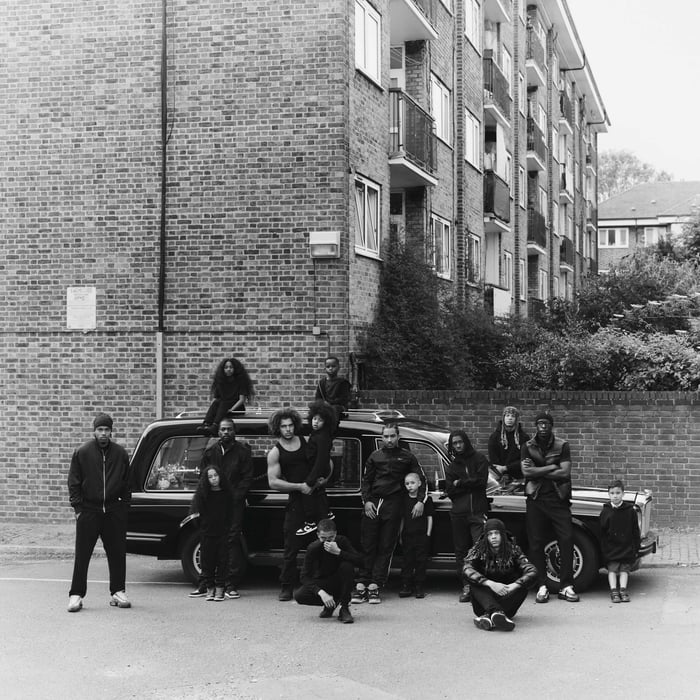
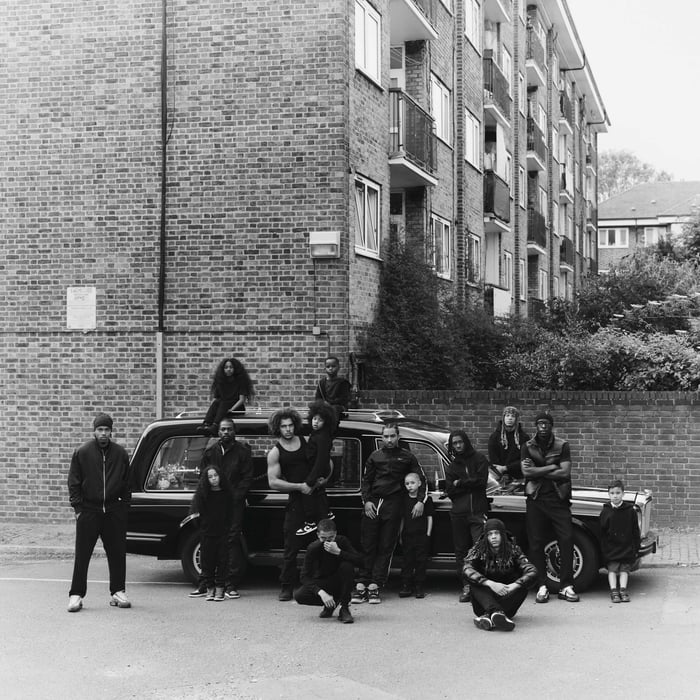
Joe James crafts “Never Ends” into a vivid ledger of memory—melding live instrumentation with precise dates and raw emotion. This debut album is intentionally messy and deeply impactful.
A record that shows receipts, not vibes
Some albums want to be “honest.” This one wants to be specific, which is far more dangerous. Joe James doesn’t float through his past in a tasteful haze—he drags you by the collar through it, address by address, age by age, man-by-man who rotated through his life like furniture.
The first thing that hit me is how unromantic the autobiography is. He’s not building a legend. He’s logging incidents. The Ends, Never Ends (and yes, I’m going to keep saying Never Ends because that’s the point) is Joe rapping personal history over live instrumentation, and the “live” part matters: it gives the stories bones. A beat tape would’ve let you skim. A band makes you sit there.
And I’ll admit it: at first I thought the whole “real instruments + trauma rap” setup might be prestige packaging. On second listen, it’s clearer he’s using the musicians like guardrails—without them, these verses would spiral.
“Who Is She?”: a prologue that makes the rest sting
The album opens by making you look at his mother like a whole human, not just a character in his backstory. “Who Is She?” works like spoken-word framing, and it’s weirdly exhausting in a deliberate way—like he’s forcing himself to list her lives properly: paramedic, clinician, student, “a leader, a mother, academic and friend.”
“Who Is She?” isn’t about praising her—it’s about explaining why he can’t simplify her. You can hear the tension in the idea that she’s everything at once, while her son is slipping into gang culture anyway. It’s not a clean “she tried her best” bow. It’s the opposite: a resume read at the edge of a breakdown.
It also sets the album’s main trick: Joe keeps widening the frame. Just when you think you’re listening to his story, he drags in the collateral.
“Back Together”: the family timeline as blunt-force chorus
From there, “Back Together” yanks you straight back into childhood with the kind of detail that doesn’t feel written—it feels remembered. The line that lands like a door slamming is simple: “Well, when I was one, my pops just left out the house.”
Then it keeps going. Stepdad Mike leaves when he’s three. Another man shows up later and, at nine, treats him “like a punching bag.” By fourteen, police are knocking. By sixteen, he’s out—sleeping on sofas, floors, night buses. Years of silence follow between him and his mum.
And then Joe does something annoyingly effective: he makes the reconciliation moment small. Not a swelling movie-scene speech. He goes to the Chanel store, turns to his mum, and says softly, “Mum, remember, we used to be poor?” That’s the warmest moment on the album, and it’s warm because it’s not trying to be. It’s a low voice in a loud world.
The hook—“Ooh, love/You put me back together”—sounds like it could be for a partner, sure. But it also feels like a message he can’t say plainly to his mother, so he hides it in a love song shape. Arguably the smartest thing he does is let one line serve two relationships at once.
“Fully Submerged”: reclaiming a label without pretending it didn’t hurt
Joe brings up being labeled autistic when he was young, and the way he flips it in “Fully Submerged” is sharp enough to feel like it cost him something: “I took away the U and put an R, I’m artistic.” It’s a bar, yes—but it’s also a kid rewriting a word that got used on him like a stamp.
He points at the pills, too, and the effect isn’t poetic. It’s practical and kind of bleak: medication turning him into a zombie who can endure long division. That’s the image—school achievement purchased with emotional absence.
Then grief shows up in the second verse through Nan’s death, measured in kid units that are almost painful to hear because they’re so right: “Felt like my Game Boy Color didn’t have no colors like her.” You don’t choose that comparison to sound clever. You choose it because you don’t have adult language yet.
Astrønne floats in on the hook—pretty, distant, controlled—while Joe’s verses list the moments nobody was catching him. And that contrast is the whole engine here: the hooks keep reaching upward while the verses keep checking the floor for blood.
“Bitterstreet Symphony” and “Never Ends”: faith as a tool, not a vibe
“Bitterstreet Symphony” is where the album inhales the most. There’s a party gone wrong, CS gas hanging in the air, and Joe describing an early coffin waiting—“and it was all for nothing.” It’s one of those lines that sounds obvious until you remember how rare it is for people to admit the pointlessness out loud. Most street narratives still want the suffering to mean something.
He jumps scenes hard—suddenly he’s in Egypt, the thirty-fifth dynasty, watching a young boy who “can’t gauge right from wrong yet but hold a gauge.” That’s a brutal couplet because it’s basically saying: morality is developmental, weapons aren’t. You can disagree with the history flex, but you can’t miss the point he’s stabbing at.
Prayer follows him everywhere, but not in a choir-boy way. In “Never Ends,” faith gets used like surveillance equipment: “I pray that God reveal my enemies/I woke up, I had two friends.” That’s not comfort. That’s suspicion with religious vocabulary.
Around that, the track stacks snapshots: aunties in court insisting “Not my son, my little lion,” men getting shot outside an arcade while playing Time Crisis. It’s so specific it becomes absurd—real life mimicking a light-gun game—and I’m pretty sure that’s intentional. Joe’s basically saying the city can’t tell entertainment from execution anymore.
“Black Cabbie”: when the album swerves into a strange kind of peace
Then “Black Cabbie” arrives and does something that almost shouldn’t work: it finds calm without pretending the storm is gone. The image is simple—roads learned with the precision of a London cabbie, breath held like Wim Hof’s. That’s discipline as survival.
Halfway through, he breaks the center of the song to ask a woman at the curb whether she wants a bus or a cab. It’s a tiny interruption, and it makes a big point: he can be deep in his head and still snap back to normal life in a second. Trauma doesn’t always look cinematic. Sometimes it looks like customer service.
I wasn’t sure the detour would land the first time. It felt almost too casual. But it grew on me because it’s exactly the kind of “ordinary” moment most confession albums skip, even though those are the moments you actually live in.
Chains, money, and the album’s least romantic villain
Joe wears seven diamonds and doesn’t treat them like trophies. He counts them like injuries: “A lot of people got hurt for this fuckin’ chain.” That line doesn’t ask you to clap. It asks you to flinch.
“Papercuts” makes money the blunt villain—“the devil itself”—and Joe traces what it does in daylight: it can lock a man out of his family “for a key.” He ties it to the smaller stuff too: robbing for trainers, friends ending up in chains, getting off the dole because now there’s something to pay for. Nobody taught him financial literacy, he says, and he’s not dressing that up.
There’s also this nasty, clear metaphor: a chain spray-painted gold could make a monkey incarcerate itself voluntarily. It’s harsh, and some people will hate that phrasing. But the ugliness is the point—he’s calling out how desire gets trained, then punished.
On “206,” the trade turns into an apprenticeship—whole ones only, no segments—eyes on the clock, brick work until he can buy the block. Between the logistics, he remembers the sound of the blue phone ringing, and when people tried to keep him grounded: “I grew some wings, and I seen gruesome things.” That line doesn’t feel triumphant. It sounds like escape that came with a bill.
Features as mirrors: “Waterloo,” “OBE,” and the discrepancy that won’t close
The features aren’t there to decorate. They’re there to reflect different angles of the same damage.
On “Waterloo,” Hak Baker shows up wishing he could roll his friend a zoot and “turn back time and smoke with you down on Waterloo Pier.” It’s grief without poetry-school polish. He remembers matching Monclers—backs that are gone now. Joe matches that energy with grounded details: no-ball-games sign, eight balls played anyway, a mother crying over a son dead in summertime—rest in peace Emmanuel—and Joe admitting he “used to write in isolation” and still does.
AOD and Felix Joseph add more remembering, pinned against a looped voice and strings that keep circling like the mind does when it can’t resolve anything.
“OBE” brings in Lancey Foux, and the song loosens into melody and menace. He name-drops living the life of Pablo energy, but the spiritual punch is the real point: “I could sit down with God himself, he’s still gonna show me right.” That’s arrogance and humility in one breath, which is basically the album’s whole personality.
“Ignorance Was Never Bliss” is where Loyle Carner slides in and quietly steals attention. Joe tells his brother to slow down with the hustle, even though he knows he’s trapping and won’t change. Day dates turn into court dates, and Joe names what most rappers try to blur: “Between the raps and reality, there’s a discrepancy.” That line is the album admitting it can’t save anyone. It can only report back.
“Same Emotions”: jokes, shame, and a gun held like a hand
“Same Emotions” hits because it lets humor leak in without turning into a comedy track. Dave delivers a verse that’s both sharp and casually human—embarrassed by his surname for no real reason, then joking that having two first names makes a man “like, I dunno, Joe James.” It’s the kind of joke you make when the room is too heavy and you need oxygen.
Joe claims Southend hard, not romantically. He mentions “where white man’ll call you ‘Darky’” and then swears the woman beside him will hold his gun the same way she holds his hand. It’s a line that makes love sound like complicity, which is uncomfortable… and probably the point. He’s not offering a clean romance; he’s showing how tenderness survives next to violence, sometimes without even arguing.
“Why I Luv U”: when therapy language feels like a costume
Then comes “Why I Luv U,” and here’s where I’m a bit torn. The therapy-speak lands oddly in his mouth: “You put my pain into context, help me understand my process.” I get what he’s doing—trying to translate chaos into something manageable—but it also feels like borrowed furniture in an otherwise lived-in house.
He flips from love to hate fast, and instead of family memories, he leans on puns and ugly couplet realism (“I called you a slag and you called me a cunt”), Bellatrix spells, and a girl singing Adele on the A13. Callum Waddington and Felix Joseph craft the production, but the lyrics have less to hold onto than usual.
If you disagree and think that’s the point—love making him shallow, not deep—I can see that argument. Still, this is the one moment where the album’s emotional precision goes a little blurry.
“All I Wanted”: the small stuff that explains the big stuff
“All I Wanted” drags the lens back to the tiny wants that shaped him before the bigger hungers arrived. He’s nine, doing sit-ups in his bedroom, trying to get a body like Bobby Lashley’s—and he gives himself a hernia for it. His mum calls him stupid and proud. That’s such a real mother sentence it almost hurt me.
Then it’s Lego, cuddling, the yellow Game Boy Color again. Watching SpongeBob at Corey’s house because there was no Sky at home. Wearing Kickers instead of Tesco school shoes because other boys had Kickers. These aren’t cute nostalgia flexes—they’re proof of how early comparison starts eating you alive.
His wants mutate during his teens. During the London riots he goes out with a toolie, and his nan tells him he’s lost his mind—Timbers might be expensive, but not as expensive as his life. One stack becomes another stack. Roads take his brother away: “Imagine being 15, and you just want your brother back.” An auntie at church starts praying for extra strength.
And in the middle of all that, Joe slips in a question that doesn’t even try to sound profound, which is why it sticks: has anyone ever been a kid and known, right then, they’ll never be a kid again? That’s the album’s quiet thesis: the end arrives while you’re still playing.
Joe James made Never Ends like a case file that accidentally learned how to sing. The live instrumentation isn’t decoration; it’s a spine. The hooks float, the verses bruise, and the best songs don’t beg for sympathy—they just stand there and make you deal with what happened.
Our verdict: People who like rap that names names, counts years, and doesn’t clean up the mess will lock into this immediately. If you need your music to “stay positive” or keep things vague enough to playlist while folding laundry, this album will glare at you until you skip it.
FAQ
- What kind of album is Never Ends, really?
It’s autobiographical rap over live instrumentation, built around memory, family fracture, faith, and the costs of chasing money. - Is the album mostly sad the whole time?
It’s heavy, but not one-note—there are jokes, calm swerves, and warm flashes that show up without warning. - Which tracks hit the hardest emotionally?
“Back Together,” “Waterloo,” and “All I Wanted” carry the most direct childhood detail and the clearest grief. - Do the guest features matter or just add hype?
They matter. Hak Baker, Lancey Foux, Loyle Carner, and Dave each reflect a different pressure point in Joe’s story. - What’s the one part that doesn’t fully land?
“Why I Luv U” has moments where the therapy phrasing and wordplay feel less anchored than the rest of the record.
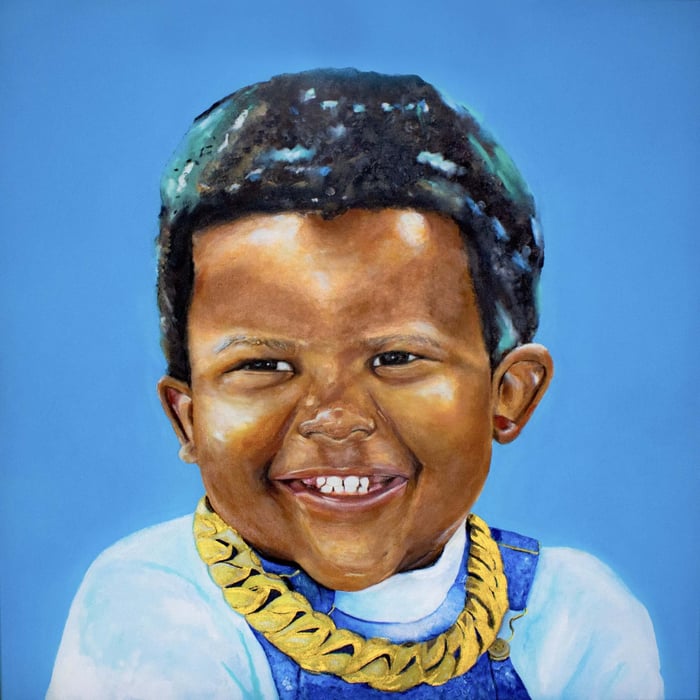
If you want a visual reminder of why Never Ends feels like a life laid out on a table, an album-cover poster is a surprisingly fitting artifact. If that’s your thing, you can grab one at our store: https://www.architeg-prints.com
 | DISCOUNTGET 30% OFF*Use code on your next order:
|
* This post may contain affiliate links, meaning we earn a commission if you make a purchase through these links, at no additional cost to you.