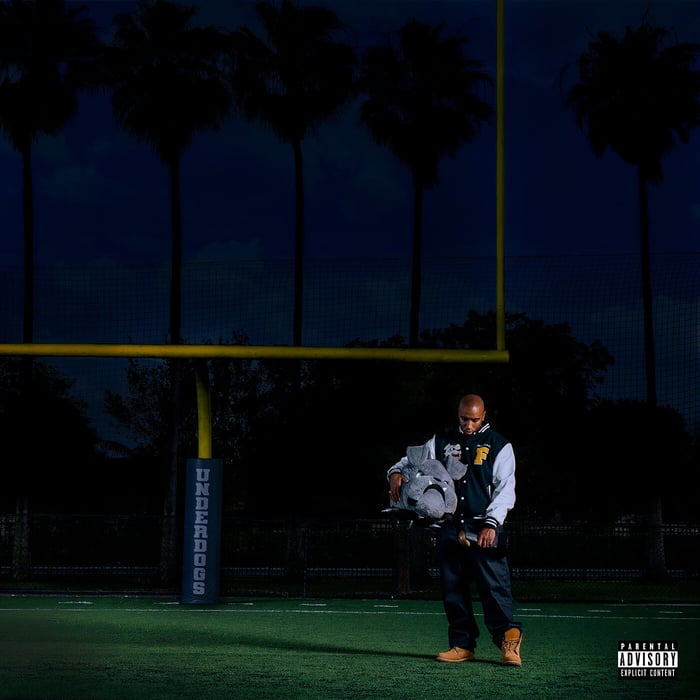
Underdogs Win Eventually Review: Bizzy Crook’s Grudge With Receipts

 See more Architeg Prints stories on Google.
Underdogs Win Eventually Review: Bizzy Crook’s Grudge With Receipts
Bizzy Crook’s Underdogs Win Eventually isn’t a victory lap—it’s a controlled burn where fame shows up late and still finds him mad. Here’s what I heard.
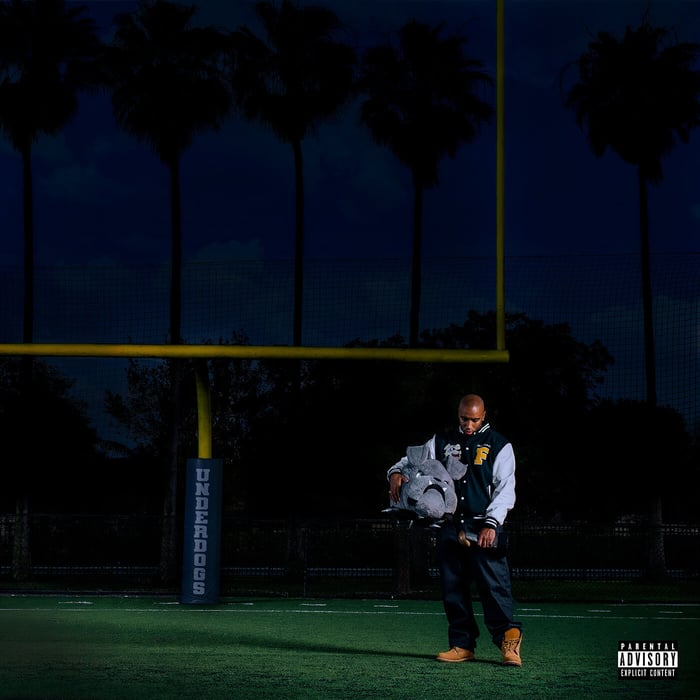
This album isn’t “inspirational”—it’s an itemized invoice
Most rap albums about winning want you to feel motivated. Underdogs Win Eventually wants you to feel indicted. I walked in expecting a clean “debut statement” kind of record—tight hooks, a little hunger, a little gratitude. What I got instead was a guy auditing his entire life, naming names, naming years, and keeping the tone ice-cold like he’s reading a bank statement he’s memorized.
Bizzy Crook doesn’t rap like someone excited to finally be here. He raps like someone who arrived late, looked around, and immediately started locking doors.
And yeah, that’s the point: this is his first album release in ten years, and it sounds like he spent that decade hoarding the best lines for himself, not for the rooms he was writing in. He’s been stacking wins on other people’s records—writing credits for Giveon and Kehlani, and then those Grammy wins earlier this year connected to Leon Thomas’s work—so when he calls this moment “eventually,” it doesn’t land like a slogan. It lands like a bruise.
The real plot: he’s shrinking his world on purpose
Here’s the move Bizzy keeps making: somebody disappoints him, and he makes his life smaller.
“Small Circles” is where he spells that out without dressing it up. The hook flex is sweet on paper—he buys his mother a Louis purse, she’s “bougie now,” it’s that classic rap payoff. But then he flips it with one of the meanest little reality-check punches on the whole album: he admits his mom didn’t believe in him until he bought her a brand-new car… and then the bank repossessed it.
That’s not just a sad anecdote. He’s basically saying: even the people you do this for can have their faith financed, and the lender can take it back.
He keeps pushing the knife in, too—there’s a cousin who can’t even send a congrats after ten years of grind. It’s petty, but it’s also weirdly human, because fame makes people pretend they’re above wanting basic recognition. Bizzy doesn’t pretend. He’s annoyed, and he stays annoyed.
Then “Locked TF In” turns that annoyance into a routine. Stripped drums, heavy bass, and this feeling that the room has one chair and one screen—him and Pro Tools, that’s it. When he warns, “We ain’t really friends, man, don’t ask me where I been,” it’s not a bar meant for the crowd. It’s a boundary he’s repeating so he doesn’t fold.
The softest thing he lets into that sealed room is one line that actually caught me off guard: “Gotta make my inner child proud.” One line for the kid, then he closes the door again. If you think this is an album about connection, you’ll probably hate it. It’s about selective access.
“Could Be Worse” is the album admitting it’s scared to be happy
The Zapp reference under “Could Be Worse” matters because it drags a certain kind of tenderness into the room—one that’s historically tied to survival songs, not celebration songs. Bizzy uses it to run a blunt check-in: “You see the wins, but what about the scars underneath?” That question is the album’s real hook, even when another hook is playing.
Leon Thomas shows up on the same track and mirrors the climb from the other side—details about a Colombian maid and a five-thousand-dollar bed he doesn’t even sleep in—then lands at the same conclusion: where you’ve been isn’t where you’re going, and it could be worse.
I’ll be honest: on first listen I thought Bizzy might get swallowed by the singers on this record. On second listen, it’s the opposite—he uses singers like contrast lighting. When he’s next to a smoother voice, his own stiffness starts to make sense. He’s not trying to be pretty. He’s trying to be precise.
And I’m not even totally sure he believes the “could be worse” mantra. It sounds like something you repeat so you don’t text the wrong person back.
When the album flirts, it still sounds like logistics
Bizzy is at his most comfortable when he can treat romance like a responsibility instead of a dream.
“That’s Love” rides a New Orleans bounce, but what he chooses to do with it is telling: he compresses the whole idea of romance into one instruction—“Baby girl, just get home safe.” It’s care as door-to-door management. It’s sweet, but also a little bleak, like he can’t imagine love without a safety protocol attached.
Then “What Do You Like” brings in Ty Dolla $ign on a hook that nods toward that Da Brat/Tyrese “What’chu Like” energy, and Bizzy writes his verses like a questionnaire:
- city or islands
- blanco or reposado
- AP or Rollie—pick one
It’s courtship presented as a survey with answers he already expects. A reasonable listener could call that shallow; I think it’s more like self-defense. If you keep everything in multiple choice, nobody gets close enough to ruin you.
“Find the Feeling” is a confession that luxury didn’t fix the leak
“Find the Feeling” starts with a threesome at a Four Seasons, which is one of those flexes that usually signals the song is about to get goofy. But the fun drains out line by line until it isn’t even a flex anymore—it’s a symptom.
He admits he’s chasing something he can’t define: he thought it might be the floor-to-ceiling windows, the new cribs, the whole upgraded life. Then he drops the therapist line—about the “infinite money glitch”—and it lands with that quiet dread of someone realizing self-awareness still costs money and still doesn’t guarantee a solution.
“I got everything I wanted, and I’m still not done with it,”
he says, and he never names what “it” is. That’s the creepiest part. The itch stays anonymous, like he’s scared that once he names it, it’ll become real enough to beat him.
“Risky” and “Justified” turn bitterness into craft
On “Risky,” Rick Ross shows up doing what Rick Ross does: pricing himself like a luxury catalog. “300K” for the chain around his neck—he makes wealth sound like a SKU number.
C Stunna slides in with full Miami shorthand—city-to-city recognition, crew tags, identity as a roll call. And Bizzy, over ACRAZE’s heavy bass and programmed drums, toughens up to match the environment. But what he actually confesses is the opposite of tough-guy simplicity:
“I don’t know what my sick obsession with revenge is.”
That line matters because it’s the rare moment where he doesn’t pretend the grudge is noble. He just admits it exists.
And then—this is the real reveal—he pledges loyalty not to people but to the tool that keeps the grudge sharp:
“Me and my pencil inseparable, baby, you never gon’ take his place.”
That’s not romantic. That’s a man marrying the act of keeping score.
“Justified” puts a timestamp on the loneliness:
“In 2022, that’s when my phone stopped ringing.”
It’s such a simple detail, but it makes the whole story feel uglier. Silence becomes a date you remember.
Then the Hot 100 moment flips the switch—relatives reappear, claiming ownership over a win he insists they didn’t earn. Benny the Butcher shows up like the hard-road translator, closing with a line that’s cold enough to be a family motto in a different life:
“Water can blow up the Coke, but it isn’t thicker than blood.”
The co-sign stings partly because it comes from outside the family—like, even strangers can articulate your betrayal better than your own people.
Not every “club-ready” moment earns its seat
Here’s where I’m not going to pretend the album is flawless.
“Ready or Not” hits that familiar “baddie o’clock” lane, and the problem isn’t that it’s a club song—the problem is it feels replaceable. It sounds like the kind of Hitmaka-style club cut plenty of talented Miami rappers could’ve run with, and Bizzy doesn’t twist it into something only he could say. For an album that’s this specific everywhere else, generic confidence is weirdly the least convincing emotion.
“100%” leans more on Leven Kali’s hook than on Bizzy’s bars. The “nines and up” talk plays like background chatter compared to the tracks where he’s talking about his mother, his cousin, his phone going dead. Next to those, this one feels like gossip—like he stepped out of the main story to prove he can still do the standard stuff.
Maybe that’s intentional, a palate cleanser. Or maybe it’s just the tax you pay for trying to make an “album” instead of a diary.
“It’s Never Over” is the moment the motivation actually has teeth
The long, thought-provoking centerpiece here is “It’s Never Over,” and it hits harder because it’s packed with unpretty details.
Before plaques, it was money stress—his mother calling about overdraft statements, which is the kind of thing that makes “grind” sound less like ambition and more like survival. He runs through a decade of friction: homeboys who couldn’t become managers, a cameraman too high to even film, momentum constantly sabotaged by people who wanted the benefits without the professionalism.
One line basically explains why he waited so long to show up as “Bizzy Crook the album artist”:
“Investors dropped me when I made an album about depression.”
That’s not just industry cynicism—it’s a lesson he clearly internalized. Don’t be vulnerable unless it sells.
Then he gets painfully specific about the turning point: a party in London for Dre, running into a familiar face from the Nickelodeon channel, and Leon Thomas telling him, “Rock with me, I got your back.” That sentence functions like a hinge. Everything swings open after it, right down to the plaques—three-time platinum reality replacing motivational poster language.
By the third verse, he lands somewhere quieter: sobriety and gratitude, with the cleanest proof-of-life line on the record—he loves being sober because every minute sober reminds him it’s not over. Finally, the hook isn’t just hope. It’s supported by evidence.
“Where I Know You From” turns forgiveness into a private club
Late in the album, “Where I Know You From” brings the past back in the form of an ex trying to reconnect years after the Applebee’s days. Bizzy’s move is petty in a way I kind of respect: he pretends he doesn’t recognize her—“Where I know you from?”—even though the whole song proves he remembers everything.
He brings up the specific betrayal: she left him for a guy sitting at the promoter’s table. And then he drops the couch line—“When I was sleeping on my cousin’s couch, you slept on me”—a pun that doesn’t feel like a joke. It feels like a final stamp on the file.
The sorority skit at the end (featuring “Chanel No BBL”) announces a special party for their underdogs, and it tells you exactly how Bizzy’s forgiveness works now. It’s not universal. It’s selective. If you weren’t in the trenches, don’t expect a seat.
I kept waiting for him to soften here—to give some cinematic closure. He doesn’t. He just tightens the guest list.
Conclusion: the win is real, but he won’t let it redeem anybody
Underdogs Win Eventually plays like Bizzy Crook finally cashing the check and still refusing to smile for the photo. The best songs aren’t “about success.” They’re about the emotional vandalism that happens on the way to it—how generosity can backfire, how silence gets dated, how therapy becomes another bill, how sobriety turns into proof you’re still steering.
If you want a neat glow-up narrative, this album will annoy you. It doesn’t tie bows. It ties knots.
Our verdict: People who like rap that keeps receipts—family drama, industry whiplash, and paranoia that feels earned—will actually love this. If you need every track to be charming or every flex to feel fun, you’ll bounce off it fast and call it bitter (and, honestly, you won’t be completely wrong).
FAQ
- What is Bizzy Crook’s album Underdogs Win Eventually mainly about?
It’s about winning late and realizing the win doesn’t automatically repair relationships, self-worth, or trust. - Does Underdogs Win Eventually have strong features?
Yes—Leon Thomas adds real perspective, Ty Dolla $ign brings a familiar smoothness, and Benny the Butcher sharpens the album’s family-betrayal theme. - What are the standout tracks on Underdogs Win Eventually?
The songs that stick are “Small Circles,” “Justified,” and “It’s Never Over,” because they’re specific enough to feel risky. - Is this album more reflective or more club-oriented?
Reflective overall. The club-ready moments exist, but they feel like detours compared to the heavier personal tracks. - Does Bizzy Crook sound hopeful on this record?
Occasionally—but it’s a hard-earned hope that shows up alongside resentment, not instead of it.
If this record put you in the mood to live with the artwork a little longer, you can always turn your favorite album cover into wall fuel—posters and prints over at https://www.architeg-prints.com/ fit this “keep the receipt” energy pretty well.
 | DISCOUNTGET 30% OFF*Use code on your next order:
|
* This post may contain affiliate links, meaning we earn a commission if you make a purchase through these links, at no additional cost to you.