No Cure “It Is Going To Get Dark” Review: Panic, Pride, and Punch-Ins


 See more Architeg Prints stories on Google.
NO CURE “It Is Going To Get Dark” Review: Panic, Pride, and Punch-Ins
NO CURE’s album “It Is Going To Get Dark” confronts a collapsing world with unyielding intensity, blending fierce identity and relentless sound into a powerful statement.
This album doesn’t “set a mood”—it picks a fight
Some records want to soundtrack your life. NO CURE wrote one that wants to argue with you in the parking lot after the show. It Is Going To Get Dark doesn’t whisper about dread or gently process feelings; it barrels into the room like it’s late for something violent and important.
And yeah, I went into it expecting purely inward rage—personal demons, private damage, the usual hardcore therapy session. But it didn’t stay there. Pretty quickly, it starts staring outward, like the band’s decided the world itself is the target now. The darkness isn’t metaphorical fog anymore; it’s a widening hole they keep pointing at like, “You seeing this too?”
That’s the real move: NO CURE aren’t taking notes on the apocalypse. They’re ripping the paper up and choosing a direction anyway.
The opening track answers its own question: by going faster
The first punch comes from “When The Spasms Cease.” It opens with a question—
“how did we get here?”—and then immediately stops pretending it wants an answer. The track basically treats that question as a trigger word.
You get the full body language of the album right away:
- guitars that don’t “build” so much as spit
- pinch harmonics that feel like someone scraping metal in your ear on purpose
- chunky riffs that lock in like a battering ram finding its rhythm
- drums that don’t so much groove as insist
- razor-sharp vocals and those heavy gang vocals that make every line sound like a verdict
What hit me most is the velocity. The record keeps coming at you, and it rarely relaxes into anything you’d call comfort. If you’re waiting for a “big atmosphere moment,” you might be waiting a while. This thing would rather sprint into a wall than slow down and explain itself.
And I’ll admit it: for the first minute or two, I wasn’t sure if that constant forward motion would start to blur together. I kept waiting for fatigue to set in. It mostly doesn’t—mostly.
The features aren’t garnish—they’re pressure changes
Once the album has you in its grip, it starts doing the smarter thing: it stays unpredictable. Not by swapping genres for shock value, but by bringing in voices that change the temperature of a song at the exact moment it could’ve gotten too familiar.
On “Brain Matter Displacement,” with Jayway (BAYWAY), the album plays with revenge like it’s not a fantasy, but a plan. The interesting tension is how the track balances incendiary death metal vocals against slick, pointed bars. That contrast doesn’t soften the violence—it sharpens it. Like, “I can articulate this perfectly, and I can still hurt you.”
Then there’s “Sharpen The Blade,” featuring Skyler Condor (VARIALS). “Stomping” is the right word here—this track doesn’t glide, it steps. The feature doesn’t feel like a cameo; it feels like No Cure called in someone to make the boot feel heavier.
And when Vincent Bennett (THE ACACIA STRAIN) shows up on “Purity Spiral,” the song basically bursts into flames it was already standing next to. The feature is pure accelerant. If the band’s goal is to make the listener feel cornered by sound, this is one of the moments where the walls actually move.
This is where the record starts to show its actual subject list—trauma, identity, morality—but it doesn’t approach them with delicate framing. It treats them like blunt objects you either lift or get crushed by.
I’ll throw a small complaint here, because it’s earned: the constant intensity can make a few transitions feel more like impact after impact than a carefully paced arc. Sometimes I wanted one extra breath—not a ballad, not a soft interlude, just a half-step back so the next hit lands even harder. The album doesn’t really care what I wanted, though. That’s kind of the point.
Hope shows up wearing steel-toed boots
Here’s the twist: amid all that cataclysm energy, the album keeps flashing something that looks like hope—but it’s not the cinematic kind. It’s not “we’ll be okay.” It’s closer to “I’m not moving.”
A lot of that comes through how straight edge identity is handled here. It doesn’t feel like trivia or a slogan thrown in for the faithful. On It Is Going To Get Dark, it comes off like a deliberate refusal to wobble while everything else shakes. In a world that keeps asking you to numb out, this album keeps answering with structure. It’s not romantic. It’s rigid on purpose.
“Ironclad” is where that gets loudest, and it’s an obvious highlight. The riffs groove without losing aggression, pinch harmonics scream at the edges, and Tyler Short (INCLINATION) storms in like he’s there to make sure nobody mistakes the message for merch.
The line
“Ironclad till my dying breath”isn’t delivered like poetry—it’s delivered like an oath you don’t say unless you mean it. And that’s where the “hope” lives: not in optimism, but in commitment.
Honestly, on first listen I thought the identity stuff might feel too planted, like a banner being waved so hard it blocks the stage lights. But on second listen, it clicked differently: the album isn’t asking you to join a club—it’s showing you what it looks like when someone refuses to be dissolved by the moment they’re living in.
That’s a bigger statement than any single breakdown.
The closer doesn’t comfort you—it drafts you
Right before the album shuts the door, it drops a quick, nasty little mission statement in the form of “I Am Still Fucking Straight Edge”—a 50-second gang-vocal-loaded anthem that moves at breakneck speed. It’s not subtle, and it’s not trying to be. It’s the sound of a room full of people shouting the same sentence because they’ve decided the sentence is survival gear.
Then the record walks itself out with “Everything I Love Is Dead Or Dying,” and that title alone tells you the kind of exit this is. Apocalyptic, sure—but not theatrical. It feels like No Cure are looking at the state of things and saying: the world’s coming apart, so figure out who you are and who you’re willing to stand with before the lights go out.
If you want the album’s intent in plain language, it’s this: collapse is happening anyway, so you might as well choose your spine.
That won’t be everyone’s idea of a good time. But it’s coherent. It’s focused. And it’s way more useful than another record that just describes despair like it’s wallpaper.
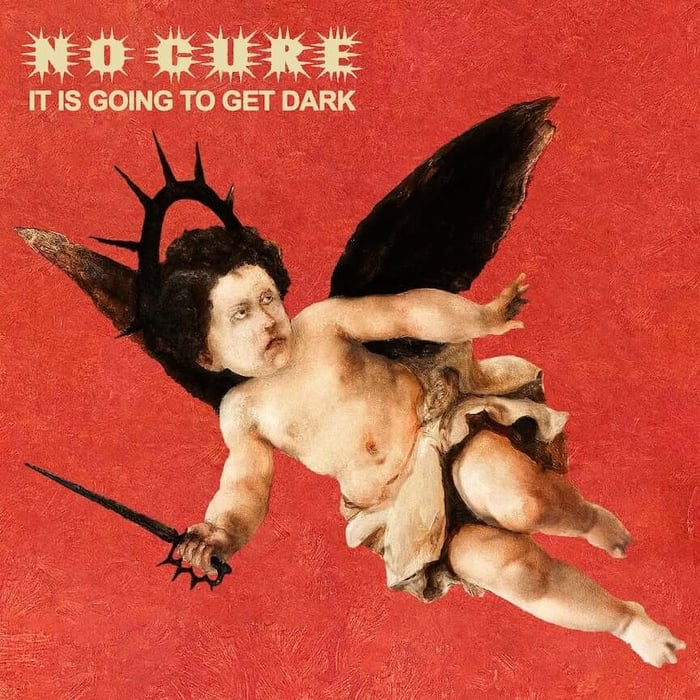
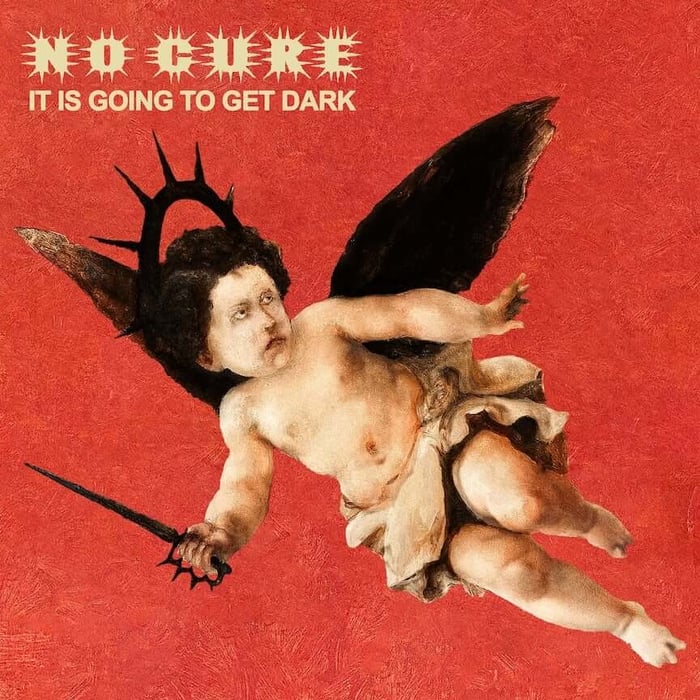
The cover tells you what you’re getting
Release details (because you’ll ask anyway)
It Is Going To Get Dark is out now via SharpTone Records.
And yes, I’ll put a number on it since some people need that kind of closure: I land around an 8/10 experience-wise—high impact, high conviction, with just a little pacing stubbornness that occasionally blunts its own knife.
Conclusion
It Is Going To Get Dark isn’t trying to be your friend. NO CURE built a record that treats identity like armor, chaos like an enemy, and heaviness like a delivery system for decisions you’ve been avoiding. It’s harsh, direct, and (mostly) smart about how it keeps you off-balance—because comfort is the one thing this album refuses to hand you.
Our verdict: People who like their heavy music with a spine—straight talk, gang vocals, riffs that lunge—will actually love this album. If you need “nuance” to mean “softened edges” or you’re allergic to conviction, you’ll bounce off it fast and call it too much. That’s fine. The album isn’t built for fence-sitters, and it doesn’t pretend otherwise.
FAQ
- What’s the core vibe of the No Cure album?
It feels like outward-facing collapse: the songs sound like they’re reacting to a world in ruin, not just personal misery. - Which track sets the tone first?
“When The Spasms Cease” throws you straight into the album’s speed, anger, and gang-vocal force. - Do the guest features actually matter?
Yes—Jayway, Skyler Condor, and Vincent Bennett all shift the pressure of their tracks instead of just appearing for novelty. - Where does the album show something like hope?
In “Ironclad” and the straight edge messaging—hope shows up as refusal to waver, not as positivity. - Is there a quick punch-track near the end?
“I Am Still Fucking Straight Edge” is a 50-second blast built around gang vocals and momentum.
If this record stuck with you visually as much as it did sonically, it’s the kind of album cover that looks ridiculous (in the best way) as wall art. If you want, you can shop a favorite album cover poster at our store: https://www.architeg-prints.com
 | DISCOUNTGET 30% OFF*Use code on your next order:
|
* This post may contain affiliate links, meaning we earn a commission if you make a purchase through these links, at no additional cost to you.