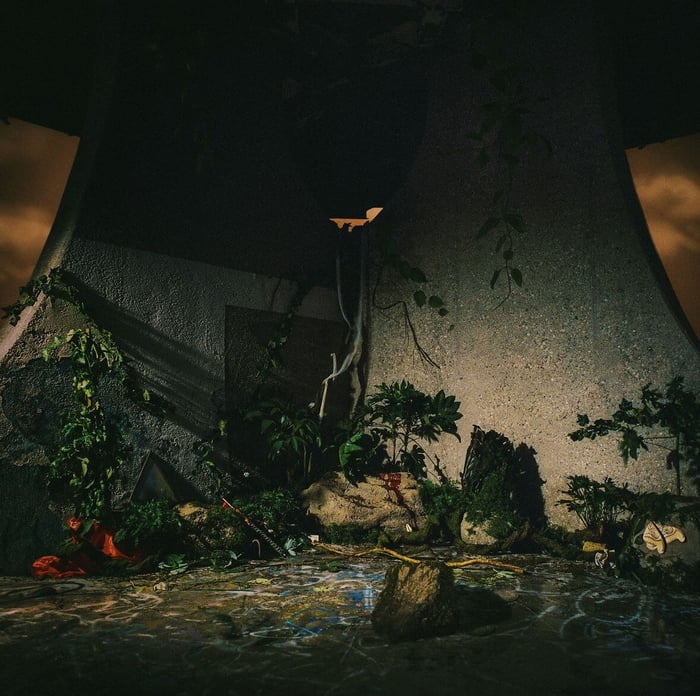
The Volume Series Review: The Plot In You’s “Playlist” Isn’t Subtle


 See more Architeg Prints stories on Google.
ALBUM REVIEW: The Volume Series – The Plot In You
A detailed review of The Plot In You’s latest collection, The Volume Series, exploring the band’s evolving sound and the impact of compiling their recent releases into one powerful album.
The last few years have seen one of metalcore’s more exciting bands, THE PLOT IN YOU, drip feeding us a selection of songs released through a smattering of EPs. This approach has been perfect for generating excitement about the band and teasing new music by keeping fans on their toes, wondering what is going to come next. Now, record collectors can rejoice as all these songs are making their way as a full collective, presented to us as The Volume Series.
A “Collected Works” That’s Not Pretending to Be One
The first thing you notice about Volume Series is that it doesn’t walk in like a traditional album. It strolls in like a folder full of sharp objects. These songs were clearly built to be released in pieces, to keep you twitchy, checking back in, wondering what the band’s next move is.
And now that they’ve been stitched into a single listen, the real trick becomes obvious: The Plot In You wanted momentum more than narrative. This is metalcore treated like a drip IV—small doses, regular hits, no time for you to get comfortable.
I’m not even sure this should “work” as a full-length the way it’s presented here… but annoyingly, it kind of does.
“Divide” Starts the Record Like a Door Being Kicked In
If you open Volume Series with “Divide”, you’re basically daring the listener to leave. The riff is thick and grimy—sludgy in that way that sounds like the guitar tone has elbows. It comes in surrounded by a cascade of noise that feels less like an intro and more like being shoved into the middle of an argument.
What sells it is Landon Tewers doing that thing he does: snapping between clean and harsh like he’s switching masks mid-sentence. The breakdowns don’t feel decorative—they feel like the point, like the song is designed to cave your chest in and then act innocent about it.
And weirdly, hearing it here—inside a bigger sequence—makes it feel more “locked in” than it did on its own. I thought it was just a strong single, but in this lineup it reads like the mission statement.
“Left Behind” Is the Band Letting You Breathe (Briefly)
Then “Left Behind” shows up and does something strategic: it softens the lighting. It’s more melodic, more accessible, the kind of track that sounds like it was built to pull in casual listeners without spooking them.
But I don’t think it’s pandering. It feels sincere—like the band is intentionally showing a vulnerable face right after flexing. Tewers’ vocal performance is the hook here, not the riff, and that’s a deliberate choice: the song wants you to listen to a person, not a pile of distortion.
Of course, the record doesn’t let that calm last.
“Forgotten” Brings the Knife Back Out
“Forgotten” kicks in with that brooding energy that doesn’t try to charm you. It’s harsh, full-throttle, and Tewers commits to the growl like he’s trying to sandblast the paint off the walls.
This is one of those tracks where the best advice is also the dumbest advice: play it loud. Not because it’s “heavy” in some vague way, but because the sound design feels like it’s meant to rattle your ears. The song’s pleasure is physical.
And right when you think you’ve got the rhythm of this collection—soft then brutal—there’s another pivot.
“Closure” Aims for Anthem, Not Impact
“Closure” opens with that familiar sludgy riff again, and the groove has a bounce to it—like the band knows exactly how to make heaviness feel rhythmic instead of just aggressive.
Then the track shifts into something more earnest, more open, like it’s reaching for catharsis instead of carnage. It’s a good song. I’m not denying that. But it doesn’t hit as hard as the best moments here, and I think that’s because it leans into a more pop-leaning shape. The edges get sanded down.
Still, the emotional point lands because the theme is so plainspoken: sometimes you really do need closure, and you don’t get it without dragging your body through the memory again.
“I don’t think I could live through that again” — Landon Tewers
That line is the spine of the track. It’s desperation dressed up as a chorus, and it gives the song a victorious feeling even while it’s admitting weakness.
“Don’t Look Away” Hits Like a Hammer That Knows Timing
When “Don’t Look Away” arrives, it feels like a hard reset into violence. It packs a punch that’s blunt but precise—at times it really does feel like a hammer striking an anvil, that clean metallic impact.
There’s urgency baked into the arrangement. The riffs are funky in that dark, stomping way—music that practically begs for a live room and a stupid amount of bodies moving at once. This is one of those tracks where you can already see the mosh pit forming before the chorus even finishes.
And yes, that’s a compliment. Some bands write “heavy songs.” This one writes crowd behavior.
“All That I Can Give” Almost Wins… Then Shrugs
“All That I Can Give” is where the collection briefly shows its seams. The track means well. You can hear it trying to rise into something huge, emotional, and sticky—something that should be a home run.
But it falls a bit short for me. Not disastrously. More like it gets to the edge of a cliff and decides not to jump. The vibe it gives off is unmistakable: it feels like it’s borrowing the emotional framing and pacing from the Bring Me The Horizon era that lived around Suicide Season, specifically the kind of dramatic push-pull you’d associate with “The Sadness Never Ends.”
That reference point isn’t an insult—just an explanation. The problem is that The Plot In You usually sounds most convincing when they’re being aggressively themselves, not when they’re flirting with someone else’s blueprint.
“Been Here Before” Is the Moment the Whole Thing Justifies Itself
Then “Been Here Before” shows up and suddenly the argument is over.
This is the standout. It’s euphoric, and the chorus is the kind of cathartic release that triggers goosebumps on contact. The song moves like it’s doing 100mph, and the emotional swing is sharp enough to make you feel slightly ridiculous for caring—which is how you know it’s working.
It also feels like the quintessential THE PLOT IN YOU track because it balances speed, heaviness, and that “feels train” melodrama without tipping into self-pity.
If you’ve heard it live, you already know the exact moment: the music drops out and Tewers’ vocals carry everything for a few seconds. It’s not a gimmick. It’s the band proving they can hold a room without hiding behind volume.
Honestly, it almost seems unfair that any song has to follow it.
“Pretend” Feels Like Leftover File Exported by Accident
And then “Pretend” does follow it, and… yeah. The momentum dips.
This is one of the few tracks here that I kept wanting to love more than I actually did. It doesn’t hit the standard set by what came right before, and it gives off “this could’ve been a B-side” energy. Not because it’s unlistenable, but because it doesn’t feel necessary in this sequence.
I’ll admit: on my first run through the collection, I assumed I was just being cranky because “Been Here Before” raised the bar too high. On second listen, I still felt the same drop. So it’s not just me being dramatic.
“Spare Me” Makes Brutality Look Pretty (In a Bad Way)
“Spare Me” fixes that. It’s one of the heavier tracks, and it barrels forward like it’s designed to leave marks. The best description I can give is the one my brain kept returning to: it sounds how a bruise looks.
What makes it stick is the guest vocal from Elisa Triana—haunting, ethereal, floating above the brutality. It’s a perfect ugly-beautiful combination, like the band intentionally stacked velvet on top of a concrete block.
This track feels engineered for “wall of death” moments. Not in a try-hard way. In a practical way, like the band is simply building the exact kind of chaos they want to see.
“Silence” Into “You Get One” Is the Record’s Meanest One-Two
“Silence” and “You Get One” come as a heavy one-two punch that doesn’t mess around.
The move here is pacing: “Silence” builds, tightening the screws, and then “You Get One” arrives with an infectious bounce that practically forces a physical reaction. The riffs pull “stank face” expressions out of you without asking permission.
These songs feel tailored for the live setting—punishing but fun, the kind of tracks that make you miss sensory overload: flashing lights, bodies colliding, everything too loud, the room turning into weather.
If you wanted proof that Volume Series is partially a concert strategy, this pairing is it.
“Carved” Ends by Letting the Air Back In
“Carved” closes the collection on a victorious note, and it does it by returning to melody—relief after the heavier stretch.
It’s easier on the ears, not because it’s watered down, but because it’s shaped to feel like an exit instead of another fight. It rounds things off cleanly and gives Tewers one last chance to show off how strong his vocals are, especially when he’s not hiding behind distortion.
And that’s the real ending statement: this band can bludgeon, sure—but the voice is the thread tying all these different releases together.
So What Is Volume Series Actually Doing?
Here’s what I think Volume Series is really about: it’s a timeline of a band testing what kind of songwriting they can get away with, while still sounding like themselves.
You can pinpoint the moments where they’re clearly shifting gears—trying newer angles, swapping emotional framing, adjusting how “pop” they’re willing to go, and how ugly they’re willing to sound right after.
Is it perfectly matched front-to-back? No. There’s a small amount of mismatch, and you feel it in the handful of tracks that don’t quite land at the same height. But that slight inconsistency also tells the truth: this is what growth sounds like when it’s not cleaned up for a neat album arc.
If I had to put a number on how effective the whole collection is, I’d land around an 8/10—mainly because the hits don’t just hit, they drag the rest upward.
The Volume Series is out now via Fearless Records.
Conclusion
Volume Series plays like a controlled leak that finally got compiled into one place, and the compilation exposes the band’s real obsession: not heaviness, not melody, but timing. When they nail the sequence—when they choose the right moment to go brutal or open-hearted—it feels inevitable.
Our verdict: People who like metalcore that’s built for real rooms (sweaty, loud, slightly unsafe) will love Volume Series, especially if they enjoy big choruses right next to throat-punch riffs. If you need albums to feel perfectly curated and “no-skips” tidy, this one will annoy you—because it refuses to pretend every track is equally essential.
FAQ
- What is the core vibe of Volume Series?
It’s a compiled run of songs that swings between punishing heaviness and melodic confessionals, with pacing that feels designed for live crowds. - Which song hits hardest on first impact?
“Divide” comes out swinging immediately, with sludge-heavy riffing and breakdowns that feel like the point of the track. - What track feels like the centerpiece?
“Been Here Before”—the chorus is cathartic in a way the rest of the collection has to chase. - Are there any weaker moments?
“Pretend” doesn’t feel as essential after the high of “Been Here Before,” and it reads like it could’ve lived as a spare track. - Does the collection end heavy or melodic?
It ends melodic: “Carved” rounds everything off with a more ear-friendly finish and a final vocal showcase.
If you’re the type who bonds with album artwork as much as the breakdowns, you can always shop a favorite album cover poster at https://www.architeg-prints.com/ — it fits the whole “music as a physical object” mindset this release leans into.
 | DISCOUNTGET 30% OFF*Use code on your next order:
|
* This post may contain affiliate links, meaning we earn a commission if you make a purchase through these links, at no additional cost to you.