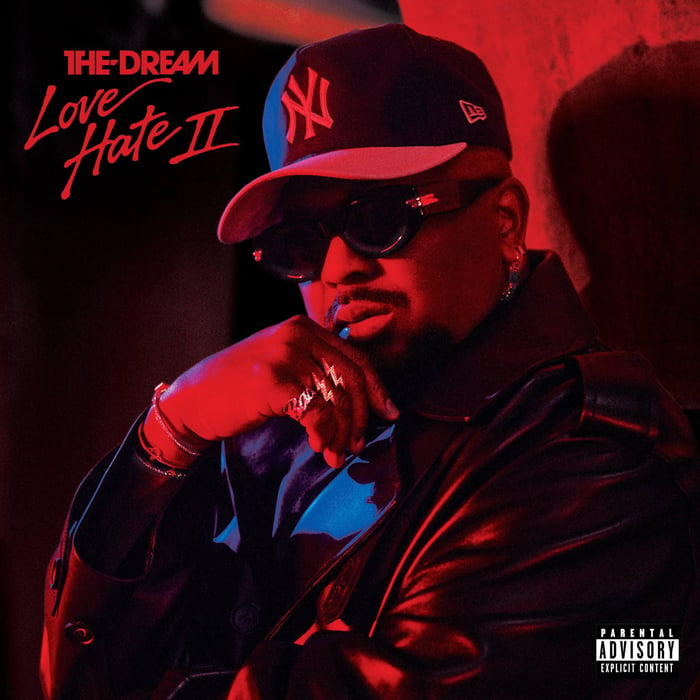
Love/Hate II Review: The-Dream’s Seduction Sequel That Bites Back


 See more Architeg Prints stories on Google.
Love/Hate II Review: The-Dream’s Seduction Sequel That Bites Back
Love/Hate II isn’t a comeback victory lap—it’s The-Dream turning bedroom R&B into a paranoid romance thriller, and it mostly works.
Start Here: This Album Isn’t “Smooth”—It’s Strategic
The first thing Love/Hate II does is remind you The-Dream doesn’t really write love songs. He writes leverage. Even when he’s whispering sweet nothings, the subtext is always: you’re coming with me, one way or another.
Back in the late-2000s mode that made him feel like an entire genre by himself, the sound is still built on drum machines, a thick synth bass that presses into your ribs, and those stacked falsettos that multiply until the words start spilling over the beat. That’s not an accident. That’s his whole trick: overload the room with voice until you stop arguing.
And yeah, there’s baggage around his name now, and I can’t pretend that doesn’t change the temperature of some of these lyrics. But purely as a listening experience, Love/Hate II plays like a “return” album that refuses to act grateful. It’s not here to be liked. It’s here to win.
The Early Run: Courtship as a Controlled Environment
The album starts by acting like seduction is a slow craft, almost domestic—like he’s setting lighting rather than chasing a thrill. That’s a bold choice, and some people are going to call it “grown.” I think it’s something colder: control dressed up as tenderness.
On “Love Sound,” the groove stays patient—drum machine ticking, synth bass looping, backing vocals widening the chorus like a doorway opening. The scene details stack up: car to kitchen counter to dishes, a little montage of conquest-as-routine. Then the song lets the woman interrupt with the one question that actually matters: what does he know about love? That moment lands because it briefly punctures his whole persona. Briefly.
“24/7” doubles down on devotion as captivity-by-romance. He keeps her in the room for a week like that’s a cute idea, like leaving would be “walking out of heaven.” The most telling flex isn’t money or sex—it’s that he sings her tempo:
“One twenty-six BPM.”That’s The-Dream telling you the relationship has a metronome and he’s holding it. If you find that sexy, you’ll love this stretch. If you find it unsettling… well, keep listening.
Dirty Macking, But Make It a Mission Statement
From there, Love/Hate II stops pretending the other guy isn’t the enemy. The album doesn’t just flirt—it sabotages.
“1 of 1” plays like a phone call with an agenda. He pushes a woman to call the man she left him for and end it immediately, and the emotional whiplash is the point:
“I’ll always adore you”right next to
“I’ll kill a [guy] for you,”capped with him admitting he’s giving off psycho energy. It’s not subtle. It’s supposed to feel like a confession you’re not allowed to repeat.
“Bring That Body” is even less patient. The hook is a command, not a request: bring her here, leave him there. He tries on the “I’m just the messenger” mask—I’m only here to undress you—and then the song quietly exposes the lie. There’s a section where the vibe shifts and suddenly it’s: we’re “just friends,” but he has keys, and he lets himself in. That’s the album in a sentence: romance as plausible deniability.
Then “Favorite” flips the dynamic into something almost businesslike. The agreement is mutual and nasty in a way that’s weirdly honest: she doesn’t need love, she wants the check; he loves her when he flies her out; she loves him when he’s in town. People will argue this is shallow. I think it’s The-Dream being practical—like he’s allergic to pretending.
“Tampa” and the Art of Flexing Like It’s Foreplay
Next, the album slides into a feature moment that feels intentionally smug.
“Tampa” has Usher doing what Usher does best: teasing like it’s athletic. The hook is shared as a taunt to the absent boyfriend—this is where your man should be—set over a Pharrell-style four-count that feels crisp and slightly show-offy.
Usher’s verse is logistics as seduction: flying her in, a mansion big enough to get lost in, an in-law suite (because nothing says romance like zoning), and luxury scent in the air. The funniest—and sharpest—moment belongs to the woman asking,
“What’s a Phantom?”It’s funny because it tells you everything: she’s new to this world, and these guys love that. Two professionals also take a little swipe at each other about saving the “running” talk for your own album, which reads like a playful jab… and also like two brands guarding territory.
If you came here for warmth, this track gives you a polished version of it. But it’s still a performance. The-Dream doesn’t “fall” in love on this album; he negotiates it.
When the Lights Go Out: “Powder Coat” Turns the Album Gothic
Then the album deliberately ruins its own comfort.
A woman steps into “Powder Coat” and asks the question that detonates the mood:
are you sure you want it—would you kill whoever—if we can’t be together?The production responds by stripping down to heavy bass, slower drums, and space that feels like an empty parking garage. The writing turns gothic: dangerous prayers, unheard prayers, dreamlike violence, poison, pawn shops, addicts—like love is a curse that spreads.
Pusha T shows up and does what he always does: makes luxury sound like a threat. Cold neck, expensive watch, name-drops that land like casual receipts, and then the line that sums up the track’s thesis: Dream and Push admitting they’re “psycho.” The strangest bar is hers—wandering through the “temple of life” in a sacrilegious way—which is the kind of poetic swing that’s either pretentious or haunting depending on your tolerance. I’m not even sure which way I lean yet, but it sticks in the head, so maybe it wins by default.
This is the moment where Love/Hate II admits what it’s really doing: it’s not building a romance, it’s building a trap—and asking if you want in.
Interlude Energy, Then the Grudge Starts Driving
After that, the album lets a woman speak on “Virgo Type Shit.” It’s one of the few moments where The-Dream steps back and lets the emotional weather come from someone else. She complains about that Virgo behavior—sweet one second, sharp the next—and there’s a half-finished insult she can’t even bring herself to complete. That unfinished thought tells you more than a full monologue would. It also sets up what comes next: him proving her right.
“State of Peaches” is where resentment takes the wheel. He hears someone saw his ex at Whole Foods last year—last year—and still makes a U-turn on Peachtree just to see her face. That’s not romance; that’s compulsion. He can’t sleep, he hopes she misses him “twice,” and then he starts preaching like the song is trying to graduate into philosophy:
if you die before you live, it’s like you were never there.It’s a great line—and also a little convenient, like he’s using wisdom to dress up obsession.
The two-part “Obviously / Juxtapose” stretches the grudge further. First comes the threat—she’ll hear the wrath of his love—then he spends a full verse mocking the new boyfriend’s clothes and even how the guy sits. It’s petty in a way that’s almost impressive. And right when he’s done posturing, he switches into a dream-state plea signed in Spanish:
“Te adoro, mi amor.”That pivot is so sudden it almost made me laugh the first time. On second listen, I realized that whiplash is the point: he wants to be seen as both the storm and the apology.
The Features as Personality Tests (And One That Doesn’t Quite Land)
From there, the album runs a set of songs that feel like different masks hung on the same hook: be mine, come here, don’t leave, but also—leave him.
“Be My Lady” is classic pitch stuff: be my lady, have what you want. T.I. shows up and doesn’t exactly float—he talks his way through the track, half-comic and dirty, gradually turning into a kind of customer service rep: call me when you need something. It’s amusing, but it also drags the fantasy into fluorescent lighting. Some listeners will love that grounded charm. I think it dulls the song’s edge.
“Papi Te Ama” becomes an actual conversation, and that’s refreshing. Kelly Rowland surprisingly doesn’t sing here, but her presence still matters because it changes the dynamic: playful banter up top, her brighter voice bouncing off his. The-Dream even turns chauffeur roleplay into a joke that still reveals his mindset: pulling off in the Benz “like Uber,” asking for five stars when he’s done. It’s funny, sure—but it also frames intimacy like a transaction with a rating system.
“Perfect” gives Rick Ross the long goodbye: Birkin bag plugs, first-night rules, all the luxury detail you’d expect. Meanwhile The-Dream keeps insisting every flaw is what he loves most, which is either tender or manipulative depending on how you hear it. Ross caps it with a tribute to B.I.G., which plays like a sign-off salute after a night of expensive promises.
Where the Album Sags: Same-Temperature Grooves and Low Stakes
Here’s where I have to be a little blunt: a few tracks in the later run blur together, and I don’t think it’s intentional.
On “No Hands,” The-Dream shows up like a beggar, calling his own creation a mess that needs cleaning. The drums barely move—tight pocket, minimal momentum—and his big promise is basically: I’ll help you scroll TikTok until you finish. That’s a very modern kind of intimacy, but it also feels weirdly small for an album that started out sounding like a full-scale seduction campaign.
“Blow My Mind” keeps compliments narrow: her hair, her behavior with his mother. The hook and verses push forward without much changing underneath, like the song is coasting on a loop that never earns its runtime.
Then “I, Remember” stays in that same slow, plodding mood—prayerful, a little haunted, focused on a woman who said she had a man, plus that side-eye from his ex at the club. By this point, three grooves in a row start feeling like one long hallway. I kept waiting for the production to throw a curveball, and it just… doesn’t.
And that’s my main complaint: Love/Hate II is best when it risks being ugly. When it plays it safe, it turns into wallpaper with good vocals.
“A Cold Summer”: Petty Revenge, Luxury Receipts, One Perfect Detail
The closing stretch warms the water back up—though not to comfort, more like lukewarm resignation.
“A Cold Summer” has him floating while watching a woman move with a new crew that used to be his old crew. He runs through lifestyle updates like he’s trying to convince himself he’s fine: selling a Collins condo, upgrading a Bentley to a Rolls, still going to Miami for Carbone, learning she even does drive-throughs now. It’s a weirdly specific set of details, and that specificity is what makes it feel real.
Then the punchline turns out to be small and perfect: her new lover is a rat who couldn’t even do a year on a five-to-ten. And the breakup ultimatum—the thing he demands back after all the luxury talk—isn’t her heart. It’s a bomber jacket.
That’s the album’s funniest truth, said straight: all those trinkets, all that power posing, and the item he can’t let go of is a jacket. If you don’t understand that kind of pettiness, you won’t understand The-Dream.
Conclusion: Love/Hate II Is Romance with a Hidden Switchblade
Love/Hate II works because it refuses to behave like a mature apology album. It’s courtship, danger, revenge, and occasional tenderness—all delivered with that stacked-vocal hypnosis The-Dream practically trademarked. It stumbles when it gets stuck in same-speed grooves, but when it leans into paranoia and obsession, it becomes vivid in a way most “sexy” R&B won’t dare.
Our verdict: People who like seductive R&B with a sinister grin will eat this up—especially if you enjoy songs that sound like they’re smiling while reaching for your phone. If you want romance that feels healthy, or even just normal, you’re going to bounce off this album fast and call it “toxic” like you’re reporting a spill.
FAQ
- What is the core vibe of Love/Hate II?
It plays like seduction that keeps slipping into threat—soft textures, hard intentions. - Which part of the album hits hardest emotionally?
“Powder Coat” is the pivot where the sweetness collapses and the gothic paranoia takes over. - Does Love/Hate II feel modern or stuck in the past?
It sounds like The-Dream reviving his older toolbox on purpose—then sneaking in modern details (TikTok, ride-share framing) to keep it current. - Are the features essential or just decoration?
They’re personality tests. Usher amplifies the flex, Pusha T sharpens the menace, and Ross turns luxury into closure. - What’s the main weakness on repeat listens?
A mid-late stretch where the grooves blur and the songs stop escalating, even though the lyrics keep trying.
If you want a physical reminder of this album’s glossy-but-dangerous mood, consider grabbing a favorite album cover poster from our shop—it’s a nicer wall vibe than, you know, “wrath of my love.”
 | DISCOUNTGET 30% OFF*Use code on your next order:
|
* This post may contain affiliate links, meaning we earn a commission if you make a purchase through these links, at no additional cost to you.