NEVER SAY DIE Review: PFG Uses Empty Space Like a Weapon (Sorry, It Works)


 See more Architeg Prints stories on Google.
NEVER SAY DIE Review: PFG Uses Empty Space Like a Weapon (Sorry, It Works)
NEVER SAY DIE sounds like Fayetteville breathing through clenched teeth—PFG talks in plain truths while J. Cole keeps the beats slim, mean, and weirdly confident.
First, understand the town this album is dragging behind it
Fayetteville, North Carolina isn’t painted here like a quirky hometown. It comes off like a place engineered for survival: a soldier town wrapped around Fort Bragg, with that “Fayettenam” nickname hanging in the air like exhaust. The rap story out of this city feels strangely centralized—like it’s been passed through one house, one camp, one lineage.
That matters because NEVER SAY DIE doesn’t sound like a rapper trying to “make it out.” It sounds like somebody documenting what never really leaves you, even when your zip code changes. I’m making a claim here: this record’s biggest flex isn’t money or menace—it’s memory. And memory is heavier than bass.
PFG’s real trick: he raps like he’s talking to one person in the room
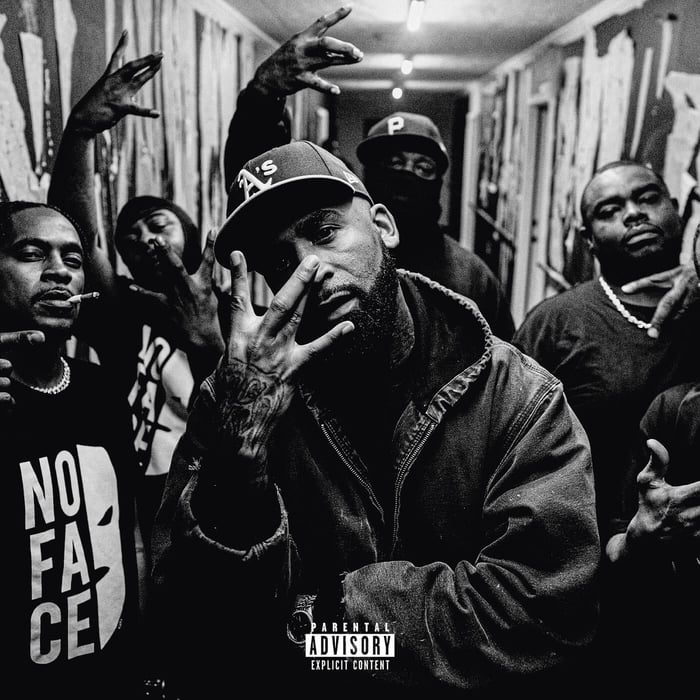
PFG (Prettyface Gangsta), who tags himself “No Face” alongside his own name, doesn’t perform like he’s trying to win new fans with acrobatics. He talks. He leans into a conversational cadence that makes the grim details land harder because he refuses to dress them up.
And J. Cole—home again, producing—sets him up with beats that stay slim and mean, the kind of open-air production where a busier producer would’ve stacked melodies to “fill it out.” Here, the emptiness is the point. That space becomes a spotlight, and PFG doesn’t waste it.
I kept waiting for the production to bloom into something more decorative… and it just doesn’t. That’s not laziness. That’s a decision. The album is basically saying: the story is the decoration.
“Mr. Biggs” is where the album tells you it’s not here to entertain you politely
“Mr. Biggs” rides a heavy soul loop that sits in a head-nod pocket—comfortable enough to lure you in—until PFG starts talking about trapping out the back door like it’s small talk at a cookout. He brags, “This that flow that Pac show,” and whether you buy that or not, the intent is clear: he’s placing himself in a tradition of street reportage, not Instagram captions.
This is one of those moments where NEVER SAY DIE shows its hand: the music isn’t trying to sound “big,” it’s trying to sound certain. The loop repeats like a thought you can’t shake. And PFG treats that repetition like a treadmill—steady pace, no drama, all stamina.
“Cole made the beat so I could smoke this bitch.” — PFG
That line is funny in a calm way, but it’s also the mission statement. The beat exists to be dominated, not admired.
“End of the Day” is a hustler’s sermon—and it doesn’t need a choir
On “End of the Day,” the drums knock instead of swing: kick and backbeat, no extra sugar. PFG turns it into a sermon about stacking chips and striking out on your own just to avoid minimum wage life. There’s an interpolation of “Bonita Applebum” slipped into a bridge where he’s begging the plug for half a kilo on consignment—ski mask sitting there as the backup plan.
That contrast is the point. The music flirts with warmth for a second, then goes right back to cold logistics. A reasonable listener could argue the nostalgia nod is unnecessary, but I think it’s calculated: the record keeps reminding you that desire and danger share a hallway.
Still—mild criticism—this is also where the album’s minimalism can feel like it’s daring you to call it repetitive. If you need constant beat switches to stay engaged, this track will test your attention span on purpose.
The murder memory on “In Rotation Left” isn’t “backstory”—it’s the engine
PFG says he watched a man get killed over cigarettes when he was nine years old. On “In Rotation Left,” he drops the line that changes the temperature of the whole album:
“When he become dead, I become alive.”He locates it precisely—on the Merc, living in Tiffany Pines—and the lesson he drags out of that moment is blunt: time is short, and every quarter and dime matters.
Cole’s hook circles around him with that image of life always running clockwise—blunt in the left hand—like time is literally something you hold while it burns down. By the second verse, PFG is shopping weight from plugs who don’t speak English, and he describes it like slipping into a horror movie: one man, one nightmare, like Jason.
Here’s my arguable take: this is the real center of NEVER SAY DIE, not the bangers, not the flexing. Everything else is just a different angle on that nine-year-old realization that the world can erase a person over nothing.
“Murk Mob” is the coldest track because it admits success is a target
“Murk Mob” gets the busiest, most aggressive drums Cole gives PFG anywhere on the album. The track feels like driving too fast with your jaw clenched. PFG is rolling down Mercerson Road plotting his next key and then lands what might be the coldest line on NEVER SAY DIE:
“Around this time next year, niggas gonna wanna kill me.”
That’s not paranoia for aesthetics. It’s a progress report. And then he loads four bricks and a roadmap into the whip and promises to feed the projects when he gets back. You can argue that’s self-mythologizing, but it doesn’t sound like fantasy. It sounds like somebody trying to justify the risk by giving it a purpose.
What surprised me is how the track doesn’t “celebrate” violence. It itemizes it. Like a receipt you can’t return.
Cole rapping again: looser, weirder, and honestly better for it
Cole steps into the record too, and he sounds looser than he has on his own songs in years. On the “Mighty Mouse” intro, he admits he doesn’t know what he’s about to say—then he says plenty. Dogs convalescing through tears and blood and sweat. A stash parked with white boys at Goldman Sachs when the economy crashed.
It’s the kind of writing that isn’t trying to be quotable; it’s trying to be true enough. And I didn’t expect that. My first impression was that Cole would feel like a “feature” stapled onto the project for shine—but on second listen, he feels more like a contrast agent. He’s there to show how the same money story looks from different altitudes.
PFG grabs the money theme and runs: back on his stash, weighing O’s, taking Cash App or Venmo for a quarter mil off one rental. That detail matters because it’s modern and mundane. This album keeps dragging big stakes into everyday tools, like your phone is just another corner.
“Whole House” is the album’s most uncomfortable split-screen
“Whole House” is where they feel furthest apart, and that distance is the whole point. Cole’s verse hawks ice cream for the low riders and a million off dope fiends—then he flips to rapping from the other side of fame: jersey retired in the rafters, silhouette too iconic to hide, living like a parade, smiling and waving.
PFG answers from street level: Cesar Blitz shot through the tint, P’s in the duffel bag, leaning when he drinks.
Here’s the arguable claim: this song quietly exposes that fame doesn’t solve the street story—it just changes the kind of trap you live inside. Cole sounds trapped by visibility. PFG sounds trapped by gravity.
And I’m not totally sure the track resolves that tension on purpose or if it just happens because these are two different lives trying to share a room. Either way, it’s the album’s most honest dissonance.
“Handguns & Hang Gliders” turns a crime scene into a shrug
PFG opens “Handguns & Hang Gliders” with a dead rapper in the trunk and asks, “Son, what’s it gonna be?” Cole lets air in before the drums hit, and PFG never expands the scenario beyond that car. That’s the chilling part: he doesn’t need to zoom out, because the trunk already contains the whole world.
The coroner looks at the body and calls it a semi. PFG grins about a surefire investment.
If you want your rap morality plays spelled out, you might hate this track. It refuses to posture as “warning” or “lesson.” It just shows you how numbness talks when it’s confident. And yes, that’s ugly—but it’s also the point.
“Twins Forever” is grief disguised as devotion (and it’s heavier than the street songs)
“Twins Forever” loops mournfully—slow, heavy, closer to a grief record than a love song. PFG asks the woman who wants to marry him if she’d really write him if he went to jail, then pledges twinship over the mantra: “I get money.”
That mantra sounds simple until you realize it’s his substitute for stability. He doesn’t say “I’ll be okay.” He says “I get money.” That’s the vocabulary he trusts.
On the remix, PFG raps the first verse again word for word, leaving the empty spaces to Cole. Cole ties the ride-or-die fantasy to his own name—“Aim at whoever threat Jermaine and dump”—then eases into aging with his day one: memes, basketball, and a boat pointed to Brazil.
Cole even explains the remix, but PFG’s move is the real explanation: he doesn’t rewrite the verse. He keeps it untouched. It’s his only shortcut, and it reads like stubbornness—like if he changes the words, the promise stops being real.
Arguable take: the remix is less “bonus content” and more proof that PFG and Cole are building two different kinds of loyalty—one forged by consequence, one by time.
“910 We Get Active” is the mob anthem, but the best line is about trauma
“910 We Get Active” brings the whole mob in. It’s a chant, and Cole keeps it consistent—drum beats tailored for a choir, like he’s building a platform for voices instead of showing off as a producer.
PFG runs through pledges and purchases—smoke to avoid, a vow with the mob, a 5K coat—then drops the line that actually explains why anyone’s buying anything:
“I cop Designer ‘cause I got trauma from all the time I hopped the fence.”
That’s not a flex. That’s a bruise speaking. One line later, he admits he’s not rich, but not poor either. The designer isn’t “luxury.” It’s armor bought at retail stores, proof he made it over the fence and came back with money to spend.
In a city where, as he puts it, even a coward has guts, that kind of armor makes grim sense.
So what is NEVER SAY DIE actually doing?
This album isn’t chasing reinvention. It’s chasing clarity. Cole’s production stays open so PFG’s voice can sit dead-center, like the entire record is a witness statement read calmly into a mic.
And that’s why the record works more often than not: it doesn’t confuse drama for depth. It just keeps talking until the details start to stack up like cash on a counter.
The part that lost me, briefly, is how the minimalism can blur the edges between songs if you’re not listening closely. But then the lyrics yank you back—some line about death, money, or time that feels too specific to be generic.
NEVER SAY DIE doesn’t ask to be loved. It asks to be believed. And annoyingly, it makes a strong case.
Our verdict: People who like rap that leaves breathing room—where the silence feels like part of the threat—will click with NEVER SAY DIE fast. If you need constant hooks, shiny beat switch-ups, or moral clarity neatly tied with a bow, you’ll probably call this “one-note” and move on… which is exactly the kind of listener this album seems happy to lose.
FAQ
- What is the core sound of NEVER SAY DIE?
Slim, open production with hard drums when needed—built to spotlight PFG’s voice rather than decorate it. - Does J. Cole overshadow PFG on this album?
No. Cole feels like a second camera angle, not the main character. PFG stays central because the beats make space for him. - Which tracks hit the hardest on first listen?
“In Rotation Left” and “Murk Mob” land immediately because they turn memory and threat into plain language. - Is there any emotional range beyond hustle talk?
Yes—“Twins Forever” is basically grief wearing a loyalty mask, and it lingers longer than the bravado tracks. - Who is this album not for?
Anyone who hears minimal production and assumes “unfinished,” or anyone who wants street rap to sound triumphant instead of tense.
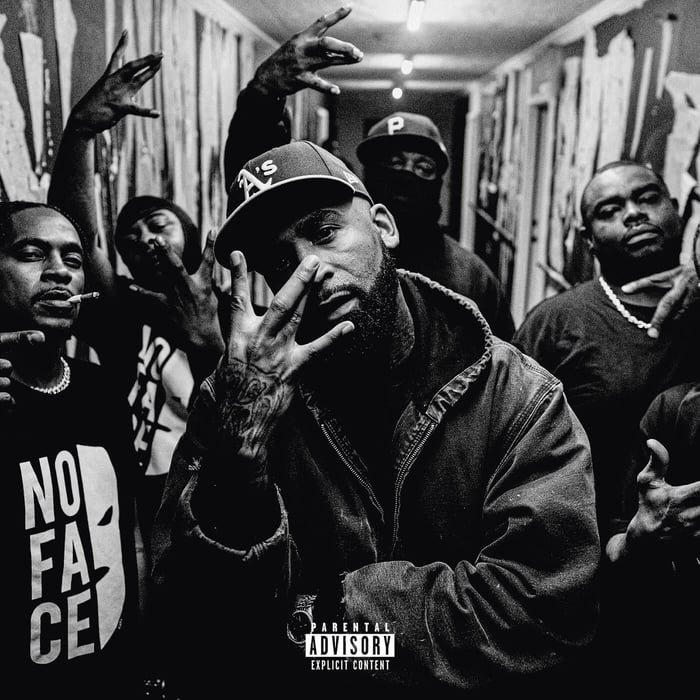
If you want a clean way to keep that cover art energy around (without replaying the heavy parts in your head), you can shop a favorite album cover poster at our store: https://www.architeg-prints.com/
 | DISCOUNTGET 30% OFF*Use code on your next order:
|
* This post may contain affiliate links, meaning we earn a commission if you make a purchase through these links, at no additional cost to you.