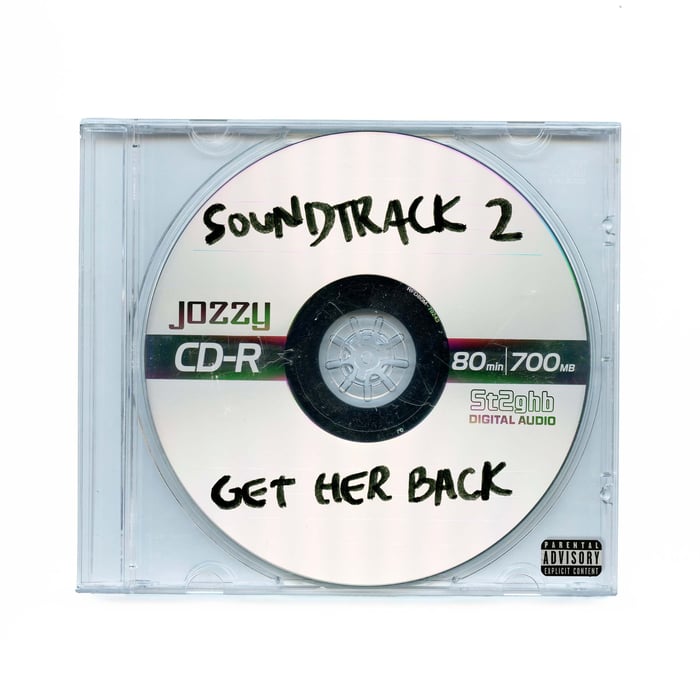
Jozzy’s Soundtrack 2 Get Her Back Is an Apology Tour With Receipts (Mostly)


 See more Architeg Prints stories on Google.
Jozzy’s Soundtrack 2 Get Her Back Is an Apology Tour With Receipts (Mostly)
Soundtrack 2 Get Her Back turns R&B confession into a messy, adult repair attempt—until it gets bored and chooses chaos.
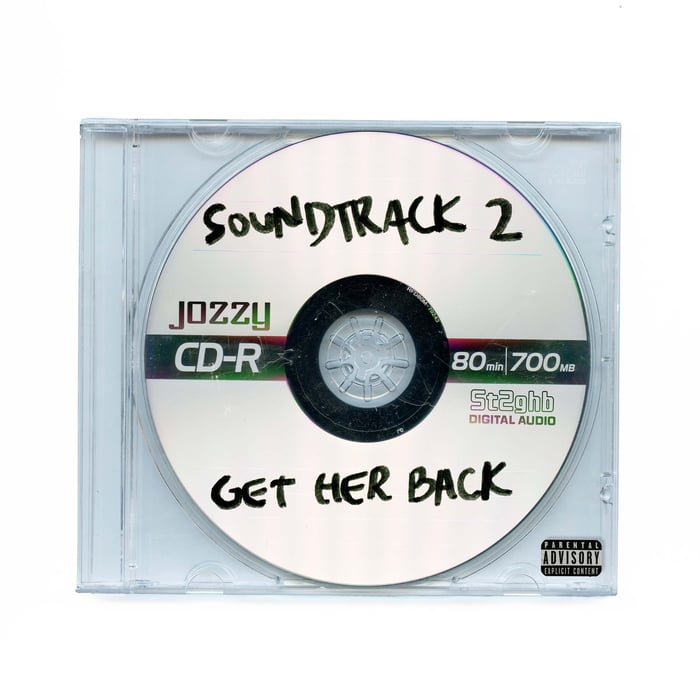
A hook before we talk history
Some albums want your attention. This one wants your forgiveness—and it keeps checking if you’re still mad.
Jozzy’s Soundtrack 2 Get Her Back plays like someone pacing their living room rehearsing what they’ll say when the door finally opens. It’s not a vibe record. It’s a motive record.
The “you’ve heard her, you just didn’t know it” problem
Here’s what’s funny about modern songwriting: the real celebrities are often invisible on purpose. You can have a song basically living in your bloodstream and still never learn who wrote the lines you quote like scripture.
Jozzy (Jocelyn Donald) has spent years in that exact shadow-seat—stacking credits, shaping radio, staying in liner-note font. I’m not even talking about obscure deep cuts. I’m talking about the kind of work that sits at the center of pop culture and refuses to move. She helped write the Billy Ray Cyrus verse on “Old Town Road,” the song that sat at number one for 19 weeks like it owned the place. She’s got writing credits tied to Beyoncé (“Virgo’s Groove”), SZA (“Low”), Summer Walker (“Body”), and cuts connected to Latto, Mary J. Blige, 21 Savage, Chlöe, Madonna, and more.
And you can hear that background all over Soundtrack 2 Get Her Back—not as polish, but as muscle memory. The hooks arrive like she’s done this 500 times because, well, she has.
Where she comes from matters, and the album acts like it knows
This isn’t one of those debuts that feels like an artist just appeared fully formed in a label conference room. The record carries family history in its posture.
She’s Memphis-born, raised around real music infrastructure: her mother had been signed to Hi Records (the Willie Mitchell world that put Al Green into the universe), and her brother ran a local rap group called Westwood Clique. She started writing songs at eleven, then sharpened her instincts as a teenager in Miami under Timbaland and Missy Elliott. That training shows up here as control—especially in how she lets a track breathe without begging it to be important.
My first impression was that the album might be too “industry”—too neatly built, too aware of what a song is supposed to do. But after sitting with it, I think the opposite is true: it’s personal enough to be inconvenient. Sometimes it even makes itself less playlist-friendly on purpose.
The label implosion is the subtext, whether she admits it or not
Jozzy got a big public co-sign in 2022 when Diddy brought her onstage at the Billboard Music Awards and called her the “R&B Biggie,” then signed her as the first (and only) act on Love Records. Her 2023 EP Songs for Women, Free Game for Niggas went to number one on the iTunes R&B chart.
Then the entire structure collapsed. Diddy was arrested on federal sex trafficking and racketeering charges in September 2024. Love Records basically evaporated overnight. Jozzy went quiet. Later she spoke publicly about being in a difficult space—praying, trying to find her actual purpose instead of just surviving the industry.
When Soundtrack 2 Get Her Back arrives on RBC Records/BMG, it doesn’t sound like a comeback. It sounds like someone choosing the terms of their next chapter because the last one got yanked away. She even built a theatrical prologue for it: a one-night stage play at North Hollywood’s El Portal Theatre, with Janina Gavankar in the cast, a score by Stevie J, and writing by Brianca Williams. The album is her debut—made at 35—after a decade of hit-writing and watching a major deal vanish into a legal crater.
If you want a clean, triumphant “finally my moment” story, this record refuses to give you that. It’s too busy being human.
The album’s real plot: confession, pursuit, and then giving up
Right from the start, the framing is blunt. A spoken-word intro admits to lying, cheating, selfishness, and neglect—like she’s reading her own charges out loud before anybody else can.
From there, Soundtrack 2 Get Her Back moves through a pretty clear emotional sequence:
- chasing the relationship back
- suspicion and side-eye
- sex as leverage and escape
- confrontation that turns into fear
- attempts at repair
- then, late in the record, a turn away from reconciliation altogether
And she sings all of it to women, without pausing to “explain” herself. That’s not just identity representation—it’s an artistic decision. She’s basically daring you to treat the story as normal, because to her it is. The queerness isn’t the plot twist; the emotional mess is.
That choice also makes the album feel rarer than it should. It’s not presented with a wink. It’s presented with a sigh.
“I Can” and the art of not overproducing your point
A clean example of her restraint is “I Can,” which she co-produces herself. It’s got Keyon Harrold’s trumpet threaded through the track, giving it actual air—brass warmth that lifts it out of standard midtempo R&B.
She borrows the “Snap your fingers, do your step” refrain and flips it into a competitive promise: picking up where the last person failed.
It’s a flex, sure. But it also sounds like insecurity dressed as confidence, which is basically the album’s core kink.
And yes, I’m aware that’s a wild sentence. Still true.
“Maybe” is where the mask slips, and that’s why it works
“Maybe” hits because it doesn’t pretend to be poetic. It’s just grown frustration—someone tired of being kept in limbo, demanding clarity without dressing it up.
“Don’t treat me like a maybe
Girl, you know I’m grown, I can handle it.”
That couplet lands because it’s not trying to become a caption. It’s trying to become a boundary.
If the album has a mission statement, it’s this: she can talk slick, but she can’t tolerate uncertainty—unless she’s the one creating it.
“Lucky” is the best kind of stunt: casting that actually adds tension
The most striking collaboration here is “Lucky,” because Mary J. Blige doesn’t show up as a legacy cameo. She shows up as a character: the woman Jozzy wronged.
Blige comes in firm and specific, basically telling Jozzy she gambled with someone’s heart and should take that confidence to Vegas. It’s harsh in a way that feels earned. And the bigger point: a legendary R&B singer stepping into a queer love story without disclaimers or stage directions is still weirdly uncommon.
But the song is so domestic—so grounded in the actual emotional math—that the casting stops feeling like a statement and starts feeling like plot.
“Lucky” is also where the production gets out of the way. BongoByTheWay gives it a bumping, uncluttered groove, the kind that doesn’t need to show off because it already knows it’s right.
She’s chasing an old-school apology… but aimed at women
Jozzy clearly wants the Anita Baker kind of apology energy—the “I Apologize” model, where a woman tells a man she’s sorry, the way Baker did in 1994 and almost nobody has touched since.
The twist is that Soundtrack 2 Get Her Back reroutes that tradition: the apology runs to women, and the person making it is a masculine-presenting queer woman who’s spoken openly about facing industry bias for not presenting “feminine enough.”
That context matters because the album’s best songs live in the gap between swagger and panic. It’s the sound of someone who can command a room but can’t control their own impulses.
The sex-run in the middle: confident, funny… and a little overloaded
The record leans hard into sex in the middle stretch. When it hits, it hits—these songs feel like they were written by someone who actually has a grown relationship with desire, not someone cosplaying adulthood.
“Hold It In” (produced by Stevie J) is explicit and commanding, the kind of bedroom track where power is the point. She tells her partner to wait until she says so, and the delivery doesn’t flinch.
“F@ck Slow Jams” with Jeremih goes even more direct: the partner wants the playlist off so she can hear the real sounds. It’s funny in that deadpan way—like, of course this is the complaint, and of course she’s right.
But I’m not going to pretend the album doesn’t sag a bit here. The sex material starts piling up, and the pacing drags under its own repetition. It’s not prudish to say that. It’s structural. The record starts feeling like it’s stalling before it has to deal with consequences again.
When she turns inward, the album suddenly gets dangerous
Then “True 2 Me” swings the knife inward:
“I’m scared of love and I hate to trust
I’ve been heartless for a minute
Put a muzzle on my feelings.”
That’s not just vulnerability; it’s self-indictment. And it makes the earlier confidence sound like armor instead of personality. For a second, I wasn’t sure if I was hearing a different voice—or the same voice with the lights off.
“Santa Monica Bar” is even more devastating because it’s small and specific. It mourns a friendship that turned sexual and died:
“It’s just my luck, how I lost my friendship for the rush
And now it’s gone.”
Most R&B breakup songs love vague tragedy. This one actually names what got destroyed. Regret hits harder when it has an address.
“Lonely Room” is her late-’90s soundtrack fantasy made real
“Lonely Room” is the reconciliation track, and it’s produced and sung on by Jon B, fresh off his 2025 comeback Waiting on You after thirteen years away.
The song has that stately, unhurried feel of a late-’90s soundtrack ballad—the kind that played during movie credits when everybody suddenly realized they had feelings. That’s not an accident. Jozzy has shouted out Above the Rim, Boomerang, and Soul Food as the soundtracks she grew up replaying, and “Lonely Room” lands right in that DNA: glossy, patient, emotionally upright.
It’s also one of the rare moments where the album seems to believe reconciliation is possible without begging for it.
Production choices: lean, close-mic, and allergic to clutter
A lot of the album’s strength is how little it overproduces the drama. Zac Brunson, who handles six songs, keeps the arrangements lean. Jozzy’s voice stays up front, close enough that you can hear the intention behind the phrasing.
Keyon Harrold’s trumpet on “I Can” adds a human warmth that’s hard to fake. It doesn’t scream “jazz influence.” It just quietly elevates the emotional temperature.
This is the kind of record where the best moments aren’t sonic fireworks—they’re tiny shifts: a held note, a pause before a line, the way she sounds braver than she is.
The part that loses me: one feature and a few too many detours
Now for the part where the album trips itself.
“Supermans Weakness” featuring Chris Brown is the most anonymous track here. The kryptonite metaphor, the bussdown AP comparison—this is writing she could do in her sleep, and it honestly sounds like she did. The song doesn’t deepen the album’s story; it fogs it up.
“Single” is a breezy party track with a phone number in the hook—charming enough, but weightless next to something like “Maybe,” where the emotional stakes actually show.
The skits, though? Weirdly effective.
- “Other Phone (Interlude)” lands as a quick, well-timed joke about a skeptical friend.
- “Tessa’s Interlude” stages a locked-door argument with sharp specificity, like a mini-scene from the stage-play world she built around this album.
Still, interludes thin the ratio of full songs, and I kept thinking the record would be tighter with fewer detours into material that any competent R&B writer could turn in on deadline.
That’s the contradiction: her theatrical instincts are sharp, but the album sometimes uses them to avoid moving forward.
So what’s actually happening on this debut?
Jozzy has the résumé—three Grammys, a Diamond plaque, and credits on records by some of the biggest names alive—earned while staying mostly unnamed to the public.
Soundtrack 2 Get Her Back is uneven, sure, but the best songs have a different kind of pressure behind them. They sound like she finally stopped “saving the good lines for other people.” And once you hear that shift, you also hear why she held onto them.
If I’m picking the tracks where the album’s intent feels clearest, it’s “Lucky,” “Maybe,” and “Santa Monica Bar.” Those are the moments where the story stops trying to be impressive and starts being precise.
Jozzy made a debut that doesn’t beg to be liked—it just insists on being heard in order. When it’s locked in, Soundtrack 2 Get Her Back feels like an adult conversation that nobody enjoys having but everybody remembers. When it’s not, it slips into generic comfort food. Still, the record’s best scenes make the weaker ones feel like distractions, not dealbreakers.
Our verdict: People who like R&B with actual consequences—queer or not—will latch onto this album’s best songs and forgive the pacing issues. If you need every track to be equally essential (or you flinch at skits), you’ll get impatient and start checking your own other phone.
FAQ
- Is Soundtrack 2 Get Her Back more of a breakup album or a get-back-together album?
It starts as an apology-and-pursuit narrative, but by the end it’s less interested in reunion and more interested in telling the truth about why reunion fails. - Does the album make Jozzy’s queerness a “concept”?
No—and that’s the point. She addresses women directly and doesn’t stop to translate herself, which makes the emotions feel more normal and more sharp. - Which song best shows her as a songwriter, not just a singer?
“Maybe.” The writing is plainspoken but strategic—the kind of line you repeat in your head after the song ends. - Do the interludes add to the experience or distract from it?
Both. They’re well-acted and specific, but they also reduce the number of full songs and occasionally feel like pacing band-aids. - What’s the one collaboration that really matters here?
“Lucky” with Mary J. Blige, because it uses the feature as casting—someone else stepping into the emotional role Jozzy can’t play herself.
If this album put a specific image in your head—one barstool, one locked door, one line you wish you’d said—getting that as a poster isn’t a bad way to keep the mood around. If you want to shop a favorite album cover poster, you can find options at our store: https://www.architeg-prints.com
 | DISCOUNTGET 30% OFF*Use code on your next order:
|
* This post may contain affiliate links, meaning we earn a commission if you make a purchase through these links, at no additional cost to you.