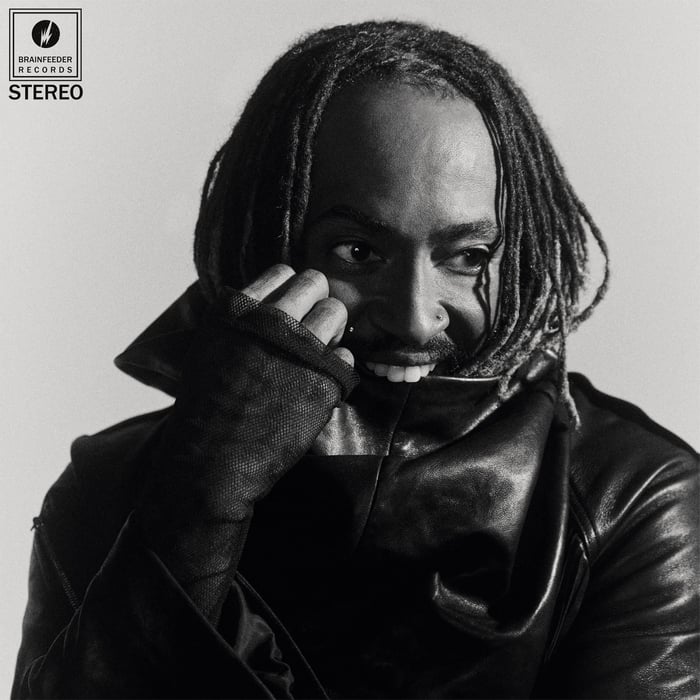
Thundercat Distracted Review: Pop Polishing a Bass Goblin (On Purpose)


 See more Architeg Prints stories on Google.
Thundercat Distracted Review: Pop Polishing a Bass Goblin (On Purpose)
Thundercat Distracted swaps FlyLo’s maze for Greg Kurstin’s spotlight—still messy, just cleaner. Here’s what that says about “Sober Steve.”
The real trick: it’s “accessible” without acting civilized
Thundercat has always sounded like a virtuoso trying to make himself laugh so he doesn’t have to admit what he’s feeling. Distracted keeps the laughing, but it stops hiding behind the mess. And yeah, that’s a choice.
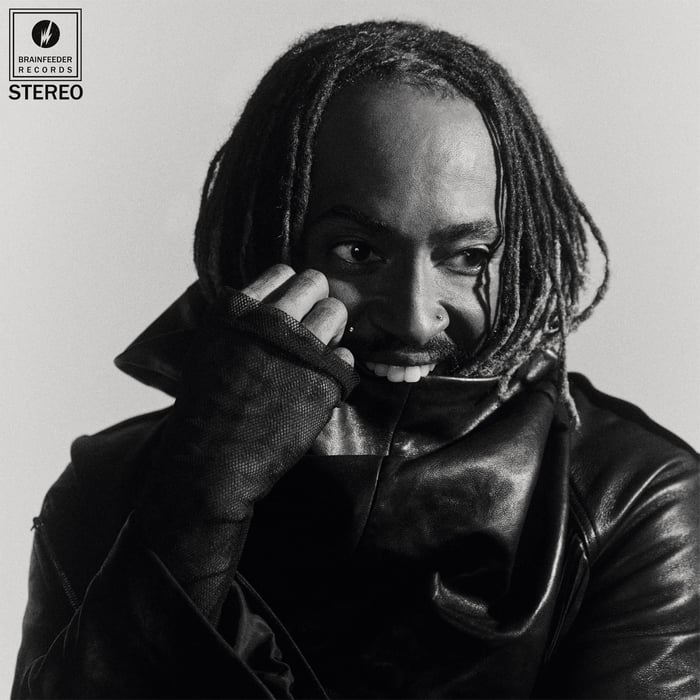
The first thing you notice is who’s driving. Somebody at Brainfeeder really did sign off on handing ten tracks to Greg Kurstin—the guy with arena-pop muscle memory—and letting him “shape” the album belonging to the label’s most unruly bass player. That’s the weird part: it works because it sounds like it shouldn’t.
Every prior Thundercat solo record had Flying Lotus hovering as executive producer. Four albums, twelve years of sessions that bent crooked—fusion-heavy, detouring into jazz tangents, stretching moments past the point where a normal pop song would politely end. On Distracted, FlyLo only shows up on two songs. The rest is Kurstin, plus one-off production spots from Kenny Beats and The Lemon Twigs. That distribution alone tells you the mission: less labyrinth, more direct contact.
And I’ll admit it: my first impression was that this would be Thundercat getting ironed flat. On second listen, I realized it’s not flattening—it’s framing. Same strange guy, brighter lighting.
Kurstin’s shine isn’t “selling out”—it’s a cage with padding
Here’s my arguable claim: Kurstin doesn’t “mainstream” Thundercat; he gives him a set of walls so the ideas can actually hit you before they evaporate.
The Kurstin tracks breathe like pop songs. Choruses arrive when they’re supposed to. Structures don’t wander off to chase a fusion squirrel for six minutes. And Thundercat sounds… fine with it. Maybe even relieved. The bass is still agile, still talkative, but it’s not constantly trying to prove a point.
That polish changes the meaning of the record. Instead of “watch this genius noodle through grief,” you get “watch this grown man try to function and fail in plain daylight.” It’s harder to dismiss, which is probably exactly why they did it this way.
Still, not every moment loves the cleaner frame. A couple transitions feel a little too neat—like a dangerous animal was guided into the shot and told not to bite. I kept waiting for one track to fully snap the leash and sprawl into something uglier.
“Sober Steve” isn’t a rebrand—it’s the same chaos without the fog
Six years passed between Distracted and It Is What It Is. In that gap, Stephen Lee Bruner got sober after fifteen years of heavy drinking, lost over a hundred pounds, started boxing, and started referring to this version of himself as “Sober Steve.”
That nickname could’ve been corny, but the album makes it land: he sounds like someone who removed one form of self-destruction and immediately noticed a dozen other problems sitting underneath it, waving.
And the brutal little twist is this: sobriety doesn’t turn him into a calm minimalist. “Sober Steve” still can’t focus. He still spirals. He just remembers it clearly now. That’s basically the album’s core discomfort—being lucid enough to watch yourself glitch.
I’m not totally sure whether the record wants you to see “distraction” as a diagnosis, a personality, or a survival tactic. It might be all three, and that blur feels intentional.
“She Knows Too Much” uses Mac Miller like a live wire, not a halo
The Mac Miller appearance on “She Knows Too Much” hits differently because it isn’t manufactured as a tribute moment. It was recorded before he died in September 2018, then sat unreleased, leaked, and eventually got properly finished with the blessing of his estate and help from Kurstin. You can feel that history in the mix—it doesn’t sound like a “feature,” it sounds like time reopening.
Mac leads the song, and the key detail is he’s not sanitized. He swings between wanting this woman and resenting her, talking penthouses and appetite and ego in the same breath. Then he lands the line that makes the whole thing sting:
“You can talk about the universe and energy / But all you really want is a celebrity.” — Mac Miller
And then—this is the part that feels painfully human—he immediately hears himself and softens it: “Man, that was a little harsh.” The whiplash from crude to caring is the point. It’s not a memorial speech; it’s Mac being reckless and present and funny.
Thundercat mostly stays off-mic, playing bass underneath like he’s deliberately stepping out of the way. After It Is What It Is ended with Thundercat calling “Hey, Mac” into dead air and getting only a ghostly “Woah” back, this track feels like the opposite gesture: not grief in a frame, but life in motion.
If you wanted a tasteful elegy, you’re in the wrong room. This is stranger, and better for it.
The album’s funniest apologies are also the most revealing
A huge chunk of Distracted is Thundercat apologizing to women while trying to make himself laugh so he doesn’t choke on the apology. That balancing act is basically his signature, but here it feels less like deflection and more like coping.
“I Did This to Myself” is the clearest example. He asks what she’s doing after work, admits he’s been made a fool chasing attention, wonders if he reminds her of her ex, questions why he’s paying so much, then mutters the kind of aside that ruins the sincerity on purpose: “(But you gotta admit, she’s a bad bitch).” It’s like watching someone attempt emotional honesty while their reflexes keep pulling them back into performance.
Then Lil Yachty shows up and takes the joke somewhere sharper and meaner:
“The more that I look in your face, you look like your dad / And it’s hard picturin’ him with a big ol’ ass.” — Lil Yachty
That line is ridiculous, obviously, but it also serves a function: it interrupts tenderness before it gets dangerous. That’s the emotional posture of the record—keep it moving, keep it joking, don’t let the feeling sit down.
“Pozole” drops the punchlines and suddenly the room gets cold
If the album has a moment where the mask slips, it’s “Pozole,” produced by The Lemon Twigs.
It ditches the jokes entirely. Thundercat starts with, “I can only show you exactly who I am,” and then he worries the thought like a loose tooth—does showing himself matter, does it change anything, does anyone even see it? By the end, the question flips inward: “Who am I?”
The plunge from confidence to blankness is fast, and the important part is it’s not played for laughs. No cute tag. No nerd reference to buffer the impact. Just a quiet drop.
My only gripe here is I wanted one more song this stark. The album hints at that abyss and then returns to brighter surfaces. Maybe that restraint is the point—but part of me suspects it’s also caution.
“Great Americans” turns distraction into a full-day horror montage
Thundercat’s most specific writing about daily dysfunction lands on “Great Americans,” which basically storyboard’s a day of falling apart.
- Morning: burnt out, “cat brain” firing mixed signals.
- Midday: not answering calls, talking to pets, vacuuming the same carpet and getting nowhere.
- Night: pacing in circles, realizing nothing got finished.
And then the hook reappears like an SOS and ends on two words that cut harder than any joke on the album: “I’m undiagnosed.” That’s the rare moment where the record stops romanticizing scatterbrained charm and names the fear underneath it.
“A.D.D. Through the Roof” circles similar anxiety but with more warmth, like he’s trying to convince himself that internal butterflies are proof he’s still alive. The title Distracted is tied to a darker admission hovering behind the songs: alcohol once felt like it helped him focus, even though that logic is obviously twisted. The album keeps returning to that paradox—sometimes you have to be scattered to pay attention at all.
That’s not a self-help message. It’s a confession with duct tape on it.
Kenny Beats + Lemon Twigs hand him the best line on the record
“What Is Left to Say,” produced by Kenny Beats and co-written with The Lemon Twigs, contains what might be the album’s sharpest piece of writing:
“Feelings are like children in a car / You can put them in the trunk, but let them drive, you won’t go far.” — Thundercat
That’s real. That’s a grown person sentence. And Thundercat can’t leave it alone without undercutting it—right after, he tosses in a nerdy deflection: “These aren’t the drugs you’re looking for, go on your way.” Jedi joke as emotional eject button. Classic him.
The push-pull is the thesis: insight flashes, then a gag kicks the ladder out from under it.
The sci-fi love songs aren’t “cute”—they’re his actual vocabulary
Here’s another arguable take: the poppier love material on Distracted is warmer than what he’s done in years, and it’s not because he suddenly got softer—it’s because he’s stopped pretending he has a cooler language than the one he actually thinks in.
“Anakin Learns His Fate” commits to the Star Wars metaphor without winking, comparing himself to someone whose partner has already painted him as a monster in her mind and blaming fate for the fallout. No irony shield. Just melodrama presented as fact—which is, honestly, how relationships feel when they’re going bad.
“Walking on the Moon” stacks space-movie references—Barbarella, Uhura from Star Trek, Starship Troopers, Event Horizon—with the sincerity of someone who grew up on sci-fi and anime and now uses that whole cosmos to describe closeness.
Then the features widen the emotional palette without stealing the record:
- Kevin Parker takes the chorus on “No More Lies,” leaning into loneliness—alone and dancing alone—with the tired resignation of someone who’s been touring too long.
- A$AP Rocky slides through “Funny Friends” casually enough to nearly vanish, tossing off “Don’t say goodbye, them words is way too lethal” like it’s nothing (which is exactly why it sticks).
- WILLOW duets on “ThunderWave,” bringing a cleaner edge that makes Thundercat sound even more like the oddball in the room.
- “This Thing We Call Love” with Channel Tres is the loosest moment here: two people in a room, no rush, Thundercat joking about kicking someone around “like Messi.”
The humor isn’t random. It’s intimacy management.
The album’s big swap: “Drunk” chaos becomes plainspoken dysfunction
Kurstin’s production gives these songs oxygen as pop structures in a way FlyLo’s weirder arrangements never would. And Thundercat seems to accept the trade: fewer six-minute codas, more direct writing about overthinking, burning breakfast because he forgot to text back, apologizing wrong, getting left without a goodbye.
That persona that made Drunk a cult favorite—the stoned virtuoso clowning between grief—has been swapped for something plainer and harder to wave off. A sober 41-year-old talking to his cats, running a vacuum over nothing, wondering if he should start an OnlyFans and show some feet. The jokes are still constant, but they aren’t hiding as much anymore. They feel like nervous system noise.
And if that sounds less “fun,” it is. But it’s also more honest—at least in the way it lands in the room.
Where I landed: standout tracks and the one thing I still wanted
After a few listens, the tracks that keep pulling me back are:
- “She Knows Too Much”
- “What Is Left to Say”
- “Great Americans”
If there’s a weakness, it’s that the streamlined approach occasionally makes the risk feel scheduled. I don’t need everything to sprawl, but I wanted one more moment where the album genuinely loses control instead of simulating it in tidy pop time.
Then again, maybe that’s the whole story: this is what losing control looks like when you’re sober—you clean up the mess while you’re making it.
Conclusion
Thundercat Distracted doesn’t “fix” Thundercat. It just puts him in a brighter room where the jokes can’t fully block the panic, and the bass can’t distract you from the words. Kurstin’s gloss isn’t a makeover; it’s a decision to make the chaos legible. And once it’s legible, it’s harder to laugh it off.
Our verdict: People who like their weirdos emotionally readable will actually love this—especially if you’ve ever tried to turn your brain off and failed. If you only want Thundercat when he’s spiraling through jazz-fusion wormholes, you’ll miss the old maze and complain the walls are too clean (and you won’t be totally wrong).
FAQ
- Is Thundercat Distracted more pop than his earlier albums?
Yes—song structures are tighter and brighter, mostly because Greg Kurstin is steering a lot of the production. - How much is Flying Lotus involved on Distracted?
Only two songs here have FlyLo contributions; most of the album belongs to Kurstin, with additional spots from Kenny Beats and The Lemon Twigs. - Is the Mac Miller feature an old recording?
Yes. “She Knows Too Much” was recorded before Mac’s death in 2018, then later finished officially with his estate’s blessing and Kurstin’s help. - What’s the album actually “about,” beyond jokes?
Daily dysfunction—missed calls, spiraling thoughts, apology loops—and the uncomfortable clarity of trying to function sober. - What songs should I start with?
Try “She Knows Too Much,” “What Is Left to Say,” and “Great Americans” if you want the album’s core emotional range fast.
If this album’s cover art lodged in your brain the way the best distractions do, you can always grab a favorite album cover poster for your wall at our store: https://www.architeg-prints.com
 | DISCOUNTGET 30% OFF*Use code on your next order:
|
* This post may contain affiliate links, meaning we earn a commission if you make a purchase through these links, at no additional cost to you.