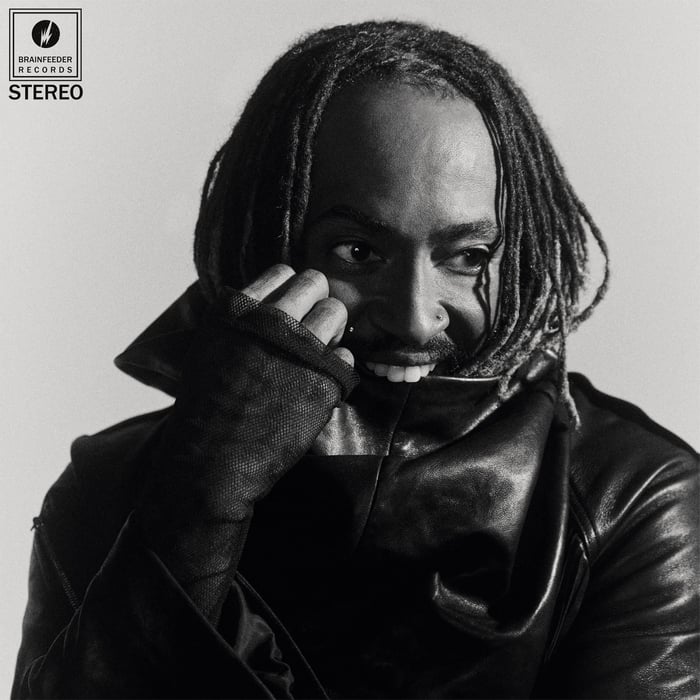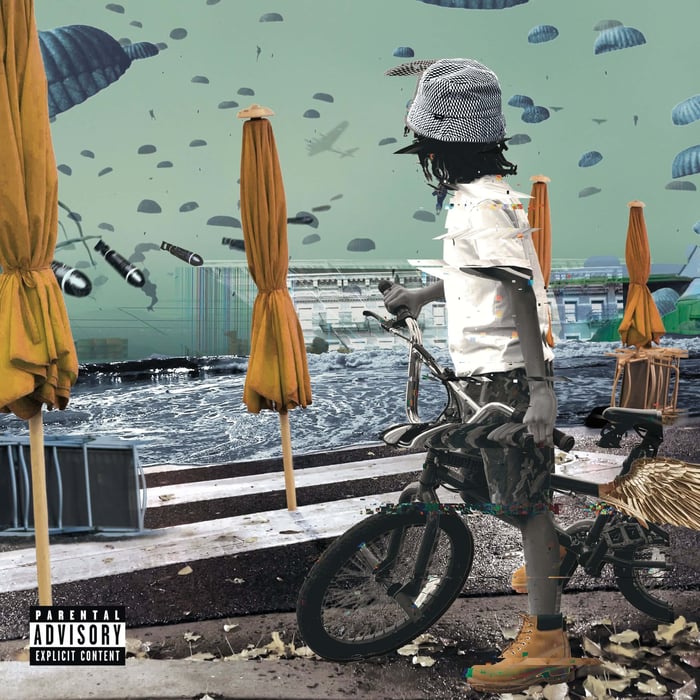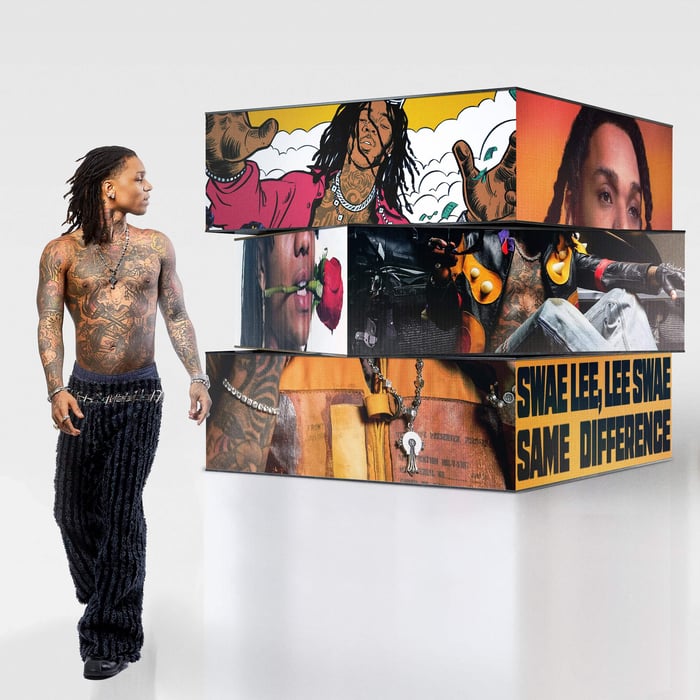
Same Difference Review: Swae Lee Finally Shows Up… Then Ghosts Himself

 See more Architeg Prints stories on Google.
Same Difference Review: Swae Lee Finally Shows Up… Then Ghosts Himself
Same Difference is Swae Lee’s long-delayed solo swing—half hypnotic confession, half luxury-rap autopilot. The voice wins, the intent wobbles.
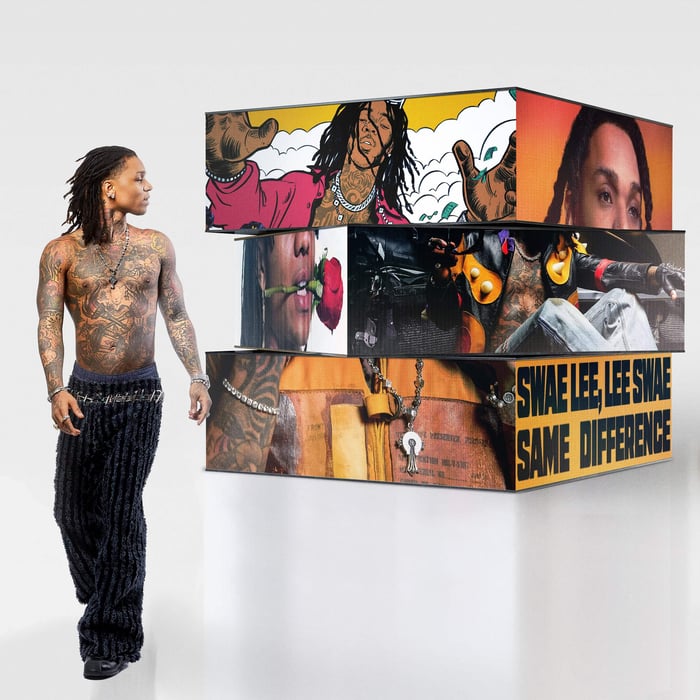
The weird part: Swae Lee has been famous forever
Swae Lee has been that guy for years—the one who quietly props up pop-rap from the inside. I’m not talking “pretty good feature run.” I mean: the kind of career where your melodies end up welded into culture, and people sing them without knowing your name.
He’s the dude who co-wrote “Formation.” He’s the guy who floated through “Sicko Mode” without getting credited for the hook. He’s the one who basically made “Unforgettable” and then watched French Montana walk off with it like it was loose change on a dresser. And yeah, he’s attached to “Sunflower,” that double-diamond monster of a single that got played so often it felt like it came pre-installed in grocery stores for two straight years.
So it’s borderline absurd that a proper solo album is only showing up now—at 32. Swaecation technically existed back in 2018, but it was stuffed into a triple-disc Rae Sremmurd package like a bonus snack you didn’t ask for. Nobody treated it like a real standalone statement, because it didn’t feel like one.
And for years, the solo album hovered like a rumor. There was talk of one title, then time passed, then more time passed, and Swae kept doing what Swae does: popping up on other people’s records, landing clean melodies, collecting invisible wins. Meanwhile the “real solo debut” stayed hypothetical—until the title changed and Same Difference finally landed.
The wait sets you up to expect… something. A point of view. A reason.
Early on, the album acts like it has nothing to prove—and that’s the problem
Here’s what I thought going in: eight-ish years of delays usually means either (1) perfectionist spiraling, or (2) label chaos, or (3) the artist has a lot on their mind and can’t decide how to say it. I expected Same Difference to sound like a backlog of feelings finally getting organized.
Instead, a lot of it sounds like Swae is killing time in expensive clothes.
On most of Same Difference, he circles the same few flex topics—cars, chains, women he doesn’t even sound curious about. It’s not that bragging is illegal. It’s that the bragging feels uncommitted, like he’s reading a luxury catalog out loud while his real thoughts are in another tab.
“The Gospel” is a perfect example of the album’s early issue: he brags about Frosted Flakes chains and Alexander McQueen shoes, then says he’s on “autopilot.” And the annoying part is… he’s telling the truth. You can hear the autopilot in the way the lines slide by without landing. The voice is doing the heavy lifting while the writing just shows up for attendance.
“Everyone Wants” hits a rhyme stretch—“loner” with “loner” with “zoner” with “stroller”—that feels like a first-take freestyle nobody bothered to refine. Not because it’s “wrong,” but because it’s the sound of someone who knows the melody will distract you from the words. And usually, with Swae, he’s right.
The title track tries to speed-run references—Bill Clinton, Tom Brady, Thanos, Johnny Bravo, Kurt Angle—in under three minutes. It’s a grab bag of recognizable nouns, and I kept waiting for the connection. It never arrives. The references don’t build a theme; they just prove he owns a television.
On “Sneaker,” he drops the kind of contradiction that makes you blink: “I cheat but never cheated her,” and then a couple bars later he’s asking for a foursome. Maybe it’s meant to sound messy and human, but it plays more like shrugging with good lighting.
And “E Off Emotion” is a clever title that doesn’t cash itself. The concept—taking the “E” off “emotion”—sounds like it should lead somewhere: numbness, detachment, ego death, something. The song mostly stalls at “Presidents on presidents/and shawty be all the way turnt up,” and that’s basically the ceiling.
He even circles back to Alexander McQueen again on “Flammable,” like he forgot he already used that sticker earlier in the album. I’m not mad at repetition—I’m mad at repetition that feels accidental.
If there’s a thesis to the first stretch of Same Difference, it’s this: Swae’s voice can make blank lyrics feel like a vibe, and he knows it.
The features show up, and nobody acts like anything matters
A feature can do two things on an album like this: either challenge the main artist (make them step up), or give the song a second angle (so it feels like a scene, not a monologue). Too often here, the guests just reinforce the autopilot.
NAV on “No Call No Show” sleepwalks through the exact checklist you’d expect—orange Ferrari, pills, the same emotional temperature as a receipt. It’s not even that it’s “bad.” It’s that it sounds like the vocal equivalent of scrolling when you’re bored.
French Montana on “Suitcase” contributes a list: Goyard bags, gold medallions, LV suitcases, three-quarter mink coats. It’s luxury as inventory. The verse doesn’t argue with the song or deepen it—it just stacks brand names like he’s packing for a trip he doesn’t want to take.
Rich the Kid pops up on “Don’t Even Call” and, again, it’s Patek talk, balloons at the crib—basically the same verse he’s been writing since The World Is Yours. A reasonable listener could say that’s the point (consistency as identity), but to me it lands like nobody in the room demanded a moment.
Even Slim Jxmmi—Swae’s actual brother, the person you’d expect to bring some chemistry—mostly talks about checking bags on planes and wanting a Rolex on “Working Remote.” It’s oddly bureaucratic. Like: congrats on flying and shopping, I guess?
None of these guests sound like they have anything at stake, and that lack of stakes bleeds into Swae’s own performance. The album starts feeling like a group project where everyone did the easiest part.
Then “Violet” hits, and the album finally tells the truth
Four songs into the back half, “Violet” arrives and the temperature drops. This is where Same Difference stops posing and starts bleeding a little.
Swae sings about walking away from someone for his own mental health, and suddenly his upper register makes sense. When he’s hurting, his voice isn’t just pretty—it’s specific. The melody starts sounding like a person trying not to crack in public.
“I wish I could buy more time
I wish I could settle down
I had to work some things out with myself.”
The second verse goes even harder, with the kind of clean line that actually sticks: “Breaking each other’s hearts, we can just take turns.” That’s not jewelry-talk. That’s someone admitting they’ve turned love into a routine. He’s talking to a specific person in a specific room—someone with a name he refuses to say on record. And that refusal makes it feel more real, not less. There’s a pointed frustration in “How come everyone can see it but the one that you really need to?” that you can’t fake with brand names.
“Raising Awareness,” produced by London On da Track, stays in that lane. It’s reflective without turning into self-pity. The line “I wanna die with memories, not dreams/We all had our fair share of things that never came to be” is the sharpest writing on the whole album, because it’s not trying to impress anybody. It’s just admitting the gap between the life you planned and the life you got. There’s also a simple line about social batteries being drained that lands because it’s plainspoken—like he finally stopped performing “celebrity” long enough to talk like a person.
“Mural” benefits from Jhené Aiko in a way that feels almost unfair. She brings warmth Swae doesn’t consistently generate alone on this record. Her line about bad women needing forehead kisses is disarming and funny, and it nudges the song into something sweeter and less guarded. The track’s emotional IQ goes up the second she’s in the room.
And “Take My Heart” with Post Malone carries a specific dread. It’s not vague sadness; it’s the fear that people don’t stay. The line about “These feet have walked over a few graves” punches harder once you remember the real-life gravity sitting behind it: Swae’s stepfather was shot and killed in Tupelo in 2020, and Swae’s younger half-brother was charged.
That context doesn’t magically “explain” the album, but it does make the best songs feel like windows—not just moods.
This stretch made me reconsider my first impression. Earlier, I was ready to write the whole thing off as glossy filler with a great voice. But these songs prove he can aim at something real and hit it dead-on. The frustrating part is that the album hides that ability like it’s embarrassed.
The album’s central contradiction: a once-in-a-generation voice, wasted on “fine”
If Same Difference were just those four tracks—“Violet,” “Raising Awareness,” “Mural,” “Take My Heart”—Swae would have a proper debut worth the years of waiting. Not because they’re “deep,” but because they sound like he actually meant them.
Instead, they’re scattered across an album padded with luxury-rap filler and serviceable beats that don’t push him anywhere. The production rarely embarrasses itself, but it also rarely demands a great performance. It’s like the instrumentals are politely staying out of the way—and sometimes that’s just another way of saying nobody showed up with a big idea.
And yeah, Swae’s voice is still ridiculous in the best way: high, elastic, slightly wobbly, full of sideways bends that make notes feel like they’re melting. It’s a voice that can make a nonsense line sound like it has emotional subtext. He could sing the phonebook and you’d probably add it to a playlist.
That superpower is also the trap. Because on songs like “Flammable” or “E Off Emotion,” the voice papers over thin material so smoothly you can spin the tracks three times before realizing nothing stuck. I’m not totally sure if that’s intentional—maybe he wants the album to slide by like a scented candle, pleasant but not demanding. But when you’ve waited years to hear who he is without Rae Sremmurd and without being the featured hook, “I feel like Michael Phelps” and “Alexander McQueen keep me fresher than an Altoid” can’t be the punchline.
A mild criticism, since I’m not trying to be dramatic: the sequencing feels like it’s actively undermining him. The vulnerable songs don’t build momentum—they arrive like rare weather, then vanish behind another wall of expensive nouns.
So what is Same Difference actually doing? Buying time
This album feels like Swae negotiating with himself in real time. Part of him wants to be the untouchable hitmaker who never sweats, never explains, never stays in one emotional place long enough to be seen. Another part of him clearly wants to say something that isn’t interchangeable with any other “money, women, cars” record.
When he leans into honesty, the whole thing sharpens. When he leans into flexing, it doesn’t sound like confidence—it sounds like avoidance with good ad-libs.
And maybe that’s the actual “same difference” of it all: the difference between Swae as a person and Swae as a product, and the uncomfortable truth that the product has been running the show for most of the runtime.
Conclusion
Same Difference doesn’t fail because Swae Lee can’t carry a solo album. It wobbles because he keeps refusing to choose what kind of solo artist he wants to be. The best songs prove he can write with precision and sing with real consequence; the rest plays like he’s stalling, dressing up empty space with a voice that’s almost unfairly beautiful.
Our verdict: People who love Swae’s voice more than they love lyrics will have a great time—this album is basically a melody buffet. If you want a solo debut that actually arrives and explains itself, you’ll get impatient fast and start skipping until “Violet” saves the night.
FAQ
- Is Same Difference actually Swae Lee’s first real solo album?
It feels like the first one that’s positioned as a standalone statement. Earlier solo material existed, but this is the first time it lands like “here I am.” - What’s the core keyword here and why does it matter?
The core keyword is Same Difference—it’s the album name and the main thing people search when they’re trying to figure out if it’s worth their time. - Which tracks show the most emotional weight?
“Violet” and “Raising Awareness” are where the writing tightens and the vocal choices finally match the mood instead of just decorating it. - Do the guest features improve the album?
Mostly, no. A few features are fine, but several guests sound like they’re reciting their usual scripts, which makes the album feel lower-stakes than it should. - Is this album better on repeat listens?
The best songs, yes—they grow. The filler doesn’t get worse, but it doesn’t magically gain meaning either, and you’ll notice the emptier lyrics more once the melodies stop distracting you.
If you’re the kind of listener who latches onto album art as part of the whole experience, you can always shop your favorite album cover poster at our store: https://www.architeg-prints.com/ — it’s a clean way to keep the Same Difference era on your wall, not just in your playlists.
 | DISCOUNTGET 30% OFF*Use code on your next order:
|
* This post may contain affiliate links, meaning we earn a commission if you make a purchase through these links, at no additional cost to you.