JPEGMAFIA Experimental Rap Review: the chaos finally learned to aim


 See more Architeg Prints stories on Google.
JPEGMAFIA Experimental Rap Review: the chaos finally learned to aim
An Experimental Rap listen-through where JPEGMAFIA stops hiding behind noise and starts using it like a weapon—sometimes brilliantly, sometimes annoyingly.
Courtesy of AWAL Recordings America, Inc.
A tweet-sized take won’t survive this record
You can walk into Experimental Rap with a hot take already pre-heated. I did. JPEGMAFIA’s whole brand has been daring you to reduce him to “provocateur with distortion,” and for a while it even felt like the provocation was sprinting ahead of the actual writing.
Then “Pop this Heat” shows up and messes with that lazy read. There’s this pitched-up, sweet-to-the-point-of-churchy R&B/gospel-adjacent vocal sample floating over boom-bap, and Peggy drops a hook that’s basically four lines of compressed contempt:
“Man, these niggas so sweet, man, these hoes so weak, he ain’t gon’ pop this heat, he don’t got hands or feet.”The point isn’t the insult. The point is he finally balances teeth and tune at the same time. I thought he was just stacking ugliness for shock value—turns out he’s been waiting to make the hook itself feel like the rebuttal.
And yes, that’s an arguable claim: plenty of people will insist he’s been doing this for years. I’m saying he’s doing it cleaner here, even when it’s filthy.
The trash talk wasn’t promo—it was a production brief
Here’s the bridge from the outside noise into the actual music: all that pre-album chest-thumping? It wasn’t just him being online. It sounds like it turned into a set of instructions for the beats.
He’d been saying nobody competes with him, swatting at peers for chasing the same sleepy pocket, and basically accusing a whole lane of making one endless song stretched across decades. I’m not quoting headlines or pretending I need receipts—his music already carries the attitude. And on this album, that attitude becomes arrangement.
“Meet the Dealers” is where I hear those three words that kept coming up—gnarled, rough, ugly—as if he wrote them on a sticky note and slapped it on the monitor. The synth bass is metallic and grinding, a looped siren keeps worrying the same nerve, and the verses stack odd little flexes and references (Phil Jackson, patty-cake handclaps) until the track feels like it’s vibrating in place. A collaborator from his earlier-era circle slides in with a distinctly regional-feeling verse, and instead of smoothing the edges, Peggy leaves the seams showing on purpose.
That’s the trick: the album pretends to be chaos, but the chaos is curated. You can disagree and call it over-designed. I’m saying the over-design is the point.
Sometimes he proves the critics right (and he knows it)
Next hook: this record is confident enough to include a self-own.
On “head.” there’s a line—
“Suck me soft or take the condom off and jump in the bed”—that basically hands ammunition to anyone who wants to flatten him into “edgelord rapper with a plugin folder.” The rhyme doesn’t do much for me there, and for a second I wondered if the whole album was going to lean on that kind of blunt-force provocation.
But the track’s chopped, fragmented vocal stabs are doing the real work anyway. The beat is the argument; the bar is just the grease stain on the napkin. Mild criticism: if you’re going to be that explicit, at least make the sentence hit like a drum. Here it lands more like a shrug.
Still, even this misfire feels intentional—like he’s testing how little he can “say” while the production keeps the song alive.
He builds whiplash into the album’s spine
Now the shift that explains the album’s actual behavior.
Imagine you’re in a parked car at a red light when “His Will” ends. The choir’s holding these sustained notes about the sun beginning to fall and the will of God. The percussion drops out. The vocals stack into something close to a hymn—wide, patient, almost sincere.
The light turns green.
“Lights” comes in like a kicked door: house tempo, cyclical synth movement, and Peggy snapping into lines that feel like they’re half-flex, half-paranoia—
“I feel like Ye when I’m tweaking, I gotta defend it, my blick in the pelican.”It’s ridiculous in a calm, practical way—like he’s describing where he keeps his keys.
That whiplash is the thesis. This album doesn’t want a smooth emotional arc. It wants you to get cut mid-thought. If you’re waiting for a neat seam between “serious” and “ignorant,” you’ll be stuck at that red light while the next car horn blares behind you.
Arguable statement: I think the sequencing is more important than half the lyrics here. Some listeners will swear the bars are the main event. I’m not hearing it that way.
When the political lines land, they land because he doesn’t blink
Next bridge: the album stops flirting with “provocation cosplay” and starts sounding like it means the ugliness.
“The Ghost of Emmett Till” is one of those moments where Peggy doesn’t just reference history—he aims it. He spits:
“Fuck Carolyn Bryant, my niggas dying, it’s R.I.P. Emmett. She did the crime but ain’t do the time, she in Hell with no helmet.”The “helmet” rhyme is almost absurdly casual, and that’s why it’s chilling. The punchline isn’t just “she’s in hell,” it’s the petty, theologically specific add-on—hell doesn’t even give you protection. It’s a detail nobody asked him for, which is exactly why it feels like he wanted it.
I’ll admit some uncertainty here: I can’t always tell when he’s being dead serious versus when he’s weaponizing shock as a delivery system. But on this track, the steadiness in his voice makes it hard to dismiss as mere performance.
He’s older now, and the rapping finally keeps up
This is the hinge where my first impression changed.
Back in 2018, the big story with him (to my ears) was production that sounded like rap radio had never processed those frequencies before—while the rapping sometimes felt like a guest trying to keep up with the producer… who happened to be the same person. On Experimental Rap, he sounds like a grown version of his own chaos. He’s 36 now, and the raps sit inside the beats instead of skating on top.
That same hyper-compressed lo-fi haze is still here, but he uses it with better timing. “GYBB” opens on this folk vocal ensemble texture—group voices arranged like a ceremonial intro—then a ’70s-funk breakbeat shoulder-checks it out of the way. “¥ (Yen)” tucks that filter under a counting-machine texture, like money turning into percussion.
And the writing’s sharper in a way that’s hard to fake. Lines like
“I love my funding like some people love on they cousins”and
“all of this guap, I just can’t decline”aren’t just “funny Peggy bars.” They’re proof he can do clean, efficient phrasing without hiding behind noise. The persona’s still brash, but it’s not covering up a lack of craft the way it sometimes used to.
Arguable statement: I think this is his best rapping-over-his-own-production balance yet. If you prefer the earlier mess, you’ll call this “too controlled.”
The quiet stretch isn’t softness—it’s a setup
Now we get to the part where the album pretends to exhale.
By the time the runtime gets deep, it’s harder to dismiss the project with an opening tweet. “Bridges on Fire” brings in Buzzy Lee—Sasha Spielberg’s voice—over something that feels like chipmunk-soul being remembered through a fogged window. She sings about friends and bridges on fire, and Peggy mostly lets the track be quiet.
But even here, I don’t hear “maturity” as the goal. I hear contrast as the weapon. The album isn’t offering tenderness; it’s offering a softer surface so the next impact feels worse.
And if you think that’s overreading, fair. I’m not inside his head. I’m just telling you what my shoulders did when the next tracks snapped back into argument mode.
He samples the culture war like it’s a drum kit
Next bridge: the album starts pulling voices from the wider circus, and it’s not subtle about the target.
“The 1st Amendment” opens with a loop of Charlie Kirk. Peggy turns that voice into texture, then slides into a line that’s meant to sting:
“all of this white-on-white violence too real, I guess now you know how it feels.”It’s not a plea for empathy. It’s a dare.
“Mask On” puts him rapping from a White House sofa—power imagery treated like a prop, like he’s bored enough to sit wherever he wants in the fantasy. “No Strippers In Heaven” drops Trayvon Martin’s name next to AR-15 imagery, which is exactly the kind of juxtaposition that can feel “too easy”… except he doesn’t let it resolve into a neat moral. He just leaves it there, like a lit cigarette on the edge of the table.
Arguable statement: I think the bluntness is the craft. Some people will hear it as clumsy. I hear it as him refusing to give you the satisfaction of “nuance” that would make the listen comfortable.
“Since I Met Ye” is the flex—and it’s uglier than bragging
Here’s the bridge into the album’s purest rap moment: after all the switches and sirens, he finally just runs the verse like he’s been practicing for years.
“Since I Met Ye” is where the internal rhymes start stacking so tightly the syntax almost buckles, and it feels like the exact style he’s been sharpening toward. There’s a Tyson line in there—
“Lately, I been feelin’ like Tyson, now when I’m swinging on these niggas like they Robin Givens.”—and it’s nasty in that way where you laugh and then immediately feel slightly gross for laughing.
This is Peggy using controversy as rhythm. Not “I’m saying something important,” but “I’m going to make the line hit whether you approve of me or not.” If you came to this album for clean hero narratives, you’re in the wrong room.
The closer dares you to reject it—and that’s the whole point
Final bridge: “Chat” doesn’t end the album by tying a bow. It ends it by trapping you in the hook.
The hook runs:
“Free Rodney Hinton Jr, stop letting them kill my childs, free Lee-Lee, free D. Chauvin.”And yeah—Derek Chauvin. The man who knelt on George Floyd’s neck. Peggy places that request at the same tempo as everything else, no dramatic pause, sandwiched between two frees that plenty of listeners might nod along with and one that makes your stomach drop.
Then he folds in a quote about his immigrant father arriving with no socks and no shoes—mud, sticks, survival imagery—on the same song where he’s asking you to free a killer. It’s not confusion. It’s the design. He’s basically forcing you to confront how easily “my people” talk turns into selective mercy, selective rage, selective memory.
I kept waiting for some sign he’d step back and clarify, like, “Here’s what I mean, don’t misinterpret me.” It never comes. And on second listen, I realized that’s the dare: if you reject the line, you’re rejecting the album’s entire method—collapsing sacred and profane into the same breath and watching who panics.
Arguable statement: I think “Chat” is the real climax, not a closing track. If you stop the record before it, you miss the trap being sprung.
Standout moments (the ones that won’t leave me alone)
To keep it concrete, here’s what stuck hardest after the noise faded:
- “The Ghost of Emmett Till” — the political writing lands because he doesn’t sermonize; he aims.
- “Since I Met Ye” — the internal-rhyme run is the album’s technical flex, and it’s mean on purpose.
- “No Strippers In Heaven” — the Trayvon/AR-15 proximity isn’t tasteful; it’s supposed to burn.
And if you want a piece of the pre-album bravado context that bled into this sound, here’s one of the clips that floated around:
Conclusion
Experimental Rap isn’t JPEGMAFIA “calming down.” It’s him tightening the screws: making the whiplash structural, making the politics unblinking, and—most importantly—making the rapping strong enough that the production doesn’t have to babysit it.
Our verdict: People who like their rap messy, confrontational, and allergic to comfort will actually love this—especially if you enjoy hearing a beat switch feel like a door slam. If you want moral clarity, smooth vibes, or even just a normal amount of breathing room, this album will treat you like you showed up to a fire drill asking for a chair.
FAQ
- Is Experimental Rap more about beats or bars?
It’s both, but the sequencing and sound design feel like the real manipulation tool—he uses the bars to sharpen the turns, not to explain them. - What’s the most jarring moment on the album?
The jump from the hymn-like “His Will” into “Lights” hits like tonal whiplash on purpose, like he wants you annoyed and awake. - Does JPEGMAFIA tone down the shock-rap stuff here?
Not really. If anything, he’s more strategic: some lines are placed to make you question your own automatic reactions. - What tracks should I start with if I’m new to him?
“Pop this Heat” for the hook/production balance, “Since I Met Ye” for pure rapping, and “The Ghost of Emmett Till” for the album’s sharpest direct statement. - Is there any softness on the record at all?
“Bridges on Fire” is the closest thing to a quiet stretch, but it feels like a setup rather than a surrender.
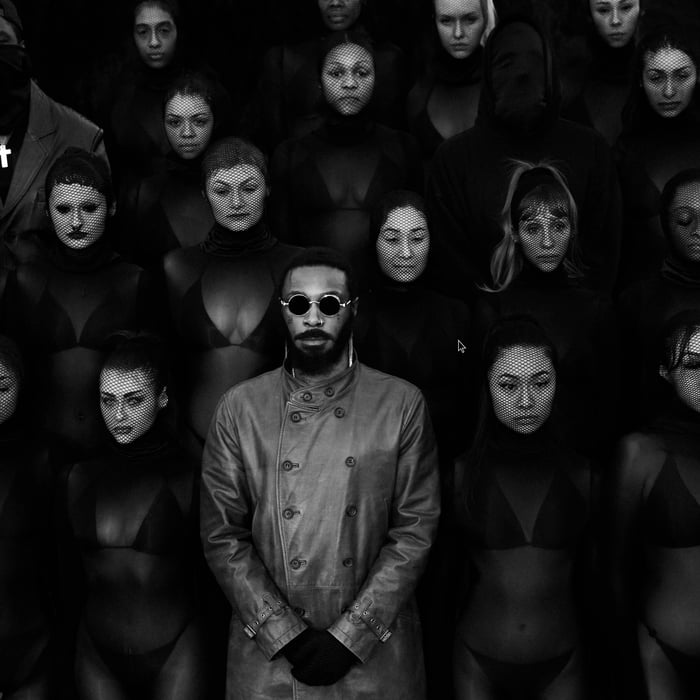
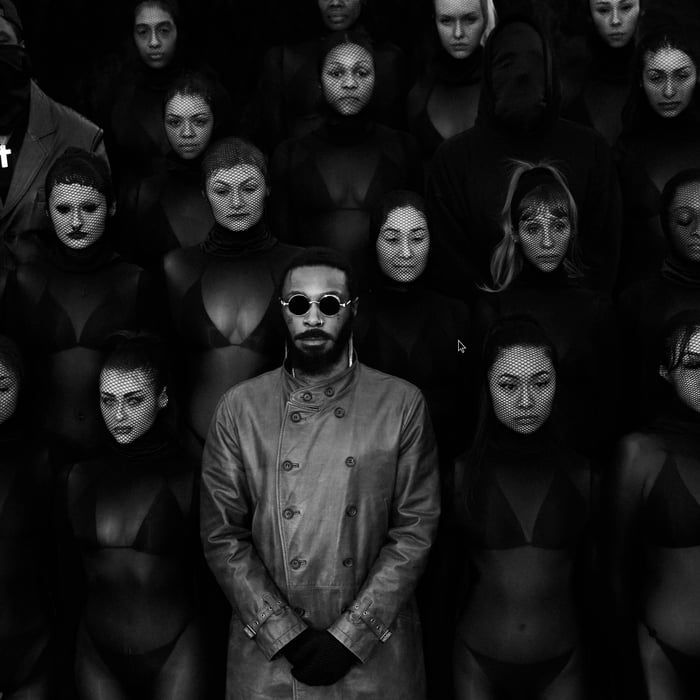
If this album’s visual vibe got under your skin too, it’s the kind of cover that actually works as wall art. You can browse album-cover-style posters at our store here: https://www.architeg-prints.com
 | DISCOUNTGET 30% OFF*Use code on your next order:
|
* This post may contain affiliate links, meaning we earn a commission if you make a purchase through these links, at no additional cost to you.