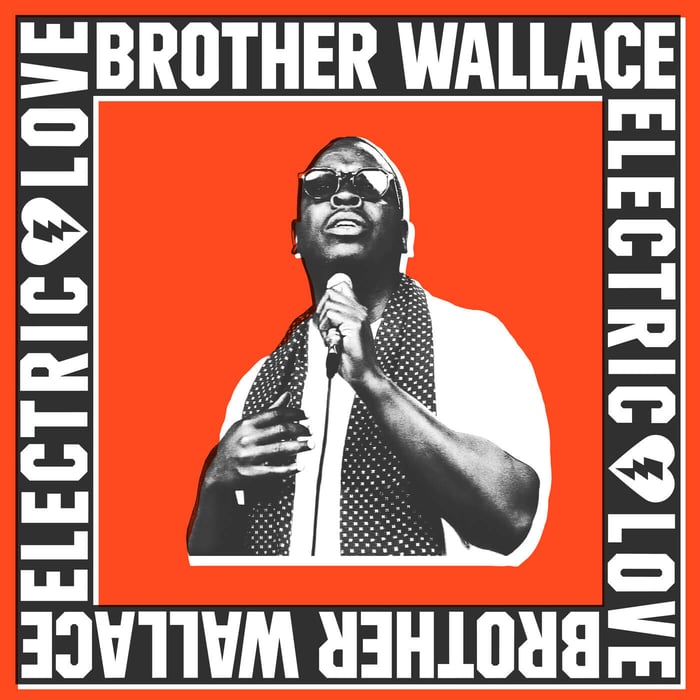
Electric Love Review: Brother Wallace Turns Drama Into Church Business


 See more Architeg Prints stories on Google.
Electric Love Review: Brother Wallace Turns Drama Into Church Business
Electric Love isn’t trying to be trendy—it’s trying to be useful. Brother Wallace sings like he’s staging scenes, not “expressing himself.”

A record that walks in like it already knows the room
Some albums want your attention. Electric Love walks in and starts directing traffic like it’s been running the building for years—and honestly, that makes sense once you hear how Brother Wallace carries himself.
He doesn’t sound like a debut artist trying to prove he belongs. He sounds like someone who’s spent his whole life getting people to sing in time, on purpose, for real reasons. The vibe is less “welcome to my art” and more “stand over there, you’re coming in on the next line.”
The backstory is audible—and it shapes the attitude
Brother Wallace’s voice has that church-trained snap: the call-and-response rhythm, the way a phrase lands like it expects an answer back. You can hear the guy who sat at a piano at six and then—somehow—ended up directing a giant church choir at fourteen. That’s not “talent,” that’s early authority. And I don’t mean it as a compliment so much as a diagnosis: he leads before he confesses.
Then you feel the second life in him too: decades teaching K–12 in Georgia. That comes out in the way he explains scenes and morals like he’s breaking them down for people who might not be listening closely. A reasonable listener could argue it’s a little too guided at times—but that’s also the engine of the album. He isn’t whispering secrets. He’s running a room.
“Who’s That?”: the album’s best trick is refusing the obvious word
“Who’s That?” is the kind of song that could’ve been a cheap betrayal anthem. Instead, it plays like a street-level short story. He’s walking downtown, he spots a situation, and the situation keeps getting worse because the details keep stacking up: the twin-like face, the dimple, the hand-holding, the fancy car, the public casualness of it.
What’s sneaky is he never says “betrayal.” Not once. And that restraint matters because it forces you to sit in the scene with him rather than jump to the conclusion and congratulate yourself for understanding. He just keeps asking,
“Who’s that baby? Who’s that baby?”like repetition might physically pull the truth out of the air.
At first I thought the hook was almost too simple—like, really, we’re just chanting the question? But on second listen it clicked: the loop is the point. That’s what getting lied to feels like. Your brain doesn’t write poetry. It replays one ugly question until it gets an answer.
Dan Taylor’s production makes this feel played, not programmed
Every song here is produced and co-written by Dan Taylor (of The Heavy), and you can hear the decision-making in the bones of the record. These arrangements don’t float. They walk.
The sound is built on:
- drum breaks that snap instead of glow
- organ stabs that act like punctuation
- horn sections that show up like a judgmental neighbor
- walking basslines that keep the songs moving even when the lyrics stall
And those choices matter because Electric Love doesn’t lean on modern “mood” production to do emotional work for it. No foggy pads, no preset shimmer to fake depth. The band plays like the story has to land in one take, in a room full of people who will not read the lyrics later.
The sessions ran at Real World Studios in England, and the album sounds like it had space to be performed, not assembled. You could argue the polish occasionally makes the songs feel a little “stage-ready” instead of intimate, but I’d rather have that than another album that hides weak writing under atmosphere.
“You’re the Man”: sarcasm dressed up as a singalong
“You’re the Man” is where the record shows its meaner grin. It rides a descending bassline with organ chords punching holes in the air, and Wallace drops into a lower register that feels like he’s speaking from the bottom of a stairwell.
He sings:
“Ain’t this the life, ain’t it grand? / Ain’t this the life, you’re the man,”
and he aims it at someone who traded safety for something darker. The lyric spells it out—standing in midnight shadows, waiting for a sun that might not come—but the real verdict is in the vocal placement. He doesn’t belt it like triumph. He sits in it like “yeah, look what you picked.”
This is one of those performances where the tone does more than the words. And I’m not totally sure the song would hit as hard if a different singer tried it; Wallace makes sarcasm sound like a hymn you don’t want to agree with.
When Wallace writes characters, the album stops preaching and starts hitting
The third-person songs are the album’s sharpest weapon. When Wallace stops trying to summarize life and starts naming people, Electric Love suddenly feels less like a message and more like a world.
“Top Shotta” sketches Charlie Mo, somebody who “slipped up” by falling in with the wrong crowd and gets reeled in “like a fish… hooked.” It’s blunt, almost folksy—like he’s telling you a familiar cautionary tale—but the details keep it from turning into a poster on a classroom wall.
Then there’s Mary, who “used her lips of honey” to run up money, “selling soul” just to make ends meet. That’s not romanticized. It’s transactional and cold, like Wallace is refusing to let charm be mistaken for innocence. Someone could argue he leans too hard into archetypes here, but I think he’s doing it on purpose: these aren’t “complex antiheroes,” they’re the kinds of people a community whispers about and then claims it never judges.
The cold ending: pretty people, poor people, and nobody seeing anything
One of the most vivid moments on the album is built on a simple, lonely piano figure before the beat drops into a kick-and-snare loop. A jazzy electric bassline snakes underneath, with sparse guitar notes echoing like a hallway you don’t want to walk down.
And the story turns into a shared dead-end: Mary’s beauty is described as “skin deep” and “blood cold as the creek,” the kind of charm that can drop a man to his knees without ever caring what happens after. Meanwhile Wallace pulls the camera back to the high side of town—“eyes wide open, but nobody sees”—which is one of those lines that sounds obvious until you realize he’s accusing everybody at once.
Misery doesn’t just love company here. Misery recruits it.
I kept waiting for this scene to resolve into something cleaner—a regret, a lesson, a rescue. It doesn’t. The album prefers consequences to catharsis, which is an arguable choice, but it’s the right one for this story.
“A Patient Man”: the moment where the album risks sounding too easy
Not everything hits with the same weight. “A Patient Man” repeats
“I am loved, I’m alive”with a kind of low-pressure calm. And look, affirmations have their place. But here it lands almost too smooth—like the record briefly swaps its sharp storytelling for a slogan that doesn’t bleed.
That said, it also reveals something real about Wallace: he’s comfortable leading people through a phrase until they believe it. He’s done it before, probably a thousand times, in rooms that needed it. The mild problem is that Electric Love is at its best when it refuses comfort, and “A Patient Man” is comfort on purpose.
A listener could easily disagree and call it necessary breathing room. I just think the album’s strongest voice is its blunt one, not its soothing one.
“Hope of Fools”: the record’s smartest contradiction
In the spring, Wallace had been opening big rooms for a touring soul band—the kind of rooms where your hook has to land fast and clean, with no explanation. “Hope of Fools” feels built for that: it’s direct, structured, and designed to stick.
Lyrically, it’s the album’s most clear-eyed gut-punch. He’s stretching a meager check while his boss gets richer. He’s watching inflation climb and war rage “all over the land,” trying to feed babies with money that doesn’t reach the end of the week. The verses move like a tired walk home.
Then the chorus labels itself “the hope of fools,” and the slogan starts flipping depending on when you hear it. The first pass:
“My vote counts / and my life matters.”The second:
“My vote didn’t count / and my life didn’t matter.”Same musical frame, opposite emotional result.
That’s the point. He doesn’t smooth the contradiction out. He lets both statements sit on opposite sides of the same horn-and-piano refrain like two versions of the same person, said on different days. If you want your protest music clean and confident, you might find this messy. I think the mess is the honesty.
And when he gets to the politician with “the purest heart” and a “real plan,” only to bite “the poisoned fruit” and sell out to corporations, Wallace doesn’t dramatize it. He states it like news everybody pretends is shocking.
When the “big” sounds get too big, they start stepping on the songs
There’s a real risk on this album: sometimes the biggest moves swallow the smaller ones. The choir vocals and horn swells on “Let’s Get Together,” for example, are so thick they can flatten the edges of everything around them. It becomes a wall of good intentions.
I’m not saying it’s bad—just that the album occasionally confuses “bigger” with “deeper.” You can feel the arrangement deciding to win the moment whether the writing is ready or not. Some listeners will love that maximal soul uplift. I wanted a little more space for Wallace’s sly, talk-singing storytelling to breathe.
“Jealous”: spelling it out, making it corny, and letting it work anyway
“Jealous” is the album admitting something ugly without dressing it up. It’s a mid-tempo boom-bap track: snappy snare, soft electric piano chords, a beat that gives him room to talk rather than perform.
He catches his ex with someone else and confesses:
“the only thing I know I feel / is E-N-V-Y.”Spelling it out is corny. And yes, I rolled my eyes a bit the first time.
Then I realized the corniness is the move. He’s not trying to look cool while feeling small. He calls envy “that old green eyed monster” and basically lets the monster win the scene. That’s a creative decision a lot of singers dodge because it’s easier to sound wounded than petty. Wallace chooses petty, which somehow ends up sounding more human.
“No God In This Town”: when the album stops negotiating
Then there’s “No God In This Town,” which feels like the album’s one deliberate break from its mostly organic palette. It’s built on a distorted vocal scratch and a melancholy synth pad—less bandstand, more haunted streetlight.
The line
“despite all that you have done / there’s no God in this town”lands with plainspoken finality, like somebody who’s tired of softening sentences for other people. It’s not an atheist slogan or a theological argument; it’s exhaustion turned into a hook.
And that’s where Electric Love quietly reveals what it’s been doing the whole time: it’s not trying to replace faith with cynicism. It’s documenting the places where prayer doesn’t reach, even if you know all the right words.
The closer: a triumph the album almost earns (almost)
The record closes with a multi-tracked choir singing
“We’ve got L-O-V-E energy / Peace and harmony”over rapid hi-hats, tambourine shuffle, punchy horns trading with piano—the whole celebration package.
It’s a triumphant ending… and I’m torn. Part of me enjoys the lift. Another part of me thinks the album hasn’t fully earned that level of resolution, because so much of what came before is unresolved by design. Maybe that’s the point: communities sing the ending they want, not the one the story delivered.
I’m not totally sure which read is “right,” but the fact that I’m arguing with the closer means it did its job. It made me react, not just nod.
Conclusion
Electric Love isn’t a diary. It’s a set of scenes, warnings, and street-corner truths delivered by a singer who knows how to lead people—even when what he’s saying isn’t comforting.
Our verdict: People who like story-first soul with church muscle and a little moral grit will actually like this album; it’s built for listeners who enjoy hearing a character walk into a mess and not magically walk out. People who want subtlety at all costs—or who need every big chorus to feel “earned” in a neat, modern way—will bounce off it and call it corny. They won’t be wrong. They’ll just be missing the point on purpose.
FAQ
- Is “Electric Love” more gospel or more soul?
It leans soul in structure and groove, but the gospel training is baked into Wallace’s phrasing and the choir-minded arrangements. - What’s the most immediate track on first listen?
“Who’s That?” hits fast because it’s a clean scene with a hook that repeats like an anxious thought you can’t shut off. - Does the album get political?
“Hope of Fools” does, but it’s less a speech and more a lived-in contradiction—hope and disenchantment in the same breath. - Is there a track where the production changes noticeably?
“No God In This Town” stands out with its distorted vocal scratch and melancholy synth pad, breaking from the more band-forward feel. - What’s the album’s weakest habit?
When it leans too hard into big choir-and-horns uplift, it can flatten the sharper storytelling moments instead of supporting them.
If this album put a particular image in your head—street scenes, neon conscience, church-stage drama—you might want to hang onto that visually too. If you’re into that kind of vibe, you can shop a favorite album cover poster at our store: https://www.architeg-prints.com/
 | DISCOUNTGET 30% OFF*Use code on your next order:
|
* This post may contain affiliate links, meaning we earn a commission if you make a purchase through these links, at no additional cost to you.