Shoot Dice Album Review: 4FIVE6 NICE Turns Hustle Into Homework


 See more Architeg Prints stories on Google.
Shoot Dice Album Review: 4FIVE6 NICE Turns Hustle Into Homework
Shoot Dice isn’t a slogan here—it’s a pressure valve. 4FIVE6 NICE and DeevoDaGenius make a Boston record that counts bills, hours, and consequences.
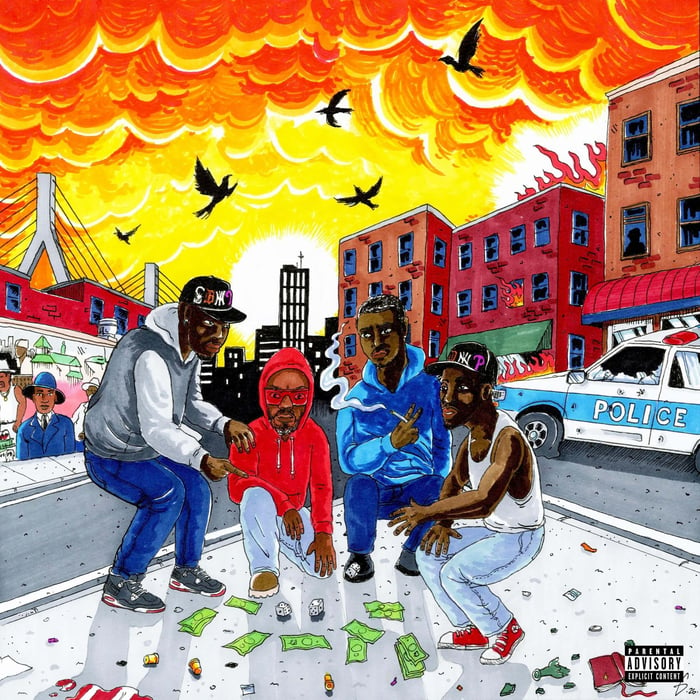
Courtesy of E11EVATION RECORDS.
A record that dares you to listen like you live there
This album doesn’t ask for your attention with shiny hooks. It kind of dares you to keep up. Shoot Dice is the sort of title that sounds like a bumper sticker until the music makes it feel like an instruction manual you should’ve read years ago.
And yeah, there’s even a note up front saying this was originally written in Japanese and translated into English for publication. I’m not totally sure what I’m supposed to do with that information while the dice-roll sound effects keep popping up like punctuation—but it sets a tone: everything here gets double-checked, reworded, and made legible. Even the street math.
“WRBYF” opens with a question, then answers it with receipts
The hook on “WRBYF” is basically: who’s still standing when everything collapses. That’s not philosophy on this track—it’s inventory. NICE raps like his lungs are working overtime, like he’s “pumping” so hard he’s practically got asthma. It’s not a cute detail; it’s the sound of a guy forcing his own past into a neat stack of sentences.
What hits is how quickly he frames “before rap” as the actual resume. He’s writing from the off-mic side of his life—bathroom-floor imagery, breaking “peas to onions,” sliding dubs before anyone was calling him a rapper. It’s two minutes that feels like the album’s thesis: rap comes second, surviving comes first.
I thought at first the track was going to lean into that tough-guy mystique—another “look what I did” opener. But by the time it settles, it’s less bragging than a cold attendance sheet. The vibe is: some people didn’t make it to the next verse.
DeevoDaGenius doesn’t “produce,” he locks the room from the inside
DeevoDaGenius tracks his beats at SoundLab in Brockton, and you can hear the difference between “home studio convenience” and “real room with real decisions.” The beats don’t show off; they hold their posture. That’s the trick—nothing is flashy, but nothing is careless either.
He’s also the guy behind a February 2024 compilation called CHAMPION SOUND, pulling in 15 Massachusetts MCs and signing off under the “97.8 Champion Sound” of the 978 area. That project felt like a roll call conceptually—names, voices, a scene assembled in public.
This album does the opposite on purpose. One rapper. One beatmaker. No crowd to hide in. If CHAMPION SOUND is the party, Shoot Dice is the long walk home where you finally admit what you did to pay for the outfit.
SoundLab later being named Studio of the Year at the 2025 Boston Music Awards makes sense in the most unromantic way: this record sounds like it was recorded by adults. And I’ll go further—this is the kind of single-producer Massachusetts rap record that tries to end the discussion by simply being more focused than everybody else.
“HERO (PAYTON PRITCHARD)” is a transition song pretending to be a flex
“HERO (PAYTON PRITCHARD)” is where NICE starts painting his life in clean panels: moving from illegal hustling into a legitimate business selling fitted caps. It’s not framed like redemption; it’s framed like logistics. He draws a straight line from digital scales to “legit digits,” from dope math to money math.
The key move is how he talks about “old Boston where the men were really made.” That could’ve been pure nostalgia cosplay. On my first listen, I honestly rolled my eyes—here we go, another golden-era speech.
But by the second listen it stops sounding like sentimental worship and starts sounding like a warning label. He tags the era with a shoutout to Bone Crusher’s “Never Scared,” and suddenly you understand what he misses: not the romance, the rules. The old Boston he’s referencing isn’t “better,” it’s just clearer about what happens to you if you slip.
That’s a risky choice, and it works. It also exposes a contradiction: the album is telling you to grow up, but it keeps glancing backward like it still wants permission.
A line about loyalty, and why it stings
“Loyalty is rare, so I threw one on the house.”
He doesn’t sell that line with a dramatic pause. He says it like he’s already seen how people behave when there’s nothing left to gain. That’s the album’s real tone: not anger, not sadness—just the weary competence of someone who learned early that feelings don’t pay.
And I’ll make an arguable claim here: that bar is more revealing than any gun-talk could ever be. It tells you he’s not addicted to violence; he’s addicted to accounting.
“PLAY TO WIN (RED LINE)” makes the “dual life” sound boring on purpose
“PLAY TO WIN (RED LINE)” rides a patient indoor loop—controlled, repetitive, almost stubbornly calm. NICE earns the bar that names the double existence: running a nine-to-five and still slinging to cover bills, riding the Dorchester stretch end-to-end on the train.
Then he slips in the line that changes the entire track:
“Still make it home to tuck the babies in for bedtime.”
He raps it with basically no inflection. That’s the point. The album refuses to treat fatherhood like a sentimental montage; it’s just another responsibility wedged between risk and rent.
The “Red Line” in the title pulls double duty too—public transit, sure, but also a colorway, a style choice, an identity code. That’s one of the record’s recurring habits: every meaningful noun does two jobs.
And the bigger idea of Shoot Dice shows up right here: “SHOOT DICE NOT PEOPLE” isn’t just a title, it becomes a creed on “SDNP FREESTYLE,” and it’s also a sound effect threaded into interstitial skits. The album turns its own motto into background noise, like it’s trying to hypnotize the listener into choosing dice over destruction.
Is that heavy-handed? A little. But it’s also kind of the only way slogans ever work—repeat them until they finally interrupt your impulses.
Wayne Street, corners, and why the album keeps speaking in coordinates
The album keeps naming places and things that function as both literal and symbolic: Wayne Street is a street, but it’s also a corner—meaning a job site, a temptation, a memory. That’s why the writing feels lived-in without needing to over-explain itself.
Still, I’ll admit a moment of uncertainty: I kept wondering if a few of these doubles are for the listener, or just for him. Like, is “Red Line” meant to be decoded by outsiders, or is it just NICE winking at his own reflection? Either way, the record doesn’t pause to clarify. It just keeps moving.
That choice can feel a little cold if you want emotional hand-holding. But the coldness is consistent: this is music made by someone who learned not to narrate.
“FCKEDUP (WHATITFEELLIKE)” is where the tough talk finally cracks
If the earlier songs are about structure—work, transit, hustle—“FCKEDUP (WHATITFEELLIKE)” is about what structure costs. NICE admits he couldn’t buy his kids fruit snacks at the grocery store. That detail hurts because it’s so small. Anybody can say “I struggled.” Fruit snacks is the kind of truth you don’t invent.
Then he goes for the throat: his grandmother’s death breaking his soul “to a million parts.” He lays out the ugly list—selling weed, selling pills, even robbing—and then says he disliked the feeling, so he got a job. Forty hours a week. No problem.
Here’s the mild criticism, because it has to be said: the “no problem” part almost oversimplifies what he’s describing. It’s a powerful line, but it risks sounding too clean for a life that obviously wasn’t. Then again… that might be the point. He’s not describing trauma; he’s describing decisions. He’s shaving the story down to the parts that changed his behavior.
And honestly, the fact that he names the hours—“forty hours a week”—is what makes it believable. A practiced rapper doesn’t need to do that. A guy who actually clocked in does.
“DEREK JETER” ends with dice, men arguing, and a hook that sounds like a dare
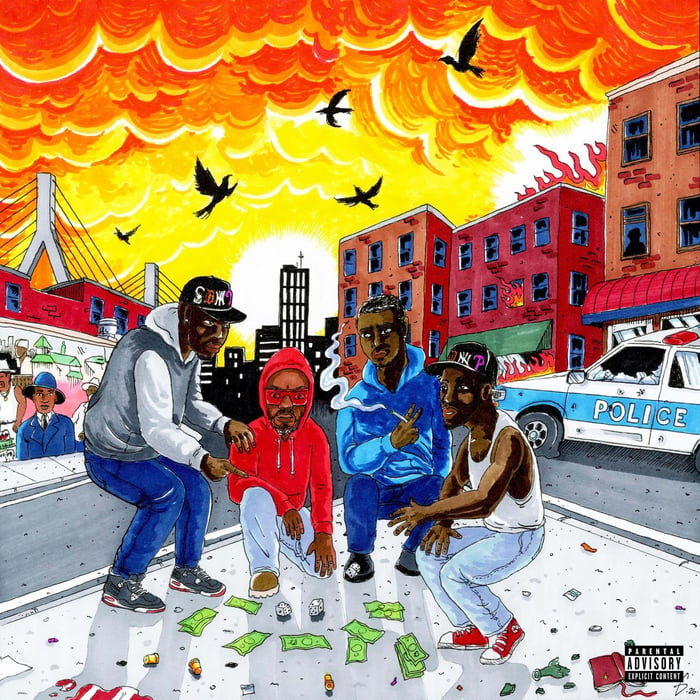
By the time “DEREK JETER” comes around, the album feels like it’s zoomed out to street-level documentary footage: a Dorchester block on a Saturday night, a circle of men in tech fleece and white Air Forces, arguing over a roll on the ground. The scene is so specific it feels like you can hear the pavement.
Then the closing audio interlude announces the “8th Annual World Series of Dice,” and MC EyeFlo’s hook rolls under it:
“If not me, who? If not now, when?”
That’s not just a motivational quote here—it’s a trap door. It’s the exact logic that gets people to take risks they can’t afford. The album knows that. It uses the hook like a mirror: are you hearing inspiration, or are you hearing the self-talk right before somebody makes a mistake?
That’s the slyest thing the record does. It refuses to moralize while still making the moral feel obvious.
What actually sticks (and what I’m still arguing with)
This project is at its best when it turns “grown man rap” into something sharper than maturity cosplay. The strongest moments aren’t the loud ones—they’re the quiet clauses tucked inside a bar, the way NICE refuses to decorate his own sacrifices.
If you want the parts that really carry the album’s weight, I keep coming back to:
- “WRBYF” for the opening statement and that breathless urgency
- “HERO (PAYTON PRITCHARD)” for the pivot from illicit to legit without pretending it’s a fairytale
- “PLAY TO WIN (RED LINE)” for making domestic responsibility sound like the hardest flex
And if you’re asking whether DeevoDaGenius outshines NICE or vice versa, I’m not sure that’s even the right question. The beats are built like a hallway; NICE walks through it and makes you notice every door.
Conclusion
Shoot Dice doesn’t romanticize the hustle—if anything, it makes the hustle sound exhausting and weirdly bureaucratic. 4FIVE6 NICE and DeevoDaGenius keep threading one idea through different rooms: your choices echo, your slogans become habits, and eventually you either build a life or you keep rolling until something breaks.
Our verdict: People who like rap that sounds like real adulthood—jobs, kids, transit, decisions—will actually like this album, because it treats responsibility like a plot twist. If you want nonstop fireworks, or you need every song to beg for playlist placement, you’re going to call it “too plain” and miss the point. The dice are right there; don’t blame the record if you wanted a slot machine.
FAQ
- What does “Shoot Dice” mean in the context of the album?
It comes off like a code of conduct: choose dice games and competition over escalating violence, and repeat it until it becomes real. - Is this more of a rapper-focused or producer-focused project?
Both, but it’s deliberately locked to one rapper and one beatmaker, so the focus is intensity through limitation, not variety. - Which tracks best represent the album’s core idea?
“WRBYF,” “HERO (PAYTON PRITCHARD),” and “PLAY TO WIN (RED LINE)” feel like the spine: survival, transition, and the double life. - Does the album glorify hustling?
It talks about hustling plainly, but the emotional tone leans closer to exhaustion and calculation than celebration. - What’s with the dice skits and sound effects?
They work like punctuation—reminding you the motto isn’t abstract. It’s a habit, a ritual, and sometimes a risk.
If this record put a specific image in your head—cover art, corner scenes, that Red Line commute—turn it into something you can hang up. You can shop a favorite album cover poster at our store: https://www.architeg-prints.com
 | DISCOUNTGET 30% OFF*Use code on your next order:
|
* This post may contain affiliate links, meaning we earn a commission if you make a purchase through these links, at no additional cost to you.