PINE Album Review: James Savage’s “PINE” and the Art of Not Deciding


 See more Architeg Prints stories on Google.
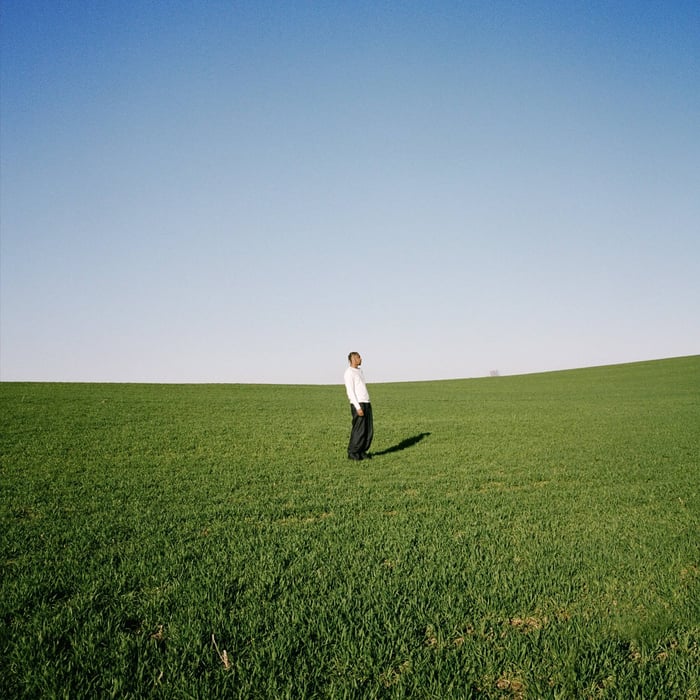
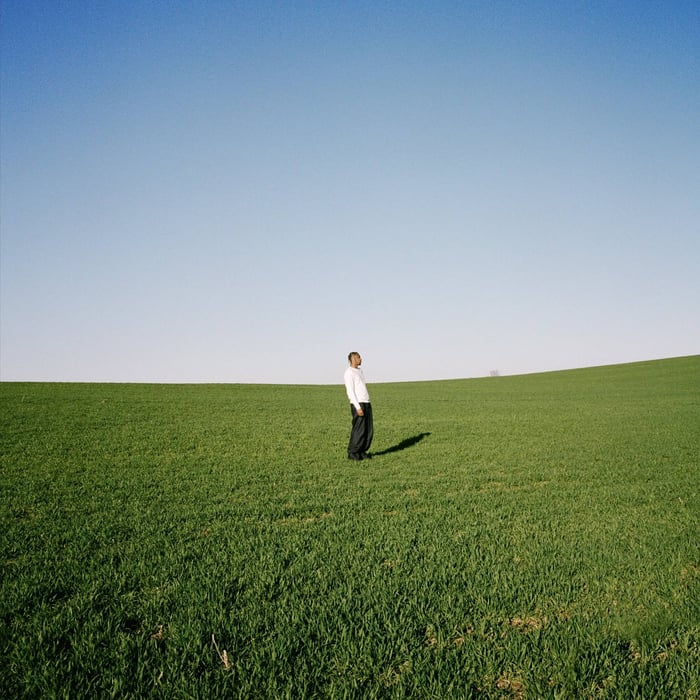
Album Review: PINE by James Savage
James Savage’s debut album PINE turns "maybe" into a personality trait—sometimes gorgeous, sometimes maddening, and weirdly honest.
A record that keeps reopening the same door
Some debuts kick the door down. PINE album keeps it cracked—then peers through it, then changes its mind, then writes a pretty line about how it’s “still thinking.”
James Savage is 24 and he confesses like it’s a full-time job. The thing is, the confession never lands as one clean verdict. He reaches for a conclusion, drops it, reaches again. If you hear that as filler, you’re only catching the surface-level indecision. The real move is that the uncertainty is the point: the album keeps trying to declare something permanent, then sabotaging its own certainty in real time.
And honestly, I kept waiting for the record to pick a lane—devotion album, heartbreak album, messy-dating album, therapy-notes album—but it won’t. That’s either brave or annoying depending on how patient you are. I’m not always patient.
“The Pine” is where he finally stands still
Here’s the blunt truth: the album’s best decision is committing to one image and refusing to let it go.
“The Pine” is a piano track where you can hear the felt of the hammers at the ends of lines—like the room is so close you’re basically sitting on the bench with him. Then the outro starts turning one phrase over and over:
“This must be the pine.”
Each time the line comes back, it stretches by a beat. Not a dramatic tempo shift—more like time itself loosens its tie.
Savage’s vibrato gets bolder with every return, which is a sneaky flex. Instead of stacking more production to make the ending “big,” the space gets quieter around him. He names the figure—this pine, this symbol, this stand-in for whatever he can’t stop circling—and lets it start to feel inevitable.
On a record that usually keeps escape routes open, that kind of staying still feels almost radical. Like: oh, you’re actually going to mean one thing for more than ten seconds?
My first impression was that “The Pine” was just a pretty centerpiece—nice piano, strong hook, classic slow-burn. On second listen it felt more like the album’s thesis statement: not “I know,” but “I can’t stop coming back to this.”
“Good Enough” makes money sound like emotion (because it is)
The co-production credits matter here—Franklin Rankin, Jermaine Paul, and Savage himself—because “Good Enough” sounds intentionally small, like they refused to let it hide behind gloss.
Savage tracks the vocal quiet. Consonants are pushed forward. You can hear breath at the ends of lines. And there’s no autotune smoothing the edges into something safer. It’s a choice, and it works because the lyric isn’t trying to impress anyone. It’s trying to admit something.
Then he drops the line:
“I need a couple hundred for your attention.”
And suddenly the whole track rearranges itself around that kind of honesty. The dollars don’t go anywhere flashy—there’s nowhere for them to go. So they land on the snare, on the sparseness, on the awkwardness of saying the part out loud that R&B usually leaves offstage.
That’s one of PINE album’s strongest tricks: treating financial talk like relationship talk, because in real life they’re the same conversation wearing different clothes.
He borrows “grandparents,” not “parents,” and it’s his smartest flex
Two modern R&B reference points hover around this album’s temperature: the quiet acoustic devotion style and the slowed-down player-diary style. You can feel the gravitational pull of both. But Savage doesn’t really pick either.
Instead, he reaches further back and grabs a specific kind of foundation:
- the dirty clavinet hook energy of Bill Withers’ “Use Me” (1972),
- paired with the gospel-piano-and-vocal spirit of Donny Hathaway’s “Tryin’ Times” (1971).
That’s not him doing cosplay as a vintage soul guy. It’s more like he’s choosing elders who understood that money is emotional language when you come from a household where every dollar is an argument, a prayer, and a promise all at once.
A 24-year-old in 2026 choosing those “grandparents” over the more obvious modern templates is the most surprising move on this debut—and I don’t think it’s an accident. It feels like Savage decided early: if I’m going to talk about devotion and scarcity, I’m not doing it in the smoothest, trendiest dialect available.
“100 Years” turns a place into a vow (and that’s the real romance)
Now the album pulls the camera back to Kentucky—but it doesn’t do it like a tourist brochure.
Sandy Lee Watkins Park sits along the Ohio River in Henderson, Kentucky—about an hour east of Evansville. The room where Savage tracked “100 Years” is somewhere in Louisville, about two hours away. Henderson’s got roughly twenty-eight thousand people. His father took him fishing there. That’s not “lore.” That’s texture. That’s the kind of specificity that makes the song’s promise feel like it has dirt under its fingernails.
(And yes, the local trivia lands: Henderson’s most famous resident before Savage was W.C. Handy, who lived there in the 1890s before moving to Memphis and helping invent recorded blues.)
Musically, “100 Years” does something stubborn: a close-miked acoustic guitar holds inside one small interval for the whole verse. No flashy chord parade. Just a tight little box he chooses to stay inside. And Savage—trained by years singing in church choir down the road—holds pitch against that chord like it’s a moral decision.
The line
“hundred years to grow for you”
starts as a relationship promise, sure. But once the song establishes the place, that proof/you-grow/you rhyme starts sounding like a Henderson address. The “partner” he’s singing to starts overlapping with the town that made him. And that’s why the track works: it’s commitment with a double exposure.
Between the two big commitment tracks, I’d take “100 Years” as the stronger one, because it doesn’t just say “forever.” It shows you what forever smells like.
“Crash” is where the writing stops being pretty and gets sharp
If “100 Years” is devotion as geography, “Crash” is memory as an ambush.
Over Math Times Joy’s distorted bass, Savage slides into the second-verse refrain with a line that’s almost too precise for this genre’s usual fog-machine metaphors:
“And in the fall we used to climb the trees all day / ’Til they all fell down but the branches stayed.”
That’s a childhood scene that should’ve come out nostalgic—kids outside, climbing trees, streetlights soon. But he scrubs the sentiment off it in one move. Trees collapsing while branches stay airborne, separated from the trunks that grew them. It’s an inversion that feels like watching your own memories betray you.
And it matters that “Crash” sits right after “The Pine.” One song gives you a pine standing tall while leaves come down. The next gives you the negative photograph: a tree falling while branches hang in the air anyway. Savage is doubling the metaphor and making it mean two different things—stability and collapse—without changing the language.
That’s the kind of writing that pushes a song past “pretty” into something harsher. He delivers it better than most R&B leads working in this lane, because he doesn’t oversing it. He just drops it there and lets you deal with it.
The middle stretch: two songs, one obsession, and a nasty question
From here, the album links two tracks like a bruise you can’t stop pressing.
“Unavoidable” leans on tremolo electric guitar. Then “Painful Company” shifts into panned vocal harmonies. The productions don’t really match, but Savage matches the pitch across both—same key, back-to-back—like he’s insisting the emotional problem is continuous even if the scenery changes.
On “Unavoidable,” he frames the relationship as a loop: sex, fight, makeup, repeat. By the time “Painful Company” hits, he’s calling that loop
“the only available form of being alive”
and dressing obsession up as a vow.
That’s where the album gets genuinely uncomfortable—in a good way. Because the writing is loud enough about the self-deception that you start wondering if Savage hears it too. I’m not fully sure. The lyric supports two readings at once:
- one where he’s brave for admitting how trapped he feels,
- one where he’s careless and calling addiction “romance” because it sounds better in a chorus.
PINE album refuses to pick which one is true. And I’ll give it this: that refusal is, itself, strong writing. He’s letting the listener sit in the contradiction instead of cleaning it up for streamability.
When Savage stops naming things, the love songs start slipping
Here’s the part where the album shows its one real weakness, and it’s not production—it’s language.
Savage’s pen is sharper on the conflict tracks:
- the Rhodes-and-bass midtempo of “Good Enough,”
- the distorted-bass chorus of “Crash,”
- the snapping-percussion verse of “Qtr Life Crisis.”
In those songs he names objects, scenes, behaviors. He puts you somewhere. But on the commitment songs, he sometimes reaches for big devotion phrases that sound… traded. Like they were purchased in bulk.
You get lines where fingertips are described as
“like I talk to God,”
or touch as
“speaking my language.”
And then there’s
“Trust or lust or comfortable is an understatement,”
which has that unmistakable vibe of a writer grabbing the nearest fancy word instead of the truest detail.
It’s not catastrophic. It’s just the moment where Savage’s specificity blurs and the song loses its teeth. Ironically, he sounds more convincing when he’s conflicted than when he’s sure—like certainty makes him lazy.
Is it fixable? Yeah. Just not on this album. He’s already proven he can name an object instead of a feeling. Doing that when love is the subject is a separate skill, and he hasn’t fully unlocked it yet.
“Qtr Life Crisis” pays off the album’s “maybe” addiction
By the time “Qtr Life Crisis” arrives, Savage’s vocal sits harder against the snapping percussion than anywhere else on the record. He sounds less like he’s floating and more like he’s gripping the steering wheel.
And the line finally says the quiet part out loud:
“Maybe it’s the pine / Maybe it was me the whole goddamn time.”
That’s the album in miniature. Savage spends the whole record naming the things he can’t decide, stacking “maybes” until the hedge becomes the only solid object left. It’s almost funny—calmly ridiculous, even—that his strongest conviction is about not having one.
The open question is whether this kind of uncertainty stays productive. On this record, it’s often compelling. On the next one, if he doesn’t sharpen the language and pick his moments, the “maybe” could start sounding like avoidance.
Where I land with it
I end up treating PINE album like a three-and-a-half-star kind of experience in my head: impressive, personal, frustrating in a few spots, and hard to dismiss once it’s in your bloodstream.
And yeah, I have clear favorites:
- “Crash”
- “The Pine”
- “Qtr Life Crisis”
Not because they’re the “best songs” in a neutral sense, but because they’re where Savage stops decorating the feeling and actually pins it to the wall.
Conclusion
PINE album is James Savage insisting that indecision can be a form of truth—then proving it by building a whole record out of beautifully sharpened “maybes.” It hits hardest when he names real objects, real places, real loops he can’t break, and it slips when devotion turns into generic poetry.
Our verdict: People who like R&B that breathes—quiet vocals, audible rooms, conflicted writing, metaphors that actually stick—will latch onto this. If you need clean resolutions, big declarations, and love songs that stop trembling long enough to pose for a photo, this album will drive you nuts (politely, but repeatedly).
FAQ
- What is the core idea behind the PINE album?
It keeps circling commitment versus obsession, using “the pine” as a symbol of staying rooted while everything else shifts. - Which track best represents James Savage’s writing at its sharpest?
“Crash,” especially the tree-and-branches image that flips nostalgia into something colder. - Does the album sound heavily produced?
Not really—some tracks are deliberately small, with close vocals and space you can hear. - Where does the album stumble most?
On a few commitment songs, the lyrics drift into generic devotion phrases instead of the concrete details he nails elsewhere. - What should I listen to first if I’m unsure?
Start with “The Pine,” then “Qtr Life Crisis.” If those don’t hook you, the album’s central tension probably won’t either.
If the pine imagery stuck with you, a good album cover on the wall kind of makes sense—like giving the music a physical place to live. If you’re into that, you can shop a favorite album cover poster at our store: https://www.architeg-prints.com
 | DISCOUNTGET 30% OFF*Use code on your next order:
|
* This post may contain affiliate links, meaning we earn a commission if you make a purchase through these links, at no additional cost to you.