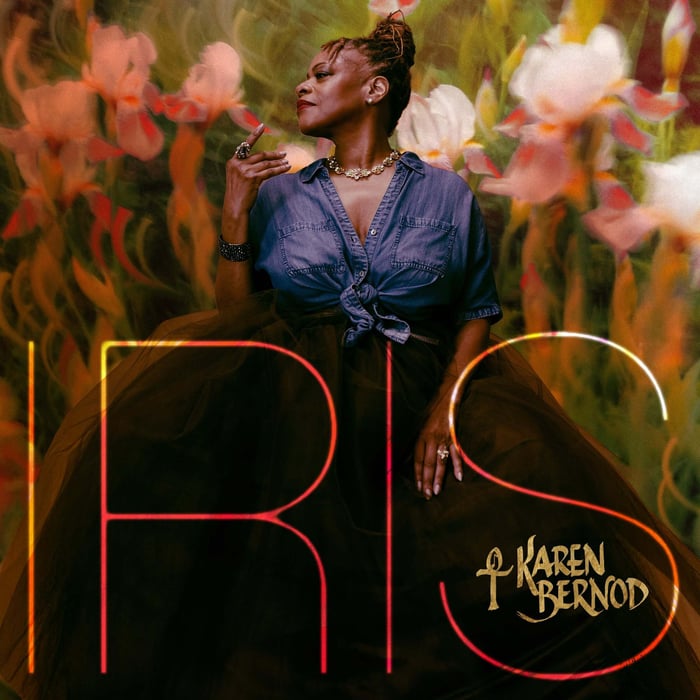
Karen Bernod’s IRIS Album Review: Grief, Grooves, and One Weird Flex


 See more Architeg Prints stories on Google.
Karen Bernod’s IRIS Album Review: Grief, Grooves, and One Weird Flex
The IRIS album isn’t the tidy tribute it pretends to be—Karen Bernod uses grief as a doorway, then sneaks out into love, doubt, and grown-folk funk.
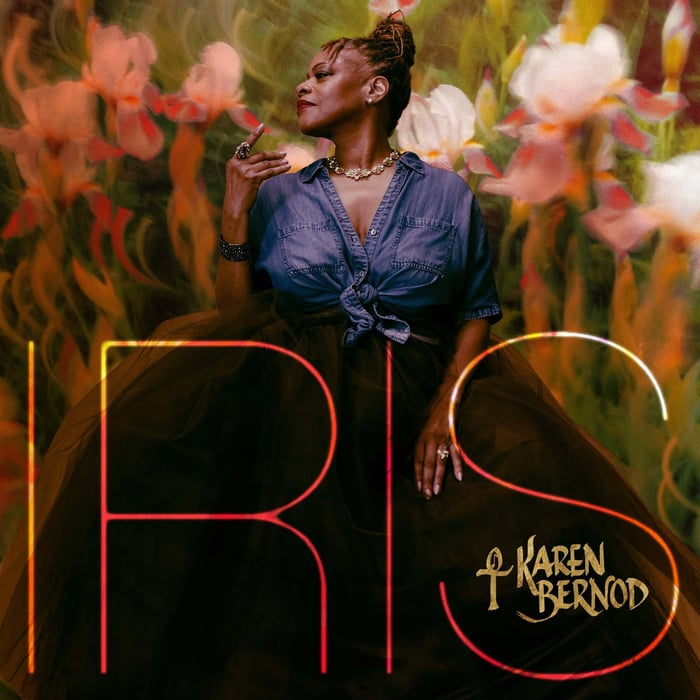
This album acts polite—then tells on itself
At first, I thought the IRIS album was going to be one long, candle-lit memorial where every song wears black and speaks in whispers. Then “2getha In Spirit” hits, and it’s not mourning—it’s adult life in the way, desire still very much awake, and timing being the real villain.
That’s the trick Karen Bernod pulls here: the rollout concept screams “tribute,” but the listening experience keeps slipping into something broader and a little messier. And honestly, that mess is where the record gets interesting.
“2getha In Spirit” is the album’s real thesis, whether it admits it or not
Here’s what “2getha In Spirit” is really doing: it’s making peace with separation without romanticizing it. Bernod doesn’t dress the situation up as fate or tragedy. She just says the quiet part out loud:
“You got a girlfriend, I got a boyfriend right now / Time does not allow us to be soul to soul.” — Karen Bernod
That line is blunt enough to make most singers hide behind metaphor. She doesn’t. And the song’s patience—the way it doesn’t rush to a neat moral—feels intentional, like the arrangement is refusing to panic.
The backstory matters because you can hear it in the seams. The song was written back in 1998 with Rob Sauthoff and produced by the late Gil Small Jr. Those original Pro Tools sessions later got corrupted as formats changed, which is the most unglamorous way possible for art to get interrupted. In 2022, Bernod’s manager DeWayne Snype handed the remaining pieces to producer 6th Sense, who kept Bernod’s original 1998 vocals and built new instrumentation underneath.
And yeah—I think I can hear that time-travel effect. There’s something about the vocal that doesn’t sound “re-performed.” It sounds lived-in already, like the emotion got recorded before the world had a chance to sand it down. A reasonable listener could say I’m projecting, but the result still lands: the song literally survives its own broken file history, which is basically the plot.
Bernod’s superpower: she refuses to code her feelings
Moving from that first punch into the middle of the album, the IRIS album keeps choosing plain language over pretty language. Bernod isn’t here to impress you with riddles. She wants to pin the thought to the wall and make you look at it.
“VR” is the clearest example. She drops lines that feel like someone talking to themselves too loudly:
- “Inside my head, don’t wanna live here / In a dark and empty space of insecurities”
- “Outside of my thoughts, such a scary existence…”
- Then she names the disease as: “Me, me, I, I, me, me, me, me, I, I,”
- And follows with: “Whatever happened to we and us?”
That isn’t poetry class. That’s a diagnosis in real time.
My arguable take: “VR” is the album’s most modern moment, and it almost feels like it wandered in from a different project—on purpose. The track even asks the question out loud late in the song: “Social media, a blessing or a curse?” and that kind of directness can sound corny in the wrong hands. Here, it works because the production makes room for the discomfort instead of smoothing it into “vibes.”
The production split: “VR” breaks the house rules
Right after you get used to the record’s live-instrument warmth, “VR” cracks the frame.
Greg Spooner—Bernod’s longest-running production partner going back to Some Othaness For U (2000)—has a co-credit on “VR,” but the staccato pocket and synth bed don’t sit in his usual neo-soul lane. Most of the IRIS album lives in a world of stacked piano chords, walking electric basslines, and choir harmonies that feel like they’ve been practiced in real rooms with real air.
Then “VR” shows up like a fluorescent light in a candle-lit restaurant.
And I’m going to say something slightly annoying but true: if this were a different artist’s album, “VR” would’ve been shoved to the front as a lead single. Here it’s track five, like Bernod is almost hiding it in the middle—either because she knows it’s an outlier, or because she doesn’t care about the obvious marketing move. I respect the second possibility more, but I’m not totally sure which one it is.
Her whole career is hiding in the way she sings to her mother
This is the part where people usually do résumé worship. I’m not doing that. I’m telling you why her history shows up audibly on this album.
Before IRIS, a lot of Bernod’s work lived on records with other names on the spine. She came out of Erasmus Hall High School in Brooklyn—same ecosystem that produced Will Downing, Stephanie Mills, and Kedar Massenburg. She was senior class president. She did a year at SUNY New Paltz. Then came the long stretch of being inside other people’s phrasing for decades.
You can hear that “career of proximity” in specifics:
- Lead vocal on Incognito’s “Marrakech” (from the 1999 LP), plus two other leads from that same record.
- Vocal consultant on Paul Simon’s Capeman with Marc Anthony and Rubén Blades.
- Co-wrote the underground house cut “Motherland” with Winston Jones in 1990.
- Background vocals for Chaka Khan that sat so close to Khan’s lead phrasing they basically merged.
Here’s why any of that matters: when Bernod sings on “IRIS (MAMA),” she doesn’t perform grief like a Broadway monologue. She sings like she’s looking across a kitchen table. That’s not an accident. That pacing—the unembarrassed steadiness—sounds like it came from years of learning how to fill a room while standing just off-mic.
My arguable claim: the album’s most emotional song is emotional because it refuses the big emotional tricks.
The album only touches loss in a few places—and that’s the point
Press framing aside, the IRIS album doesn’t spend most of its runtime “about” loss. Only a few tracks really engage it head-on: the title track “IRIS (MAMA),” “Rain On My Star,” and yes, “2getha In Spirit” in its own sideways way.
“Rain On My Star” is the one moment where the album actually breaks open. Weeping strings, a dragging tempo, and Bernod letting a tearful, soaring falsetto crack the ceiling. It’s the sound of composure losing the argument.
Then “IRIS (MAMA)” comes right after and does the opposite: it recovers and just talks. Over warm piano and gentle strings, Bernod thanks her mother Iris Cox for sacrifice, for raising three children, for getting her out of jams “big or small,” for carrying her nine months. No theatrical pleading. No grand lesson about what the loss “means.” Just gratitude that doesn’t need to decorate itself.
I expected her to overdo this one. I expected the capital-G Grief performance. She doesn’t do it. And that restraint is the flex.
A decade away from solo work, plus a decade inside the Brooklyn Interdenominational Choir under Pastor Frank Haye, seems to have taught her the hardest skill: knowing when to leave a song alone. The line “I’m so glad I got you” hits because it doesn’t chase you—it just sits there like a fact.
When the album talks to “the listener,” it gets a little wobbly
Now the mild criticism, because the IRIS album isn’t untouchable.
“Love Is All We Need” spends five minutes preaching, and not in the fun way. Bernod opens by spelling out L-O-V-E and builds this morning-prayer-into-evening-prayer structure, staying at sermon altitude the whole time. The rich/poor/homeless triad is clear, sure, but the song feels like it’s trying to persuade me of something I already agree with—without giving me a new angle to feel it from.
“Alone (You Will Never Be)” starts with an unbuffered greeting—“Hello, good morning, good day, or good evening to you”—and offers her music as company. It’s a sweet gesture, but the verses repeat the offer until it loses its edges. The intention is generous; the execution is a little too tidy.
My arguable take: both songs were written toward a listener instead of from inside a moment, and you can hear the difference immediately. A leaner version of this album—one that cuts both—would be a sharper record.
The “grown folks” section: indecision, survival, and a two-step with opinions
From there, the record does what it does best: it behaves like adult conversation set to groove.
“I Don’t Wanna Go” doesn’t pretend relationships are puzzles with elegant solutions. It drops a four-word verdict—“Ain’t no perfect relationship”—like a shrug that still hurts a little. That’s a better move than pretending love is always a victory lap.
“The Ringer” swerves into survival mode, quoting Corinthians over funk horn stabs. It’s not subtle, but subtle isn’t the assignment. The track feels like Bernod is choosing “keep going” as a discipline, not a mood.
And “Beautiful Soul” rolls in with a grown-folks two-step that basically comes with choreography instructions:
- “Grab your partner by the hand and do-si-do.”
- “Slide and we glide across the floor.”
- “This is old folk music.”
That last line made me laugh—calmly. Because she’s right, and she knows it, and she’s not begging anyone to think it’s cool. My arguable claim: that’s why it works. The song doesn’t flirt with nostalgia; it just lives there.
So what is IRIS really doing? It’s slipping past its own cover story
If you go in expecting a single-purpose memorial, the IRIS album will confuse you—maybe even disappoint you—because it keeps choosing life. Even when loss shows up, it’s not made into a museum exhibit. It’s more like a room you pass through on the way to somewhere else.
Inside the “tribute” framing, there’s a wider album hiding: one about indecision, companionship, ego sickness, imperfect love, survival scripture, and yes, the occasional lecture that runs too long.
And on second listen, I stopped wishing it was more “conceptually consistent.” The inconsistency is the point. Real grief rarely stays on-topic.
Conclusion
Karen Bernod uses the IRIS album title like a front door: you walk in expecting one thing, and she quietly leads you through a whole house of adult emotions—some tender, some blunt, some a little too polished—without asking permission.
Our verdict: People who like soul music that talks straight—kitchen-table honest, occasionally church-lit, and unafraid to sound grown—will actually like this album. People who need constant high drama, or who can’t tolerate a song turning into a five-minute PSA, will get impatient and start checking the time like it’s a work meeting.
FAQ
- What’s the core mood of the IRIS album?
It alternates between restrained gratitude (“IRIS (MAMA)”) and real-world complication (“2getha In Spirit”), with a jolt of modern anxiety on “VR.” - Which songs deal most directly with loss?
“IRIS (MAMA)” and “Rain On My Star” feel like the clearest moments where grief actually steps into the room. “2getha In Spirit” touches absence in a more sideways way. - Why does “VR” feel different from the rest?
The synth bed and staccato pocket break the album’s usual live-instrument comfort zone, which makes its message land harder—like a cold splash mid-set. - Is this album heavily political or social-commentary driven?
Not across the board, but “VR” directly questions social media’s impact, and “Love Is All We Need” leans into broad moral preaching. - What’s the biggest weakness on the record?
A couple tracks (“Love Is All We Need,” and to a lesser extent “Alone (You Will Never Be)”) feel written at the listener, which flattens the intimacy the best songs earn.
If this album put an image in your head—especially that “kitchen table” feeling—turning it into wall art isn’t the worst idea. You can shop a favorite album cover poster style at our store here: https://www.architeg-prints.com
 | DISCOUNTGET 30% OFF*Use code on your next order:
|
* This post may contain affiliate links, meaning we earn a commission if you make a purchase through these links, at no additional cost to you.