PawPaw Rod’s Picture Day Is “Brunch Music” That Picks a Fight (Oops)

 See more Architeg Prints stories on Google.
Album Review: Picture Day: A PawPaw Rod Album by PawPaw Rod
Picture Day by PawPaw Rod presents itself as smooth funk-soul but quickly reveals deeper emotional layers, mixing upbeat grooves with raw reflections on grief and identity.
Let’s get one thing straight: this album wants you to underestimate it. At first, Picture Day plays like it’s trying to be the most harmless thing in the room: clean funk bass, soul guitar, vocals that slide between rapping, singing, and that talk-sing zone people use when they’re pretending not to care. It’s the kind of polish that screams “background music with a hook.” Put it on during Sunday brunch, nod politely, forget it by Monday.
And then the album immediately sabotages that easy role.

“I Wish” flips the whole “feel-good” contract upside down
Here’s where my first impression got corrected in real time. I thought “I Wish” was going to be that familiar indie-funk opener: a propulsive bassline, a snappy hook, the usual finger-snap fantasy where everything gets smoothed over.
But he doesn’t smooth anything over. He loads weight onto the groove.
“I wish I could bring back my bro.”
It’s jarring on purpose. The hook tries to reassure you—then the next breath cancels the reassurance:
“But I can’t, but I can’t, but I can’t.”He says it three times, like he’s pushing his own face back into reality.
And he doubles down later with a run of wishes that aren’t cute at all: bringing someone back, cutting back on smoke, caring less about what people think. It’s not confessional in a dramatic way—it’s confessional in a petty, human way, which is worse (and better). The wild part is how fully the track refuses the dance-floor escape route. Most records like this treat funk as a getaway car. This one uses the car to drive you back to the scene.
If this album has a mission statement, “I Wish” is it: I can make this sound sweet, but I’m not going to lie to you.
“Tornado Alley” is the porch scene the rest of the album keeps circling
The next big reveal is “Tornado Alley,” and it’s the track that feels like the album’s spine. The opening image lands hard: grandma on the porch like nothing’s wrong, the kind of calm that makes a kid start believing she controls the weather. There’s an acoustic strum held tight against a steady drum line—simple, sturdy, almost stubborn.
What hits me is how the storytelling comes in pieces instead of a neat little narrative: corner store wrecked, newsmen promising they’ll rebuild “come September,” a kid learning the non-poetic truth that life can end quicker than your mood can even catch up. It’s bluesy soul-rap without the performance of “being bluesy.” That’s a big difference. A lot of artists wear struggle like an outfit. Here, it sounds like he’s describing what’s still in the air.
“Still a 405 [guy], no matter where I go.”
It doesn’t sound like branding. It sounds like a decision. He was born in Honolulu, moved around like military kids do, and you can hear the moment where he stops apologizing for claiming Oklahoma anyway. “Tornado Alley” carries Picture Day because it’s not trying to be universal. It’s trying to be specific enough that you either come with him or you don’t.
If there’s one arguable take I’ll stand by: this is the only cut here that truly earns its blues without dressing up for it—and the guitar strum is the stitching holding it together.
“The Get Back” is where the album admits it grew up on rap
From “Tornado Alley,” the record pivots into “The Get Back,” and suddenly the singing thins into a grounded, conversational rap cadence. The dedication lands like he’s pointing out the window as the car passes familiar streets: Eastside, the people getting low-balled, the ones who “can’t get right.” It’s not poetic. That’s the point.
Production-wise, it snaps into boom-bap with chopped soul—an obvious break from the funk-disco gloss around it. And honestly, the contrast is a flex: the album stops pretending it’s only “indie-funk” and finally admits the rap DNA has been there the whole time.
What makes this track stick is the way inheritance and warning get braided together. The cousins “hug the block,” and those same cousins are the ones who told him “you better not,” like the neighborhood itself is both temptation and guardrail. Then he answers with
“Use my mind as a weapon,”which could’ve been corny… except it doesn’t sound like a motivational poster. It sounds like somebody repeating the line so they don’t mess up their own life.
By the end, the chant—big up sister, papa, mama—feels like repayment. Not fame-brag repayment. More like: I said I wouldn’t forget you, so here’s the proof.
Arguable claim: this is the moment the album stops being charming and starts being serious—without changing its volume.
“Give It to Me Straight” turns a relationship blowup into percussion
“Give It to Me Straight” doesn’t ease in. It arrives like someone walking into the room mid-argument. Thick rhythmic bass thuds, handclaps stacked right up front, synth stabs cutting in where a normal pop song would let somebody breathe.
He opens in a melodic stack—
“Your rage / My pain / transformed into something”—and then snaps into staccato rap:
“You’re no princess, I’m no P / Fairytales don’t work for me.”The refusal to soften either mode is the smartest choice here. A lot of artists would sand down the edges and call it “versatile.” This track keeps the edges sharp and lets the bass and the words volley at each other.
There’s a line that hits because it’s so physically true:
“Thoughts crammed in a two-door / need more legroom.”The low end underneath it feels like a trunk that won’t close.
If I’m being picky (and I am), I’m not sure the synth stabs always land with maximum impact—they sometimes feel like they’re trying a little too hard to sound “modern tense.” But the tension works anyway because the performance doesn’t flinch.
Arguable claim: this song is the album’s best proof that his talk-sing isn’t a compromise—it’s a weapon.
Yes, the “safe” tracks matter—even when they almost don’t
Here’s the part where a lot of listeners will get lazy and flatten the record into “nice vibes.” And to be fair, the album does offer plenty of safe-pocket cuts—the ones that fit neatly into playlists without demanding follow-up questions.
- “Bettin on Me” runs the self-belief script over a funk bass that feels familiar on purpose, like it borrowed the suit every indie-soul record has been wearing lately.
- “No Questions Asked” sells unconditional loyalty on warm chords that ask nothing from you, which is either generous or suspicious depending on your mood.
- “Chandelier” bounces and stomps with claps, and it’s so aware of how chipper it sounds that it almost feels like it’s grinning too long.
Mild criticism, since the album earns it: these tracks can blur together if you aren’t paying attention, and “Bettin on Me” in particular leans hard on a formula that other records have already rinsed. It’s not bad—it’s just a little too good at being agreeable.
But I can’t pretend they’re useless. Pull “Bettin on Me” from the sequence and that “stop runnin’” reminder disappears with it; the boom-bap pivot into “The Get Back” starts to feel like a stunt instead of a homecoming. Remove “No Questions Asked,” and the path between “Lights Down Low” and “Tunnel Vision” gets bumpier; the dance-pop turn doesn’t get its runway.
Arguable claim: the peaks don’t hit as hard without these safe songs acting like padded walls.
The autobiography isn’t “lore”—it’s the album’s pressure system
The personal details aren’t sprinkled in for flavor; they’re baked into why the record sounds the way it does.
He records under his late grandfather’s nickname, and he’s been wearing his grandfather’s leather coats—pulled from the closet and claimed like armor. That matters because PawPaw Rod is a record obsessed with what you inherit versus what you choose. If you moved through enough military zip codes, you can start to feel like you’re from nowhere. Here, Norman, Oklahoma is the place that “took,” the place he stopped drifting.
There’s also the career runway leading here: “HIT EM WHERE IT HURTS” went viral in 2020, landed in an Apple ad, and effectively bought him time—four EPs worth—before this full-length arrived.
And “I Wish,” of all songs, got cut in Toronto with Jeff Hazin and Nick Ferraro on a January 2025 morning when the Los Angeles fires broke out—smoke watched on a phone between takes. That detail changes the way the song lands: it explains why the beat sounds like motion while the lyric refuses relief. Outside world burning, inside the booth somebody saying
“but I can’t”like a mantra.
He even mailed Nick Sylvester two hundred favorite songs as a primer on what raised him, which explains why the album can move between funk-disco gloss, boom-bap, and soul without sounding like cosplay. It sounds like someone showing their receipts.
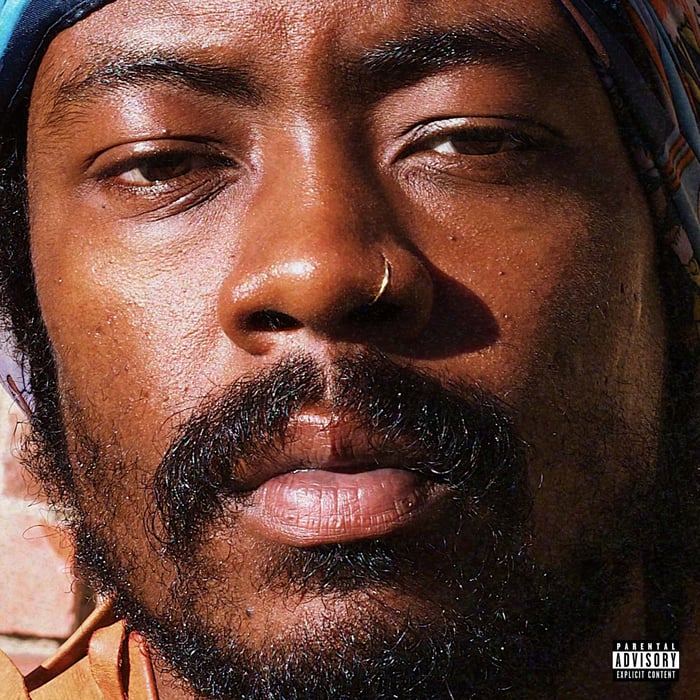
Moment of uncertainty: I can’t tell if the cover’s leather-coat symbolism is meant to be read as heavy and sacred, or if it’s just him saying, this is what I wear, don’t make it weird. Either way, it works because the music keeps returning to that same idea: you carry people with you, whether you want to or not.
“Hot Streak” is the feature that actually earns oxygen
Tommy Newport shows up on “Hot Streak” with a falsetto that climbs into the upper register and grabs onto the psychedelic guitar like it’s a rope. His lines—“It tastes sweet / hot streak / everybody watch me”—land as melody first, meaning second. Newport sings like he’s floating.
That contrast is the point, because PawPaw returns with a conversational baritone planted on the downbeat, asking:
who’s gonna bust a move, who’s gonna make a play, what’s your role?Two Midwest transplants comparing notes on momentum, and it’s the one feature that feels necessary rather than decorative.
KingJet and Sylvester’s off-kilter beat gives Newport room to climb and gives PawPaw room to sit in his pocket. And Newport’s bridge—
“Maybe / I need someone here to stop me”—is the closest thing on the record to the worry PawPaw has been outrunning since “I Wish.” It’s like the album finally admits that momentum can be a problem, not just a strategy.
Arguable claim: this track proves PawPaw sounds best when someone else’s voice forces him to choose a lane—and he chooses “calm control.”
“White Chocolate Chips” closes the night without pretending tomorrow is solved
“White Chocolate Chips” loosens the bass right on the downbeat, like somebody unbuttoning their collar after keeping it together all evening. Smooth synth opens the room wide enough for the guitar line to walk in without bumping into furniture. The disco-funk warmth is so real you could almost forget “Tornado Alley” ever happened—almost.
And then he drops the line that holds the whole ending together:
“I’m not ready to change clothes / I’m not ready to wash this night off.”That’s not just romance-talk. That’s somebody trying to pause time because daylight comes with consequences.
It’s played like the last song you’ll hear, and I believe it. The album finally picks “the good,” but only after it’s been honest about what can’t be fixed. That order matters. Otherwise it would just be vibes.
Arguable claim: the closing track is the album’s most honest “feel-good” moment because it refuses to call itself healing.
Conclusion: Picture Day isn’t wallpaper—it’s a mirror with good bass
Picture Day keeps dressing itself up as brunch music, then turning around and confessing something inconvenient. The smartest trick PawPaw Rod pulls is using bright grooves to carry lyrics that won’t cooperate. The record’s not trying to be heavier than it is; it’s doing something sneakier—making the lightness feel earned, and making the heaviness show up when you thought you were safe.
Our verdict: If you like funk-soul that smiles while it’s quietly telling you the truth, you’ll actually like this album—and you’ll replay “I Wish,” “Tornado Alley,” and “The Get Back” like they’re checkpoints. If you only want frictionless vibes and you get annoyed when a groove starts talking back, Picture Day will feel like a playlist that suddenly asks you how you’re doing, and you’ll skip it out of self-defense.
FAQ
- What is the core sound of Picture Day? Funk bass and soul guitar with vocals that swing between rapping, singing, and talk-singing, with a noticeable boom-bap pivot in spots like “The Get Back.”
- Is Picture Day actually “brunch music”? It plays like it is—until tracks like “I Wish” and “Tornado Alley” start rejecting comfort and forcing the groove to carry real weight.
- Which songs feel most autobiographical? “Tornado Alley” and “The Get Back” feel rooted in place and loyalty, while “I Wish” frames the album’s refusal to pretend everything’s fine.
- Does the album have any weak spots? Some of the safer mid-album cuts (“Bettin on Me,” “No Questions Asked”) can blur if you aren’t tuned in, even though they help the sequencing.
- Is the Tommy Newport feature worth hearing? Yes—“Hot Streak” works because Newport floats and PawPaw stays grounded, and the contrast creates real tension instead of just “guest energy.”
If this album’s visuals stuck with you as much as the grooves did, you can grab a favorite album cover poster for your wall at our store: https://www.architeg-prints.com —same vibe, less smoke in the room.
 | DISCOUNTGET 30% OFF*Use code on your next order:
|
* This post may contain affiliate links, meaning we earn a commission if you make a purchase through these links, at no additional cost to you.