Diamond Morning Album Review: Prog Metal That Refuses to Sulk


 See more Architeg Prints stories on Google.
Diamond Morning Album Review: Prog Metal That Refuses to Sulk
Diamond Morning turns modern prog into something weirdly hopeful—clean vocals, warm keys, and heavy parts that lift instead of lurk.
A bright prog album that acts like darkness is optional
Most modern prog metal treats joy like it’ll ruin the mix. Diamond Morning doesn’t. It walks in smiling, turns the amps up anyway, and somehow makes heaviness feel like forward motion instead of doom cosplay.
I went in expecting the usual: low-tuned grit, grey moods, vocal strain-as-a-personality-trait. What I got was KARMANJAKAH doing the opposite on purpose—writing progressive metal that’s technically sharp but emotionally… open-window bright.
KARMANJAKAH’s real trick: they don’t “go heavy” to sound tough
Here’s what Diamond Morning is actually doing: it’s refusing the genre’s default posture. A lot of bands use heaviness like a mask—thicker tones, darker harmonies, harsher vocals, and that predictable “we are serious artists” fog. This album uses heaviness like terrain. The riffs aren’t there to intimidate you; they’re there to push you somewhere.
That choice alone makes the record feel like a little act of rebellion. And yes, it’s still progressive—odd turns, shifting motifs, technical movement—but it doesn’t smell like the inside of a damp rehearsal space.
“Dove” opens like a warning shot, then pulls the floor out
“Dove” starts blistering—like it wants to prove it can crush before it tries to charm. The depth hits first, then it violently erupts into big grooves, and just when it feels like it might settle into a standard heavy pocket, it backs off into something calmer, swaying, almost tranquil.
That contrast is the album’s thesis in miniature: pressure and release, not endless punishment. I kept waiting for the band to stay in “stank face” mode, but they’re more interested in motion—like they want you to feel your balance shifting.
“Eyes Seeing Eyes” is where the album stops playing nice
Once the opener clears its throat, “Eyes Seeing Eyes” is the first track that really shows the untapped angle this band has on prog. The keys come in warm, not icy or theatrical, and the guitar phrasing keeps changing its accent—like it’s refusing to land on one identity.
You’ll hear:
- djenty breakdowns that show up without the usual macho pause beforehand
- droning trills that feel like suspension, not filler
- spacious, reverberating notes that open the room up instead of stuffing it with sound
And that’s the thing: the band knows space is a weapon. A lot of prog bands stack parts to prove they can. KARMANJAKAH uses restraint to prove they don’t have to.
I’m not totally sure on first listen whether the constant guitar inflection changes are meant to feel slippery or just restless—but by the time the track is done, it reads like intention, not indecision.
“Thousand Horns” dares you to surrender instead of analyze
If “Eyes Seeing Eyes” breaks ground, “Thousand Horns” starts building a whole strange landscape on it. The tone feels mammoth—huge without being blunt. The subtle dissonance isn’t there to sound “advanced”; it’s there to keep the emotional temperature unsettled.
This song keeps shifting to new harmonies, then adds space in the exact moments you expect it to tighten. That move creates tension in a sneaky way—less like a jump scare, more like leaning back in a chair and realizing the floor isn’t where you thought it was.
The bursting center of it feels emotionally raw, like the track is opening a new little cosmos and then asking you not to fight it. And yes, someone could argue it hops motifs too quickly—like it’s showing off its passport stamps—but I think that constant pivoting is the point. It’s not a loop; it’s a climb.
“Sun, Astray” / “Moon, Astray” are the album’s quiet flex
After that, the record pivots into the pairing of “Sun, Astray” and “Moon, Astray,” and the big reveal is how comfortable this band is letting the guitars be clean even though the album can absolutely go heavy.
The signature guitar tone Viggo Örsan has built is all over these tracks, and Jonas Lundquist’s vocals glide through with that almost unreal, heavenly clarity. It’s not the typical prog move where clean vocals mean “now we’re in the soft interlude.” Here, the clean singing feels like the main character, and the instruments are doing the scene-setting.
If anything, my first impression was that “Sun, Astray” might drift too politely—like it’s setting the table for something bigger. But on second listen, that’s exactly why it works: it’s not begging for attention. It’s making room for the next track to do something sneakier.
“Moon, Astray” wins through details you don’t notice until you’re trapped
“Moon, Astray” has a ton of subtle rhythm work—Sebastian Brydniak on drums and Lukas Ohlsson on bass quietly building a current underneath everything. There’s this slow realization about two minutes in: you’ve been pulled under without a single vocal line. That’s a flex. Most bands would panic and add a hook. This one lets the rhythm section do the talking.
And when the vocals do arrive, they don’t do the expected “big clean chorus” thing. There’s a spoken word element—not shouted, not sharp—more like the track is leaning in close and telling you something you didn’t plan to hear.
I’ll admit: the spoken delivery briefly threw me. I thought it might break the spell. But it ends up widening the track’s emotional range, like the album is reminding you it’s not trapped inside metal habits.
The “gemstone quintet” turns into a controlled little detour
Once the record moves into the later half—what I can’t help thinking of as the gemstone run—it loosens its tie.
“Sapphire” gets jazzy
“Sapphire” brings in a jazzy lean, not in a corny “look, we like jazz chords” way, but in the way it loosens timing and feel. It’s the album briefly letting its shoulders drop.
“Ruby” gets warbly
Then “Ruby” goes a little warbly—wobbly in a playful, human way. Both of these instrumentals are short, but they matter: they’re the palette cleanser that proves the band isn’t afraid of being light on its feet.
A reasonable complaint is that these two moments can feel almost too brief, like sketches instead of full scenes. That’s my mild gripe: I wanted at least one of them to overstay its welcome just a little. Still, as quick instrumental pivots, they show an impressive level of artistry without grandstanding.
The “Diamond” trio is the album’s engine room
Then the record digs its deepest groove with the trio:
- “Diamond Morning”
- “Diamond Art”
- “Diamond Train”
This is where that iconic Örsan guitar sound rears up properly—classic odd-timed chugs, grooves that keep increasing, energy that builds and twists like it’s tightening bolts. The three sections interlace cleanly, and the transitions don’t feel like “track-to-track.” They feel like one long machine changing gears.
What I like is how the band keeps dropping unforeseen ideas without making them feel like detours. Some prog albums throw curveballs just to prove they can. Here, the weird turns land because the groove keeps carrying you.
And there’s a specific emotional effect these tracks create: safety. Not “safe music”—that’s not what this is. More like the feeling of traveling with someone who knows the route even when the road gets strange. The record gets unusual, sometimes it recombines familiar ingredients in new ways, but it never drags you somewhere you don’t want to be.
That’s a bold choice in a genre that often treats discomfort like a virtue.
What the album’s positivity really means (and why it doesn’t feel cheesy)
The rare thing about Diamond Morning is that it makes you feel like you could soar without turning into corny inspiration-core. It’s uplifting in a structural way: the heavy parts feel like mountains that lift you up, and the lighter ideas feel like wind that keeps you there.
It also makes you appreciate little elements of sound—spacing, tone, rhythm interplay—that you might normally ignore when a band is busy flexing.
I’m not going to pretend every moment is flawless, though. Occasionally the album’s commitment to clean, hopeful energy can make the harsher edges feel slightly held back—like it could bite harder but chooses not to. Some listeners will call that restraint. Others will call it a missed chance. I land on restraint… most of the time.
Artwork check
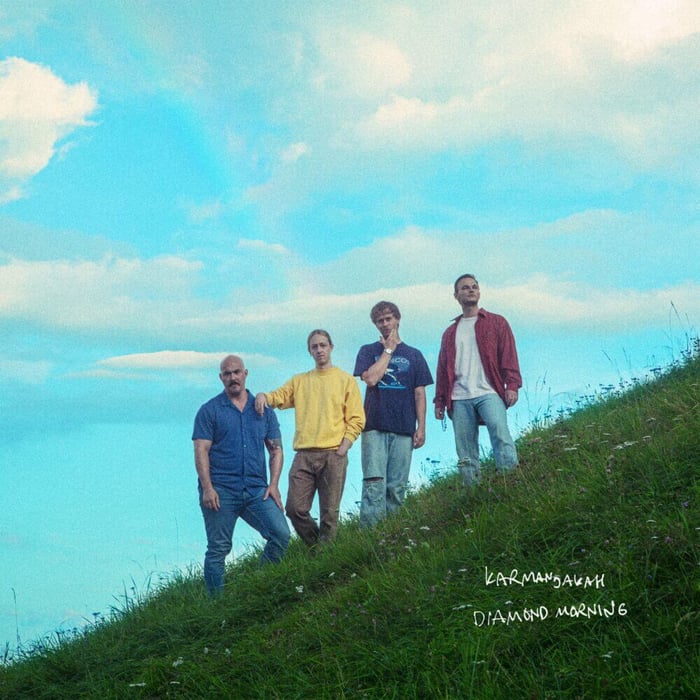
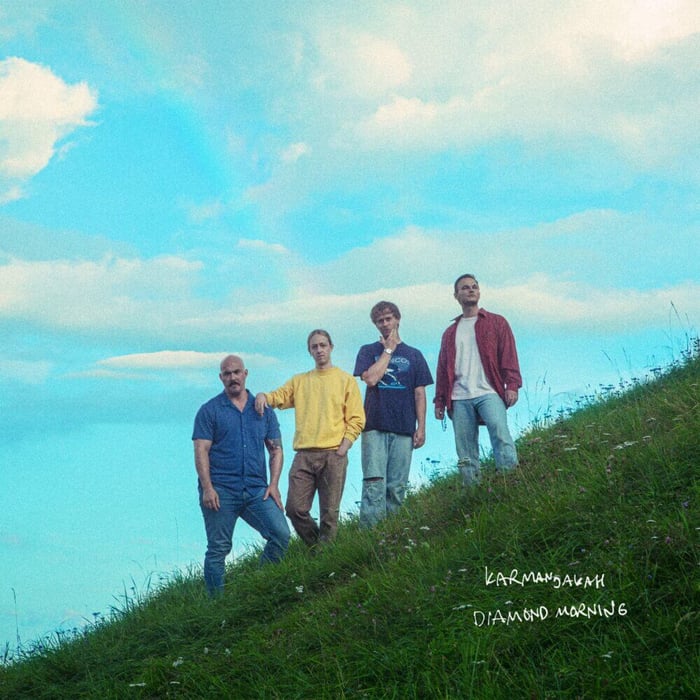
The cover looks like the music feels: luminous, polished, and a little unreal—like it’s daring a heavy record to look pleasant.
Release note and where this band actually lives online
Diamond Morning is out now via self-release.
And yes, if you want the simple social follow: KARMANJAKAH are on Facebook here: https://www.facebook.com/karmanjakah
My blunt number, since people always ask for one
If I’m forced to translate all that into the dumb little scoreboard we pretend doesn’t matter: 9/10 feels right. Not because it’s perfect, but because it’s unusually clear about what it wants to be—progressive metal that refuses to mope.
Conclusion
Diamond Morning doesn’t try to “save” prog metal. It just quietly sidesteps its worst habits—murk-for-mystique, heaviness-for-status—and replaces them with warmth, groove, and the confidence to let clean guitars and vocals carry real weight.
Our verdict: People who like progressive metal but are tired of the genre acting like happiness is embarrassing will actually love this. If you need your prog to sound like it was recorded in a haunted basement with eternal suffering in the compressor, you’ll find this album suspiciously well-adjusted.
FAQ
- Is Diamond Morning a heavy album or a clean, melodic one?
It’s both, but it uses heaviness like momentum, not menace. The clean moments aren’t “breaks”—they’re central to the album’s identity. - What track best represents what KARMANJAKAH are doing here?
“Eyes Seeing Eyes” is the clearest snapshot: warm keys, shifting guitar character, and heaviness that doesn’t collapse into gloom. - Do the instrumentals feel like filler?
No—“Sapphire” and “Ruby” are short, but they’re purposeful detours that show the band can get loose without losing the album’s thread. - What’s the deal with “Sun, Astray” and “Moon, Astray”?
They lean into Örsan’s signature guitar tone and Lundquist’s clean vocals, with “Moon, Astray” especially pulling you in through subtle drum-and-bass work before vocals even arrive. - Who will bounce off this album fastest?
Anyone who treats “dark” as a required setting for prog. This record doesn’t wallow, and it’s not interested in sounding miserable for credibility.
If this album’s shiny weirdness got under your skin, a poster of your favorite album cover is a nice way to keep that energy on the wall—tastefully, not like a merch booth. Have a look at https://www.architeg-prints.com.
 | DISCOUNTGET 30% OFF*Use code on your next order:
|
* This post may contain affiliate links, meaning we earn a commission if you make a purchase through these links, at no additional cost to you.