Masters of the Artistry Review: Bop Alloy’s “Reliable” Flex Is Weirdly Bold


 See more Architeg Prints stories on Google.
Masters of the Artistry Review: Bop Alloy’s “Reliable” Flex Is Weirdly Bold
Bop Alloy’s Masters of the Artistry is grown-rapper hip-hop that refuses to surprise you—and that stubborn calm is kind of the point.
Two People, One Ocean, and a Long Memory
Here’s the setup you can hear in the seams: Bop Alloy has been making records across an ocean since 2007, and the distance doesn’t read like a limitation—it reads like a habit. Substantial is rooted in Virginia now, not far from where he grew up in Prince George’s County, and he raps like someone who knows exactly which details matter and which ones are just noise. Marcus D builds the music from Tokyo, where he runs Absolutzero and has piled up over a hundred Bandcamp releases like it’s normal to be that productive.
The Nujabes connection isn’t used as a neon sign, but it’s in the DNA. Substantial’s debut To This Union A Sun Was Born came out on Hyde Out Productions back in 2001, and Marcus D has the kind of reverence you only get from calling someone a mentor and meaning it. When Nujabes died in a Tokyo car accident in February 2010, these two were already deep into recording what became their first joint album, Substantial & Marcus D Are Bop Alloy, which arrived seven months later. Sixteen years later—and two Kickstarter campaigns later—Masters of the Artistry lands as their third full-length.
An arguable take: you can hear how long they’ve been doing this because the album doesn’t “introduce” itself. It assumes you’ll catch up.
Marcus D’s Production: Restraint That Acts Like a Power Move
The next link in the chain is the sound, and Marcus D’s fingerprints are basically everywhere—sometimes literally, because the piano and keys are his. The beats don’t crowd Substantial; they frame him. That’s a choice, and it’s also a quiet kind of ego: it takes confidence to make hip-hop this warm without making it mushy.
On “Old Souls,” there’s this low Rhodes line sliding under Substantial’s voice, and the kick-snare pattern is lazy on purpose—like a head-nod you’d do at a barbershop while pretending you’re not listening too closely. “Wind Blows” opens in warmer tones too, but the chords lean minor, and the progression shifts like weather changing mid-conversation. The drums start pushing harder as the song stacks its contradictions, and the beat never has to shout to make the point.
The instrumental breaks—“Break Room” and “The Art of Mastery”—don’t feel like filler. They feel like proof that the album trusts its own atmosphere. And “Audio Sunshine” is a perfect example of Marcus D’s taste for doing less but making it stick: a scratched vocal loop does most of the heavy lifting over a beat that could’ve been tracked in some basement studio in Shibuya two decades ago.
An arguable take: Marcus D isn’t chasing “timeless”—he’s chasing dependable, which is way harder to pull off without sounding boring.
Substantial’s Writing: The Grind Without the Poster-Quote Energy
From there, the record shifts into what Substantial really does: he narrates life like he’s documenting evidence, not selling a dream. He was selling his artwork to neighbors before he hit double digits, and on “You Don’t Have No Idea” he lays that out without romanticizing it—drawings for cash while other kids pushed Girl Scout cookies, a cousin who helped sharpen his rapping and then got locked up, weeks of no sleep in the studio.
“Ain’t get my momma the house, but I still made her proud ‘cause she lovin’ how I’m livin’.” — Substantial
That’s the whole ethos right there: no mansion payoff, no fake victory lap. Just grown-up pride that doesn’t need receipts.
On “One Prize,” he doubles down on staying put while trends blow by. He raps, “Locked in like I traveled this road without an exit ramp,” and it’s stubborn, sure, but it’s also practical. He turns pedigree into something like pedagogy because, in real life, that’s literally what he does—he teaches Music Business at Omega Studios in Rockville. Rapping, teaching, two decades of independent releases: the album doesn’t separate them because he doesn’t separate them. It’s one continuous work ethic.
An arguable take: this record isn’t “inspirational”—it’s almost aggressively anti-inspirational, like it refuses to be used as somebody’s hustle soundtrack.
“Wind Blows” and the Album’s Real Topic: Speed, Not Morals
Now the album starts telling on itself. “Wind Blows” covers more actual life in two verses than most concept records manage across a whole runtime, and the trick is it doesn’t underline anything. It just moves.
You’re walking in the park with your daughter, then you’re in the ER because she broke her arm. A week later you’re crying with a friend because someone died, then you’re toasting someone else’s newborn. Tuesday brings a dream job and a big house; by spring, you’re laid off. Someone who spent twenty years selling drugs comes home and ends up selling cars. The song doesn’t hand you a moral. The speed is the commentary.
I’ll admit, on first listen I thought the track was almost too matter-of-fact—like it was speeding past feelings. But on second listen, I realized that’s the point: the emotions don’t get a neat spotlight because life doesn’t schedule one.
An arguable take: “Wind Blows” isn’t deep because it’s poetic—it’s deep because it refuses to slow down for your comfort.
“Old Souls” and the Power of Naming Things Until It Hurts
Joe.D picks up that same thread on “Old Souls” with a verse rooted in Capitol Heights and Clinton, Maryland. The details don’t sound “curated,” they sound remembered: rectangle cheese pizza and butter crunch at communion, scratching his dad’s records before he even understood what he was doing, bumping Ice Cube in the park with 40 ounces.
Then he jumps forward thirty years and suddenly it’s mortgages and protection from forces you can see and forces you can’t. No lesson arrives. He just keeps naming things until the pile of them starts to mean something.
That’s the album’s real writing style: accumulation. It’s not trying to “say” life is complicated. It’s letting you feel the weight of it by stacking specifics.
An arguable take: this kind of detail-heavy writing hits harder than clever punchlines, because it doesn’t give you an exit ramp.
The Features Aren’t Flexes—They’re Structural Beams
Features can wreck an album’s balance. Here, they don’t. They behave like chosen ingredients, not guest-star interruptions.
Blu shows up on “Audio Sunshine” and immediately widens the lens. He leaps from melanin to the solar system, then treats the sun like a religious figure, bouncing through centuries of worship before boiling it down to one image: “the truth makes you squint like the sun when it glistens.” He raps like he’s thinking out loud—always his best trick—and it plays clean against Substantial’s more measured delivery.
One Be Lo takes “Say It Again” and drags in Marvel references, backstabbing slanderers, and then lands a brutal couplet about giving someone the key to his heart three separate times before the pain escaped him “like a slave flee with chains on the ankle feet.” His cadence is choppy in a way that adds grit to a song about refusing to shrink yourself for other people. And yeah, it matters that he’s the Binary Star co-founder and that he’s living in Cairo now—because his verse sounds like someone who’s had to rebuild context, not just write bars.
These aren’t vanity features. They share the same underground pedigree as Bop Alloy, so the verses slide in without knocking the album off its center of gravity.
An arguable take: the guests don’t “steal” songs because Bop Alloy built the songs to be stolen a little—that’s how you keep a long-running sound from turning into a loop.
The Nujabes Shadow Shows Up… Briefly, On Purpose
If you’re listening for an explicit tribute, you’ll get one moment that feels closest: Uyama Hiroto’s saxophone on “Last Song I’ll Ever Write.” It’s a warm, unhurried solo, woven into a beat that could pass for a hymn. And that’s what’s interesting—Masters of the Artistry doesn’t milk the connection. The touch is light, almost polite, like they refuse to trade grief for aesthetics.
Substantial writes the song as if it might genuinely be his last, and he addresses it to his two daughters. The line that lands because it’s plain and unprotected is: “Never been a perfect parent, but I’m always present.” A younger rapper might not have the nerve—or the mileage—to say it like that without dressing it up.
The closing verses turn into simple prayers: that his words were a guiding light, that his life inspired something great, that his loved ones still know he loves them after goodbyes. It’s sincerity that doesn’t wink. In a genre that often buries sentiment under punchlines and posture, this feels almost confrontational.
I’m not even totally sure why it hit me as hard as it did—maybe because it refuses to perform pain. It just sits there, upright, saying what it means.
An arguable take: “Last Song I’ll Ever Write” is the album’s most important moment precisely because it’s the least “impressive.”
The Album’s Biggest Strength Is Also Its Biggest Limitation
Here’s where the record makes its bet. Masters of the Artistry isn’t trying to convert anyone. Hooks repeat cleanly, guests complement rather than overshadow, and the production stays warm without getting sleepy.
But—this is the part that lost me a little—no track really breaks the established register in a way that might jolt a new listener. Everything stays at roughly the same emotional altitude. And that’s a strange choice for a record that keeps talking about life’s wild unpredictability: the sequencing and pacing stay remarkably steady.
That consistency feels intentional. Bop Alloy’s whole pitch is reliability, not surprise. They’ve been shaping this sound for nearly two decades, and they know exactly what it is. If you meet it on its terms, it pays off: two 40-something lifers, a continent apart, still putting in hours like they owe somebody a good record.
An arguable take: the album’s steadiness is a quiet dare—if you need constant left turns to stay engaged, it’s basically telling you that’s your problem.
Where I Landed: The Tracks That Actually Stick
To be blunt, I ended up thinking of this as a great record in the old sense—great as in it does exactly what it intends to do and doesn’t apologize for being adult.
The songs that kept pulling me back were:
- “Wind Blows” (because it moves like real life moves)
- “You Don’t Have No Idea” (because the grind is specific, not glossy)
- “Last Song I’ll Ever Write” (because it’s brave enough to be plain)
An arguable take: those three tracks aren’t just highlights—they’re the proof that Bop Alloy’s “modest” style is actually a discipline, not a limitation.
Conclusion
Masters of the Artistry doesn’t chase novelty; it sharpens familiarity until it feels like character. The beats stay warm, the verses stay grounded, and the album keeps choosing steadiness over fireworks—even when the stories inside it are anything but steady.
Our verdict: This will actually land for listeners who like grown hip-hop that’s content to be human—parents, lifers, people allergic to hype, and anyone who thinks a clean Rhodes line is a personality trait. If you need your rap albums to constantly reinvent the wheel (or at least set it on fire), you’re going to call this “too even” and go back to refreshing your algorithm like it owes you rent.
FAQ
- Is “Masters of the Artistry” a good entry point for Bop Alloy?
It can be, but it won’t do the usual “welcome new listeners” thing. It assumes you’ll sit still and listen like an adult. - What’s the core sound of the album?
Marcus D’s warm keys, chopped samples, and drums that thump without crowding—built to hold Substantial’s detail-heavy writing. - Do the features change the album’s tone?
Not really. Blu and One Be Lo widen the perspective, but they don’t hijack the mood or derail the pacing. - Which track carries the emotional peak?
“Last Song I’ll Ever Write.” It’s direct, unflashy, and that’s why it hits. - Does the album ever take big risks?
The risk is the lack of risk: it stays in one emotional lane on purpose, which some people will find calming and others will find frustrating.
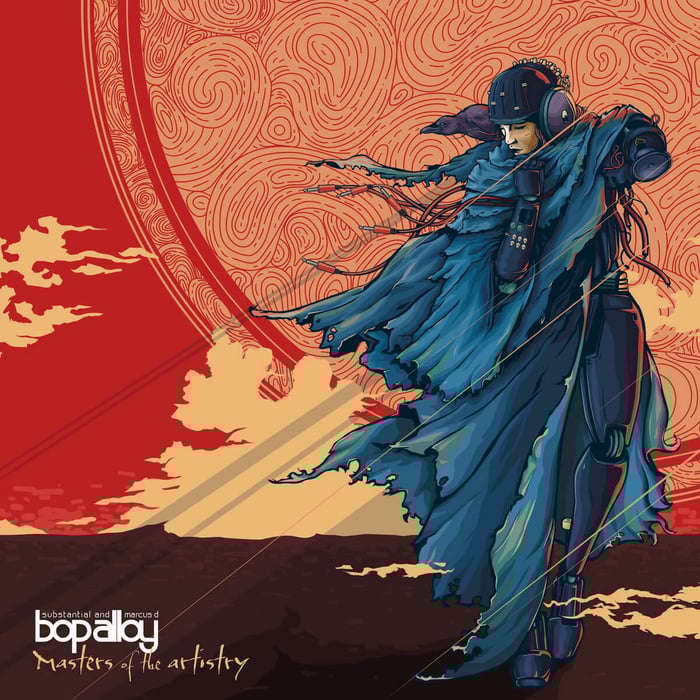
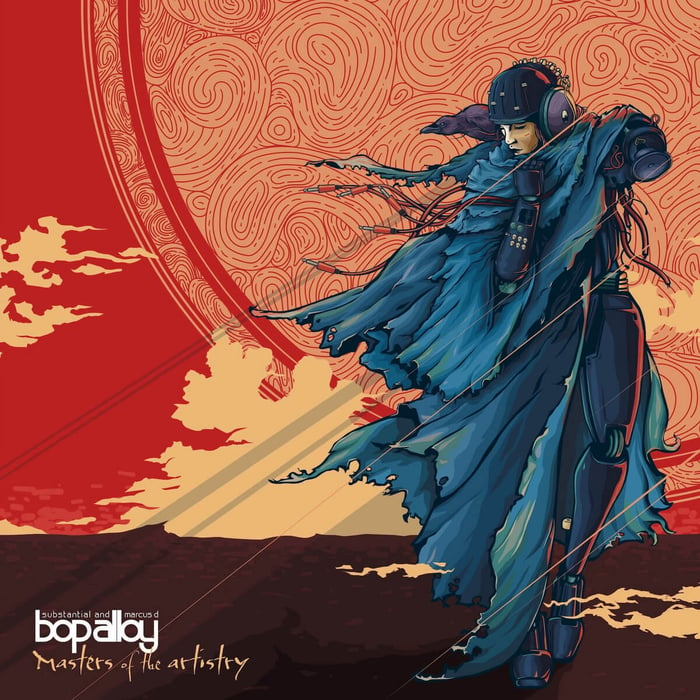
If this album’s cover is living in your head now, that’s usually a sign. If you want to hang your favorite album art on the wall, you can pick up a poster you actually like looking at over at https://www.architeg-prints.com.
 | DISCOUNTGET 30% OFF*Use code on your next order:
|
* This post may contain affiliate links, meaning we earn a commission if you make a purchase through these links, at no additional cost to you.