Burning World Neurosis Review: A Surprise Return That Refuses to Behave


 See more Architeg Prints stories on Google.
Burning World Neurosis Review: A Surprise Return That Refuses to Behave
Burning World Neurosis hits like a sealed-note confession—eight songs, a new voice, and a band sounding weirdly reborn instead of politely “back.”
The kind of comeback that doesn’t ask permission
Most album releases now feel like scheduled maintenance. Teasers, pre-saves, “exclusive” singles that aren’t exclusive to anything except your exhaustion. So when Neurosis reappears without the usual runway lights, it doesn’t just feel surprising—it feels aggressive, like the band deliberately waited until nobody was watching and then kicked the door off its hinges.
And yeah, I keep thinking: how did this stay quiet? I’m not entirely sure I buy that secrecy is even possible anymore, which almost makes the drop feel like part of the statement. Like the band didn’t want anticipation—they wanted impact.
The lineup shift is the point, not trivia
This isn’t just “Neurosis returns.” This is Neurosis returning with a visibly altered shape. The band now centers on Steve Von Till (vocals/guitar), Dave Edwardson (bass), Jason Roeder (drums), and Noah Landis (keyboards), with Aaron Turner added into the mix.
If you’ve heard Turner in other contexts, you can feel what he brings immediately—not as a “feature,” not as a novelty, but as a pressure system. The smart (and frankly gutsy) move here is that the album doesn’t treat him like a guest star. It treats him like a new organ the band grew because it had to survive.
And the broader reaction? You can practically hear the extreme music world collectively choking on its own drink. This kind of return doesn’t land as nostalgia. It lands as a seismic correction, like a band people quietly assumed was gone deciding they’re not finished being necessary.
Eight tracks, and none of them feel like “content”
Once the shock wears off, what’s left is the real flex: these are eight long songs that don’t sound like the band is trying to prove anything. That’s rare. A lot of comeback records overcompensate—they stack heaviness like sandbags, hoping nobody notices the structure is hollow.
Here, the material feels lived-in. Not comfortable—just real. The record plays like a single harsh weather front moving through different terrain: sometimes jagged, sometimes eerily open, but always carrying the same chemical charge.
I thought my first listen would be enough to “get it,” but it wasn’t. On second listen the album didn’t just open up—it got meaner in a quieter way, like it was withholding the full weight until it trusted you to stay.
“We Are Torn Wide Open” starts the fire and doesn’t put it out
The opener, “We Are Torn Wide Open,” doesn’t warm up. It declares. The repetition in the refrain is doing something blunt and kind of unforgiving: it’s not trying to be catchy, it’s trying to be inescapable. When that line keeps coming back, it feels less like a chorus and more like a thought you can’t stop thinking once somebody plants it.
It’s apocalyptic right out of the gate, but not in the cartoon way—more like the sound of a person realizing they’ve been living wrong for years and finally saying it out loud. The lyric about forgetting how to live and suffering lands like a diagnosis, and the song’s slow expansion turns that diagnosis into a full-body scan.
Arguable claim: this track is more terrifying in its quieter stretches than in its heavier ones, because it sounds like the band has nothing left to hide behind.
The middle run is where the album proves it’s not just “back”
From there, the album rolls into “First Red Rays,” “Blind,” and “Seething And Scattered,” and the big trick is that they don’t feel like separate “songs” so much as different angles on the same crisis.
These tracks are huge—wide soundscapes, deep low-end pressure, the kind of pacing that forces your attention to slow down and match it. And they sound vital, not preserved. There’s an important difference: preserved music tries to imitate its own legacy; vital music acts like legacy is irrelevant.
If you want an easy slogan, sure, you could call it cathartic. But it’s a specific kind of catharsis: not the triumphant, arms-raised kind. More like standing in a cold room and realizing the cold is honest.
I will say this, though: there were moments in this stretch where I kept waiting for a more distinct pivot—something to cut the fog. That’s not a dealbreaker, but it’s the one time the album’s scale flirts with sameness. The atmosphere is enormous, and occasionally it leans so hard into enormity that the edges blur.
Arguable claim: the album wants you slightly lost in the sprawl, because clarity would be a lie.
“Untethered” tightens the screws without shrinking the sound
Then “Untethered” shows up more streamlined, and it’s almost funny how “streamlined” in this context still feels like dragging a cathedral through mud. But compared to the surrounding vastness, it moves with a clearer purpose—less drifting, more driving.
This is where the album starts feeling life-affirming in an odd, bruised way. Not because it’s happy—obviously not—but because it sounds like motion. Like choosing to continue even when continuing looks stupid on paper.
Arguable claim: “Untethered” is the record’s most quietly motivational moment, even though it never once tries to inspire you.
The album’s real thesis shows up late
By the time you reach “In The Waiting Hours,” the record stops feeling like a return and starts feeling like a statement. This is the penultimate track, and it plays like the album’s clearest self-portrait: expansive, punishing, patient, and—this is crucial—complete.
It contains the whole Neurosis appeal in one long, controlled burn: the ritual pacing, the sense of a band building something heavy without rushing, the way beauty and dread share the same room without speaking. If you’ve ever wanted a single track to point to and say “this is why this band matters,” this is the one that makes the strongest case.
I didn’t expect the late-album highlight to be this… composed. My first impression was that the record was going to escalate into pure destruction, but “In The Waiting Hours” doesn’t just smash—it arranges the smash. That restraint ends up feeling more powerful than maximal chaos.
Arguable claim: this track is the album’s best argument that Neurosis doesn’t need shock tactics anymore—they can just stand there and the room changes.
“Last Light” makes Aaron Turner feel inevitable
The closer, “Last Light,” is the album’s final purge. And this is where Aaron Turner’s presence stops being “interesting” and starts being pivotal. His vocals come through anguished but commanding, not just as texture but as urgency—like the record needed another throat to say what it’s saying.
The track keeps building and building, and it doesn’t do the usual closer move of dumping everything at once. It offers gentler passages—little stretches of breathing room—while still keeping that heavy, cleansing groove underneath. The result is a closing sequence that feels ritualistic without getting theatrical about it.
Arguable claim: “Last Light” isn’t trying to end the album—it’s trying to make sure you don’t walk away unchanged.
What “Burning World Neurosis” is really doing
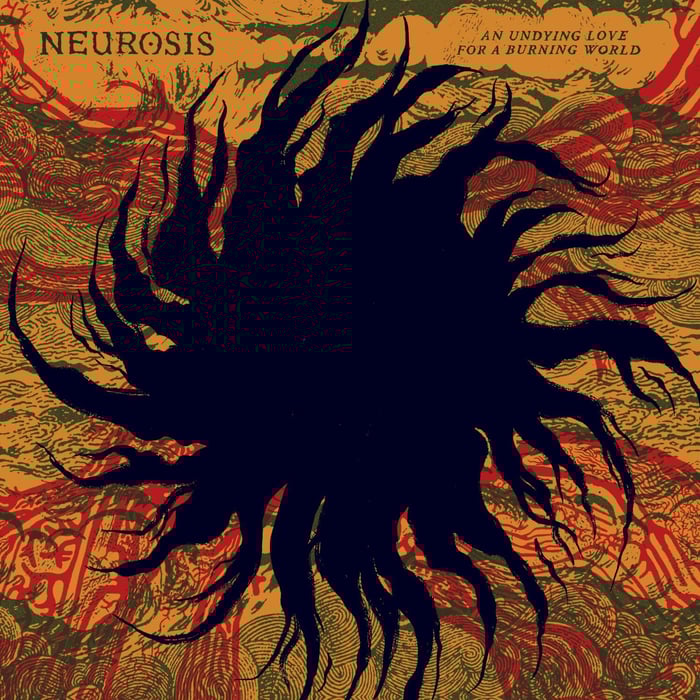
So here’s what I think is actually happening on An Undying Love For A Burning World: this isn’t a victory lap, and it’s not an apology tour either. It sounds like a band re-entering the world with zero interest in being palatable, while still choosing—somehow—to sound alive.
The record gets better with repeated listens, partly because it doesn’t hand you easy peaks. It immerses you by force. The more time you spend inside it, the more it feels like the album is widening around you, like you’re standing in the middle of something bigger than the speakers.
And the timing carries an extra sting: nearly thirty years after Through Silver In Blood, this album doesn’t sound like it’s chasing that era. It sounds like it’s dragging a light out of darkness with its bare hands, even if the hands get wrecked in the process.
Arguable claim: if you came here looking for “classic Neurosis,” you’ll miss the point—this is Neurosis refusing to be preserved.
Availability (and the blunt reality of it)
An Undying Love For A Burning World is available now via Neurot Recordings. That’s all it really needs. This isn’t the kind of album that benefits from a marketing speech. You either step into it, or you don’t.
Arguable claim: the record’s biggest strength is that it doesn’t beg for attention—if anything, it acts slightly annoyed you showed up late.
Conclusion
This is a comeback that doesn’t feel like a return to form—it feels like a refusal to stay dead. Burning World Neurosis isn’t here to comfort longtime listeners; it’s here to reopen the wound, clean it out, and then make you live with the scar.
Our verdict: People who like their heavy music slow, spiritual, and unapologetically long-winded will actually love this—especially listeners who think “catharsis” should hurt a little. People who need quick hooks, bright choruses, or even just a sense of casual fun should stay away; this album treats “fun” like an urban legend.
FAQ
- Is this album approachable if I’m new to Neurosis?
It’s approachable in the way a storm is approachable: you can walk into it, but don’t expect it to greet you politely. - What does Aaron Turner add to the sound?
A sharper human edge—his vocals feel urgent, and the closer in particular makes his presence feel essential rather than decorative. - Which track best represents the whole album?
“In The Waiting Hours” feels like the record’s clearest self-summary: huge, patient, and emotionally specific. - Does the album reward repeat listens?
Yes. The first listen lands as weight; later listens reveal how carefully that weight is shaped. - Any weak spot?
A few middle stretches flirt with blending together if you’re craving sharp pivots—but the atmosphere is so deliberate it feels like an intentional risk.
If this record lodged itself in your head, you might want that feeling on your wall too. You can shop album cover posters over at our store: https://www.architeg-prints.com/
 | DISCOUNTGET 30% OFF*Use code on your next order:
|
* This post may contain affiliate links, meaning we earn a commission if you make a purchase through these links, at no additional cost to you.