Dads at End Album Review: Sole Sounds Like He Finally Quit Arguing


 See more Architeg Prints stories on Google.
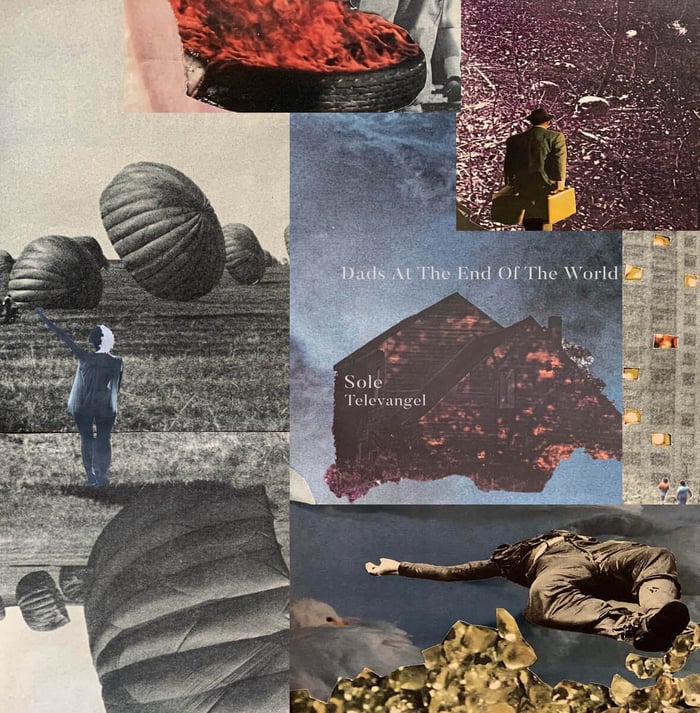
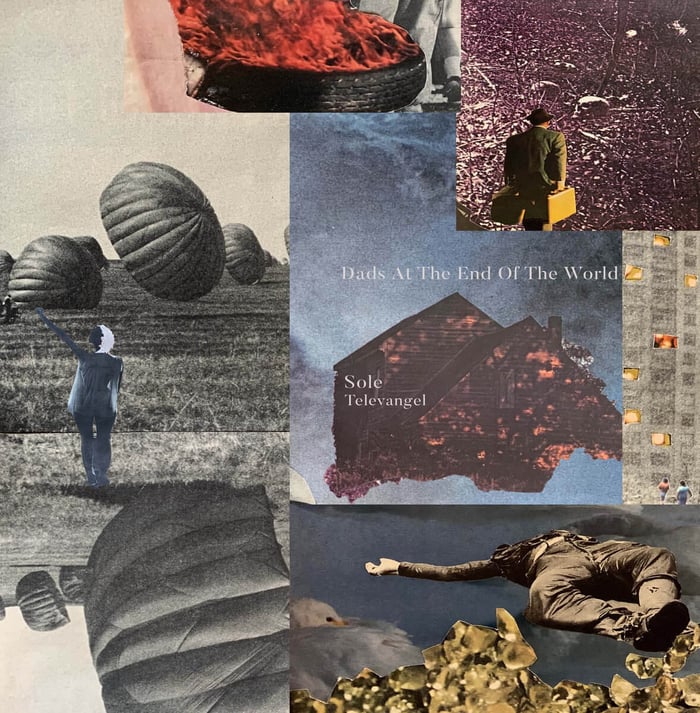
Album Review: Dads at the End of the World by Sole & TELEVANGEL
Dads at End turns Sole’s theory-brain into parent-brain—still angry, less performative, and weirdly practical when it counts.
This record isn’t a “return”—it’s a reckoning
Some albums feel like an artist showing you their new haircut. This one feels like an artist dumping a whole drawer of old identities onto the floor and deciding, in real time, what still fits.
Dads at End is Sole sounding like he’s tired of being a walking argument. Not because he stopped believing things—because he finally noticed belief isn’t the same as living. And the unglamorous part is the point: these nine songs (a tight 34 minutes) aren’t trying to “win.” They’re trying to stay honest long enough to raise kids and outlive the past.
Sole’s whole backstory shows up as pressure, not trivia
Here’s what you can hear, even before he spells it out: this is a guy who’s spent decades moving through scenes, cities, ideologies, and projects like he was chasing the clean version of himself.
The timeline spills out with the casualness of someone who’s told it too many times and no longer expects applause for surviving it. He comes from a small port town in Maine. He remembers the uniform—saggy jeans—and the predictable harassment—cops treating him like a dealer because that’s the role they had pre-cast him in. You can hear the old chip on the shoulder, but it’s not the centerpiece anymore. It’s just weather.
And then the life starts stacking up in snapshots that don’t sound embellished because they’re too specific to be mythology:
- trading tapes online while everyone around him was still living on pagers
- getting on a Greyhound to New York at seventeen to go to Fatbeat Records, because his parents (small-business owners) actually let him go
- a classmate trying to put a bomb in his locker, then coming at him with a knife—Sole puts the kid in the hospital
- seeing Serbia in flames during ethnic riots
- selling his father’s apartment after the first overdose
- living out on the red rocks of the Coconino National Forest, swimming every day with his dog
None of this reads like “look what I lived through.” It reads like: this is why I don’t trust neat narratives. And honestly, I thought at first listen he might be leaning too hard on autobiography-as-proof. On second listen, it hits different: it’s not proof, it’s context—he’s showing how a person becomes someone who can’t turn their brain off.
The real center: a dead father, and two living kids
The album’s emotional gravity isn’t politics. It’s family. Specifically: what happens when your father dies unfinished, and you’re left holding the tab.
On “Kids,” Sole addresses his dad directly, and he does it without the usual album trick of turning pain into a cinematic arc. He just lays out the pieces like he’s inventorying a life that never got repaired:
- addiction left to run wild
- a trailer funeral that didn’t offer any relief
- a woman who kept getting his dad high, and the line between “enabled” and “killed” stops mattering
- a watch she said she’d send but never did
The way he delivers it—flat, unadorned—ends up being harsher than melodrama. There’s no swelling chorus telling you when to cry. It’s the opposite: he’s making you sit in the awkward, unresolved place where grief doesn’t improve your personality. That’s what makes it feel real.
Then the album flips the mirror: Sole as a father now. These moments land because they’re not Hallmark-coded. They’re specific, almost casually funny, and that specificity is the emotional evidence.
He tells his six-year-old about Christianity. The kid laughs. Sole laughs at him laughing. That’s not a “religion critique” so much as a dad witnessing a child instinctively rejecting a story that’s supposed to scare them into obedience. He tells his son never to pledge allegiance to a flag. Again: not a slogan, a lesson. You can hear him trying to pass down defiance without handing over paranoia.
And that “sword-to-shovel” image that shows up twice? It doesn’t mean he got softer. It means he re-aimed. The anger didn’t disappear—it got repurposed into something functional. Fatherhood, in this album’s logic, isn’t a personality upgrade. It’s a responsibility that forces him to stop performing purity and start thinking about survival.
“Rules” is the sound of a man putting the theory book down
A lot of Sole’s identity has always been tied to being the guy with the right references. On “Rules,” he still namechecks—Guy Debord pops up again (third time across the record), and you can feel the old habit of using theory as both weapon and shield.
But then he does something more interesting than flexing: he admits the cracks. He confesses he’s been listening to Jeezy’s Thug Motivation because he needed permission to pull himself out of poverty. That’s a brutal little confession if you know the type of person Sole used to sound like: the kind who could talk for ten minutes about ideology and still avoid saying, plainly, “I want money because I’m tired of struggling.”
And then he drops the simplest stage direction on the album: “Puts down book. Exit building.”
It’s funny in a dry way, but it’s also the album’s thesis. This is him admitting that a lifetime of theory can become a comfortable room you never leave, even while you talk about liberation.
If there’s a risk here, it’s that this moment could’ve turned corny fast—like a “look, I’m humble now” pivot. Somehow, it doesn’t. I’m not totally sure why it avoids the trap. Maybe because he doesn’t claim enlightenment. He just admits he’s contradictory and keeps walking.
“Freedom” drags the weird details into the light (and they actually matter)
The political records and side projects and podcasts and reinventions—those are easy to summarize, but the album refuses summary. It’s obsessed with the strange receipts life hands you.
On “Freedom,” Sole pulls out these oddly intimate scenes: Bell’s palsy in the ’90s. Wearing an eye patch to the mall while friends mocked him. Bootleg live albums being sold in black markets in Belgrade and Moscow—bootleggers recognizing him. That’s the kind of detail you don’t invent because it doesn’t make you look cool. It makes you look real, which is rarer.
Then there’s the wildest money story on the record: a Swiss fan deposits $60,000 into his bank account, wipes out his debt, and then never replies to another email. That moment doesn’t get played as a miracle; it gets played as another confusing artifact of capitalism—random salvation with no relationship attached.
Sole says he always thought he’d be rich. Then he talks about debt: how they ran it up, how he rode the poverty line, how he tells himself real wealth is in the heart even when money is on the mind. That line should sound like a motivational poster. Here, it doesn’t—because he’s describing it like an argument he’s still having with himself. He “earned” the right to say it, not by suffering, but by refusing to turn suffering into a brand.
TELEVANGEL’s production: restraint that corners the lyrics
This album works because TELEVANGEL doesn’t treat Sole like an “underground legend” who needs fireworks behind him. The production is controlled, even modest, and that’s exactly what makes it sharp.
You can hear where TELEVANGEL comes from—years of beat-building for rappers, plus a solo catalog that’s drifted through ambient, post-punk, and industrial without settling. But on Dads at the End of the World, he chooses something more focused: nothing fights for the spotlight.
Two moments say it cleanly:
- “Protozoa”: a warped synth tone bends under the verse like a rusted gate flexing in winter. Not dramatic—just uneasy, like the metal’s going to give eventually.
- “The Crumbles”: distorted bass pulses swell and recede with tide patience. It’s not trying to scare you; it’s trying to wear you down.
And compared to Sole’s run with DJ Pain 1 (Death Drive, Nihilismo, Post American Studies, Vault 1312)—records that ran hotter, louder, and more confrontational—this feels like the temperature has been deliberately lowered so the words can’t hide behind adrenaline.
That choice makes Sole sound more focused and less scattered than he has in a while. The mild downside? A couple of these beats are almost too patient. There were moments I kept waiting for a switch-up that never came, and I can’t tell if that’s the point (endurance) or a missed chance to escalate tension. Still, the discipline pays off more than it costs.
The politics hit harder because he keeps doing math
The political angle on this album doesn’t feel like protest music. It feels like a man realizing his ideology has to pass through a wallet, a family, and a calendar—or it’s just cosplay.
Sole points out something that a lot of political artists avoid admitting: half the world can’t buy a $40 vinyl record or pay $30 shipping. That’s not him “selling out”; that’s him staring directly at the class reality of being an artist who needs to eat while making art about inequality.
He frames himself in a tense middle: rich enough to never beg for crumbs, working class enough that he still has to hustle. No 401K, no savings, and he says he’s going to fix it with urgency. That admission matters because it punctures the fantasy of the endlessly righteous outsider. Outsiders still age. Outsiders still need a plan.
On “Rules,” he basically dismantles his own theory habit. He confesses he wanted to be “a material man doing material things,” and that theory led him there anyway. That’s a nasty little twist: the very intellectual path that claimed to reject materialism ends up justifying it.
And then “Lift the Curse” lands the sharpest question on the album:
“If direct action gets the goods, then why has nothing changed?”
It’s not rhetorical. It sounds like he genuinely wants an answer and doesn’t like the available options.
Instead of pretending he solved it, he pivots into a practical list: stack firewood, store bullets, plant 401 fruit trees, teach the kids to read and write—and to fight. Then he runs through a chain of hypotheticals: maybe he’ll vote, maybe he’ll stoke a fire to end the empire, maybe he’ll hang the jury, maybe he’ll hang a Nazi, maybe he’ll walk with his kids through the forest and marvel at autumn leaves falling.
That run of “maybes” is the album in miniature: rage, tenderness, uncertainty, brutality, peace—held in the same hands. He doesn’t square the contradictions. TELEVANGEL’s beat just keeps moving underneath, like time does, unbothered by your ideology.
So what’s actually happening here? A contrarian grows up—annoyingly
The blunt reading: Sole didn’t become less political. He became less interested in political identity. That’s a more threatening change than people realize.
Because once you start admitting you want stability, money, and a future for your kids, you can’t posture as the pure radical anymore. You have to live with compromises out loud. Dads at the End of the World isn’t “mature” in the boring sense. It’s mature in the uncomfortable sense: it refuses to resolve into a clean lesson.
I’ll admit I’m still torn on one thing: the album sometimes sounds like it’s daring you to accuse him of hypocrisy so he can shrug and say “yep.” That shrug can read like freedom, or like fatigue. Maybe it’s both. Either way, it’s more honest than the version of this record where he pretends he’s above the material world.
Standout tracks (the ones that expose the whole nerve)
If you want the album’s clearest pressure points, these are the ones:
- “Kids” — the father wound, said plainly, no sentimental cleanup
- “Homies in Catalunya” — the life story as a straight line, not a victory lap
- “Lift the Curse” — the question that ruins easy activism and replaces it with survival plans
And yes, I walked in expecting “Kids” to be a heavy-handed centerpiece. It isn’t. It’s worse in the best way: it doesn’t try to heal you. It just tells you what happened.
Conclusion
Dads at the End of the World sounds like Sole catching himself mid-speech and choosing, for once, to talk like a person instead of a manifesto. TELEVANGEL matches that with production that’s patient enough to let every uncomfortable admission sit there and breathe.
Our verdict: People who like rap when it’s diaristic, ideological, and a little self-incriminating will actually love this—especially listeners who’ve outgrown “perfect takes” and started valuing honest mess. People who want slogans, big hooks, or nonstop confrontation will get restless and start checking their phone by track four, then blame the album for their attention span.
FAQ
- What does “Dads at End” focus on more—politics or family?
Family, but not as a softening. The politics show up through parenting, money stress, and the reality of trying to build a life that doesn’t collapse. - Is TELEVANGEL’s production loud and aggressive?
Not really. It’s restrained on purpose—more pressure than punch—so Sole’s lyrics can’t duck behind chaos. - Does the album resolve Sole’s contradictions?
No, and that’s the point. The “maybe I’ll…” moments admit he’s still split between tenderness and violence, theory and practicality. - Is this a good starting point if I haven’t heard Sole before?
Yes, because it explains him without feeling like an introduction. It’s personal enough that you don’t need homework. - What’s the emotional hardest track to sit with?
“Kids,” because it refuses closure. It names specifics and leaves them where they are.
If this album put you in the mood to hang a cover on your wall like a personal warning label, you can shop favorite album cover posters at our store: https://www.architeg-prints.com
 | DISCOUNTGET 30% OFF*Use code on your next order:
|
* This post may contain affiliate links, meaning we earn a commission if you make a purchase through these links, at no additional cost to you.