Hagler Hearns Album Review: Rap Training Camp, No Ring Girls Allowed


 See more Architeg Prints stories on Google.
Hagler Hearns Album Review: Rap Training Camp, No Ring Girls Allowed
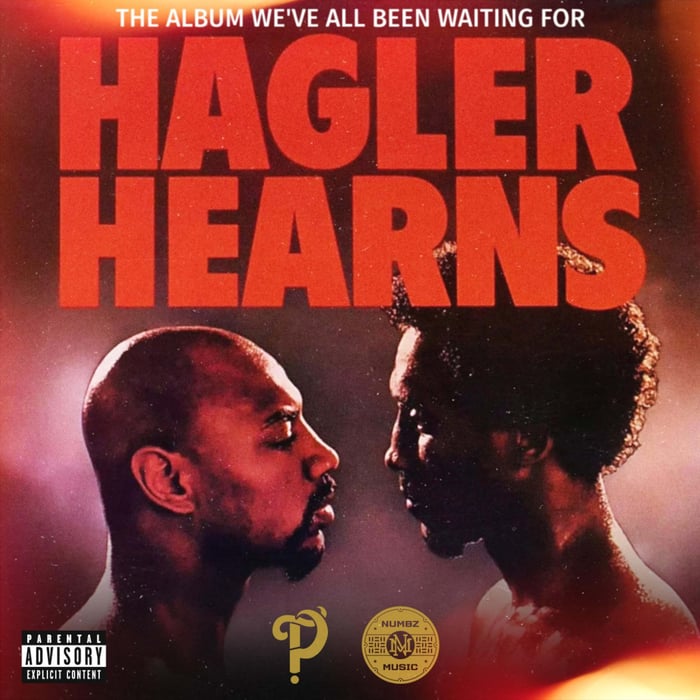
Hagler Hearns turns boxing history into a work ethic sermon—sometimes inspiring, sometimes suffocating. Here’s what Hagler Hearns is really doing.
The Hook: This Album Isn’t “About Boxing”—It’s About Being Denied
There are rap albums that use boxing like wallpaper. Hagler Hearns uses it like a surveillance camera—rewinding, zooming in, and daring you to argue with the evidence.
Two Origins, One Obsession: Newark Looms Over Everything
Here’s the first thing the album quietly flexes: it has geography in its bloodstream. Marvin Hagler’s story starts in Newark, New Jersey—born there, built there, and (depending on who you ask) robbed in plain sight later on. And then the producer Numbz shows up with the same hometown stamp, like the project is trying to make Newark itself a co-signer.
That choice matters because the beats feel like a city that doesn’t waste motion. Nothing plush. No “let’s make this cinematic.” The sound is blunt: put the rapper under a light, take away the furniture, see what happens.
The Grind Comparison Isn’t Cute—It’s a Dare
Thought Provokah doesn’t flirt with the Hagler comparison; he insists on it. The album practically leans in and says: take the grind seriously or don’t press play. You can hear it in the way he frames his own output—years of releasing music at a pace that would make most underground discographies look like “vacation mode.”
And the Hagler parallel isn’t vague motivation-poster stuff, either. The album hangs on specifics: Hagler fighting 24 bouts in 730 days, getting paid fifty dollars a night, and not getting a title shot until fight number fifty. That detail isn’t trivia here—it’s the spine. The point is endurance without reward, which is a pretty uncomfortable thing to build a rap album around, because it implies the listener might not reward it either.
I’ll admit: on my first run, I thought the concept might be overcommitted—like, okay, we get it, boxing. But the deeper it goes into the actual record of Hagler’s career, the more it stops being concept-y and starts feeling like a worldview.
Most “Boxing Rap” Stops at Gloves—This One Studies the Judges
A lot of rap that borrows boxing imagery stays in the safe zone: ropes, rings, knockouts, generic hunger. Thought Provokah doesn’t do that. He acts like he’s building a legal case.
He goes straight for Hagler’s 1979 fight against Vito Antuofermo—the fiftieth contest, the controversial draw that kept Hagler from the middleweight belt. And instead of just referencing it, he bends the bitterness into his own self-mythology, making the fight feel like an origin story for resentment that never gets a clean ending.
“The inferno of Antuofermo, internal, eternal / It burn slow when the bouts don’t mean a W…”
— Thought Provokah
That’s not sports-fan name-dropping. That’s someone trying to translate a specific kind of injustice into fuel—and also quietly admitting fuel still burns you.
The Album Gets Uncomfortably Specific (And That’s the Whole Point)
The record doesn’t stay at the Antuofermo fight, either. It starts pulling out Hagler’s ledger like it’s a sacred text: 46-2-1, getting dropped by Juan Roldan before Hagler turned it into a tenth-round TKO, the Carl Leonard bout. This is the kind of detail that makes you realize the album isn’t trying to sound “inspired by boxing.” It’s trying to sound like someone who watched the tapes until the VCR started eating them.
On “Stop the Bleeding,” Thought Provokah reconstructs the opening round of Hagler vs. Hearns: Hearns opening a cut on Hagler’s forehead, referee Richard Steele nearly calling it, Hagler demanding to continue. Then the album uses a sample of Hagler’s own voice, with Hagler recalling that “in the back of his mind” they were going to find a way to take away what he earned.
That’s where Hagler Hearns shows its hand: it treats history like primary-source evidence. The vibe isn’t “sports documentary.” It’s more like a rapper cross-examining the past to explain why he refuses to relax.
Numbz’s Production Is a Bare Floor on Purpose
Numbz builds the beats with restraint that borders on rude. Lots of samples. Some tracks go drumless, others bring in trap-leaning drums, and the broadcast commentary from the Hagler-Hearns fight gets threaded between songs like the album is being narrated by the pressure itself.
That austerity has an effect: it turns Hagler Hearns into a rapping album first, second, and third. No hooks trying to sweeten the medicine. No beat switches to distract you when the bars get dense.
Does it always work? Mostly. But the part that lost me once or twice is how committed the production is to denial—denial of warmth, denial of bounce, denial of anything that feels like relief. I get why it’s done. I’m just not convinced every moment earns that level of strictness.
“War” Swerves into Wrestling, and Somehow That Isn’t Random
There’s a moment on “War” where Thought Provokah pivots from boxing into professional wrestling—“attitude era,” “prickly as Cactus Jack,” pinfalls, Heather and Helmsley, “more spears than Micah.” On paper that reads like a messy reference dump.
But hearing it in context, it doesn’t feel scattered—it feels like one mythology swapping masks. Boxing and wrestling are both about performance under pressure, both about bodies as currency, both about crowds deciding what’s “real” enough to matter. The album’s real fixation isn’t fighting—it’s competition as identity, and wrestling just gives him extra props.
Also, the comfort in those lines matters. The references don’t land like Wikipedia. They land like muscle memory. The offhand ease of something like “a heartbeat kid when you just strip it” says more about actual fandom than any serious “let me explain my influences” statement ever could.
That said, a reasonable listener could call this section self-indulgent—and I wouldn’t fight them on it. The album’s confidence sometimes looks a lot like refusing to edit.
“Doubt in Mind” Is Where the Tough-Guy Mask Finally Slips
Then the album does something smarter: it stops acting like relentless work is automatically heroic. On “Doubt in Mind,” Thought Provokah turns inward and starts talking to himself instead of the audience.
“Here I go again speaking to myself like I don’t deserve it / Maybe success makes me nervous / Self-sabotage on purpose.”
— Thought Provokah
That’s the pivot. The bravado doesn’t crash—it just steps aside. He “refunds” compliments, signs “deals with doubt,” and admits to being “timid with the vision, second-guessing ambition,” before he lands on a small, hard statement: “Now conviction in the mission got me speaking like I live/And I do.”
No victory lap follows. He just observes how people confuse humility with timidity and confidence with ability, and then he leaves it “quiet as kept.” It’s one of the most boxing-accurate emotional moments on the album, because it sounds like someone describing a punch they barely saw coming—and realizing it was their own hand.
Isolation Isn’t a Mood Here—It’s a Routine
Hagler trained for the Hearns fight in Provincetown, Cape Cod, alone. The album grabs that detail and doesn’t romanticize it. “The Melody of Isolation” turns it into domestic reality: Thought Provokah heading to the studio solo most of the time, “ninety-five percent” of sessions just him and the engineer, and explicitly: no drinking, no smoking, no party.
It’s almost aggressively unglamorous. He ticks through his regimen—Cape Cod swimming, shadow routines, sparring “with serenity.” And the way he drops references like Hendrix and The Brady Bunch doesn’t feel like quirky garnish; it feels like what happens when you’re alone long enough that pop culture becomes your hallway conversation.
If there’s a hidden thesis in Hagler Hearns, it might be this: isolation isn’t tragic. It’s training. The album makes that argument so forcefully that I caught myself wondering—does he actually believe it all the time, or does he need to believe it to keep going? I’m not fully sure, and that uncertainty is part of what makes the record feel human instead of motivational.
The Guest Verse and the Final Knife Twist
The album brings in Rome Mallory on “In the End It’s All Marvelous.” Mallory runs through Ali-era imagery, drops Duran Duran puns, throws in Roberto Duran callbacks—so the song widens the ring for a minute.
Then Thought Provokah returns to the numbers: Hagler’s sixty-four bouts before Hearns, the eleven years spent stuck at one-and-one in title decisions, and the simple line that lands heavier than the stats: “He’s a champion of where I am.”
And then the song turns and addresses Richard Steele and Tommy Hearns—ghosts on both sides. That’s the sharpest sequencing choice on the whole project: saving the most domestic, personal framing of isolation and doubt for the same stretch where the album finally voices the dead fighter’s unanswered question. It’s not neat. It’s not inspiring. It’s accurate.
Conclusion: Hagler Hearns Wants You to Respect the Work, Not Enjoy It
Hagler Hearns is a record that treats craft like a lonely sport and treats history like proof. It’s not trying to charm you. It’s trying to make you sit still and listen the way someone sits still in a gym when they know they’ve got another round.
The weird part is, on second listen, what felt harsh at first started to feel intentional instead of joyless. The album isn’t withholding pleasure because it can’t provide it—it’s withholding it because the whole point is what happens when you keep going without applause.
Our verdict: This will hit hardest for listeners who like lyric-first rap, stripped-down beats, and the kind of sports obsession that comes with receipts. If you need big hooks, shiny drums, or anything resembling a “good time,” this album will feel like being handed a jump rope and a schedule.
FAQ
- What is the core concept of Hagler Hearns?
It uses Marvin Hagler’s career—especially the Hearns fight and earlier controversies—as a framework for talking about grind, doubt, and earning respect late (or never). - How does the production sound on Hagler Hearns?
Numbz keeps it bare: sample-driven beats, some drumless, some with trap-style drums, plus fight commentary threaded between tracks. - Is this album full of boxing references only?
No. It goes deep into boxing history, but it also swerves into pro wrestling on “War,” treating both like one big mythology of competition. - What’s the most personal moment on the album?
“Doubt in Mind” drops the confident pose and admits fear of success and self-sabotage—then refuses to wrap it up with a neat ending. - Which track best captures the album’s intent?
“Stop the Bleeding” feels like the mission statement: fight detail, pressure, history-as-proof, and zero interest in making it pretty.
If this record put you in that headspace where you want the image as much as the sound, you can always shop a favorite album cover poster at our store—clean prints, no hype—over at https://www.architeg-prints.com.
 | DISCOUNTGET 30% OFF*Use code on your next order:
|
* This post may contain affiliate links, meaning we earn a commission if you make a purchase through these links, at no additional cost to you.