Scarred and Sacred Review: SOLCHLD Turns Poetry Into a Jazz Ambush


 See more Architeg Prints stories on Google.
Scarred and Sacred Review: SOLCHLD Turns Poetry Into a Jazz Ambush
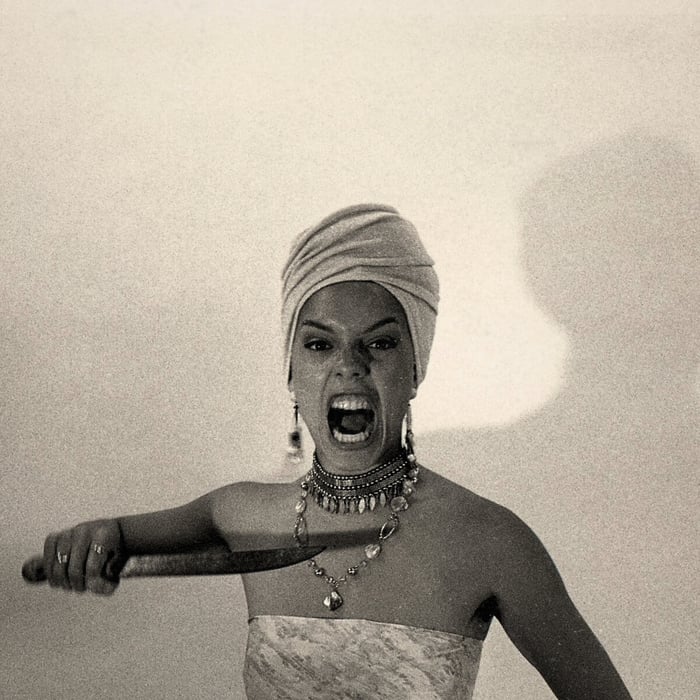
Scarred and Sacred isn’t “songs with spoken word”—it’s poetry calling the shots while jazz musicians orbit it. It’s intimate, blunt, and political on purpose.
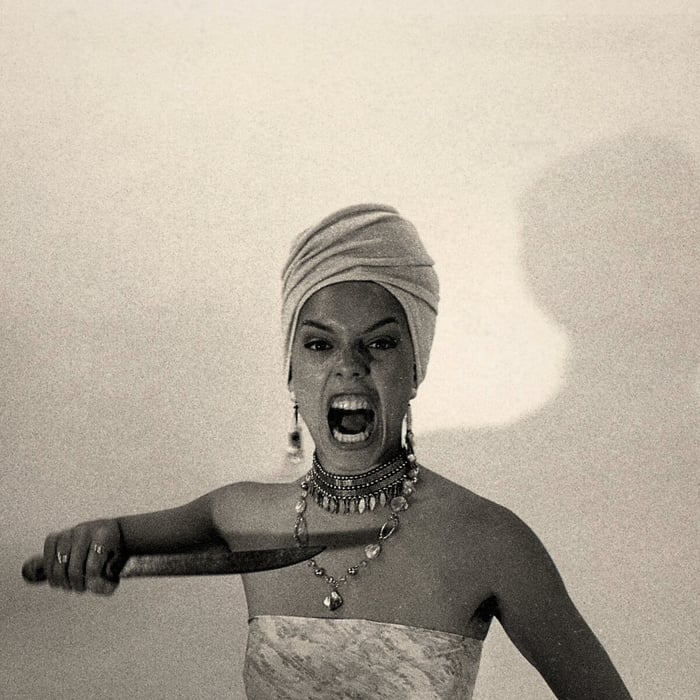
This album isn’t trying to “blend” anything—it's trying to take over
Some records feel like a band found some lyrics and dressed them up. Scarred and Sacred feels like the opposite: the words showed up early, claimed the room, and the instruments were told to behave.
That order matters, because SOLCHLD’s debut doesn’t hide its origin story in the sound. It sounds like poems that were already finished before anyone counted in a tempo. The music doesn’t lead; it makes space. And if you’re the kind of listener who needs melodies to be in charge, you’ll probably call this “not an album” and move on. I’d call that a failure of imagination.
SOLCHLD is one voice, but the record moves like a small cast
SOLCHLD is the musical identity of Aurora Liddle-Christie, a Magan-djin (Brisbane)-based artist of Arrernte, Alyawarr, Jamaican, Irish, and Scottish settler descent, with Arrernte lineage running back to Mparntwe (Alice Springs). The album doesn’t treat that as a bio line—it treats it like the structural beams.
And the band isn’t “a backing band,” even when the record acts like it is. Callum Pask wrote the piano parts. Julia Beiers handled bass. Ryan Hammermeister took drums. Tristan Rogers played trumpet. Four jazz musicians in a room with a poet, and—crucially—the poet doesn’t step aside to let them “have a moment.” The musicians are there to sharpen the edges, not to steal the scene.
If that sounds controlling, it is. It’s also the point.
At first I thought the restraint would get stale—then it started feeling like discipline
On my first pass, I kept waiting for the album to “open up,” to give me a more obvious musical payoff—some bigger chorus-equivalent, some moment where the band finally cuts loose and says, okay, now it’s our turn.
But on second listen, I realized the record is making a different bet: that the most dramatic thing here is a voice staying steady while it says the hard part. The music stays lean because the writing is already doing the heavy lifting. That’s not a lack of ambition. It’s a refusal to decorate.
Still, I’m not totally sure every track earns that level of restraint. Sometimes the minimalism reads like confidence; once or twice it reads like the band is being kept on a short leash just because it can be.
“My Nana Is a Pelican” is the album’s emotional proof
Here’s where Scarred and Sacred stops being “good spoken word with tasteful jazz” and becomes something stickier. “My Nana Is a Pelican” is the strongest piece on the record, and it’s not subtle why: it’s a life-spanning scene that doesn’t need to posture.
Aurora is six years old, sitting on her grandmother’s knee, telling her she looks like a pelican. The grandmother laughs and touches the loose skin on her neck. But the kid isn’t making fun—she’s failing to explain something huge with a tiny vocabulary. What she means is that her grandmother is a banyan tree, a seaside, a forest. That’s the kind of child-mythology that adults usually smother with “aww.”
Then the writing jumps decades forward. The same two people sit together again, the nana now eighty-three—hunched body, tired bones, and a mind still sharp. Aurora asks if she’s afraid of dying, and the answer lands with the calm of someone who’s already made peace with time.
The real trick is how the music knows when to vanish. Pask’s piano thins down to almost nothing under the closing lines, like the record understands a basic rule: if the words are already breaking the room open, don’t bring in cymbals to prove you were there.
Arguable claim: this track works because it refuses “performance” and keeps the delivery human. If you want big theatrical delivery, you’ll miss what makes it hit.
“Freedom Come” is long, blunt, and intentionally unsanitized
The album’s political material doesn’t tiptoe, and “Freedom Come” is where that becomes unavoidable. It’s the longest and most direct piece here, and it moves like a ritual that doesn’t care whether you’re comfortable standing in the circle.
Aurora calls for an “urban witch” to “cleanse them colonial spirits,” which is the kind of line that tells you the record isn’t interested in sounding respectable. Mid-stride, she drops a Beyoncé quote—“You can’t break my soul”—and it doesn’t feel like a cute reference. It feels like a modern mantra pulled into the same breath as history.
Then the writing yanks you hard: cocoa butter curls and Eurocentric conformity in one moment, and then—without warning—children laughing beneath bombs dropping, children crying with bodies under rubble. It’s not a poetic “comparison.” It’s a collision.
I can hear why the Blackfulla-Palestinian Solidarity Dinner in Brisbane used this track as its centerpiece. It’s designed like a centerpiece: it holds attention, it names what it’s naming, and it doesn’t flinch. When Aurora says “from the river to the sea/Palestine will be,” she’s drawing a direct line between First Nations Australians and Palestinians—colonial occupation on both ends—and she does it without hedging or dressing it up in polite ambiguity.
The ending goes for escalation: “Aunty said, ‘Fuck hope’/I say, ‘Fuck hope’/Freedom come now,” and Rogers’ trumpet flares underneath like it just got handed instructions.
Mild criticism, though: the piece is so direct that it risks flattening its own dynamics. The bluntness is the point, yes—but part of me wanted one more turn of phrasing, one more unexpected angle, just to keep the ear as engaged as the conscience.
“My Love Is Aged Wine” is the one time the album locks eyes with one person
Most of Scarred and Sacred speaks outward—to ancestors, oppressors, a country, a community. “My Love Is Aged Wine” is the one track that turns away from the crowd and addresses a man standing right there.
It opens a door the rest of the album keeps locked. Aurora describes her love as aged wine, stored away in dark shadows, fermenting, waiting. A man tries to crack the glass—tries to get past avoidance—and the writing doesn’t romanticize that attempt. It makes it dangerous.
The confession is brutal in a quiet way: if she were honest, she tells him, he’d bear the name of every man who’s ever hurt her. He could speak in gentleness, but she’s only fluent in danger. That line—“fluent in danger”—is the kind of sentence most songwriters would build an entire album around and then spend a year failing to live up to.
She talks about healing in spirals, about how every broken cycle reveals another dimension of abandonment. And the track ends on a small emotional tremor: “you came close, boy/you came close.” The slight waver in her delivery changes the temperature of the whole record, because suddenly this isn’t only about history and systems. It’s about what happens when a person tries to love you and you can’t stop bracing for impact.
Arguable claim: this is the album’s most revealing track because it’s the least “public.” If you think the political pieces are the core, you might miss that this track quietly explains the cost.
“Do You See Us?” turns identity into a roll call, then twists the knife
After that intimacy, the record swings back to the collective voice—and “Do You See Us?” does it with a physical checklist that sounds like posture turning into armor:
- chest out
- head up
- stride strong
- energy big
- laugh loud
- hair proud
- face fresh
- fit funky
- voice even
- “Did I stutter.”
It’s not just swagger. It’s survival posing as style. Then the reversal bites: when they tell us to go back to where we came from, that where we come from is the very fabric of their existence. That line doesn’t ask permission. It doesn’t soften itself for the listener who “needs context.”
The Rastafarian theology—“I am that I am, and I and I”—sits beside that without announcement, like the record is daring you to keep up. And I respect that. This album doesn’t footnote itself.
“I Am Nature” names Country like it’s naming the real archive
“I Am Nature” is where the record starts cataloging place with the kind of specificity that makes “nature” stop being an aesthetic. There are ghost gums. Iron-soaked sands. Dried riverbeds. A narrow brook. These aren’t vague pastoral images—they’re anchored, Central Australian, and treated like memory you can walk on.
When Aurora recites lineage—“Aranda, Aleyawra, Afro-Jamaican Gaelic”—the list doesn’t feel like accumulation for its own sake. It feels like a map being read aloud, the kind where each name carries responsibility.
Arguable claim: this track proves the album is less interested in sounding pretty than it is in sounding located. If you’re hunting for “vibes,” this one will probably frustrate you—because it refuses to be wallpaper.
“Sun Rising” compresses pregnancy, ancestral memory, and ceremony into a tight strike
“Sun Rising” collapses pregnancy, ancestral memory, and ceremony into under three minutes, and it feels like watching someone fold a huge cloth into a small square without losing the pattern.
This is where I start thinking about how much these pieces are built for rooms full of people—breathing together, reacting in real time. Spoken word tradition thrives on that exchange, and a studio recording can’t always recreate it. I kept wondering what a live crowd would do at certain turns of phrase—whether the room would go quiet or erupt.
And yeah, I think “Sun Rising” would wreck a live audience. On record, it still hits, but there’s a slight sense of contained voltage—the feeling of a moment meant to be shared that’s being asked to stand alone.
The title track “Scarred and Sacred” holds up two hands at once
The sharpest political phrasing on the album is in the title track, and it’s sharp because it’s layered, not because it’s loud.
Aurora describes drinking from wells poisoned with ill intentions, then standing atop mountains of her own grief. Struggle gets framed as “an heirloom of our lineage,” and perspective as “the offspring of time.” Those are big images, but they don’t compete—they sit next to each other like they’ve both been true for a long time.
Then the closing gesture lands with that exact duality the album keeps insisting on: a peace sign and a middle finger at the same time. Brown and liberated, grounded on stolen land, hopeful despite injustice. It’s not trying to resolve the contradiction. It’s insisting that the contradiction is the lived reality.
Arguable claim: this track doesn’t “inspire”—it confronts. If you want political art to soothe you, you’ll probably call it too much. If you want it to tell the truth without cleaning it, this is the thesis.
The album’s standouts are obvious, and that’s not an insult
By the end, the record makes its own favorites hard to argue with. The tracks that feel most essential are the ones where the writing creates a full scene or a full demand:
- “My Nana Is a Pelican”
- “Freedom Come”
- “My Love Is Aged Wine”
That said, I’m a little torn about how the album’s sequencing makes the “big” tracks tower over the shorter declarations. Maybe that imbalance is the intention—maybe it’s mirroring how some memories and fights take up more room in your body than others. Or maybe it’s just the reality of having a few pieces so strong they bend the rest of the record’s gravity.
I’m not totally sure. But I felt it.
Conclusion: Scarred and Sacred doesn’t try to win you over with hooks—it tries to tell the truth while musicians hold the floor steady. When it works, it feels like a room going silent for the right reason.
Our verdict: People who like poetry-first records (and can handle politics without asking it to smile) will actually love this. If you need sung choruses, tidy resolutions, or you get itchy when an album refuses to entertain you on command—this will feel like homework you didn’t assign yourself.
FAQ
- Is Scarred and Sacred more jazz album or spoken word album? Spoken word leads, jazz supports. The instruments act like lighting, not like the main characters.
- Who is SOLCHLD on this record? SOLCHLD is Aurora Liddle-Christie’s musical identity, with contributions from Callum Pask (piano composition), Julia Beiers (bass), Ryan Hammermeister (drums), and Tristan Rogers (trumpet).
- What’s the most emotionally direct track? “My Nana Is a Pelican” hits hardest because it moves through decades without rushing, and the music knows when to disappear.
- Which track is the most openly political? “Freedom Come.” It’s long, explicit, and refuses to soften its language or its references.
- Is there any love song energy here—or is it all collective themes? “My Love Is Aged Wine” is the one track that turns personal and one-on-one, and it’s arguably the record’s most revealing moment.
If this album made you miss the feeling of judging music by its cover—maybe grab a favorite album-cover poster and put it somewhere you’ll actually look at it. We keep a rotating stash over at Architeg Prints.
 | DISCOUNTGET 30% OFF*Use code on your next order:
|
* This post may contain affiliate links, meaning we earn a commission if you make a purchase through these links, at no additional cost to you.