STBC Shifa Review: Healing Rap That Smells Like Subway Chai


 See more Architeg Prints stories on Google.
STBC Shifa Review: Healing Rap That Smells Like Subway Chai
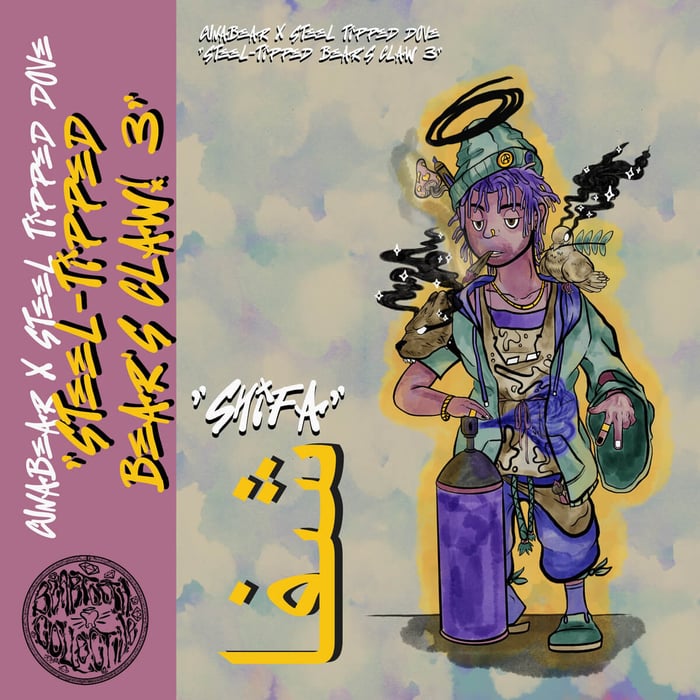
STBC Shifa isn’t “self-care rap.” It’s broke, busy healing—building houses, feeding extra mouths, and turning nerd lore into community plans.
A record that shows you what “healing” costs
Most albums about healing want candles and soft-focus epiphanies. STBC Shifa shows up with dirty hands and a to-do list. It sounds like somebody trying to get better while life keeps texting them new problems.
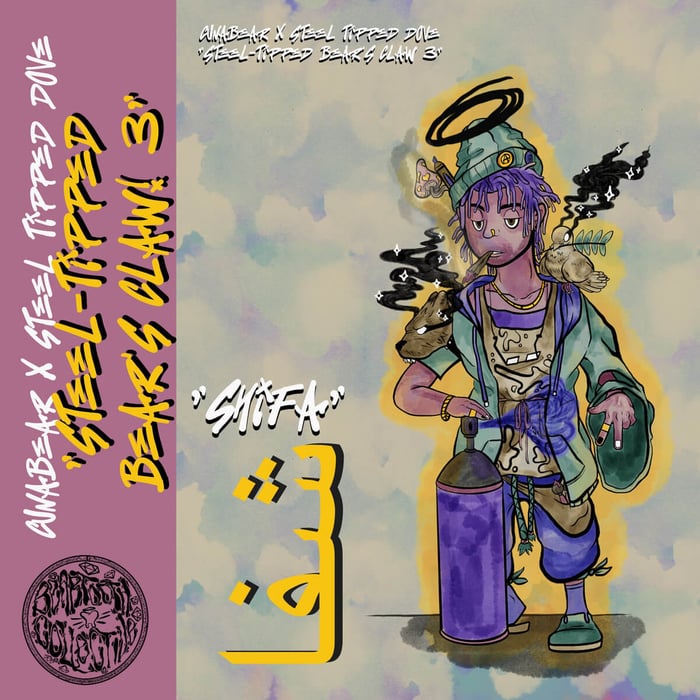
cunabear moves like that: a rapper based in Savannah, originally from Richmond, and the kind of DIY lifer who doesn’t separate “art” from “the rest of it.” He runs a label/art collective called the BearTooth Collective, draws bears, sells figurines, and even hand screen-prints cassette tapes. Physical releases come packaged with Magic: The Gathering cards, which is either wildly sincere or an elaborate way of saying “my world is my world—come step into it.” I’m leaning sincere.
And then there’s the voice: low, unhurried, almost stubbornly calm. The bars are packed so tight with competing ideas that you can feel each line threatening to buckle under the next one. That pressure—mental, emotional, logistical—is basically the plot.
This is his third collaborative record with Brooklyn producer Steel Tipped Dove, titled STBC! III: “Shifa”—shifa meaning “healing” in Arabic. But the healing here isn’t spa-day healing. It’s the kind that happens when you’re broke, the family group chat used to be a war zone, and stability means pouring foundations, lifting walls, and feeding people who aren’t your kids because they showed up hungry.
That’s not metaphor. That’s the emotional temperature.
Steel Tipped Dove keeps the room warm—and doesn’t crowd it
The next thing you notice is how Steel Tipped Dove refuses to make this album fight for space. He’s the Brooklyn producer (Joseph Fusaro) who’s been engineering/producing for years out of the same second-floor walk-up—work tied to billy woods, Armand Hammer, ShrapKnel, Fatboi Sharif, and a lot of the Backwoodz Studioz universe. That resume usually signals dense, knotted, sample-stacked puzzles.
That’s not what happens on STBC Shifa.
Instead, Dove gives cunabear beats that breathe without rushing, warm and spacious, built from patient loops that repeat without going stale. It’s a pretty intentional choice: when your rapper wants to cram detours, references, and whole side-quests into one bar, you either cage him with maximalism or you hand him an open floor and let his footprints become the rhythm.
These instrumentals pick the open-floor option.
On “Grandma’s Hands Manifested a House for Me,” the loop hovers in a midtempo sway—organ flecks, a little dust in the corners. It opens into cunabear rapping about crossbeams and concrete slabs and wingspans that open doors. Not “I got trauma,” not “I found peace.” More like: I’m building something real and my body remembers every step.
And “Nightosphere Bodega Blunts” drifts on what sounds like a detuned moog line humming under soft percussion. It’s half-lullaby, half-late-night commute. cunabear meets it by slowing down until each syllable settles into the groove like a foot pressing into wet sand. That’s a specific type of confidence: not speed, not volume—just weight.
I’ll admit, on my first listen I thought the production might be too relaxed, like it was saving itself for a bigger moment that never comes. On second listen, I realized that is the bigger moment. The beats are choosing steadiness over spectacle, which fits the “healing means showing up again tomorrow” theme a little too well.
The nerd references aren’t cute—he thinks in them
Here’s where cunabear either clicks for you or doesn’t: his world is stacked with anime villains, Final Fantasy weapons, bodega runs, and J-train commutes all occupying the same mental shelf. And he doesn’t do it like a personality badge. He does it like it’s his actual vocabulary—because it is.
On “Colossus (How to Build Community),” he flicks One Punch Man out the storyboard, charges spirit bomb energy by touching thumbs, and then drops a question that cuts through the cosplay fog: “If punk never died, then where are all the radical lovers?” That line doesn’t land like a reference. It lands like a dare.
This is the part a reasonable listener could argue with, but I’m going to say it anyway: the “nerd stuff” is the most precise political language on the whole album. When he frames community organizing in gaming terms—calling himself a “bear-shaped colossus,” talking about pions assembling “a moving prophet”—it’s not escapism. It’s him describing structure, roles, momentum. Plain-spoken versions of those ideas would actually be less accurate to how he experiences them.
And on “Nightosphere Bodega Blunts,” he slides between the cosmic and the corner-store like it’s one continuous neighborhood. He buys interstellar band-aids at the local mart, makes dinner for a kid who isn’t his, then sails off with the crew at the queen’s request—djinn summons, yokai encounters, and a night ride back to Bushwick. It sounds ridiculous until you realize that’s how real responsibility feels: mundane chores interrupted by strange dread, sudden wonder, and the constant sense you’re traveling through worlds.
When the myth fades, the real question shows up
After a while, you can hear the album doing something sneaky: it keeps dissolving the line between the fantastical and the political because cunabear treats both as the same errand.
On “Sardonyx-Coated Prayer Hands,” the mythology recedes and the communal impulse steps forward. He describes himself with sensory bluntness—chai and sweaty subway piss—and then pivots into tenderness that doesn’t ask permission. He sings for no swans, opens a rift to love like it’s an organic tendency, and asks the kind of question that doesn’t come from theory but from scars: do you understand the violence it took to become this gentle?
That’s not a cute line. That’s a whole biography condensed into one breath.
And yeah, it also makes a claim: gentleness isn’t a personality trait here—it’s a victory, and it cost something.
He talks about tearing borders down and building a communal throne. That could sound like big talk, but on this album it feels less like ideology and more like blueprints. Healing, in STBC Shifa, is a construction job.
The subway announcements frame the whole thing like a loop
The album opens and closes with NYC subway announcements—14th Street–Union Square and West Bergen on the way in, then World Trade Center via C train on the way out. It’s a choice that shouldn’t matter, but it does: it turns the project into a transit story, a record about movement that never fully resolves into arrival.
That framing pays off hardest on “The Last Train Home,” which is easily the strangest and most affecting passage here. cunabear boards a train with no stops—just a loop that rides until you arrive. The passengers tell him everyone only ever wants to stay. He says he needs to go.
It plays like a conversation between one living person and a purgatory full of people who forgot what belonging even felt like. For someone splitting life between Savannah and the Brooklyn orbit, “home” doesn’t come off as a vibe. It comes off as a destination you have to argue for—something other people don’t even recognize as real.
I’m not totally sure the track “answers” anything. But I don’t think it’s supposed to. It’s supposed to leave you with that stubborn, human sentence: I need to go.
Playfulness as a weapon (and sometimes a shield)
From there, the record swings into a different kind of energy without breaking character.
“BearTooth Collective Battle Cry No. 67” is cunabear at his most playful—breaking animals out of the Brooklyn Zoo, pricking demons with poison pins, settling scores with pleasantries instead of fists. It’s funny in that calm, observational way where the absurdity is treated like normal errands.
And “Mental Health Check” pairs a blunt hook with a verse that feels like he’s trying to reprogram the planet: kickflipping the whole world to rearrange tidepools, breaking knowledge off in tiny chunks like pomegranate guts. He frames it like nutrition—small tastes that keep you alive. He even calls it a kind of “bonus” to your health, that jolt you get from tasting something you actually love.
Here’s my mild complaint, though: every now and then, the density works against the feeling. A couple of passages hit like a brilliant notebook dump when I wanted the emotion to linger a second longer. The album is so committed to motion that it occasionally rushes past its own best moments. That might be the point—healing doesn’t let you pause—but it still left me wanting one or two more breaths.
“Jazz Is Freedom” is where the record stops negotiating
The clearest triumph is “Jazz Is Freedom (You Think About That!)”. The instrumental is nimble and jazz-flecked, bobbing instead of booming, and cunabear sounds the most liberated he gets across the whole runtime—three full verses of freewheeling imagery.
He’ll jump from growing mushrooms in knee-high Odd Future socks to some absurd vessel called the SS Take No Shit pulling out from Positivity Harbor, and somehow it doesn’t feel like random. It feels like he’s finally stopped translating himself for anyone.
And there’s a line that pins the theme to the wall without turning it into a slogan: some night terrors are forever and some wet dreams never last. He raps it with the ease of someone who already accepted that darkness and light aren’t opponents. They’re roommates. Sometimes they split rent. Sometimes one of them eats your leftovers.
That’s what STBC Shifa keeps insisting: perfection isn’t the goal, and chasing it is just another way to stay sick. The album doesn’t ask to be “fixed.” It asks to be lived in.
So what is STBC Shifa actually doing?
This is the part where I stop pretending it’s just a collection of tracks.
STBC Shifa is cunabear documenting a very specific kind of adulthood: the version where imagination doesn’t fade, it becomes a tool for survival. The fantasy references aren’t an escape hatch—they’re his way of naming forces that are otherwise too big and too close to talk about plainly: responsibility, community, fear, gentleness earned the hard way.
And Steel Tipped Dove’s decision to avoid his more sample-dense maximalism matters. These beats aren’t trying to outsmart you. They’re trying to hold you. They loop patiently so cunabear can keep stacking meaning without the floor collapsing.
By the end, the music doesn’t get bigger. The person inside it does. That’s the flex.
Conclusion
STBC Shifa treats healing like something you do with your sleeves rolled up: build the house, calm the group chat, cook the extra plate, catch the train, keep moving. It’s not motivational—if anything, it’s stubbornly practical.
Our verdict: People who like their rap dense, weird, and quietly humane will actually love this album—especially if you’ve ever used fiction to explain real life because real life felt too blunt. If you need big hooks, shiny choruses, or neat emotional “arcs,” you’re going to bounce off STBC Shifa and call it confusing, right before you put on something that lies to you more politely.
FAQ
- What does STBC Shifa mean?
“Shifa” means healing in Arabic, and the album frames healing as work—building, feeding, repairing, and staying present. - Is this album more about lyrics or production?
Lyrics lead, but Steel Tipped Dove’s spacious loops are the reason the lyric density doesn’t turn into clutter. - Which track best explains the album’s concept?
“The Last Train Home” makes the “home vs. movement” theme feel painfully literal, especially with the subway framing. - Are the anime and game references just gimmicks?
No—they’re how cunabear thinks. The references function like a private language for community and survival, not trivia. - Where should I start if I’m new to cunabear?
Start with “Jazz Is Freedom (You Think About That!),” then “Sardonyx-Coated Prayer Hands,” then “Nightosphere Bodega Blunts” once your ears adjust to his slower gravity.
If the cover stuck in your head the way the subway announcements do, it might be worth putting it on your wall—tastefully, not like a shrine. You can shop your favorite album cover poster at our store: https://www.architeg-prints.com/
 | DISCOUNTGET 30% OFF*Use code on your next order:
|
* This post may contain affiliate links, meaning we earn a commission if you make a purchase through these links, at no additional cost to you.