Slave Machine Review: Nervosa’s “Bigger Choruses” Era (Yes, Really)


 See more Architeg Prints stories on Google.
Slave Machine Review: Nervosa’s “Bigger Choruses” Era (Yes, Really)
Slave Machine by Nervosa delivers thrash and death metal with a confident new vocal approach and bigger, more impactful choruses without losing its aggressive edge.
A record that shows up already mid-swing
Nervosa has spent well over a decade sounding like they’re trying to kick a locked door off its hinges. Slave Machine is album number six, and it lands with that same familiar snap—thrash and death metal braided together, riffs coming in hot, and the mood staying socially sharp instead of “party metal” dumb.
This is also the second album with Prika Amaral handling lead vocals. After two vocalists cycled out in quick succession, I expected that familiar “we’re just trying to survive” energy bands sometimes leak when the lineup’s still drying like paint. I thought that going in… but about halfway through this album, that suspicion stopped making sense. This doesn’t sound like a band holding on. It sounds like a band enjoying the grip.
Why Prika’s second run on lead matters (more than the press release version)
On Jailbreak, Prika stepping into the lead role could’ve easily felt like an emergency fix—competent, brave, a little tense. Instead, it came off like a reset switch that actually worked. And Slave Machine doubles down on that reality: the vocals aren’t just “good for a guitarist taking over.” They’re positioned like a statement.
The creative decision I hear all over this record is simple: Nervosa wants to sound unshakeable, like the lineup drama is old news and you’re the one who’s late. The pacing, the confidence in the hooks, the way the songs hold their ground—none of it reads apologetic. If anything, it’s almost cocky.
The opener tells you the trick: brute force, but staged like a ritual
The first real move on “Impending Doom” is that tone-setting, tribal-ish drone—more atmosphere than riff, like they’re widening the room before they start throwing furniture. It’s hard not to think of Sepultura in that moment, not because Nervosa is copying, but because they’re tapping the same cultural nerve: percussion/texture as a warning flare, then the full-body lunge into thrash-death momentum.
And when the riffs finally hit, it’s classic Nervosa behavior—tight picking, forward-leaning aggression, no long warmup. If you’re looking for subtlety here, you’re in the wrong building. The arguable part: I don’t think this band even wants subtlety; they want clarity, the kind you get from being punched in the chest by a well-rehearsed idea.
This album’s real shift: the choruses start acting like headlines
Here’s what changes on Slave Machine: the band starts treating choruses like they matter. Not in a radio-rock way—more like they finally decided that a great chorus doesn’t “sell out” a great riff, it weaponizes it.
On Jailbreak, there were flashes of that bigger, grander scale—an example that sticks in my head is the opening of “Seed of Death.” But this time the “big” moments aren’t occasional scenic overlooks; they’re part of the road design.
The title track “Slave Machine” makes the point loudest. The chords open up, the vocals layer—harsh stacked with clean—and suddenly the song isn’t just fast and angry. It’s declarative. It’s built to make a room shout something back. You can call that empowering, sure, but the more blunt interpretation is: Nervosa wants to sound like a band that can lead a crowd, not just outplay one.
Then “30 Seconds” pulls a similar trick. The chorus lands and Prika’s clean vocal line pops out—less theatrical “metal clean singing,” more like someone genuinely trying to push the emotion through the distortion. I’m not 100% sure it’ll work for everyone; I can imagine some listeners hearing those clean notes and immediately reaching for the “sellout” stamp. But to me it reads as confidence, not compromise.
Don’t panic, purists: it still melts faces on purpose
If the word “melodic” makes you flinch, Slave Machine doesn’t suddenly turn into a soft-focus version of extreme metal. The album still knows why you showed up.
“Beast of Burden” is the cleanest example: a straightforward, effective thrash battering that wastes no motion. About three and a half minutes of “yes, we can still do this in our sleep,” except it doesn’t sound sleepy—it sounds efficient.
“You Are Not A Hero” is where the record digs in its heels the hardest. The rhythms get stompier, the attack feels more blunt-force death metal, and the lyrics cut in a way that doesn’t feel performatively edgy. The arguable claim: this is the album’s most aggressive moment not because it’s the fastest, but because it’s the most unpleasant on purpose—like the band is daring you to romanticize anything they’re saying.
And then there’s “Hate.” Yes, that title. No poetry contest entries here. The riffs veer into Testament-ish territory—sharp, classic, satisfying in that “why mess with what works?” way. If anything, this track feels like Nervosa showing off that they understand the tradition and can still out-muscle it.
Innovation isn’t the point—leveling up is
Extreme metal can be a narrow hallway. Death and thrash are built from straightforward components: speed, precision, aggression, release. There’s not always tons of room for nuance unless you’re willing to change the architecture. Nervosa doesn’t radically redraw the map on Slave Machine.
But here’s the part that matters: the band pushes themselves to a higher level anyway. Not by reinventing death-thrash, but by cleaning up the band’s intent. The songs sound like they’re written with fewer doubts.
I’ll admit, on first pass I didn’t fully buy the “bigger chorus” approach—I worried it might sand down the band’s edges. On second listen, that fear started to feel misplaced. The intensity is still there. The difference is that now the record has these bigger, more impactful landing zones where a song can hit and stay hit, instead of just sprinting past you.
That said, one mild criticism: the album’s “grand” moments occasionally feel like they’re trying to prove a point a little too hard—like the band knows you might be skeptical, so they emphasize the chorus lift with an extra underline. It’s not a dealbreaker, but I did catch myself thinking, “Okay, I get it—you’re big now.”
The real story is the missing trepidation
Jailbreak felt like a rebirth that succeeded—impressive, exciting, maybe carrying a tiny shadow of “let’s see if this holds.” On Slave Machine, that shadow’s gone. The band plays like the lineup is settled in their bones.
And by the time the album wraps, the message isn’t subtle: this version of Nervosa wants to be seen as its most confident form. Not “survivors.” Not “still here.” More like: we’re the standard, deal with it.
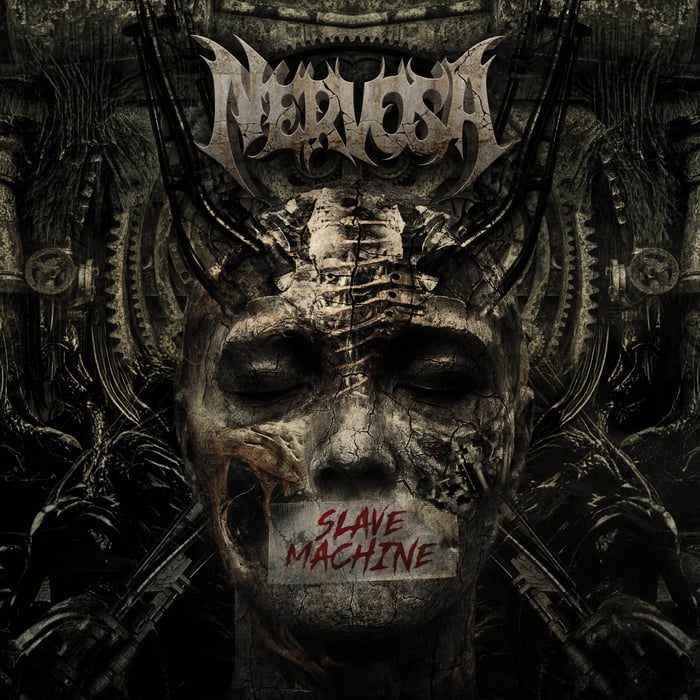
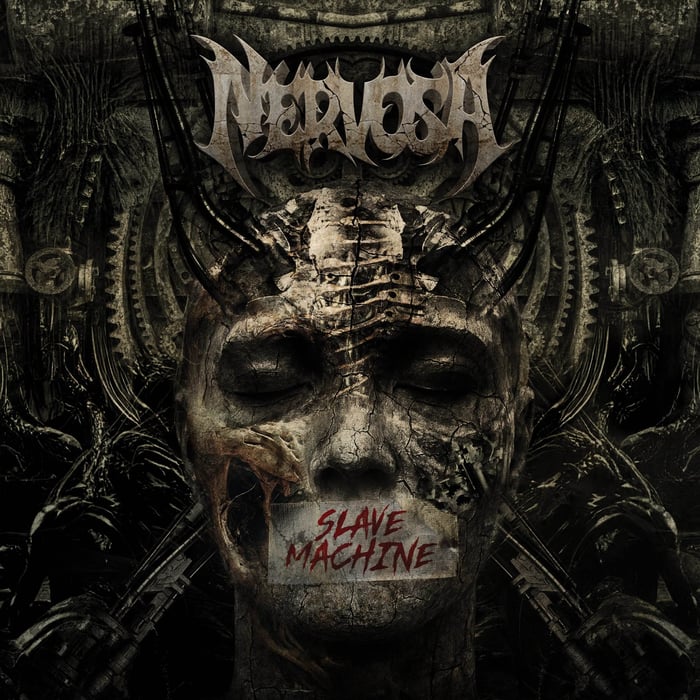
Album art
Release details (the only calendar note you need)
Slave Machine is set for release on April 3rd via Napalm Records.
If you want to keep up with the band the normal way, they’re on Facebook here: https://www.facebook.com/nervosa
What Slave Machine is actually doing under the hood
This record is Nervosa choosing impact over pure velocity—without abandoning velocity. It’s the band insisting that big choruses and layered vocals aren’t “mainstream,” they’re strategic. The arguable part is whether that strategy is necessary at all. Some fans will always prefer the version of this band that feels like constant forward motion with no “anthem” architecture.
But I keep coming back to how intentional it sounds. Slave Machine doesn’t feel like a band experimenting. It feels like a band deciding.
Nervosa made Slave Machine with the posture of a group that’s done explaining itself. It’s still thrash-death at its core—riffs first, teeth out—but now it’s built to land bigger, stay longer, and get a room shouting instead of just sweating.
Our verdict: People who like their extreme metal tight, aggressive, and secretly catchy will get exactly what they want from Slave Machine—and probably pretend they don’t like the clean vocals while replaying the chorus anyway. If you only respect thrash when it’s allergic to hooks, you’re going to side-eye this album like it just wore a clean shirt to rehearsal.
FAQ
- Is Slave Machine more melodic than earlier Nervosa albums?
Yes, but not in a “soft” way—more in a “the chorus now wants to be remembered” way. - Does Prika Amaral’s lead vocal approach change the band’s sound?
It changes the shape of the songs—more layered vocals and clearer chorus moments—without dulling the aggression. - What’s the best starting track if I’m new to the band?
“Impending Doom” sets the tone immediately, and the title track “Slave Machine” shows the bigger-chorus direction. - Will death/thrash purists hate this album?
Some will, mostly on principle. The riffs still hit hard; the difference is the band isn’t afraid of a big chorus landing. - What label is releasing Slave Machine and when?
It’s due April 3rd via Napalm Records.
If this album cover is your kind of wall energy, you can always shop a favorite album cover poster at our store—tastefully, not like a merch table ambush: https://www.architeg-prints.com
 | DISCOUNTGET 30% OFF*Use code on your next order:
|
* This post may contain affiliate links, meaning we earn a commission if you make a purchase through these links, at no additional cost to you.