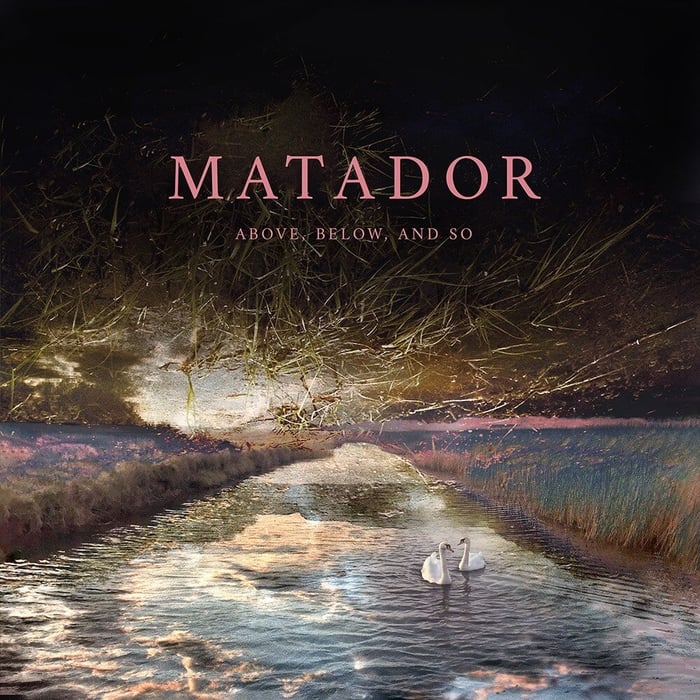
Matador’s Above, Below: Post-Metal Ambition With Controlled Heat


 See more Architeg Prints stories on Google.
Matador’s Above, Below: Post-Metal Ambition With Controlled Heat
An observational listen-through of Matador’s Above, Below, tracking its accessible post-metal aims, its strongest mid-album stretch, and where momentum softens.
Release context and basic framing
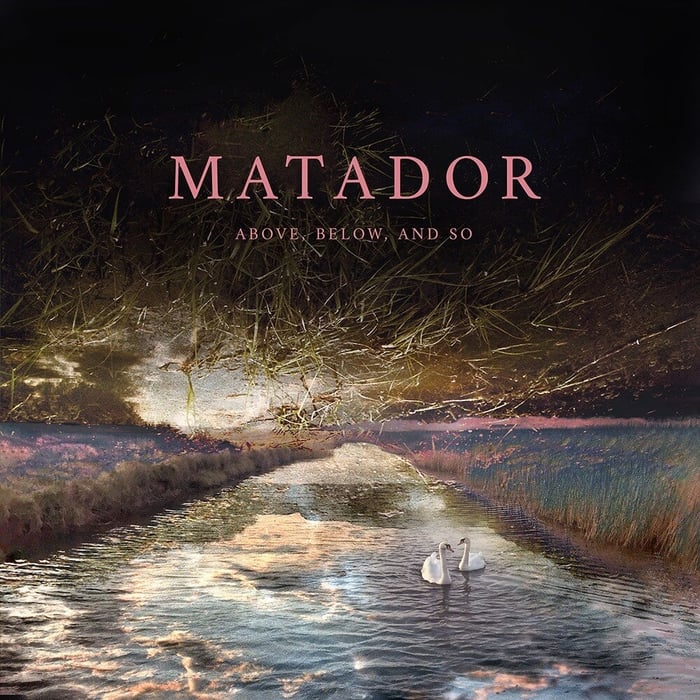
Matador’s third album, Above, Below And So, presents the Brighton trio working in post-metal with a noticeable lean toward broader accessibility. The record is also their longest so far, stretching the runtime by roughly ten minutes compared to prior releases.
A familiar analogy appears, then the album tests it
The listening experience encourages the usual comparisons between post-metal and other meticulous crafts: both can be process-heavy, both rely on controlled variables, and both can produce strong physical reactions when the pressure is applied correctly. Above, Below spends much of its runtime showing careful measurement—tones dialed in, transitions planned, parts layered with intent—while also demonstrating that precision and finish are not the same thing.
The album’s central tension is easy to track in real time: it repeatedly sets up big emotional architecture, then steps away before the structure fully locks into place.
The opening track introduces the album’s push-and-pull
The first full statement arrives with “The House Always Wins,” and it immediately behaves like two competing drafts of the same song sharing one room. Guitars arrive coated in feedback, with the sound pushing forward in thick sheets, the way bad weather pushes itself through an open window. Over that, James Kirk uses a restrained vocal approach—more spoken than sung at first—creating a calm surface that implies an approaching shift rather than delivering one instantly.
When the band expands into larger melodic sections, the album’s accessibility goal becomes practical rather than theoretical. The riffs brighten, the groove grows to arena proportions, and the track temporarily resembles the kind of big-shouldered rock framework that can hold a crowd without requiring anyone to take notes. That said, the delivery doesn’t always match the size of the arrangement. After several minutes of atmosphere-building, a false-ending maneuver arrives, followed by a return that is deliberately muted and fading. The restart doesn’t feel like a second act so much as an administrative reopening—technically allowed, not clearly necessary.
“Glitter Skin” continues the same method, with sharper dynamics
From there, “Glitter Skin” repeats the album’s most common pattern: controlled escalation, detailed layering, and a payoff that arrives slightly under its own ideal temperature. The bassline sits deep in reverb, producing a cinematic pull that makes the track feel larger than the room it’s playing in. Above it, harmonized guitar shapes move steadily, more patient than urgent, as if the song expects the listener to follow the procedure.
Kirk’s guitar parts stack and simmer, then rise into heavier motion. Vocals shift between near-whispered clean lines and harsher, animal-edged bursts that function less as melodic statements and more as intensity markers—clear signals that the track is meant to peak here. The dynamics recall the kind of progressive rise-and-fall approach where instruments interlock gradually and then separate again, with the satisfaction coming from the mechanism working as intended. Even so, the track repeatedly suggests that one more pass—one more decisive lift, one more final push—would have made the emotional impact land with fewer caveats.
Mid-album, the band starts showing what the material can do
The record’s midpoint is where Above, Below stops debating with itself and begins behaving with more certainty. “The Flood” opens with groove-forward riffing that flirts with funk-weight swagger before shifting into textural, wave-like guitar movement. The transitions feel less like experiments and more like choices the band is comfortable living with.
Scott Stronach drives the track with fast, active drumming that can tighten the song into motion or loosen it into something more improvised. Mark Ainsworth brings in a bass tone that thickens the low end until it becomes a kind of audible pressure, turning the mix into something heavier to physically stand near. Kirk’s guitar alternates between melodic richness and chugging, dystopian shapes—bright and blunt in rotation, like switching tools depending on which surface needs cutting.
The most revealing moment is the track’s drift into an interlude that feels intentionally unmoored. Drums adopt a freer, jazz-leaning looseness; bass fades in and out of prominence; guitar lines hover as if they are scoring a sequence rather than “playing a part.” It’s the album briefly allowing itself to become strange without apologizing for it, and the atmosphere holds.
A short interlude uses brevity as a practical advantage
The interlude “O Suna” reinforces how effective this band can be when it treats pacing as a resource, not a hurdle. At roughly two and a half minutes, it doesn’t have time to over-explain itself, which helps. An opening riff shimmers with a clean melodic sheen—bright enough to feel inviting—while a reverb-heavy bass presence gradually rises from underneath and starts occupying the center of the track.
The emotional shift is achieved through simple physical changes in the sound: the low end grows, the space gets darker, the calm gets replaced by a persistent, slightly paranoid pressure that doesn’t resolve before the track ends. In practical terms, it sends the listener somewhere mildly uncomfortable and leaves them there, which is often what this kind of music is built to do.
The back half returns to longer forms, and the edits become more noticeable
After that stretch, the album moves back into the longer, more cinematic framework that dominated the opening—and the earlier frustrations return with it. The ten-minute “A Virus” begins in an uneasy atmosphere: a singular dissonant riff repeats with intention, cymbals clatter with a nervous edge, and the track positions itself as something meant to unsettle rather than entertain.
Kirk’s harsher vocal appears in a lo-fi treatment, partially buried in the mix, which makes the voice feel like another texture rather than the clear front-facing narrator. The lyrics describe bodily and mental strain in blunt, tangible terms—images of internal fireworks and bleeding that turn suffering into something physical and operational. The words carry weight on their own, and the drummer’s improvisational instinct adds ambition, but the surrounding music does not always rise to meet that gravity.
Sections linger. Instrumental passages stretch outward and then keep stretching, repeating earlier sounds without adding much new pressure or consequence. The effect is less “hypnotic” than simply extended, like a process continuing after the result is already visible. When the track fades out and later rises again, it returns with a cinematic drone that feels only loosely connected to what came before—another instance where the album uses a filmic gesture without fully justifying it inside the song’s internal logic.
Accessibility is the clear priority, and the bass work anchors it
Across Above, Below, the intent to welcome newer listeners into post-metal’s heavier terrain stays visible. The band often chooses broad grooves, cleaner melodic arcs, and recognizable rock-scale lift rather than relentless abrasion. That approach is supported especially well by Ainsworth’s bass work, which remains consistently active—throbbing, pulsing, and shaping the body of each track even when the guitars drift toward atmosphere or melody.
The tradeoff is that accessibility sometimes comes at the expense of the genre’s most reliable cornerstone: tension that escalates with purpose and then resolves in a way that feels earned. When the album is decisive—particularly around “The Flood” and “O Suna”—it achieves a direct emotional effect through texture, weight, and pacing. When it hesitates, the songs can feel like carefully assembled parts waiting for one final round of tightening.
Release details and where to follow
Above, Below And So is set for release on February 27 via Church Road Records. The band can be followed here: https://www.facebook.com/matadorlives
Conclusion
Matador’s Above, Below proceeds as a deliberate attempt to balance post-metal’s heavier habits with a more open, rock-scaled presentation. At its best, the album uses groove, texture, and short-form restraint to produce real pressure and genuine unease; at its loosest, it leans on extended sections and cinematic gestures that arrive before the songs have fully earned them.
Our verdict: ambitious, frequently well-constructed, and occasionally content to stop just short of the point where the room noticeably changes.
FAQ
- What is the core focus of Above, Below on first listen?
It prioritizes accessible post-metal structures—bigger grooves, clearer melodic shapes—while still using weight, reverb, and tension as primary tools. - Which stretch of the album feels most resolved?
The midpoint, especially “The Flood,” followed by the short interlude “O Suna,” where pacing and atmosphere work with minimal overextension. - How are the vocals handled across the record?
Vocals move between subdued, near-spoken clean delivery and harsher bursts; at times the voice is mixed as texture rather than a dominant lead. - Does the album rely on long runtimes and cinematic transitions?
Yes. Several tracks build slowly, and some include fade-outs and returns that emphasize mood, though not always with clear payoff. - When does the album feel most physically heavy?
The low-end presence—particularly the bass—often supplies the weight even when guitars lean into atmosphere or melody.
If you want a piece of wall-friendly evidence that you survived a full run of Above, Below, you can shop album cover posters at our store: https://www.architeg-prints.com
 | DISCOUNTGET 30% OFF*Use code on your next order:
|
* This post may contain affiliate links, meaning we earn a commission if you make a purchase through these links, at no additional cost to you.