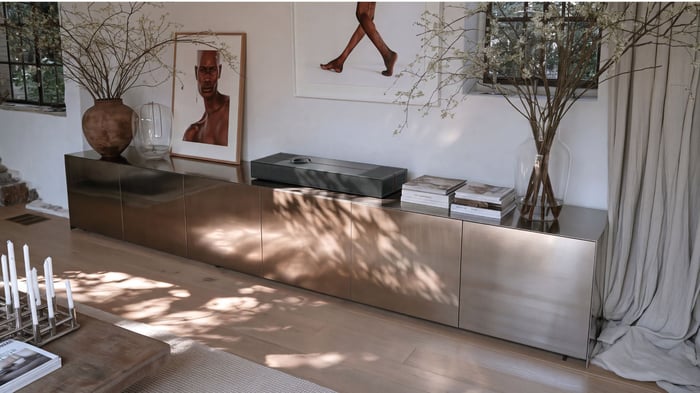
Naim Mu-so Utopia: A New Benchmark for Full-Fidelity Music



Naim Mu-so Utopia: A New Benchmark for Full-Fidelity Music
The Mu-so Utopia brings redesigned drivers, 720 watts of power, Dolby Atmos, and a more music-focused listening experience to Naim’s premium all-in-one speaker.
A Familiar Shape with a Fresh Ambition
Some speakers arrive quietly. Others walk into the room wearing a red trim and announcing that the all-in-one hi-fi game has just become a little more serious. The Naim Mu-so Utopia belongs firmly in the second group.
When the Focal Mu-so Hekla appeared as a powerful, highly rated addition to the family, it seemed reasonable to assume that the Mu-so range might settle in for a while. Instead, Naim was working on something more ambitious behind the scenes: an all-in-one speaker designed to carry the Mu-so name into a more refined, music-first era.
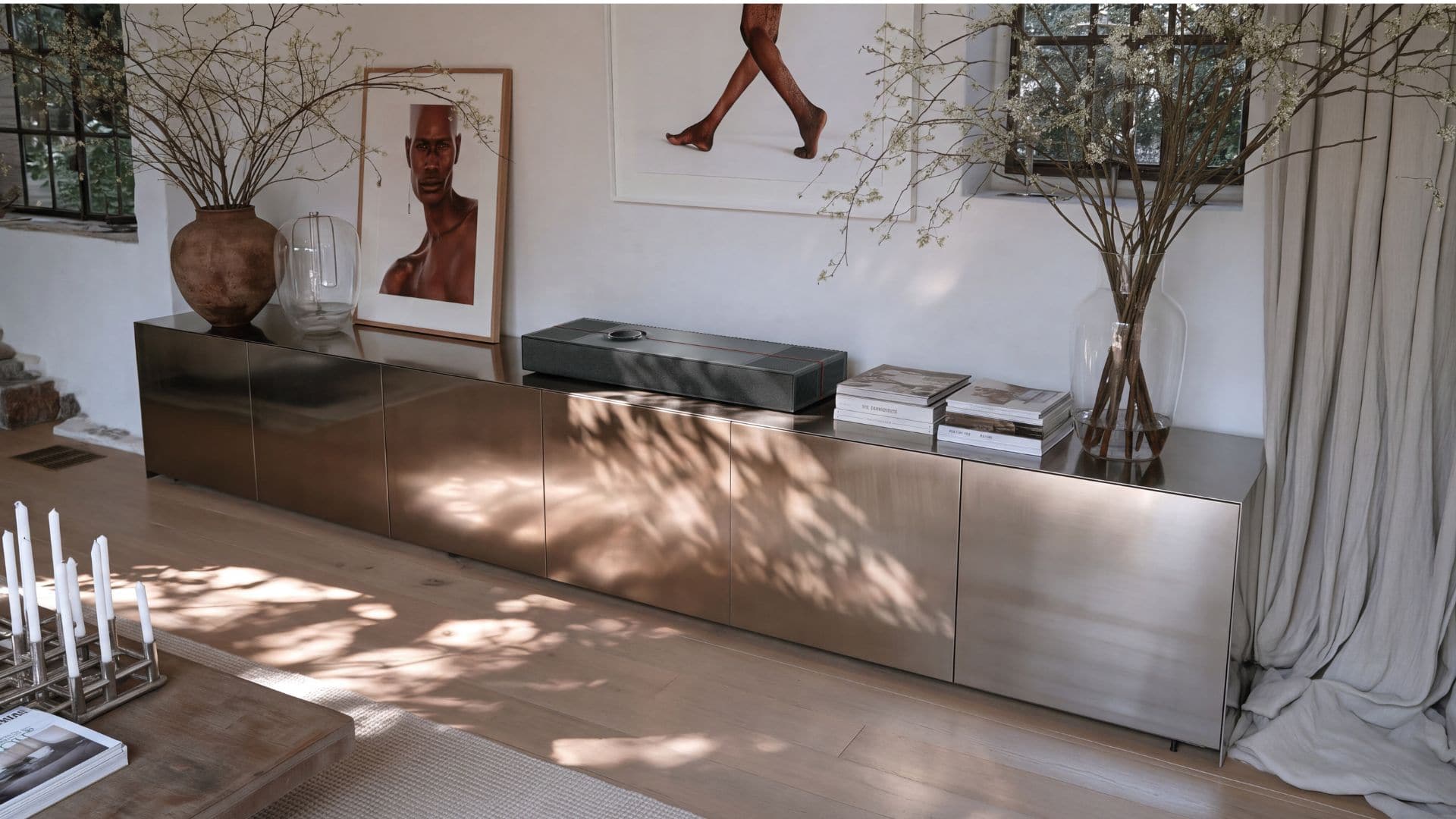
At first glance, the Mu-so Utopia shares much of the Hekla’s visual DNA. It has the same broad, substantial cabinet and the same sense that this is not a speaker you casually tuck behind a plant. But the similarities become less important once you look beneath the surface.
The new model features redesigned drive units, more amplification, and what Naim describes as the most sophisticated amplification ever developed for a Mu-so system. In other words, this isn’t simply a cosmetic refresh. The Utopia is intended to be a genuine next step for the range.
The Mu-so Utopia Puts Music at the Center
The name “Utopia” carries some weight here. It’s the first Naim Mu-so product to use it, while the name had previously been associated with Focal’s large active loudspeakers. That shift says plenty about the direction of the product.
Focal has increasingly explored AV and immersive audio, while Naim has traditionally concentrated on two-channel listening, amplification, and the character of recorded music. The Mu-so Utopia brings those ideas together, but its priorities are clear: it wants music to feel bigger, more involving, and more emotionally immediate.
The specification list is broadly similar to that of the Mu-so Hekla, including support for Dolby Atmos. However, the Utopia’s goal is not merely to create an impressive bubble of sound around the listener. It’s about making the experience of music feel more immersive without losing the directness and focus that serious two-channel systems aim for.
That distinction matters. A speaker can produce a wide soundstage and still leave music feeling oddly distant. Naim’s approach with the Utopia appears to be about giving recordings more room to breathe while keeping the signal path as clean and purposeful as possible.
New Drivers Give the Speaker a Different Voice
The largest changes are hidden inside the cabinet. Like the Hekla, the Mu-so Utopia uses upward-firing drivers to support Dolby Atmos. Yet the drive units themselves have been upgraded throughout.
Every driver in the Utopia is new compared with the Hekla. The speaker incorporates Focal-derived tweeters using new PRISM technology, along with a pair of midrange drivers featuring the distinctive “M” shape. That combination is intended to bring greater control and clarity across the frequency range.
The tweeter arrangement is particularly important for the top end. High frequencies can easily become aggressive when a system is pushed hard, especially in a large all-in-one cabinet. The Utopia’s redesigned approach is intended to keep the treble controlled while allowing detail to emerge naturally.
The midrange drivers, meanwhile, are responsible for much of the area where vocals, guitars, piano, and the body of a recording live. They’re the part of a speaker that can make a familiar song sound intimate—or strangely flat. Naim has clearly focused considerable attention on this section of the design.
The amplification has also changed. The Utopia combines Class D and Class A/B amplification, with the Class A/B section providing additional control over the higher frequencies. It’s a hybrid approach that gives the speaker plenty of efficiency while targeting a more precise, composed presentation where it counts.
“Incredibly over specc’d” amplifiers allow the midrange drivers to be “underdriven” and run at “very very sort of low distortion.” — Naim
That language may sound wonderfully technical, but the practical idea is straightforward. By giving the amplifiers more capacity than they strictly need, Naim can operate the midrange section with less strain. Less strain generally means lower distortion, especially when the music becomes dense or the volume starts climbing.
720 Watts Brings Serious Scale
Power is another clear dividing line between the two models. The Mu-so Hekla was capable of delivering 660 watts, while the Mu-so Utopia raises that figure to 720 watts.
On paper, that increase might not look enormous. In a real room, though, additional power can help a speaker maintain composure when asked to fill a larger space or reproduce demanding passages. It can also give music a sense of ease—the difference between a system that sounds loud and one that sounds effortlessly expansive.
The Utopia’s power supply has been upgraded from the unit used in the Hekla, and the amplifier design has been developed around the new driver arrangement. Naim says the updated configuration reduces distortion by approximately five times compared with the Hekla.
That claim is especially interesting because the Hekla was not known for sounding obviously distorted. If the earlier speaker already kept things clean, the Utopia’s refinements are about pushing that performance further rather than repairing a glaring weakness.
The overall result is a speaker designed to produce a larger presentation. The Mu-so Utopia can fill rooms of up to 50 square meters, compared with the Hekla’s stated 40-square-meter coverage. The number of speakers inside remains the same at 15, but the driver redesign and revised amplification are intended to make the whole system sound bigger and more capable.
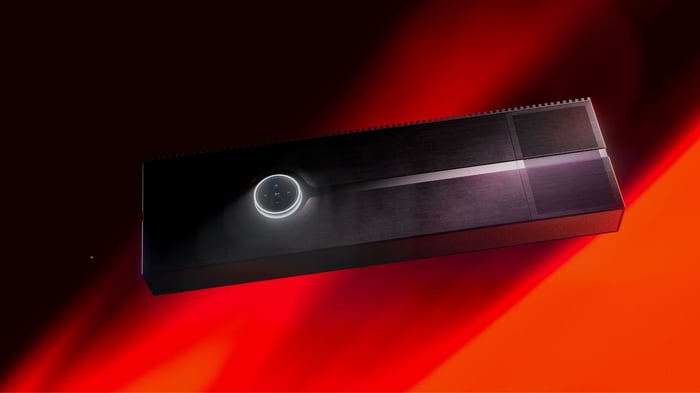
The Design Stays Familiar, with One Vivid Flourish
The Mu-so Utopia doesn’t completely reinvent the exterior. That’s probably a sensible choice. The existing cabinet has become part of the identity of the Mu-so family, and its substantial proportions help accommodate the built-in audio hardware.
There is, however, a sleek red trim that gives the Utopia a more distinctive appearance. It’s a small visual adjustment, but one that helps separate the new speaker from its siblings. The red accent feels less like decoration for decoration’s sake and more like a quiet signal that this is the flagship model.
The cabinet remains the same size, preserving the all-in-one concept. Naim has included a built-in subwoofer, which avoids the slightly awkward situation of buying an “all-in-one” speaker that still requires a separate bass unit to feel complete. The idea here is simple: one substantial cabinet, one integrated system, and no extra box taking up floor space.
That makes the Utopia a particularly practical proposition for listeners who want serious sound without assembling a traditional stack of components. It may be large, but it’s still a single system rather than a collection of separate boxes.
Streaming Support Covers the Modern Essentials
In terms of connectivity, the Mu-so Utopia carries over much of what made the Hekla versatile. It supports Google Cast, Spotify Connect, Qobuz Connect, AirPlay 2, Bluetooth, Tidal Connect, and Presto Music.
That gives listeners plenty of ways to get music into the system. You can use a streaming app, send audio from a compatible device, or connect through one of the supported platforms depending on how you prefer to listen. The range is broad enough to cover casual everyday playback as well as more deliberate high-resolution listening.
The speaker can also connect to a television through its HDMI eARC port. That makes the Utopia more flexible than a dedicated music system, especially for anyone who wants one premium speaker to handle albums, movies, television, and games.
Audio support extends up to 32-bit/384kHz WAV, along with DSD64 and DSD128. Bluetooth streaming remains available through SBC and AAC, while the higher-resolution formats are handled through the speaker’s broader network and digital connections.
Dolby Atmos is supported, too. But when playing conventional two-channel music, Naim says it can bypass Dolby processing. This creates a shorter signal path and is intended to reduce both distortion and unwanted coloration.
That choice should appeal to listeners who want Atmos when it’s useful but don’t want every stereo recording pushed through additional processing. Sometimes the best route between a great recording and your ears is simply the shortest one.
The Premium Upgrades Come with a Premium Price
There’s no getting around the most noticeable change: the price has risen significantly.
The Mu-so Hekla sits at £2,999, while the Mu-so Utopia is priced at £4,499, €5,000, or $5,500. That’s a substantial jump, and it places the Utopia firmly in premium territory.
The increase reflects more than the red trim. Naim has introduced entirely new drive units, upgraded the power supply, expanded the amplification, and worked to reduce distortion while increasing room-filling capability. Whether those improvements justify the difference will depend on how much value a listener places on refinement, scale, and having a complete high-end system in one cabinet.
Still, the concept is easy to understand. The Utopia is not positioned as a cheaper alternative or a minor update. It is the more ambitious, more powerful, and more music-focused member of the Mu-so family.
Conclusion
The Naim Mu-so Utopia takes the familiar all-in-one formula and pushes it toward a more serious level of performance. With redesigned drivers, hybrid amplification, 720 watts of power, broad streaming support, Dolby Atmos, and coverage for rooms up to 50 square meters, it aims to make music feel larger without losing focus.
For listeners who love the convenience of a single speaker but don’t want to compromise on detail or scale, the Utopia could be a compelling next step. Would you choose an all-in-one flagship like this, or build a traditional hi-fi system piece by piece?
FAQ
- What is the Naim Mu-so Utopia?
The Naim Mu-so Utopia is a premium all-in-one wireless speaker designed to deliver a more immersive and music-focused listening experience. - How much power does the Mu-so Utopia provide?
It delivers up to 720 watts of power, compared with 660 watts from the Mu-so Hekla. - Does the Mu-so Utopia support Dolby Atmos?
Yes. It uses upward-firing drivers for Dolby Atmos playback and can bypass Dolby processing when playing two-channel music. - What streaming services and platforms does it support?
Support includes Google Cast, Spotify Connect, Qobuz Connect, AirPlay 2, Bluetooth, Tidal Connect, and Presto Music. - How much does the Naim Mu-so Utopia cost?
The listed price is £4,499, €5,000, or $5,500.
If the Mu-so Utopia’s blend of bold design and serious music performance speaks to you, take a look at our favorite album cover posters for a tasteful way to bring that same love of music to your walls.
 | DISCOUNTGET 30% OFF*Use code on your next order:
|
* This post may contain affiliate links, meaning we earn a commission if you make a purchase through these links, at no additional cost to you.