Out the Mud Review: MudBaby Ru Turns Family Trauma Into Street Math


 See more Architeg Prints stories on Google.
Out the Mud Review: MudBaby Ru Turns Family Trauma Into Street Math
Out the Mud isn’t just grit—MudBaby Ru uses the album like a ledger, tallying loss, loyalty, and the cost of surviving West Memphis without pretending it’s poetic.
This album isn’t “from the mud.” It’s from the bridge.
You can feel the geography before you even start picking out punchlines. Crossing the Mississippi from Memphis takes minutes, but the mentality shift hits faster. Out the Mud plays like somebody narrating life from the Arkansas side—West Memphis energy, truck-stop sprawl, Memphis rap economy breathing over the water like exhaust.
MudBaby Ru opens with his world already crowded. The ad-libs—40 Boy ENT, Big 4BE—aren’t just branding; they’re like a committee in the room making sure nobody forgets who’s standing behind him. The dead are in the room too. Not in a “ghostly” way. In a “these names still run the conversation” way. The album keeps dragging the past into the present until “now” stops sounding like safety.
And yeah, I thought this was going to be another tough-guy sprint through familiar trap setups. It isn’t. Not exactly.
“Let’s Talk” is him admitting the family raised him—and also wrecked him
The turn on “Let’s Talk” is how normal the violence feels inside the family stories. Not normalized like he’s proud—normalized like it’s furniture. Granny’s there telling him to pull his pants up, and his mom is there too, still clocking him as her dad all over again. Ru comes off like he’s hearing that comparison and deciding, in real time, whether it’s love or a warning.
He drops the kind of detail you don’t invent because it doesn’t “sound cool.” He remembers being smart at school, then hits you with: residue under his dad’s fingernail from sniffing the bag. That’s not a metaphor. That’s a snapshot that stays gross in your head.
Even the extended family pops up like characters you didn’t ask for but can’t delete. There’s an uncle selling work “white enough” to make even a respectability-politics sermon start sweating. The point isn’t the joke—it’s that Ru’s world doesn’t separate “family man” from “dope man.” It stacks them in the same kitchen.
And that leads straight into the album’s core move: he refuses to pretend the origin story was heroic. It’s just the origin story.
The title track “Out the Mud” flexes, but the flex is basically a receipt
When Key Glock shows up on the title track hook, it lands like somebody stepping off a jet and still talking like they’re on the block. That contrast is the whole mood: elevation without emotional relocation.
Ru uses the hook’s shine as a frame, then fills it with family history instead of fantasy. One of the album’s most brutal lines isn’t even “violent”—it’s domestic:
“Pop cooked breakfast, Unc cooked coke / TT made spaghetti out the same pot.”
That’s not just dirt; that’s contamination. He’s telling you the house didn’t have “two lives,” a clean one and a dirty one. It had one pot.
He also slips in the kind of status detail that sounds like a victory until you listen closer: Camrys turned into a Bentley “on a truck somewhere.” Even success is being hauled, not driven. Then he circles back to “Let’s Talk” energy—still calling himself “a man on a truck” and not rich. That’s the album’s quiet theme: money might change the car, but it doesn’t automatically change the physics.
“Gun Class II” is a tutorial, and it’s not pretending to be art
“Gun Class II” is where Ru turns blunt into structure. The instructor voice introduces himself as Mud, takes an oath on life, and immediately pivots into legal panic—calling Fifth to plead a case in the same breath as the vow. That contradiction is the real lesson: rules exist, but they don’t apply evenly, so people start making their own.
The “instruction” is basically footwork choreography:
- right foot, left foot, step up, shoot.
And the guests stick to the bit without winking at it. Nardo Wick reframes shooters as barbers looking to chop a fro—funny for half a second, then you realize it’s him translating violence into a day job because that’s how casual it’s gotten. G Herbo whips something white and calls it Jack Harlow, which is the kind of throwaway absurdity that still reads like a threat: I can rename anything and it still sells.
Ru “fools his way to worse,” and that’s a real talent. He doesn’t escalate like a comic-book villain; he escalates like a guy telling you what happened this week.
He turns cruelty into routine on “40 Mo’ Reasons” and “Ridin Round”—and that’s the point
The album starts stacking scenes where empathy gets treated like an expensive add-on. “40 Mo’ Reasons” hits like a blistering dispatch—cold, efficient, like he’s trying to sound inevitable.
Then “Ridin Round” gets uglier in a different way. The neighbor finds a body and posts “Oh my God, I think he dead” on Facebook. That line sticks because it isn’t “rap shocking.” It’s real-life unseriousness. Death becomes content, and Ru doesn’t need to editorialize it—he just lets the stupidity sit there and stink.
Even on “Yumz,” which runs three minutes, he veers from Plan B chatter into describing his anatomy to Oscar Proud. I’m not going to pretend that moment is elegant—honestly, it’s the kind of bar that made me pause and go, really? But it also tells you something: this album isn’t trying to be classy. It’s trying to be accurate to a mind that can jump from danger to hormones in half a breath.
If there’s a weakness in Out the Mud, it’s that Ru sometimes reaches for shock when the story already hits hard without it.
“Black Truck” is paranoia with a headcount
“Black Truck” plays like a roll call of women he knows—except it’s delivered like a security briefing. He counts them down from four to three after watching who tried setting the game up. One had one of her brothers involved; another had someone reaching for a neck chain. It’s messy, specific, and suspicious in that way paranoia always is: part truth, part pattern-making.
The hardest part is how the track treats betrayal like weather. And the closing thought is basically policy:
If you get me scraped, we spinning behind that.
Not “if I die.” Not “if you kill me.” If you get me scraped. Even injury comes with an invoice.
That’s the album again: consequences as accounting.
“Car Freestyle” and “Skrilla Flow” finally let the grief talk—and it doesn’t sound proud
When Ru says names on “Car Freestyle”—Jayde, Lil B, Bezzal, CB—it doesn’t feel like a memorial designed for applause. It feels like he’s checking his own brain to make sure he didn’t forget anybody.
The verse is built on loyalty questions—who’s with who, who answered, who didn’t. Then he drops the image of watching Lil 9 die and warning anyone who wants to speak on it. That’s the first time on the album where I wasn’t sure what I wanted from him. Part of me kept waiting for reflection, some space, some breath. But he doesn’t give you that. He gives you enforcement.
“Skrilla Flow” hits even harder because it’s one verse, no chorus—no relief, no reset button. It arrives like first fire: immediate, hot, and kind of panicked underneath the control. He talks lineage before he even gets to “up” talk. He mentions being “up a fifty” before he ever says the word “up,” like he’s allergic to sounding celebratory.
Then there’s the fatigue—actual, human exhaustion:
- tired of running down opps
- tired of walking
- sick and tired of the strand making him tired
That repetition matters. This isn’t the usual “I’m tired” as a throwaway. It sounds like the lifestyle is eating his joints. On second listen, this became the emotional center of the album for me, even though it’s structured like a blunt weapon.
“IDK” and “AP Gold” flirt with repetition—sometimes too much
On “IDK,” PaperRoute Woo takes the final verse and repeats Ru’s opening verse word for word, including the “hundred G’s counted in sleep” idea—again, exactly. I get what this is supposed to signal: shared mentality, shared grind, crew symmetry. But it also drains momentum. The track already feels sparse before the repeat, and the copy-paste choice made me notice the emptiness more than the message.
“AP Gold” comes off like a single drawer pulled open: money, switches, a plug getting taken down—no house around it, no wider scene. It’s not a bad track; it’s just more like a list than a lived-in room.
If you like your street rap as clean inventory, you’ll call that “focused.” I call it slightly undercooked.
“300” is where the flex finally sounds like breathing
Then “300” fixes some of that by acting casual in the right way. Walking in the store like it doesn’t matter is its own kind of flex, and Ru sells that better than the louder triumph stuff.
He “ballin like Joker,” but Ru’s tone still suggests reciprocity—taking, returning, dealing with grown women who do business, mentioning a Presi that cost him fifty. The important part isn’t the watch; it’s that the details sound like he’s actually there, not narrating from a throne he rented for the verse.
This is one of the album’s sneakiest choices: the quiet flexes land better than the loud ones.
“Auto Mud” and “Love With a YN” are softer—without pretending he’s healed
“Auto Mud” drops in something that could’ve been corny in the wrong hands: his daughter already has racks, and his son is about to be born—Ru gives him speech before birth, basically telling him you’re next, your dad’s a Don.
It’s tender, but it’s also pressure. A blessing that sounds a little like a job offer.
He also gives a ten to his lil’ mans, then complains it went to clothes and women instead of bows. And then—this is the kind of moment I trust—he folds and admits the truth: he can’t tell him what to do with money he earned. That’s not “character development.” That’s just a guy catching himself before he turns into the kind of older dude he used to side-eye.
On “Love With a YN,” built on a Pretty Ricky sample, Ru leans into protection mode—jumping in front of trouble for a girl. He also claims he wouldn’t cry if she left, which sounds tough until you hear what comes after: he admits he’s not the guy for her, says she’s a star like the one in the roof, and when he’s sad he looks to the sky for her.
That contradiction is the whole song: I’m cold / I’m sentimental / I’m lying / I’m not lying. If that annoys you, you’ll hate the track. I think it’s one of the few places the album lets a feeling stay messy.
“Button” is the loud room where everybody talks at once—and Ru wants it that way
“Button” is a full room of sound: Kash, Mannie, lil’ Mike, Tony—and Tony has the beat up too loud. That detail is so specific it basically becomes a character trait. You can hear the chaos of too many people in the same space, everybody trying to be heard, nobody turning anything down.
Ru’s verse fills the room with hardware and memory:
- a fifty-round drum that could shoot all week
- fresh pin into a 5.56
- cooling kit on a ZPAP
- police raiding TT’s crib
- Unc hiding ice in the couch
It’s like he’s walking you through a house where every object has a charge. And at the end, he drops the money talk—rap money at 1.5, first million around twenty-two—not like bragging, more like finishing a sentence he started years ago.
Mannie holds the beat steady, lil’ Mike cranks something, and Tony still has it too loud. That’s the joke, if there is one: the album ends in the same environment it’s been describing—no neat exit, no cinematic fade-out.
Favorite moments that actually stick
Not “best songs,” just the parts that stayed in my head after the speakers stopped:
- “Let’s Talk” for the family snapshots that don’t try to flatter anybody
- “Black Truck” for turning paranoia into a countdown
- “Skrilla Flow” for the no-chorus pressure and the burnout confession
Conclusion
Out the Mud isn’t trying to persuade you that this life is admirable. It’s doing something colder: showing how a person can be surrounded by family, money, guns, grief, and still sound like they’re just reporting the day’s weather. I came in expecting a straight run of flexes, but the album kept yanking the camera back to the kitchen table—same pot, same history, different consequences.
Our verdict: People who like street rap that keeps the grief inside the bravado will lock into this album fast. If you need hooks polished like showroom chrome, or you want every track to “evolve,” you’ll get impatient and start blaming Tony for having the beat up too loud.
FAQ
- Is “Out the Mud” more about flexing or storytelling?
Storytelling, but it hides inside flex language—like he’s allergic to sounding vulnerable even when he clearly is. - What’s the most emotional track without trying to be emotional?
“Skrilla Flow.” One verse, no chorus, and the exhaustion lands harder than any sad piano would. - Does the album ever get romantic or soft?
Yes—“Auto Mud” and “Love With a YN” get surprisingly tender, but he still keeps one hand on the mask. - Any moment that doesn’t work as well?
The word-for-word verse repeat on “IDK” drags the energy instead of deepening the idea. - Where should I start if I’m new to MudBaby Ru?
Start with “Let’s Talk” for context, then “Black Truck” for tension, then “Button” for the full-room chaos.
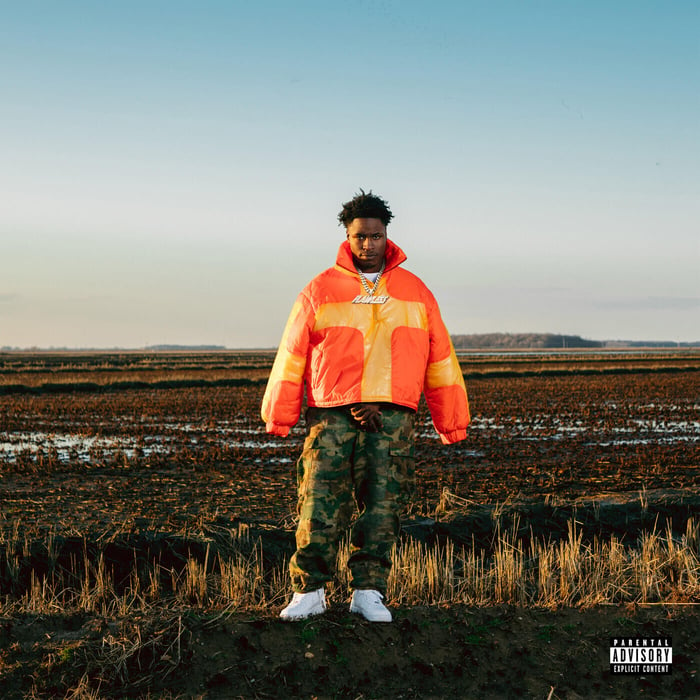
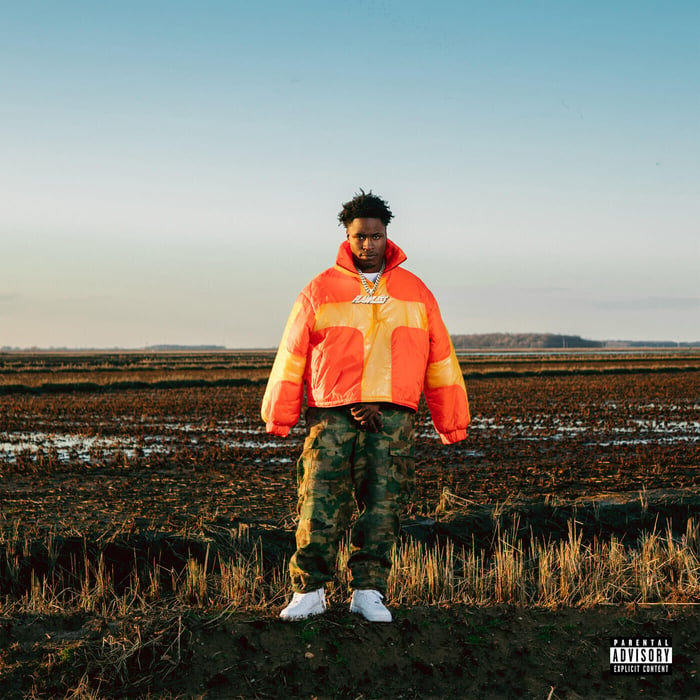
If this album’s cover is already burned into your brain, you can put it on a wall the same way you put a record on repeat—quietly, personally. Shop your favorite album cover poster at our store: https://www.architeg-prints.com
 | DISCOUNTGET 30% OFF*Use code on your next order:
|
* This post may contain affiliate links, meaning we earn a commission if you make a purchase through these links, at no additional cost to you.