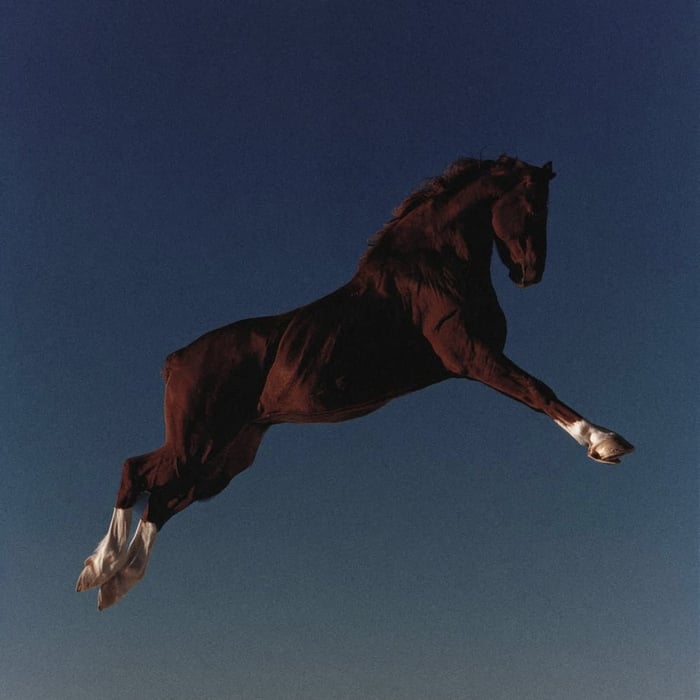
If I’m Being Honest: Dame Atlas Turns R&B Into a One-Man Courtroom


 See more Architeg Prints stories on Google.
If I’m Being Honest: Dame Atlas Turns R&B Into a One-Man Courtroom
If I’m Being Honest is Dame Atlas staging a messy trial of love, where he’s both the witness and the verdict—and the music dares you to argue.
The setup: this isn’t romance, it’s testimony
Male R&B used to show up with flowers and a guilt complex. Somewhere between the confessional era and the modern “I did what I did” era, that apology energy dried up. If I’m Being Honest lands squarely in the post-sorry world: Dame Atlas isn’t crawling—he’s building a case.
And he doesn’t even pretend it’s a balanced hearing. The whole album feels like it’s written to one woman, one looping situation: she blocked him, begged him to stay, left, came back. The important part is the camera angle—Dame keeps it pointed at her… until it doesn’t. He wrote and produced the whole thing himself, which matters because there’s nobody else to soften the edges or tell him, “Hey man, maybe don’t phrase it like that.”
The record’s real move is simple: it traps you in a closed room where only his version gets oxygen. That’s not “toxic,” exactly. It’s just… a very convenient way to tell a story.
Title track: he opens with questions, but they’re loaded
The title song, “if i’m being honest,” starts with questioning that doesn’t actually invite answers. He wonders where she’s been while he stayed right there—hurting like her, down like her. It sounds empathetic for a second, but you can hear the trapdoor under the sympathy. The questions are basically accusations wearing a polite shirt.
He lays it out clean:
- her ex was still a bum
- Dame was the difference
- she begged him to stay (even if she rewrites that memory now)
- promises, especially the “pinky” kind, don’t weigh anything once the relationship turns into a rerun
Then—credit where it’s due—he admits his own dirt at the end:
“I just been plottin’ on the low, low / Schemin’ on the low.”It’s not an apology, though. It’s more like he’s saying, fine, I’ll enter my flaws into evidence, now back to your crimes.
Even the compliments feel like scorekeeping. When he drops “face card like Angela,” it’s not tenderness—it’s inventory. Face like Angela Bassett, body like Jessica Rabbit, like he’s building a highlight reel to prove he loved her correctly.
The bridge is where the intent shows: she was supposed to be the “meet my mother” girl, the “take to the pastor” girl. That’s not romance; that’s a social contract. He closes by muttering that she’s hard to love, and the cursing slips in at the end like he couldn’t hold it back. It’s the first sign that the album’s “honesty” is going to be less confession and more controlled burn.
“second round”: the argument gets tired—and sharper
Here’s the pivot: halfway through, Dame stops swinging wildly and starts aiming.
On “second round,” he tells her to stop painting over her burns—burns people can see but never feel. That’s a nasty little observation, and it’s arguable in the way real fights are arguable: he’s not saying she isn’t hurt, he’s saying she performs hurt like it’s a lifestyle brand.
He also goes after her independence talk, picking at the pattern of every man being labeled toxic, as if the common denominator couldn’t possibly be her. And then he asks the question that sits under the whole album like a loose floorboard:
“You want chaos / I want silence / Do you love my noise?”
That’s the first time the record admits it might not be a villain-and-victim story. It might just be two people addicted to opposite kinds of turbulence.
I wasn’t sure on first listen whether that line was self-awareness or just a slick way to win the argument. On second listen, it sounded uncomfortably sincere—like he hates his own volume but keeps using it anyway.
“god don’t make mistakes”: he goes Biblical, and it gets ugly
“god don’t make mistakes” is where the album stops sounding like a breakup diary and starts sounding like a sermon delivered through clenched teeth.
He mocks baby shower pictures she took alone. He brings up two kids she had with a man who wasn’t there. He wonders what she was crying for. He insults her body. None of this is framed as “I’m hurt”—it’s framed as I’m right.
Then he lands on the theological flex:
“God don’t make no mistakes / I don’t make no mistakes.”That’s the line that tells you what this album is actually doing. It’s not trying to heal. It’s trying to justify.
And yeah, this is where the project briefly lost me. Not because artists can’t be harsh—they can. But because the certainty starts to feel like the point. The more he insists he’s flawless, the more I start wondering what’s being left out on purpose.
“super bowl sunday”: the drama turns cinematic—and self-incriminating
“super bowl sunday” starts like a scene: she calls him, the national anthem playing somewhere behind her life. She says she’s praying for protection, but Dame frames it differently—like she’s really praying her current man doesn’t find out what she’s doing.
And that man, in Dame’s telling, is a football player mid-warm-up. Meanwhile she’s in Dame’s car, mascara running on fourth down. It’s specific enough that you can smell the leather seats and panic.
Dame drops one of the cleanest contrasts on the album:
“He chasing rings / You chasing peace.”And he refuses to turn it into a pity party. Crying in a Rolls doesn’t fix anything. Next thing you know, she’s back in her ’02 Honda—status evaporated, reality intact.
Then he twists the knife with a “normal life” fantasy: she would’ve been better off with a librarian making sixteen an hour, reading at night. But she runs from good men because “good” feels scary.
And then—this is the part that matters—Dame flips the camera on himself:
“You’re addicted to chaos too / That’s why I pick up every time.”
For one moment, the prosecutor admits he’s also the getaway car. That single admission makes the whole album smarter than it wants to be, because it suggests Dame knows he’s not just describing dysfunction—he’s participating in it like it’s tradition.
Production choices: he wins by subtracting, not stacking
As a producer, Dame works with a pretty limited palette—sustained keyboards, patience, and space. His favorite trick is subtraction: he’ll pull the drums out under his voice and let a line hang there, unfinished, like he wants the silence to do the arguing.
That approach is a gamble. When it hits, it feels intimate—like you’re standing too close to someone’s private thoughts. When it misses, it can feel underbuilt, like he wrote the hook and decided that was enough architecture for one song.
The Pete Rango mix of “crying on the floor” pushes against Dame’s usual stop-start instincts. The pulse doesn’t pause even when Dame does. It’s basically dance music for a guy watching her dance through somebody else’s eyes—moving, but not invited.
“race ur mind” tightens his phrasing. The drums are busier than he usually allows, with high percussion ticking like a timer. He stacks brand names—Prada, Balenciaga—and even throws in Argentina like she’s Messi, which sounds like flex talk until you realize he’s pleading not to be the one who wastes her time or her mind. It’s a crowded song, and that crowding feels intentional—like anxiety dressed up as nightlife.
Two songs that sit still on purpose: “beauty and the beast of Calabasas” + “take it all”
Then the album dries up the motion.
“beauty and the beast of Calabasas” sits in a narrow space—bass notes placed separately, like footsteps in an empty house. Dame calls himself the beast alone in Calabasas and tells her to tell her mom she loves a bastard. And he doesn’t really build beyond that hook.
At first, I thought that minimalism was confidence—like he didn’t need to do more. Later, it hit me as a little too convenient, like he didn’t want to complicate the moment with details that might make him look worse.
“take it all” pleads for her to remember the ways he loves her, but he doesn’t hand her much to hold onto besides the plea itself. It’s emotional, sure, but it’s also vague in a way the album usually isn’t. For a record so obsessed with specifics—cars, promises, Sunday rituals—this one feels like he backed away from the real sentence.
“dame’s interlude”: love vow as end-times fantasy
On “dame’s interlude,” he promises to stand beside her while trumpets blow, the sky tears open, and they leave together hand in hand before the moon drowns in blood. It’s basically a love vow written with the vocabulary of Revelation.
He sings it softly, doubled, with the drums dropping out around him. It’s pretty in a haunted way. But the more you sit with it, the less romantic it feels. It’s not “I want forever.” It’s “I want the apocalypse, as long as you’re holding my hand.” That’s not commitment; that’s intensity addiction dressed as devotion.
“all eyez on me” and the sudden pill-sized void
Then “all eyez on me” hits and it’s startlingly short—under ninety seconds—and it feels like a door slamming.
He takes a pill to feel something. He wants hundreds thrown if he dies. He sees his daughter and everything he wants to give her. And then the other vision shows up:
“I see the killers / I’m gonna let it off.”
The brevity makes it worse—in the good way. It doesn’t resolve. It just flashes the thought and disappears. If the album is a courtroom, this is the moment where the defendant says something so raw the room goes quiet.
His daughter’s voice: “aaliyah’s intro” changes the weight of the record
Then his daughter appears—literally.
On “aaliyah’s intro,” she’s the small voice going through her school week over room noise: Crazy Hair Day, mismatched socks day, Dr. Seuss Day. She doubles back once she loses track, dead serious about her little details. Dame places her ahead of any note he sings, and it reframes everything.
Because suddenly the album isn’t just a fight with a lover. It’s a life being built while the adult drama keeps trying to light itself on fire.
I can’t tell if he included this to soften the record or to prove something about himself. Maybe both. Either way, it works—not as a “cute” moment, but as a reality check the album desperately needs.
“moody’s outro”: no drums, just questions and a life that won’t land
“moody’s outro” drops the drum grid entirely. Slow chords, stacked harmonies, and a sequence of questions that don’t sound performative—they sound like insomnia:
- “Will you always stay and love me?”
- “What if I spent my last?”
He says she fell for him long before he did. He used to be broke just to see her. Now he’s flying first class and staying high through all of it, and time moves so fast he doesn’t land anywhere.
That’s the sneaky truth of the back half: the album acts like it’s about her chaos, but it keeps revealing his drift.
“high horse”: the one time the honesty actually costs him
“high horse” starts with a long intro with no drums—just an arpeggio and his voice—like he’s clearing his throat before saying something he can’t unsay.
He drops a line that sounds like the album’s real thesis:
“I’ve been bleeding quiet / Just to keep you comfortable.”He describes what she calls “distance” as abandonment. He says she acts like an angel when the lights go on, hides the knives, tells God she’s innocent.
And then he drags God into it too:
“If God was watching / He looked away too.”
When the full drums finally come in, layered with background vocals, it feels like the song deciding to stand up. And the ending is surprisingly restraint-heavy: no hate, just a brutal kind of clarity. He says he finally sees her—and calls that the worst thing she’s ever done to him.
This is the only track where his “honesty” seems to hurt him more than it hurts her. And because of that, it’s the one that feels least like a closing argument and most like an actual confession.
Conclusion: he’s not asking for forgiveness—he’s asking to be believed
If I’m Being Honest isn’t a breakup album; it’s a self-authored trial transcript. Dame Atlas keeps trying to win the story, but the best moments are the ones where he accidentally admits he’s not just the injured party—he’s also the guy who keeps reopening the door.
The album works when the details are sharp (“super bowl sunday”), when the silence is used like tension instead of filler (“high horse”), and when his daughter’s voice reminds you there’s a real world outside this argument. It stumbles when certainty becomes a substitute for depth—because sometimes he sounds less “honest” than determined to be unchallenged.
Our verdict: People who like R&B that sounds like a late-night text thread turned into evidence will love this album—especially if you enjoy artists who implicate themselves just enough to feel human. If you want warmth, mutual accountability, or even a hint that the other person’s version might matter, you’re going to get irritated fast—and honestly, that irritation might be the point.
FAQ
- Is If I’m Being Honest fully self-made?
Yeah—he comes off as solo-written and solo-produced, and the control shows in how tightly the story sticks to his perspective. - What’s the album’s main relationship dynamic?
It circles one woman who blocked him, begged him to stay, left, and returned—Dame narrates it like a case he’s determined to win. - Which track feels most self-aware?
“super bowl sunday,” because he admits he picks up the phone too—he’s not just reacting to chaos, he’s feeding it. - Where does the album get heaviest emotionally?
“high horse,” because the honesty finally seems to cost him something instead of just bruising the other person. - Does the album ever break from the relationship storyline?
Yes—his daughter’s voice on “aaliyah’s intro” shifts the weight and pulls the listener out of the adult drama for a minute.
If you want something physical to match the album’s “exhibit A” energy, consider grabbing a favorite album-cover poster from our shop—it’s a neat way to frame the obsession without texting your ex.
 | DISCOUNTGET 30% OFF*Use code on your next order:
|
* This post may contain affiliate links, meaning we earn a commission if you make a purchase through these links, at no additional cost to you.