HUN Album Review: The Hu Go Mainstream (and It Mostly Behaves Itself)


 See more Architeg Prints stories on Google.
HUN Album Review: The Hu Go Mainstream (and It Mostly Behaves Itself)
HUN album puts The Hu’s Mongol grit on a tighter leash—bigger hooks, cleaner edges, and just enough throat-sung menace to keep it honest.
A record that wants to travel—without losing its accent
The Hu don’t sound like a band that’s trying to “break through” anymore. They already did that years ago, and HUN album feels like the next move: not louder, not weirder, but sharper. This HUN album plays like the group deliberately trimming the fat so the point lands faster—more direct song shapes, more familiar modern heaviness, and a steady undercurrent of native texture that keeps the whole thing from turning into generic alt-metal wallpaper.
At first, I thought the album was going to lean hard into the cinematic side—big horizon shots, long build-ups, the works. But as it unfolds, it becomes obvious the mission is simpler: get in, hit hard, keep the identity, and don’t apologize for wanting choruses people can actually remember.
“Warrior Chant” opens the gates, not the debate
The opener, “Warrior Chant,” doesn’t bother with subtlety. It’s basically a ritual that happens to be arranged like a metal track. The percussion and vocals run the show early, and the intensity isn’t “produced” so much as summoned. You can hear the escalation being assembled piece by piece: the initial pulse, then the heavier bass-drum and cymbal hits, and that throat-sung presence sitting in the middle like it owns the room.
What’s sneaky is how short the verses and choruses are. It’s not because they didn’t have more ideas—it feels intentional, like the band wanted the crescendo to feel inevitable instead of composed. When the full drum beat finally locks in, the horns that were lurking in the background step forward, and the vocals get nastier in a way that reads as commitment, not theatrics.
It ends without some grand twist, and honestly, that’s the point: this track isn’t here to impress you. It’s here to tell you what kind of air HUN is breathing.
“Lost Soul” is the big swing: English vocals, modern sheen, real risk
Then comes “Lost Soul,” and the album does something that’s either brave or slightly chaotic depending on your mood: it goes English, because it brings in Jonny Hawkins from Nothing More.
I’ll admit I hesitated when I realized what was happening. The decision has “label-friendly crossover moment” written all over it, and I kept waiting for it to flatten the band’s personality. But it doesn’t. Somehow, it works—mostly because the song commits to being the most mainstream thing here instead of pretending it isn’t.
The track leans into electronic-metal textures—synths, drum-machine-style punch, glossy momentum—rather than the more overtly tribal framework The Hu are famous for. The hook hits immediately with the chorus, then the first verse pulls back a bit, pairing Hawkins with Galbadrakh “Gala” Tsendbaatar so you get two vocal attitudes at once: Hawkins sounding clean and urgent, Gala sounding grounded and earthy, like he’s dragging the melody through gravel.
When the chorus returns, it’s backed by the full band instead of just the slicker electronic scaffolding, and that shift makes the hook feel bigger and catchier without turning it into radio mush. The second verse swings more heavily toward Gala, and that makes the next chorus land harder—same melody, more weight. The bridge brings the drum-machine feel back in, but it doesn’t stay sterile; traditional instrumental colors creep in and stop the song from feeling like a feature tacked onto someone else’s template.
“Shadow” proves they can thrash without losing the signature
“Shadow” is where the album reminds you The Hu can play fast and sharp without needing a guest vocalist or studio tricks to “modernize” them. The main riff is straight-up thrash-ready—tight, aggressive, and built to cut through a live mix. And the vocals don’t float politely on top; they slice through the heaviness like they’re trying to split the riff open and climb out.
The chorus is almost stubbornly simple, and that’s why it works. It doesn’t over-explain itself. It matches the riff’s directness and lets repetition do the damage. After the second chorus, there’s a short solo on the morin khuur—the instrument that’s basically a calling card for this band at this point—and it’s not just a novelty cameo. It’s the moment the song’s identity snaps into focus: yes, this is heavy, yes, it’s modern enough, but the center of gravity stays somewhere else.
Then the final chorus comes back and ends it clean. No endless outro, no cinematic padding—just impact.
Arguable statement: “Shadow” makes the case that The Hu don’t need long runtime to feel epic; they just need the right riff and that morin khuur bite.
“The Real You” is the speed-run flex (and Gala steals it)
“The Real You” is the album’s clearest example of what happens when The Hu push the pace and stop pretending they’re only about atmosphere. The main riff comes in with urgency, and the drumming underneath feels technical in a way that’s impossible to ignore—it isn’t just keeping time; it’s dragging the song forward like it’s late for something.
Just before the pre-chorus, the opening melody circles back, which sounds like a deliberate “don’t forget this hook” move. And honestly, it’s smart. The track is fast enough that you need those landmarks.
The real highlight here is Gala’s vocal performance in the chorus. He repeats the same line in different pitches, and instead of feeling like a trick, it feels like control—like he’s tightening a bolt with each pass. He keeps finding higher notes throughout the song, and it gives the chorus a sense of rising pressure rather than just repeating the same emotional temperature.
Then comes another standout: a morin khuur solo that actually sounds passionate, not just decorative. It’s the kind of playing that makes you lean in, even if you weren’t expecting to. Once it wraps, the chorus returns in that higher register and gives the track a neat, satisfying finish.
I’m not totally sure if this is the “best” song here, but it’s the one that made me sit up and stop multitasking. That counts.
Arguable statement: “The Real You” is The Hu at their most convincing when they’re being fast, not when they’re being “grand.”
The first half is a rush—then the long songs test your patience
By the time you’re through these early tracks, the first half of HUN feels downright electric: heavy but crafted, catchy without turning soft, and emotionally direct in a way a lot of alternative music only pretends to be. The album’s strength is that it doesn’t need you to understand every lyric to feel the intent—rhythm, tone, and vocal texture do the translation work.
But I’m not going to pretend everything hits the same. The longer, more cinematic songs (there are two of them on the record) take too long to reveal what they’re building toward. I kept waiting for the moment where the tension snaps into a payoff, and instead it sometimes just… continues. That slow-burn approach can work, but here it’s slightly underwhelming because the band has already proven—earlier on the album—that they can say more with less time.
On second listen, I softened a bit: the slower development does add ambience, and it does paint wider scenery. Still, when the shorter, faster songs are this effective, the drawn-out pieces feel like The Hu deliberately resisting their own best instincts.
Arguable statement: the album’s cinematic tracks don’t “expand” the record so much as interrupt its momentum.
Third album energy: they didn’t play it safe, they played it strategic
A lot of bands hit album three and clamp down—repeat the successful formula, iron out the weird edges, keep the brand intact. HUN doesn’t feel like that. It feels like The Hu making a specific bet: that they can move through more than one alternative sub-genre—thrash-leaning riffs, electronic-metal gloss, chant-driven intensity—without dropping the cultural thread that made them matter in the first place.
The result is a record that keeps their homeland’s musical atmosphere in the room even when the songwriting gets more mainstream. The album doesn’t beg for approval, but it clearly wants to connect beyond language—and it mostly does, because the band are arranging emotion, not just sound.
If there’s a contradiction, it’s this: the album wants to be more straightforward, but it occasionally forgets that straightforward also means knowing when to stop. When they keep it tight, they’re lethal. When they stretch, they sometimes lose the bite.
Artwork and release details (yes, this matters)
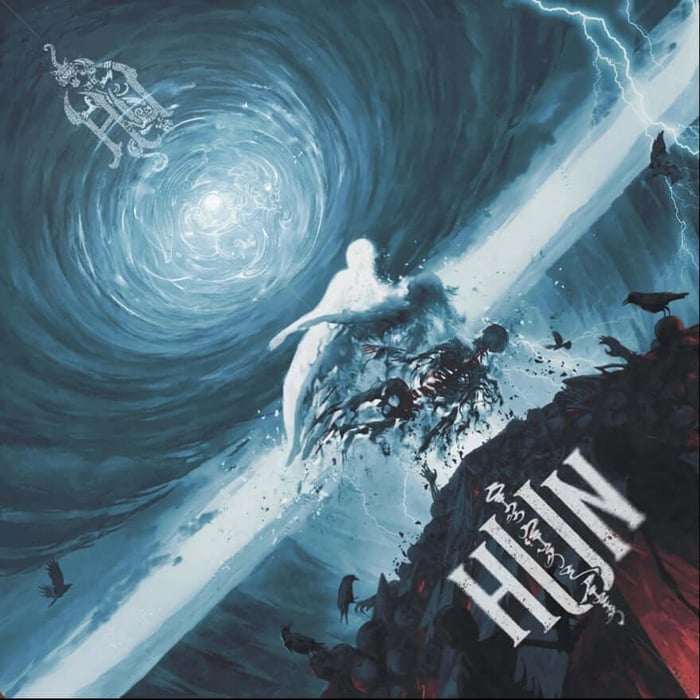
The cover looks like the album sounds: bold, centered, not shy about its identity.
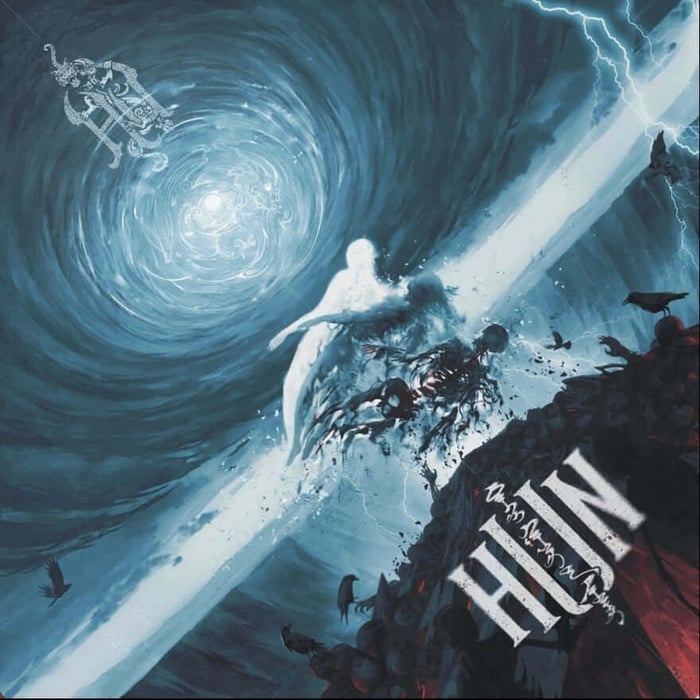
HUN is set for release on July 24 via Better Noise Music.
Conclusion: HUN tightens the screws, then dares you to call it “selling out”
HUN feels like The Hu choosing control over sprawl. It’s not them abandoning their roots—it’s them packaging that identity in ways that travel faster, hit harder, and stick longer. When it works, it’s the kind of heavy music that doesn’t need translation. When it doesn’t, it’s usually because the song takes the scenic route when the direct road was right there.
Our verdict: If you like heavy music with real cultural texture—and you don’t panic when a band writes an actual chorus—you’ll get along with this HUN album. If you only want the most traditional, ritualistic version of The Hu and treat mainstream structure like a crime scene, a few choices here will make you sigh dramatically into your headphones.
FAQ
- Is HUN a more mainstream album for The Hu?
Yes—especially on tracks like “Lost Soul,” where modern electronic-metal polish takes the lead, even while the band keeps their signature elements nearby. - Which song best represents the album’s intensity right away?
“Warrior Chant.” It’s a blunt opener that sets the atmosphere fast, with percussion and throat-sung vocals doing most of the talking. - Does the English-language feature on “Lost Soul” fit the band?
Surprisingly, yes. It’s a risky move, but the song commits to the crossover sound instead of diluting it, and the vocal contrast works. - What’s the standout performance moment on the album?
“The Real You,” particularly the chorus vocals from Gala and the morin khuur solo that feels emotional rather than ornamental. - Are the longer cinematic songs worth it?
They add scenery, but they take a while to develop, and the payoff can feel smaller than expected compared to the tighter, faster tracks.
If you’re the type who bonds with an album’s aesthetic as much as its riffs, you might want to hang it on your wall too—shop your favorite album cover poster at our store: https://www.architeg-prints.com
 | DISCOUNTGET 30% OFF*Use code on your next order:
|
* This post may contain affiliate links, meaning we earn a commission if you make a purchase through these links, at no additional cost to you.