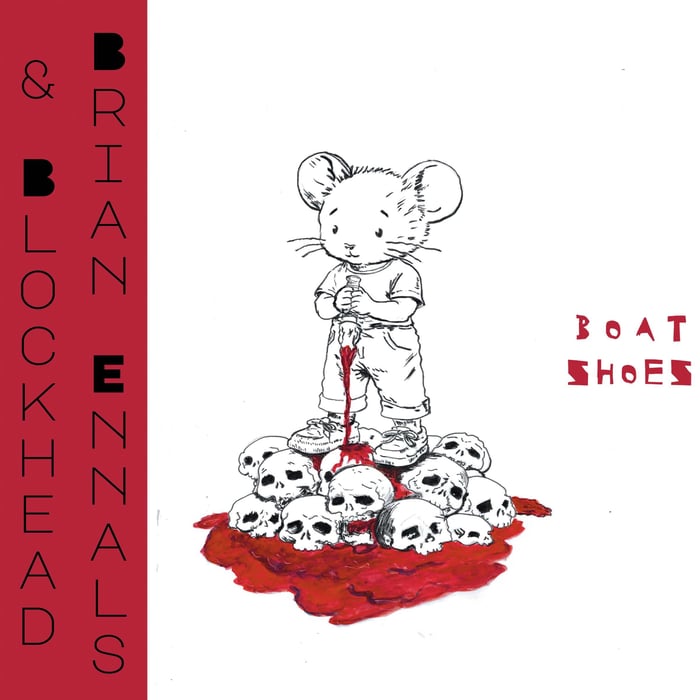
Boatshoes Album Review: Brian Ennals & Blockhead’s Brightly Lit Doom


 See more Architeg Prints stories on Google.
Boatshoes Album Review: Brian Ennals & Blockhead’s Brightly Lit Doom
Boatshoes album turns grim confession into funk therapy—then yanks the rug. It’s hilarious, ugly, tender, and (annoyingly) catchy.
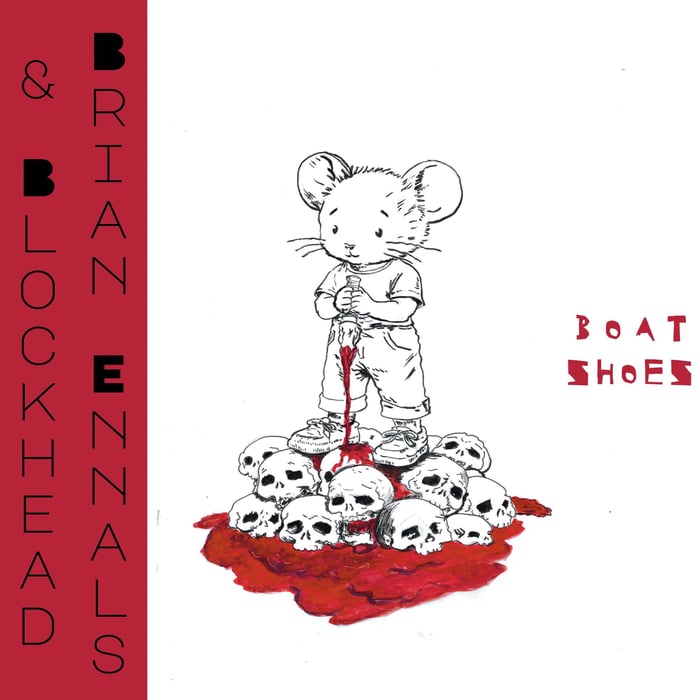
A record that smiles while it’s bleeding
This is the kind of album that hands you a neon cocktail and, while you’re sipping, quietly admits it’s been awake for three days and thinks someone’s outside.
The Boatshoes album doesn’t “balance” darkness with levity. It weaponizes levity. Blockhead keeps the lights on—bright synth lines, crisp breaks, funky movement—so Brian Ennals can say the bleak parts out loud without hiding behind aesthetic fog. And honestly, that contrast is the whole trick: the music acts like a party, the lyrics act like a police report written by a stand-up comic who’s not doing great.
Where Ennals is really coming from (and why it matters here)
Ennals doesn’t rap like he’s trying to graduate into a bigger city scene or a cleaner narrative. He sounds like someone who stayed put on purpose—like the point is to remain unpolished and unredeemable. He grew up in Severn, Maryland, went to Howard University, and earlier work with Infinity Knives came off ferocious and political, soaked in cheap liquor energy and fast, nasty wording.
What changes on Boatshoes album isn’t his appetite for scorched-earth confession. It’s the frame around it. Blockhead gives him beats that are noticeably brighter and funkier than what you’d expect for someone this committed to self-sabotage. A reasonable listener could argue the production is almost too inviting for what Ennals is saying. I’d argue that’s the point: the album wants you to dance so you don’t notice you’re agreeing with something awful.
“Aldente” opens the tab—and it’s overdue
The first real punch comes early on “Aldente,” where Ennals drops the sort of detail most rappers would sand down for brand safety: four credit cards in collection. No mythmaking, no motivational angle. Just debt as biography.
Then the song starts doing this weird push-pull: building a “brick wall high,” tearing it down, getting high off a funked-up synclavier vibe, letting a swampy harmonica solo slither through like it wandered in from a different, grimier song. Ennals claims he’s BB King mixed with Dr. Doom—which is absurd, but also annoyingly accurate as a self-portrait: blues ego + comic-book villain posture, both delivered like he’s daring you to laugh.
The ending is what sticks, though. He closes with spoken word that sizes him up and lands on a blunt read of the whole persona—being thanked for the steak and then getting tagged as:
“You’re just a big, sad, alcoholic bore.” — spoken-word voice at the end of “Aldente”
That’s not just a punchline. It’s the album slipping a knife into its own myth. A lot of rappers want to be complicated; Ennals wants to be caught.
“Smirnoff, via a Straw” is the anti-redemption arc
If you’re waiting for Ennals to tidy himself up, “Smirnoff, via a Straw” exists to spit in your face preemptively. He calls Nicolas Cage a genius, labels Jesse Jackson a snitch, and takes a flamethrower to Hamilton, calling it “the worst thing to happen to this country since slavery.” That line is designed to start an argument and then walk away mid-sentence.
But the real thesis is the one he drops like it’s a casual aside: even if the money comes, the misery stays.
He says, basically, don’t worry about a sellout moment—he’ll still be depressed when he’s rich. It’s such a deliberate refusal to perform growth that it loops back around into honesty. Not “relatable” honesty. More like: here’s the ugly contract, sign it or leave.
On my first pass, I thought the shock lines were there to distract from softer writing. On second listen, I’m not so sure. The provocation feels less like decoration and more like a defense mechanism: if he says the most unforgivable thing in the room, he doesn’t have to talk about the forgivable stuff.
“Roll Call” makes sobriety sound like a threat
“Roll Call” is where Ennals turns confession into a list of intentions, and none of them are heroic. He says he just left rehab—and immediately lines up what comes next: first get high, then lie, then tell everyone he loves that he really tried. It’s not a redemption story; it’s a premeditated relapse with stage directions.
The chorus is a self-intro that sounds like a mission statement carved into a desk with a razor:
“My name is Brian / And I’m from Severn / And I hate centrists / And I hate reverence.”
That last part matters. He isn’t just mad at politics; he’s mad at posture—at anyone who wants him to be polite, grateful, or inspirational. Some people will hear that and call it juvenile. I hear someone refusing to let “recovery” turn him into a brand mascot.
Then he swerves into dread: hell might be real, heaven probably isn’t, and his son is going to hear the harsh truth before he’s seven. And the detail that actually cuts deepest isn’t cosmic at all—it’s domestic and humiliating: his ex’s new man is a good guy, pays rent, takes her shopping, and isn’t too drunk to have sex. That’s the kind of jealousy you can’t dress up as philosophy, so Ennals doesn’t try. He just lets it sit there, souring the air.
“Wonderwall” and “Wet Noodle” turn sex into a symptom
“Wonderwall” keeps the self-poisoning mundane: he’s still smoking ports and dreading the day his mother grows old. No big metaphors, just the slow-motion horror of time doing what time does.
“Wet Noodle,” though—this one is a whole small tragedy disguised as a dirty story. The beat lays melancholic string samples under these oddly jubilant Tron-like synth colors, like the music is trying to keep things playful while the lyrics refuse. Ennals admits he did way too much to get it up, tried to cover by eating her out for an hour, and then went to the drawer for the strap. It’s a brutal little scene: performance, panic, compensation, props.
The chorus splits his year in half like a bleak calendar gag: “Zaza in the summer / Depression in the winter.” He does all the lines, she wants another, and he rides home in an Uber at 5:49 a.m. watching the sun start to shine. That sunrise detail is nasty because it’s so ordinary—like the world is fine, the birds are singing, and he’s still stuck being himself.
If I’m nitpicking, this is where Ennals sometimes overplays the shock value. Not because it’s “too much,” but because the vividness can flatten into a familiar posture: the guy who keeps proving he’s a mess. Still, the track works because the beat refuses to moralize. Blockhead just keeps it moving.
Political targets, paranoia, and Blockhead’s specialty
“Pass the Yayo” is Ennals going straight at Senator Cory Booker, calling him “a piece of shit.” The production snaps—insistent synth lines, hot guitar licks, sharp drum breaks—like Blockhead is underlining every accusation with a highlighter that also functions as a weapon. You can disagree with Ennals’ take (plenty will), but you can’t say it’s halfhearted. The performance is a scathing sprint.
“Signed Sealed Delivered” gets darker in a more cartoonish way: Ennals claims he and others stock cyanide pills—“so we die with nothing”—and lays out heist fantasies like a massive Target looting. He even promises to “sign and seal and deliver” Charlie Kirk’s mail to him, which sounds petty until you realize pettiness is one of the album’s main fuels.
Then “Soy Boy” unloads on Bernie Sanders (“useless”), swings at K-pop (“blackface”), and even calls his grandmother a liar for telling him there were souls. It ends with pig-shooting advice and a marksmanship tip—hold it steady—after earlier lines where he insists someone is trying to kill him, that he wakes up paranoid and scared for his life.
Here’s where I hesitate: I can’t tell how much of the paranoia is literal and how much is Ennals turning anxiety into a character who can narrate the album. Either way, Blockhead is the perfect producer for this headspace. He’s been the go-to for paranoid men for years—Aesop Rock, Cage, Murs, Illogic, Armand Hammer—and Boatshoes album might be the clearest example of why. Blockhead doesn’t just score dread; he gives it structure.
“Let It Burn (like Usher)” is romance at the end of everything
This is the song that surprised me most, mostly because it’s the closest Ennals gets to romance—and it’s set in the middle of buildings turning orange, then red, then exploding with people screaming as blood drips down onto the bricks.
A couple watches the destruction like it’s a date with a terrible view. The guy has makeup all over his shirt from his girlfriend. He sings: “It goes one by one and two by two / A couple more bombs and we’ll all be through.” And they promise each other they’ll go to meetings and not relapse.
But it’s obvious—at least it felt obvious to me—that twelve steps won’t save them. The vow is touching because it’s doomed. Ennals makes love sound like mutual sabotage with nice lighting. And the nasty genius is that it could be about a lover or about the bomb itself—the thing he can’t stop wanting even as it ends him.
“Yellow School Buses” and the posse cut: cartoons on chemicals
“Yellow School Buses” throws you into a chorus handled by Mikie Mayo, vocals getting increasingly frantic. The imagery is chemically bright: Lisa Frank nosebleeds, favorite cartoons on a lot of Adderall, little orange strips pressed cheap by the dozen. It’s childhood iconography turned into a stimulant fever dream.
Ennals answers with Skeletor cranking meth and He-Man doing poppers—then drops three possible outcomes like a guidance counselor from hell: “Jail, death, mental wards.” Defcee jumps in with a surreal high-school bathroom scene—Day-Glo vapes posed on chrome toilet-paper holders, orange peels or pills of every color in the trash. It’s grossly specific, which makes it believable in that way nightmares are believable.
Then you get “Now That’s What I Call a Posse Cut vol. 87,” with Ennals, Curly Castro, Fatboi Sharif, PremRock, and DeathIRL. Ennals bookends it, and the images go full horror-movie: he’s got a handgun, he’s sawing open a chest with an electric saw to reach a dead father’s heart, and he feeds it to his sad, lost dog. DeathIRL ends on a line that feels like the only clean air in the room: “I just wanna be free.”
A reasonable person could argue the posse cut is too packed—too many voices, too many angles. I get that. But the overload feels intentional, like the album briefly turns into a crowded group chat of the damned.
“Shyne” is the closest thing to hope Ennals allows
For some reason—maybe because it’s safer—Ennals saves his best writing for a little girl on “Shyne.” He paints her as celestial, piercing through clouds, sticking around even after the apocalypse, coming back stronger. He asks to be with her as long as she’s around. That’s basically the whole love song.
And then he immediately undercuts it with the real life: “Death is easy as fuck / It’s hard being alive.” That line doesn’t feel like a clever quote; it feels like the plainest thing he’s said on the whole record. He admits he’s been numb so long he mistook numb for healing. That one landed on me late—I didn’t clock it at first because the album trains you to expect a punchline.
His mother’s advice shows up like a quiet timestamp you can’t argue with:
“Slowly, the time don’t stop.” — Brian Ennals’ mother (as quoted on “Shyne”)
So Ennals leans into the surreal, the dreamlike. He namechecks Salvador Dali and imagines himself four-wheeling toward the light. It’s not “optimism.” It’s more like a tiny exception he grants himself—one human figure who isn’t being dragged for sport.
Conclusion: what Boatshoes is actually doing
Boatshoes album is Brian Ennals standing under bright, funky lighting and refusing to let you call his darkness “a phase.” Blockhead doesn’t soften him—he frames him, like putting a snarling animal in a glass room so you can’t pretend you didn’t see it. The jokes hit because they’re not escapes; they’re admissions. The political swings are messy on purpose. The tenderness shows up like contraband. And the album’s ugliest moments keep circling back to a simple idea: it’s easier to burn everything than to sit still and feel time passing.
Our verdict: People who like rap when it’s raw, specific, and kind of socially dangerous will love this—especially if you enjoy Blockhead turning paranoia into something you can nod your head to. If you need your albums to offer lessons, healing, or even basic emotional manners, this will feel like getting stuck in an Uber with someone oversharing at 5:49 a.m. and, yes, that’s the point.
FAQ
- What is the core vibe of the Boatshoes album—dark or upbeat?
It’s upbeat on purpose so the darkness feels unavoidable. The funk isn’t comfort; it’s contrast. - Does Blockhead’s production change Brian Ennals’ usual approach?
The writing stays brutal, but the brighter, crispier beats make his lines land sharper—like insults delivered in sunshine. - Is this album political, personal, or both?
Both, and it refuses to separate them. The politics come out as personal disgust, not polite commentary. - What tracks best represent the album’s range?
“Wet Noodle” for bleak intimacy, “Smirnoff, via a Straw” for scorched humor, and “Shyne” for the rare open window. - Is Boatshoes an easy listen?
Sonically, it can be weirdly catchy. Lyrically, it’s not here to tuck you in.
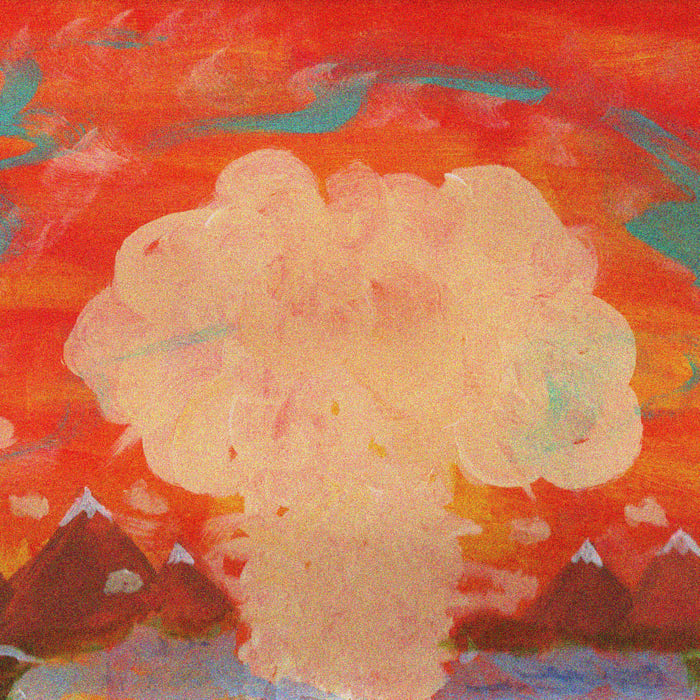
If this record’s cover is stuck in your head the way the choruses get stuck in your teeth, you can always grab a favorite album cover poster from our shop and let your wall take the emotional damage.
 | DISCOUNTGET 30% OFF*Use code on your next order:
|
* This post may contain affiliate links, meaning we earn a commission if you make a purchase through these links, at no additional cost to you.