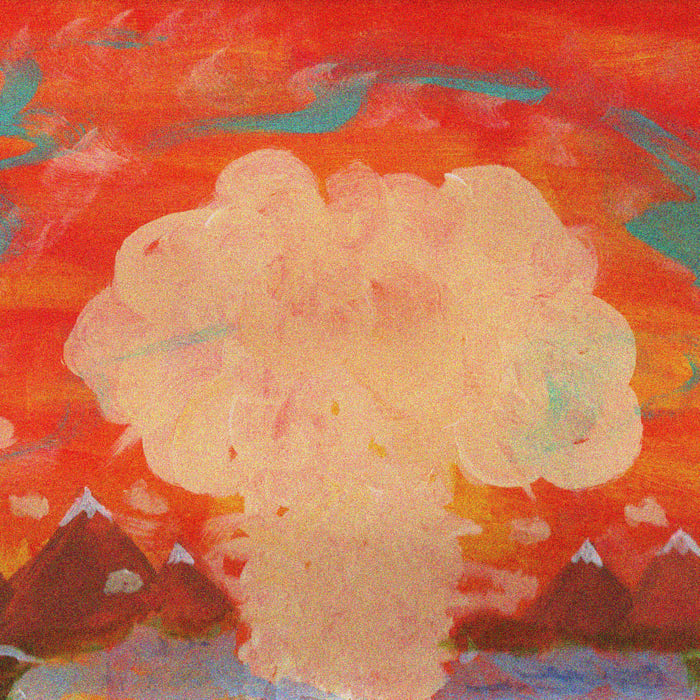
Atomic Justice Review: AJ Suede’s “Headquarters Rap” Isn’t Here to Hug You


 See more Architeg Prints stories on Google.
Atomic Justice Review: AJ Suede’s “Headquarters Rap” Isn’t Here to Hug You
Atomic Justice turns self-made rap into a dry, focused manifesto—like memos fired off from a one-room HQ with the door locked.
A One-Room HQ Where Everything Gets Made (and Judged)
There’s a certain kind of confidence you can’t fake: the kind where you don’t “perform” so much as state your position and move on. Atomic Justice feels built in that mindset. One person in one small room, doing the whole job—writing, chopping, rapping, mixing, mastering—then stamping it with a name like Suede God as if that’s just the obvious job title.
What’s striking is how little he seems to care if you’re “with him” emotionally. The raps arrive in short blocks—thought-units. Not big stage monologues. More like clean statements pushed across a desk at company headquarters. And yeah, I’m making that sound sterile, but it’s not lifeless—it’s deliberate. The album’s whole posture is: I’m minding my business. Your confusion isn’t my problem.
That alone is an arguable choice. Plenty of listeners want their rap to sweat a little. This album mostly doesn’t.
“Billed Gates”: The One-Rhyme Complaint Box, Emptied All at Once
The first time “Billed Gates” rolled in, I thought: okay, here comes the usual industry whining. But he doesn’t whine—he inventories. One rhyme sound, locked in, like he’s refusing to give you the luxury of variety while he lists what he’s disgusted by.
He takes swings at the culture’s costume jewelry:
- jokers acting like philosophers
- extras chasing Oscars
- critics getting cozy with the studios they’re supposed to review
That last one lands because he doesn’t dress it up. He just drops it like a fact of weather: this is the climate, deal with it.
And then the closer is the flex that’s actually a job description: he directs, produces, and writes the screenplay for his own “movies.” That’s not a cute metaphor here—it’s the thesis of Atomic Justice: autonomy as a survival skill. If you’re waiting for a label co-sign or a big cast to carry you (he even swats away the idea of being “carried”), you’re already losing.
I’m not totally sure the one-rhyme constraint makes it more listenable, though. It’s impressive, but it’s also intentionally boxed-in—like he wants the walls to prove a point.
“Strawng” and “Sin Tax”: Craft as Routine, Not Redemption
After that, “Strawng” shows up like a dojo oath. The loop is thin and dry—almost aggressively so. This isn’t “lush production,” it’s a stripped mat you’re expected to train on. The movement comes from his voice, from the way he places the bars.
There’s a line that basically says: if you’re talking about a “return to form,” you must’ve left your form behind. And then he underlines the idea with an image of doing katas since childhood—like muscle memory, not inspiration.
That’s an arguable stance: treating rap skill as daily discipline instead of creative lightning. It makes the album feel stable, but it also risks making some tracks feel like demonstrations instead of experiences.
“Sin Tax” pushes that further. It’s written like case law—autonomy means you ignore everything, including trends. The backing is basically kick, snare, loop, voice. No extra frosting, no hook built to rescue the track. If you came for a triumphant “get-back song,” he refuses to manufacture one. The get-back is just… continuing. That’s the flex.
Mild criticism: this is where the album’s minimalism can start to blur. The restraint is the point, but restraint can also flatten momentum if you’re listening straight through and hoping for a bigger swing.
“Able to be Kane”: The ‘80s Feeling, Rewired for RAM
Then the album gets more pointed—like the same calm voice suddenly decides to stare directly at the power grid.
“Able to be Kane” has him saying the ‘80s must’ve felt like something like this, with Uncle Sam as the plug. He takes that vibe—state power, supply lines, controlled highs—and translates it into modern resource addiction: terabytes of muscle memory, RAM as the new cocaine. It’s a smart line because it’s not just “technology bad.” It’s: we’ve found new ways to get hooked on capacity.
The loop here hits harder than the surrounding tracks, and you feel him notice it—quick line returns, sharper pivots. He drops in everyday grief too, like regretting the pre-pandemic price of chicken wings. That detail matters because it’s petty in the way real frustration is petty. And he wonders why the nastiest comments come from people with scripture in their bios—another small observation that somehow explains an entire internet.
This track convinced me more than I expected. At first I pegged the album as pure craft exercise, but “Able to be Kane” made it clear he’s building a worldview, not just a skill showcase.
“Thrilla Bark” and “Wrawng”: Resentment Turned into Fuel
“Thrilla Bark” keeps the resentment but plugs it into infrastructure—power grid energy, Tesla recharge imagery, the feeling of being kept underwater by economic policies. The bitterness isn’t theatrical. It’s practical: a kid raised on meritocracy gets handed a pay-to-win reality instead.
That’s a spicy claim to build a song around because it’s easy to sound like you’re reading slogans off a poster. He avoids that by staying specific in his tone—he’s not rallying a crowd, he’s reporting from inside the disappointment.
“Wrawng” is even more minimal. It’s pure Monday-to-Monday declarations sitting in a tight pocket. No dramatic crescendos—just pressure. And the vow in it is the one that actually stings: pressure won’t force him to kneel, but pressure might force someone else to steal. That’s the closest the album gets to empathy without breaking its posture.
If you think rap should “open up” more, you could call this emotionally stingy. I’d argue it’s emotionally honest in a different way: it refuses to pretend pain makes you poetic.
“Tego Cal”: Naming Names, Roasting the Empty Calories
“Tego Cal” goes after the media by name and by nutrient deficiency—no soul, not enough magnesium. It’s a ridiculous way to phrase it, which is why it works. He’s basically saying: the content diet is making people sick, and everyone’s pretending it’s fine.
The loop is filtered and foggy, with empty spaces that feel intentional—like he’s leaving room for the targets to step forward and take their hits:
- podcast lobbyists
- creative players in the Twittersphere constructing egos
- rappers dismissed as Mickey Mouse and Bugs Bunny
And then, in the same breath, he salutes his African Taínos spread across the Caribbean. That pivot is the album in miniature: complaint, cultural critique, then identity—handled not as a “moment,” but as a baseline fact.
Arguable take: the foggy pocket is the best possible production choice here because it mirrors the “scrolling past slop” feeling—half-seen, half-ignored, always there.
“Gol D. Rajah”: Ego Death as Workflow Optimization
“Gol D. Rajah” is where the album turns psychedelics into a closed chapter. A week of tabs washed down with shroom tea until ego death made further use unnecessary—psychic powers kept around only to unlock doors.
That’s a wild run of imagery, but he treats it like a pragmatic report: tools were used, results achieved, moving on.
He calls himself a cook by profession here, and it’s not just a cute line. Every rap comes out like a dish served fast: short loop, steady pattern, no “preparation” theatrics. He’s not romanticizing creation. He’s turning it into labor.
I’m slightly unsure whether that’s inspiring or bleak. Maybe it’s both. The album never pauses to clarify, which is sort of the point.
“Ghost Dawg”: Knives, Vows, and the Underground as a Universe
“Ghost Dawg” brings in Figerson, and the contrast is sharp—no pun intended, but also yes, pun intended. Figerson raps about a knife the way other rappers brag about chains. The knife stays in hand the whole verse, like a loyalty test that never ends. It’s all vows, renewal, energy harvesting, underground permanence—wrap your art in something durable.
The beat behind them is dark with ghostly fragments floating around—like torn film strips drifting through smoke.
Suede’s response is cinematic and coded: Kurosawa films, koi fish tattoos done long-needle traditional, a sun salutation on the roof like the Ghost Dog archetype, Bushido code intact. He turns the whole track into a personal rulebook without sounding like he’s giving a lecture.
Arguable statement: this is the album’s most vivid collaboration because it forces Suede to show his symbols instead of just his arguments.
“Lifting Gravity” and “A$AP Baki”: Elbows Out, Then the Coldest Voice Wins
Phiik shows up on “Lifting Gravity” rapping with elbows—syllable-heavy, like mad cow rapids. He talks mission failure and indie-scene grind resentment, calling out the rappers who didn’t actually like the work. It’s the kind of verse that tries to outrun you, daring you to keep up.
Suede comes in more relaxed, but he loads the lines: referees fixing games you could’ve bet on, dopamine hits that make you spend your bread. That’s the album again—power structures and personal weakness in the same breath.
Then “A$AP Baki” happens, and Mary Sue flat-out steals the air. Suede opens genuinely puzzled at people who try every drug but still fear weed, then flips it—he admits he’s the opposite, afraid to take speed, street or prescribed. That admission matters because this album doesn’t hand out many.
Mary Sue answers cold. Her weapon is her words—blunt, clubbing, escalating her vantage every time she gets a floor. She asks what your substance of choice is, whether you want to remain important, and closes with ears cut off and worn like neck ornaments. It’s vicious, but it’s controlled vicious—she doesn’t rant, she aims.
If someone says this is too harsh, I’d disagree. The harshness is the clarity. The album’s whole world is consequences.
“Rolling Cutter”: When “Let the Music Talk” Stops Working
“Rolling Cutter” has the line that cuts through all the title-reign talk: he tried to let the music talk, but it’s not enough these days. That’s the confession that explains the album’s bluntness. He’s not being direct because he can’t be subtle—he’s being direct because subtlety gets ignored.
The drum pocket here works harder than nearby songs, repeating the phrase and snapping back to the vocal like it’s determined to make you hear it. He talks unifying belts, whipping rappers like Wu-Tang, scamming them like Johnny Dang—then pivots into the neighborhood library like it’s the same room.
Nas reads like scripture in his hood. Juelz and Lil Wayne get shelved together with him. He remembers running down numbers on the avenue. The title defense and church service share the same drum pattern, and he sounds equally comfortable doing both. That’s not accidental—he’s telling you canon and hustle belong on the same shelf.
Arguable take: “Rolling Cutter” is the album’s true center because it admits the problem—attention economy—without begging for attention.
Where I Landed (Including the Tracks I Keep Replaying)
By the end, Atomic Justice feels like a self-contained operation with strict policies. It doesn’t chase your approval. It doesn’t widen the mix for comfort. It assumes the listener can keep up—or can leave.
I will say this: I kept waiting for a bigger hook payoff in a few places, and the album basically shrugged at that desire. Sometimes that shrug reads like discipline. Once or twice, it reads like stubbornness.
Still, the tracks I keep circling back to are the same ones that show the album’s range without changing its rules:
- “Ghost Dawg”
- “Able to be Kane”
- “A$AP Baki”
They’re the moments where the ideas sharpen into scenes instead of just statements.
Atomic Justice doesn’t try to be your friend. It tries to be right, and then it dares you to argue back. That’s why it sticks: not because it comforts, but because it keeps its posture even when you don’t.
Our verdict: People who like lyrical discipline, minimal beats, and rappers who sound like they’re filing a report from inside the culture will actually like Atomic Justice. If you need big hooks, warm choruses, or music that “opens up” and holds your hand—this album will politely ignore you and keep walking.
FAQ
- What is the core vibe of Atomic Justice?
Controlled, self-made, and blunt—short thought-blocks over lean loops, like memos from a one-person headquarters. - Does Atomic Justice have hooks and big sing-along moments?
Not really. It chooses clarity and routine over catchiness, and that’s either refreshing or maddening. - Which tracks best represent Atomic Justice?
“Able to be Kane” for the modern-resource addiction angle, “Ghost Dawg” for the cinematic code, and “A$AP Baki” for the coldest feature moment. - What’s the album’s main target?
A mix of industry fakery, media emptiness, internet ego-building, and the way power systems rig the game while everyone pretends it’s “merit.” - Is Atomic Justice more about craft or emotion?
Craft first—but emotion leaks through in resentments, confessions, and pressure-test lines rather than big cathartic releases.
If you’re the type who treats album art like part of the ritual, you can always grab a favorite album cover poster for your wall at our store — it fits the whole “headquarters aesthetic,” honestly.
 | DISCOUNTGET 30% OFF*Use code on your next order:
|
* This post may contain affiliate links, meaning we earn a commission if you make a purchase through these links, at no additional cost to you.