S.K.A.T.E. Album: Rylo Rodriguez Treats Silence Like a Loaded Weapon


 See more Architeg Prints stories on Google.
S.K.A.T.E. Album: Rylo Rodriguez Treats Silence Like a Loaded Weapon
Rylo Rodriguez’s S.K.A.T.E. album turns “don’t talk” into a whole worldview—funny, paranoid, grieving, and weirdly tender when it counts.
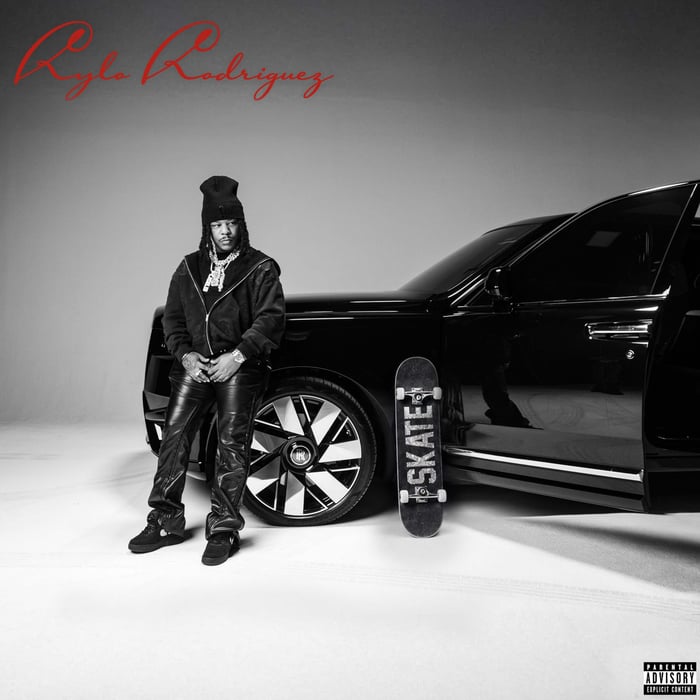
Courtesy of Glass Window Entertainment/Motown Records.
The hook: this isn’t “mysterious,” it’s tactical
Some rap albums want you to hear the pain. This one wants you to watch Rylo hide it in plain sight, like a guy talking to you while checking the exits.
The whole S.K.A.T.E. album runs on a specific Mobile, Alabama logic: talking costs money, safety, freedom, pride—pick one. And Rylo doesn’t just repeat that like a slogan. He builds the entire record around the idea that silence isn’t a vibe, it’s a strategy. Even the title spells it out: Silence Keeps All Targets Exposed. That’s not poetry. That’s a rule.
Mobile rules: the quiet guy isn’t peaceful—he’s keeping receipts
Here’s what hits first: Rylo raps like someone raised on consequences. The album keeps circling the Roger Williams Housing Projects energy where everything you say becomes evidence later. He doesn’t romanticize it either. He narrates it like it’s weather.
You can feel how he came up on remix instincts—taking something soft and popular (like flipping Mariah Carey’s “Always Be My Baby” into “Project Baby”) and turning it into a street document. That move matters because it explains his whole gift: he can turn almost any material into a report from inside the walls. He later locks in with Lil Baby’s 4PF, and by the time you get to this fourth studio album, it sounds like he’s done flexing just to flex. Now he flexes like someone who’s tired of attending funerals but still has to act like money means something.
Arguable claim: this album isn’t “street rap realism”—it’s Rylo trying to control the narrative before the narrative controls him.
“Stir”: the song that teaches you how to listen to the album
Coming out the gate with “Stir,” Rylo doesn’t act like the star of his own life. He acts like the observer. The beat sits in that dark, round minor-key pocket, and he uses it to send flowers—not as some Hallmark gesture, but as a reward for discipline: a friend who kept his mouth shut for sixty months straight.
That detail tells you what kind of morality runs the place. Loyalty isn’t “being there.” Loyalty is not speaking. And Rylo keeps stacking these small stories like he’s building a case file:
- checking on a cousin down the road who was forced to cut his hair to pay back a loan
- repeating a bunkie’s prison-romance detail—perfume sprayed on letters—like it’s sacred information
- shaking his head at an uncle who snitched in Georgia and never did a day
The album makes “watching” sound like a lifestyle. Rylo isn’t just looking out the window; he’s measuring everybody.
I’ll admit it: at first I took “Stir” as just another reflective intro cut. On second listen, it felt more like the mission statement—the moment he shows you he’s not trying to be charismatic. He’s trying to be correct.
“Exposed”: flexing in handcuffs isn’t a metaphor, it’s the point
Rylo’s best trick is how he turns confession into intimidation. He’ll tell you the messy truth, but he’ll tell it like it’s a flex—so you don’t know whether to sympathize or back up.
“They took a Patek off my wrist, put shackles on my hand / Had to turn myself in in my prime, I feel like Deion Sanders.”
That line lands because it’s absurd and believable at the same time. Only a certain kind of rapper can compare surrendering to authorities to being Deion Sanders and make it feel like a bruise, not a joke.
Then on “Exposed,” he counts the courtroom like it’s a roll call—GWAY, Ayesha, D.A., the judge—like everyone’s just another face in the system he’s already mapped. And the bar that sticks is simple and ugly:
“I took the stand in court, and still continue to rap.”
No redemption arc. No clean apology. Just pride and guilt held in the same mouthful of air.
Arguable claim: “Exposed” isn’t about regret—it’s Rylo daring you to call him inconsistent while he keeps moving.
“Endless Cups”: grief comes in sips, not speeches
Rylo’s mourning on this album doesn’t come with swelling violins and big “RIP” refrains. It comes in quick images that feel like they were remembered against his will.
“My nigga died doin’ the robbery, it sent shots through his chest.”
Then he snaps to the wake detail:
“They hung up his jersey like Mitchell & Ness.”
That’s the whole style right there—brutality followed by the merch-table visual. Death becomes a scene, and the scene becomes part of the economy.
Arguable claim: Rylo’s refusal to linger is exactly why the grief hits harder; he doesn’t give you time to prepare, because he didn’t get time either.
“Idols R’ Us”: one-line life stories, no refunds
On “Idols R’ Us,” he recalls raising Mel’s casket beside his auntie’s son. He doesn’t dramatize it. He states it like a memory that never stops replaying.
And then he drops one of those Rylo lines that feels like a whole documentary compressed into ten words:
“He lived nineteen years to die, it’s a fast end like Ramadan.”
It’s clever, but it’s not “clever for clever’s sake.” It’s him trying to make something shapeless—early death—fit inside language for one second.
I’m not totally sure that metaphor works the way he thinks it does, but I also kind of respect that he didn’t sand it down to be more palatable. The album doesn’t beg to be understood. It shrugs and keeps talking.
“Ecstatic”: the moment he admits the money didn’t work
“Ecstatic” is where the album stops acting tough for a minute and starts acting honest in a way that’s almost uncomfortable. The details get intimate and sour: earrings dropped in the double cup, the cost of snitching reduced to math:
“Twenty years in a cell, the few that could get the mail / Twenty years in a cell, you do two if you tell.”
Then he says it outright—suicidal thoughts hitting strong, asking who else needs a prayer. He doesn’t polish the confession into a motivational speech. He tosses it into the same pile as everything else: death, loyalty tests, courtroom arithmetic.
And the setting is nasty in a very specific way: he’s dancing and crying at the same time in the strip club where his brother was killed. That’s not symbolism. That’s trauma continuing to operate during business hours.
Arguable claim: this is the album’s real center, not because it’s the “saddest,” but because it’s the one time he stops pretending silence is easy.
The petty streak: when he gets funny, it’s still a verdict
Between funerals and prison talk, Rylo gets petty in a way that’s genuinely entertaining—and revealing. The humor here isn’t “comic relief.” It’s control. He’s mocking people to keep them small.
On “Really Hate U,” he lands a mean little insult that’s almost polite:
“Me and her wasn’t on the same page, I got her a bookmark.”
Then he flips into the hook hating the woman who makes him rich:
“But you make me rich / You make me sick.”
That contradiction is kind of the point. Wealth doesn’t solve intimacy; it just funds new resentments.
On “Low Top Vanz,” he stacks punches fast:
“I got versatility, I’m not Doja Cat,”
and then immediately pulls his childhood into frame:
“I’m a project baby, I still got all my trophies on the dresser.”
That’s Rylo in a nutshell: the joke, then the bruise underneath it.
And on “Too Real,” he does the coldest thing he does on the record—brags that he frees more people off lawyer bills than Harriet Tubman, then drops a twenty-year friend in one sentence:
“I can’t pick the phone up for you no more, ‘cause you cooperated.”
Arguable claim: Rylo’s funniest lines are also his harshest moral rules—he laughs to make the sentence final.
The guest features: nobody escapes the “suffer in silence” rule
The features don’t hijack this album. They line up inside Rylo’s worldview like they’ve been briefed.
Kevin Gates gets the most space on “Neighborhood Starz,” and he goes straight for the thesis:
“This go out to everybody sufferin’ in silence.”
That line doesn’t feel like a motivational poster. It feels like a warning: keep it in, or pay.
Veeze slides into “Kount Ya Hat” with deadpan energy, still policing the snitching line:
“I watch him talk to the feds for an hour, like when do his lawyer speak?”
YTB Fatt on “Say What” answers Rylo’s hook question with a roster of snitches and a number that sounds like it’s supposed to make you nauseous:
“Seven hundred thousand in Ps, he was squeakin’, he gave his partner up for bows.”
Lil Baby shows up twice. And on “Promises,” he gives the tightest kind of favor-violence in one line:
“Heard yo’ man died, tryna say I got him wiped.”
NoCap—back from those Rogerville days—joins on “Excuse Me,” singing pain-rap like it’s an oath:
“If I love you, I’ll throw you a brick.”
Arguable claim: the guests don’t add variety as much as they add proof—multiple voices confirming this code is bigger than Rylo.
When he turns to love songs, he doesn’t actually change the deal
Here’s where the album gets a little bleak on purpose. When the theme shifts toward women—“Love 4 Luv,” “Locks From Tiffany,” “God 2 U (Selfish Ways)”—Rylo doesn’t suddenly become tender in the usual sense. The terms stay criminal. Romance is still loyalty. Affection is still a contract.
“Locks From Tiffany” wraps love in jewelry and syrup comparisons, like romance is something you purchase and pour. On “God 2 U (Selfish Ways),” he admits the imbalance, but he keeps it anyway—like honesty alone is supposed to excuse the behavior.
I kept waiting for a track where he actually sounds softened by love instead of just negotiating it. It never fully arrives. And maybe that’s the point: he can’t stop being the guy who counts risk.
Arguable claim: these love tracks aren’t romantic at all—they’re Rylo showing how the street brain poisons even the nice parts.
“Sure G6”: the one time the album feels replaceable
Let me be fair and a little blunt: “Sure G6” is where the spell slips. It’s a stunt session that could’ve been written by almost anyone who knows the basic language of flex rap.
It’s not bad. It just doesn’t have that Rylo specificity—the odd little details, the moral math, the way he makes a joke feel like a threat. On an album built on personal accounting, a generic moment sticks out like a rented chain.
Arguable claim: “Sure G6” isn’t filler because it’s weak—it’s filler because it’s anonymous, and Rylo’s whole advantage is sounding like nobody else.
“AP Skelly”: the album’s one honest self-exposure
Then “AP Skelly” comes in and flips the light on.
He uses the Audemars Piguet skeleton watch like a literal metaphor—one designed to show its gears, its working parts, its inside. And Rylo wears it like a reminder of death, not success:
“AP skelly watch, I can still see my bone.”
That’s a memento mori with a price tag. And the best part is he doesn’t pretend the money solved anything. He blames himself—“I blame myself because I knew you was flawed, but I looked past it”—and then says the quiet part people like him aren’t supposed to say:
“I thought gettin’ this paper would’ve eventually made me happy.”
That line doesn’t land because it’s profound. It lands because it’s exhausted.
If the S.K.A.T.E. album is about keeping targets exposed by staying silent, “AP Skelly” is the one place he exposes himself—bones, gears, hours, regret—all showing.
Arguable claim: “AP Skelly” is the real title track in spirit, even though it’s not named like one.
Conclusion: silence isn’t emptiness here—it’s a weapon with fingerprints
Rylo Rodriguez made an album where every laugh has a sentence attached to it, every gift is a loyalty test, and every memory feels like it was dragged out of him without permission. The record’s best moments (“Stir,” “Ecstatic,” “AP Skelly”) don’t just sound good—they sound like somebody choosing his words because he’s learned what words can cost.
Our verdict: People who like street rap that reads like a private case file—full of rules, receipts, and nerve—will actually love this. If you need big emotional choruses, obvious “growth,” or love songs that don’t feel like a plea bargain, you’ll bounce off it fast and complain it’s cold. And honestly? It is cold. That’s the point.
FAQ
- What does S.K.A.T.E. album stand for?
It’s framed as “Silence Keeps All Targets Exposed,” and the record treats that like a survival principle, not a tagline. - Is this album more about flexing or grief?
Both, but the flexing often sounds like coping. The grief keeps interrupting the money talk, especially on “Endless Cups” and “Ecstatic.” - Which tracks feel like the emotional core?
“Ecstatic” hits the deepest because he admits suicidal thoughts and ties joy to a place where his brother was killed. - Do the guest features change the vibe?
They shift the body language—Kevin Gates is more declarative, Veeze is deadpan—but nobody breaks Rylo’s “suffer in silence” code. - Is there a weak point on the tracklist?
“Sure G6” feels more generic than the rest; it loses the hyper-specific details that make Rylo hard to imitate.
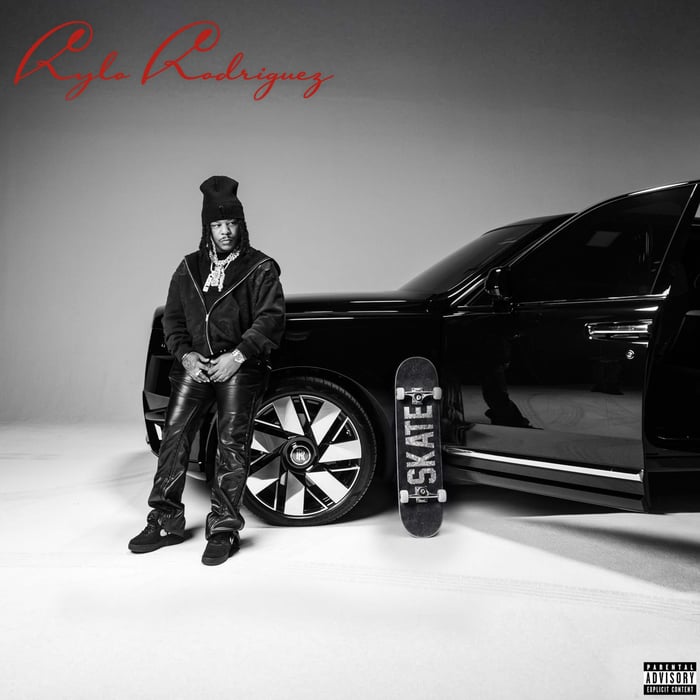
If this record left you staring at the cover like it’s part of the story, you can shop a favorite album-cover poster at our store—something about hanging that kind of mood on a wall just makes sense.
 | DISCOUNTGET 30% OFF*Use code on your next order:
|
* This post may contain affiliate links, meaning we earn a commission if you make a purchase through these links, at no additional cost to you.