Soul To Soul Soundtrack: a 13-Hour Party That Refuses to Behave


 See more Architeg Prints stories on Google.
Soul To Soul Soundtrack: a 13-Hour Party That Refuses to Behave
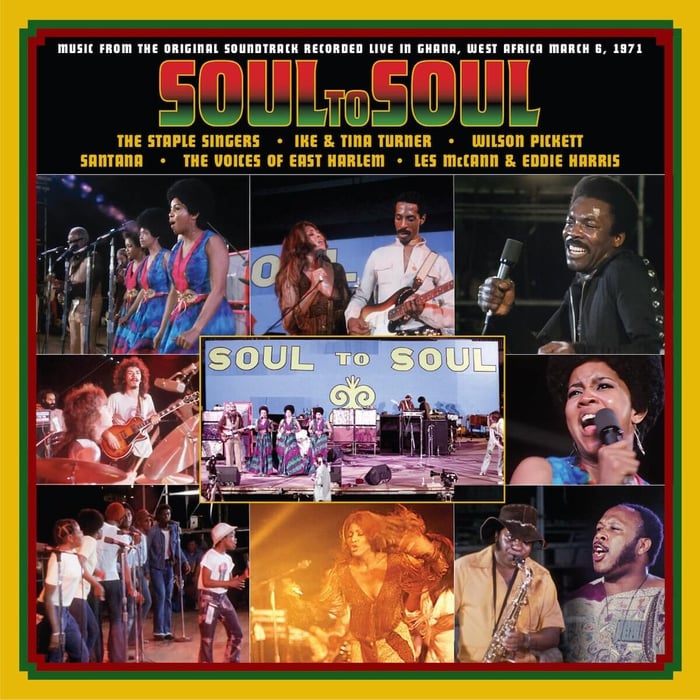
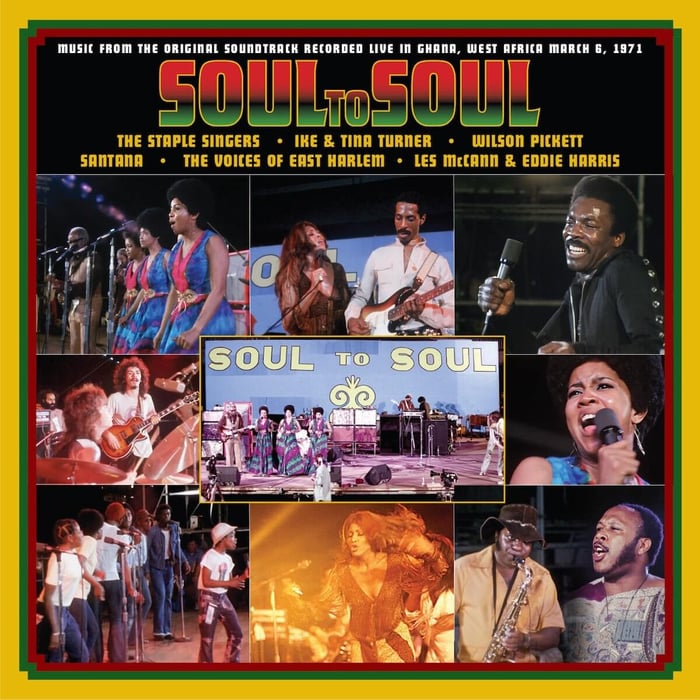
Soul To Soul soundtrack captures an electrifying celebration of African American musicians in Ghana, blending soul, jazz, and gospel at a historic concert marking Ghana’s independence. Now restored and remastered, this album reconnects listeners with a powerful moment of cultural exchange and musical energy.
This isn’t “a concert album.” It’s a nerve ending.
You put on the Soul To Soul soundtrack expecting a nice historical document, and it immediately corrects you. This thing isn’t polite, and it’s not trying to be. It feels like a whole plane of musicians landing inside a question they can’t stop asking: What does “home” even mean when you’ve never been there?
And yeah, I’m aware that sounds lofty. But the music makes it hard to stay cynical.
The trip is the point, and the soundtrack won’t let you forget it
The whole setup matters: February 1971, a big crew of African American soul, jazz, and gospel artists traveling from New York City to Ghana, West Africa for a 13-hour concert celebrating 14 years of Ghana’s independence from British rule. For many of them, it’s their first time on the continent. That fact hangs over everything—sometimes like joy, sometimes like grief with better clothes on.
What surprised me is how the soundtrack carries the emotional baggage without giving you a lecture. You can hear a kind of alertness in the performances, like everybody knows they’re being watched by history and by their own private ghosts. A reasonable listener could say I’m projecting. Fine. But play it loud and tell me the stakes don’t feel different.
The film’s resurrection is basically part of the album now
Here’s the unglamorous truth: this soundtrack survives because people did the boring work.
The concert film/documentary—directed by Academy Award winner Denis Sanders and produced by Tom Mosk and Richard Bock—had a limited theatrical run in late 1971. Then it fell into that half-life where important things go when the world gets distracted. In 2004, Reelin’ In The Years Productions got permission from the producer and copyright holder to put out a DVD, and they re-cleared all the artists who appear in the film (which sounds like paperwork hell, because it is).
Now it’s getting another shot at an audience, and you can feel the intent behind the restoration. Steve Scoville (Blue H2O Productions) rebuilt the original edit, scene by scene, using high-quality 2K transfers from the original film elements (shot in 4:3). The soundtrack got digitally remastered by Randy Perry.
This matters because the whole project is about connection—and you can’t connect if the thing is trapped in a vault or smeared into fuzzy audio. The remaster isn’t just “cleaner.” It’s like the room lights came on.
Peak-power performances… and a crowd that turns it into something bigger
At the center of Soul To Soul is a simple flex: it’s an electrifying concert film with artists performing like they know the night is too big to waste. Over 100,000 Ghanaians showed up for this meeting of cultures. That number isn’t trivia—it’s part of the sound, even when you can’t literally see it.
And I’ll go further: the crowd presence makes some of these songs feel less like “setlist staples” and more like declarations. You can disagree, but I think a lot of American live records feel like performers showing off. This feels like performers answering.
Ike & Tina: controlled fire, on purpose
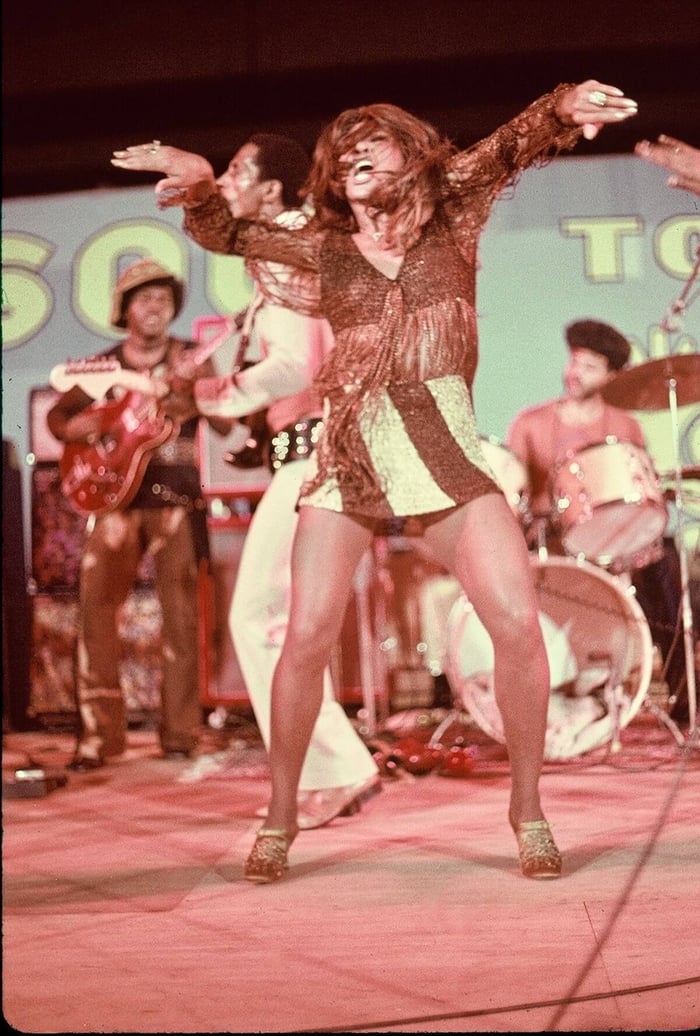
The Ike & Tina Turner Revue comes in like a warning shot. Tina is out front, furious and precise, shimmying alongside The Ikettes, and the band plays like it’s trying to out-run her. They tear into:
- River Deep-Mountain High (also positioned as the project’s first digital single)
- Soul To Soul (written specifically for this concert)
- a cover of Otis Redding’s I’ve Been Loving You Too Long (noted as a special Blu-ray outtake)
My first impression was that it might be “just” spectacle—big moves, big band, big hair energy. On second listen, it’s something sharper: Tina’s performance feels like she’s refusing to let nostalgia win. This isn’t a museum piece. It’s a living thing, and it bites back.
If I have a mild gripe, it’s that the sheer heat of the Revue can make everything after it feel like it has to justify its existence. That’s not a flaw in the performance—it’s a sequencing problem the soundtrack inherits.
Wilson Pickett at 4:30 a.m.: the finale that doesn’t ask permission
Then there’s Wilson Pickett, reportedly the most popular American artist known to West Africans at the time. He hits the stage at 4:30 a.m.—a detail I love because it’s so unromantic. This isn’t prime-time TV. This is endurance.
And what does he do with that hour? He goes for the throat with:
- In The Midnight Hour
- Funky Broadway
- Land Of A 1000 Dances
You can argue whether that’s nuance or brute force. I’d argue brute force is the point. At 4:30 a.m., subtlety is basically a form of lying. Pickett sounds like he’s trying to keep the whole field awake, and he succeeds.
The Staple Singers: the calmest moment that still stings
The Staple Singers show up and quietly shift the emotional temperature. They perform:
- When Will We Be Paid
- Are You Sure
And the timing is wild: it’s just five months before they record I’ll Take You There and Respect Yourself. Listening to these performances, you can hear a group that already knows how to turn a question into a hook—and how to make a hook feel like a moral problem.
Here’s an arguable claim: their set doesn’t “explode” like Ike & Tina or Pickett, but it lands longer. The songs don’t chase you. They follow you home.
Les McCann & Eddie Harris: jazz as a friendly ambush
When Les McCann (piano) and Eddie Harris (tenor sax) step in, the soundtrack does something smart: it treats jazz not as an academic side quest but as a party that happens to be sophisticated.
They run through spirited performances of:
- The Price You Gotta Pay To Be Free
- Hey Jorler (with local Ghanaian artist Amoah Azangeo)
The “introduction to jazz” angle is right there in the way it hits—this isn’t a “please respect the genre” moment. It’s a “watch how fast we can lift the roof” moment. If you’ve ever thought jazz needed to justify itself, this set basically laughs at you.
I’m not totally sure everyone in the crowd heard it as “jazz,” honestly. It might’ve just registered as energy with brains. But maybe that’s the best introduction possible.
The Voices of East Harlem: youth as the sharpest instrument
The Voices of East Harlem, a young gospel ensemble, contribute Run, Shaker Life. And it plays like a reminder that this whole event isn’t only about legacy acts. Youth voices cut through the pageantry. They don’t sound “cute.” They sound committed.
Arguably, that’s the moment the soundtrack stops being about famous names and becomes about community—because young singers don’t carry reputation the way stars do. They carry urgency.
Santana is the wild card, and that’s the whole joke
Then the soundtrack pulls its strangest trick: Santana, with guest percussionist Willie Bobo.
On paper, they’re the oddest fit: a San Francisco group with only one African American member. And yet, paradoxically—because of the band’s reliance on Afro-Cuban and other Latin American rhythm frameworks—they wind up sounding the most African out of the American guests.
You hear it in Black Magic Woman / Gypsy Queen and Jungle Strut: guitars and percussion locking into patterns that feel less like “rock with extras” and more like rhythm doing its actual job.
This is where the project gets accidentally profound. The soundtrack basically suggests that “roots” aren’t a straight line. They’re a bunch of loops and borrowed tools that still somehow build a house.
And there’s a quote that nails the aftershock Santana left behind—credited to musicologist John Collins, quoted in expanded liner notes by Rob Bowman:
“They had a big impact on the local guitarists. The students were really fascinated by what Santana was doing with Latin music and rock… The obvious equation was, if you can unite Latin music with rock, you can do the same with African music. That’s actually what happened.” — John Collins
You can disagree with the neatness of that equation, but the idea is potent: fusion as permission, not gimmick.
Between songs, the film keeps cutting to real life (and the soundtrack implies it)
One of the best choices Soul To Soul makes is refusing to stay onstage. Between performances, the camera crew follows the American musicians as they visit local villages, meet kings, and share food and dance with the Ghanaian community.
Even just knowing that’s happening changes how the soundtrack hits. The performances stop feeling like touring professionals doing a special gig, and start feeling like people trying to process where they are—sometimes gracefully, sometimes awkwardly.
If there’s any moment where I hesitate, it’s here: cultural “meeting” narratives can get sentimental fast. I kept waiting for the project to flatten Ghana into a backdrop for American self-discovery. But the sheer scale of the event—and the way Ghanaian presence is treated as central, not decorative—pushes back against that fear.
Listen order matters: this soundtrack rewards attention, not background play
This is not a “throw it on while you answer emails” album. If you do that, you’ll reduce it to a playlist of legends, and that’s the most boring way to take it.
What works best is listening like you’re inside the 13-hour sprawl—letting the shifts between gospel, soul, R&B, and jazz feel like a real night with real pacing. Some sets hit like adrenaline. Some hit like testimony. And Santana hits like someone brought the wrong map and accidentally found the right road.
Here’s my arguable take: the soundtrack’s power isn’t that every moment is equally strong—it’s that the unevenness feels human. A perfect, uniform concert record would actually miss the point.
Media
Conclusion: the soundtrack isn’t nostalgia—it’s a live wire
Soul To Soul doesn’t play like a tidy commemorative release. It plays like a crowded, sweaty, half-mystical night where musicians are trying to honor Ghana’s independence celebration while also quietly dealing with their own story—roots, loss, pride, and the weird joy of recognition. The restoration work makes that immediacy possible again, and the performances do the rest.
Our verdict: People who like their soul and gospel with real stakes—and don’t need everything sanded into a modern “vibe”—will actually love this. If you only want the hits in isolation, or you get impatient when an album feels like an event instead of a product, this will exhaust you (politely, then loudly).
FAQ
- What is the core idea behind the Soul To Soul soundtrack?
It documents a 13-hour concert in Ghana tied to an independence celebration, and it plays like cultural exchange under bright lights—messy, meaningful, and very alive. - Why does the restoration matter if I’m only listening to the soundtrack?
Because the project’s whole impact depends on clarity and presence; the reconstruction and remastering help the performances feel immediate instead of archival. - Which performances hit hardest on first listen?
Ike & Tina’s set lands like controlled fire, and Wilson Pickett’s 4:30 a.m. run feels like a closer that refuses to calm down. - Is Santana really that important here, or is it just novelty?
It’s more than novelty—the paradox is the point. Their Latin rhythm foundations make them sound “most African” in a way that reframes what “roots” can mean. - Is this an easy listen?
Not always. It rewards attention, and the pacing can feel like a real all-night event—which is exactly why it sticks.
If this whole “music as a physical artifact of a moment” thing grabbed you, a good album-cover poster is basically the least corny way to keep it in your space. You can browse prints at https://www.architeg-prints.com.
 | DISCOUNTGET 30% OFF*Use code on your next order:
|
* This post may contain affiliate links, meaning we earn a commission if you make a purchase through these links, at no additional cost to you.