Spine Digital Album Shelf Turns Streaming Into Wall Art


Spine Digital Album Shelf Turns Streaming Into Wall Art
Spine digital album shelf brings the tactile charm of physical music collections to streaming, with a 28-inch display built for album lovers.
A More Beautiful Way to Browse Music
There’s a peculiar kind of magic in scanning a shelf of records or CDs. You might reach for one album, spot another beside it, and suddenly your evening has taken an entirely different musical turn. Spine, a 28-inch display from a London-based company, aims to bring that browsing ritual back—without asking you to rebuild your collection in physical format.
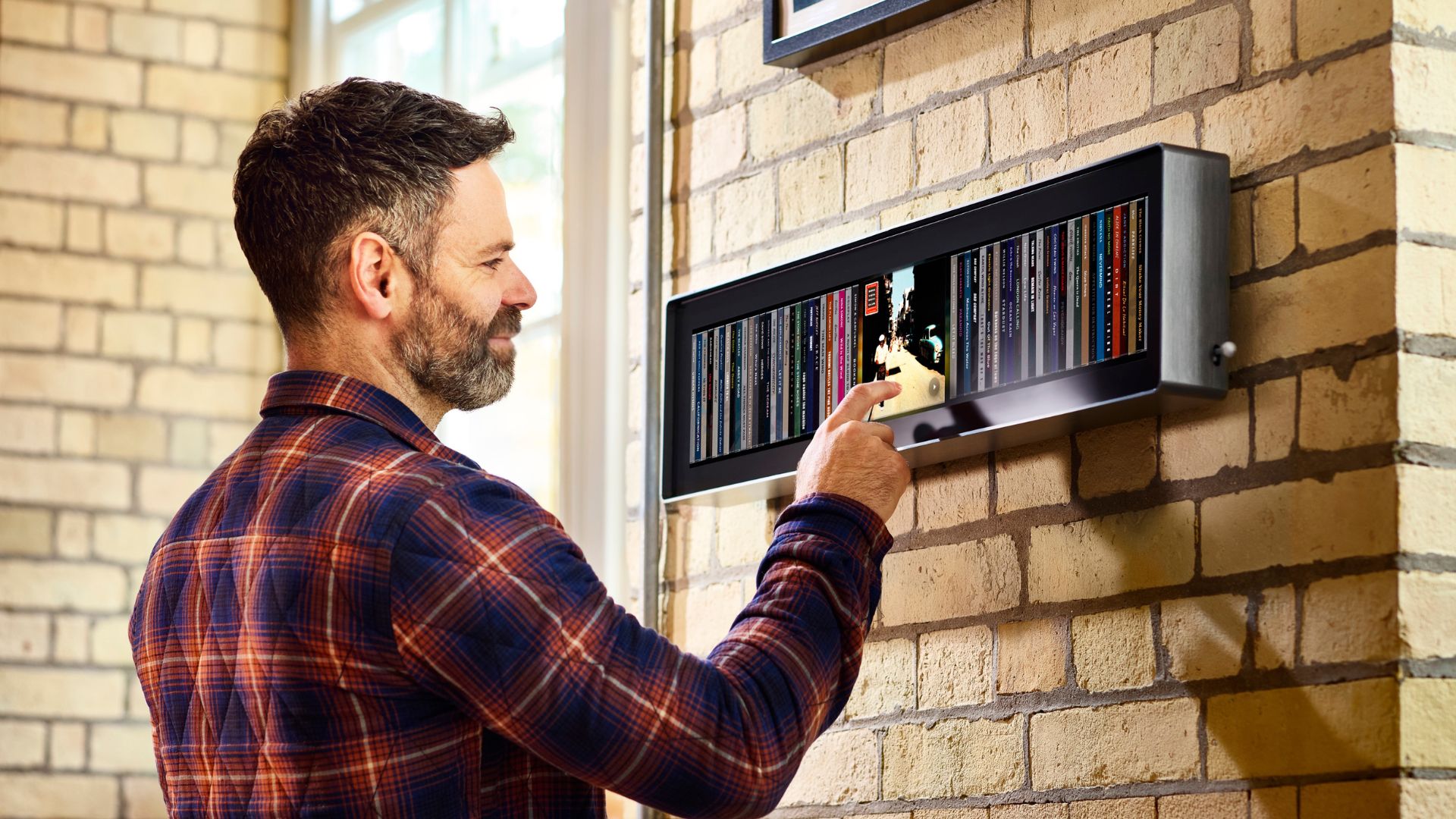
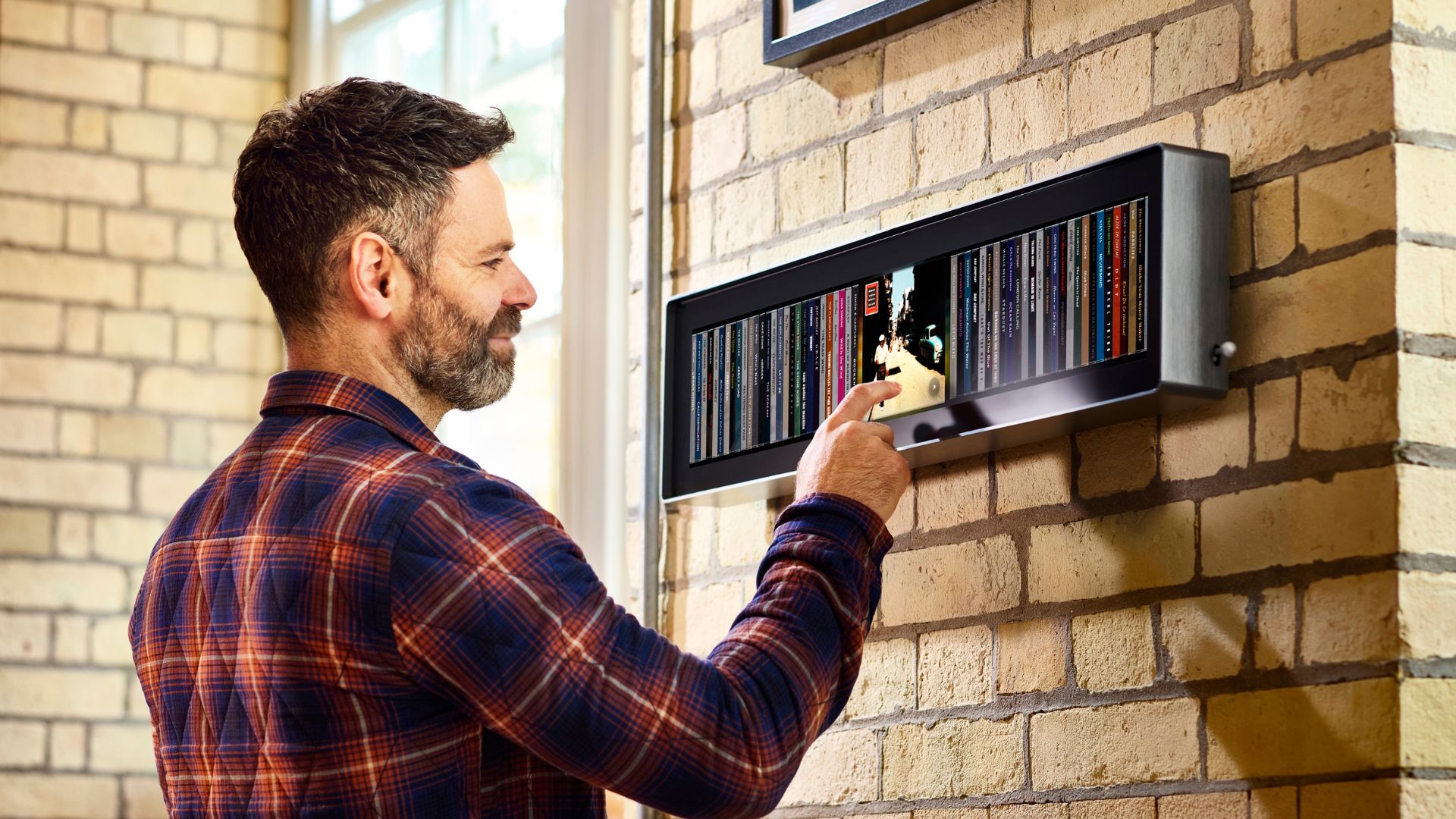
Instead of leaving your favorite albums buried inside an app, Spine turns them into a digital album shelf. The display presents cover artwork in a horizontal row, creating the visual feeling of records or CDs lined up on a shelf. It’s a simple idea, but one that speaks directly to anyone who misses seeing their music collection rather than endlessly scrolling through menus.
The device can be backed through a crowdfunding campaign, with prices beginning at £849 before rising to a planned retail price of £949. That puts Spine firmly in the premium home-audio accessory category, although it isn’t actually a speaker or a music player. Its job is more specific—and arguably more nostalgic: to make your streaming library visible.
A Digital Shelf for Your Streaming Library
The heart of Spine is its ability to connect with supported streaming services and arrange albums as digital “spines.” At launch, the system connects with Apple Music and Tidal, pulling albums from a user’s library and presenting them in a layout inspired by physical music shelves.
That visual approach gives the collection a little more personality. Streaming services are wonderfully convenient, of course, but their endless grids and recommendation panels can make music feel strangely disposable. Spine takes the opposite route. It treats album artwork as something worth displaying, almost like a gallery wall made from your listening history.
Users can browse their collection by touch, moving across the digital shelf until a particular album catches their eye. Pulling an album forward reveals its full artwork, while tapping it starts playback. The interaction is designed to feel direct and physical, even though the music itself remains entirely digital.
Spotify is supported as well, but the setup works differently. Albums need to be imported using TuneMyMusic rather than through a direct connection. It’s a small extra step, but an important distinction for Spotify users considering how smoothly the device will fit into their existing library.
The App Keeps the Collection Organized
The experience is managed through the Spine Music app, available for iPhone and Android. From there, users can organize albums by artist, decade, or a personal arrangement. That last option could be especially appealing to listeners who prefer a little chaos—perhaps a soundtrack for rainy Sundays next to a favorite live album, followed by the record they always play when friends come over.
Organization is more than a cosmetic feature here. Since Spine is designed around browsing, the way albums are arranged becomes part of the experience. Sorting by artist might make the display feel like a tidy record store. Sorting by decade could turn it into a timeline of personal memories. A custom order, meanwhile, lets the shelf become completely individual.
Playback depends on the streaming service and the equipment already in your home. Spine doesn’t require you to replace your speakers or build a new audio system. Music can play through Sonos speakers, a HomePod, headphones, or a traditional hi-fi system.
Apple Music starts playback immediately from the display. Spotify and Tidal require confirmation on a phone, adding one more step before the music begins. Still, the central promise remains the same: Spine is meant to make choosing an album feel more intentional while allowing your existing audio setup to do the actual listening.
A Display First, Not a Speaker
The hardware has been designed to look more like a piece of furniture or wall art than a conventional music device. Spine uses a 1920 x 360 display positioned behind matte etched glass, which helps reduce reflections. That matters for a product intended to sit on a wall or shelf in a living space, where bright windows and overhead lights could otherwise turn the screen into a mirror.
Its body is made from brushed gunmetal aluminum, giving it a restrained, modern appearance. The unit measures approximately 76 x 19 x 8 centimeters and weighs around 7 kilograms. It can be mounted on a wall or placed on a shelf, so the final presentation depends on the room and the kind of statement you want it to make.
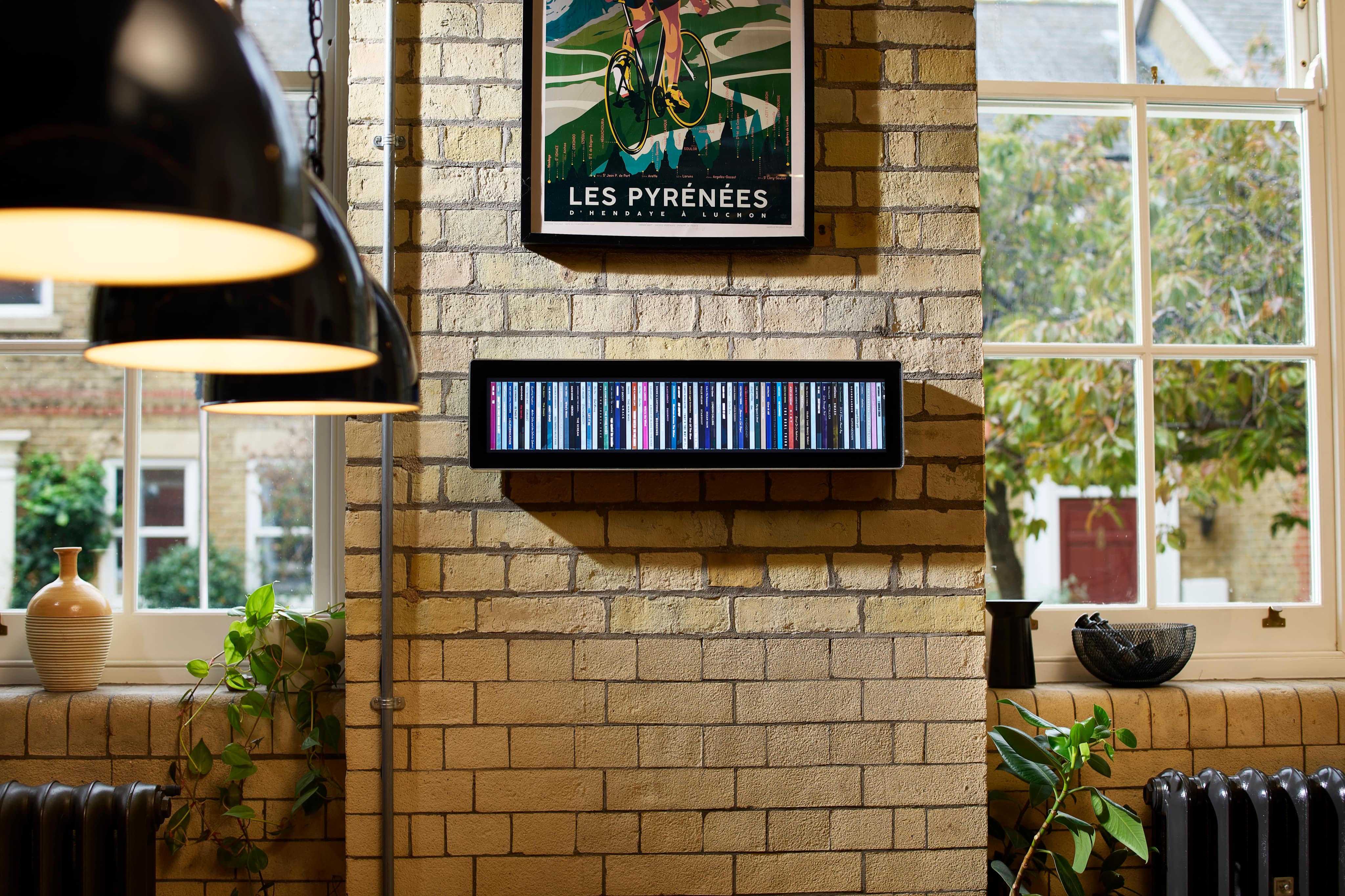
The long, narrow shape is particularly suited to displaying album artwork in a row. Rather than resembling a tablet stretched beyond reason, it’s intended to feel like a contemporary take on a music rack. The matte glass and metal housing reinforce that idea: this is a dedicated object for the room, not just another screen waiting to be folded into a notification ecosystem.
There is one major limitation to keep in mind. Spine has no built-in speakers and no audio output. It’s strictly a display, meaning it cannot function as a standalone music player. The sound must travel through an existing setup, whether that’s wireless speakers, headphones, or a full hi-fi system.
That separation is both a limitation and part of the product’s identity. Spine isn’t trying to replace your listening equipment. It’s trying to give the music a visual home.
Where and How You Can Buy Spine
The initial crowdfunding campaign is limited to shipping within the United Kingdom. Supporters can pay their pledges in three interest-free monthly installments, which may make the premium price easier to manage for some early adopters.
Direct orders for Europe and the United States are planned for 2027. An international waiting list is available through the company’s website for people who want to register their interest before broader ordering begins.
The rollout suggests that Spine is being positioned as a carefully developed niche product rather than a mass-market streaming accessory. It’s aimed at listeners who care about album artwork, room design, and the small ceremony of choosing what to play. In other words, it’s for people who still occasionally pick music based on the cover they happen to see first.
Why a Digital Album Shelf Feels Different
At first glance, Spine may seem like an elaborate way to display information that already exists inside a phone app. But that misses the emotional reason physical music collections have remained so memorable.
A record shelf is visible even when you aren’t using it. It becomes part of the room, a quiet snapshot of your taste. Guests can glance at it. You can browse it without opening another app. Sometimes, you can rediscover an album simply because its cover is sitting beside one you were already looking for.
Spine tries to recreate that moment with streaming music. It doesn’t bring back the weight of vinyl, the snap of a CD case, or the little ritual of placing a record on a turntable. What it does offer is visibility. Your digital collection no longer has to stay hidden behind a screen that disappears as soon as you lock your phone.
That could make the device feel especially appealing to listeners with large libraries. Instead of asking what to play through a search box, you can scroll through a familiar visual landscape. The album covers become prompts, like old friends waving from across the room.
There’s also something pleasingly old-fashioned about the idea. Music technology has spent years making listening faster and more portable. Spine takes a small step in the opposite direction by making the collection slower to browse, more deliberate, and more present.
Is Spine Worth Considering?
Spine’s appeal depends heavily on what you want from your music setup. If you’re looking for a new speaker, amplifier, or all-in-one player, this isn’t that product. It has no built-in audio hardware, so it won’t replace the equipment responsible for making your music sound good.
But if your streaming library feels invisible, Spine offers a distinctive solution. It transforms album artwork into a permanent visual feature, while keeping playback connected to the services and speakers you already use. The touchscreen browsing, personal sorting options, and physical mounting choices all support the same basic idea: music collections should be enjoyable to look at, not merely functional to search.
At £849 during the campaign and £949 at retail, it’s an expensive piece of music decor. Still, its concept is unusually focused. Spine isn’t trying to be everything. It’s a dedicated digital album shelf for people who miss the feeling of having their music collection right there in front of them.
Conclusion
Spine gives streaming music a physical presence again, turning a hidden library into a colorful, touchable display. It may not recreate every part of owning vinyl or CDs, but it captures the joy of browsing, choosing, and living alongside your favorite albums. Would a visible digital shelf make you explore your own music collection more often?
FAQ
- What is Spine?
Spine is a 28-inch display that presents albums from supported streaming libraries as digital spines arranged across a horizontal shelf. - Which music services work with Spine?
Spine connects directly with Apple Music and Tidal. Spotify is supported through an import process using TuneMyMusic. - Does Spine include built-in speakers?
No. Spine is a display only and has no built-in speakers or audio output. Music plays through existing equipment such as Sonos speakers, a HomePod, headphones, or a hi-fi system. - How can albums be organized on the display?
Albums can be organized by artist, decade, or a custom order selected by the user through the Spine Music app for iPhone and Android. - Can Spine be shipped internationally?
The initial campaign is limited to UK shipping. Direct orders for Europe and the United States are planned for 2027, with an international waiting list available.
Give your favorite records a place to live beyond the screen with a thoughtfully designed album cover poster from our store. It’s a warm, timeless way to bring the visual character of music into your space.
 | DISCOUNTGET 30% OFF*Use code on your next order:
|
* This post may contain affiliate links, meaning we earn a commission if you make a purchase through these links, at no additional cost to you.