
Xiaomi Open Earbuds Bring Five Drivers to Tech-Jewelry Design


Xiaomi Open Earbuds Bring Five Drivers to Tech-Jewelry Design
Xiaomi open earbuds combine five drivers, open-ear comfort, anti-leakage audio, and a polished jewelry-inspired design.
Earbuds Finally Get a Little Glamour
I own plenty of earbuds, yet not one has ever made me feel especially stylish. Most of them are the gym socks of consumer technology: useful, easy to misplace, and best kept out of sight. Xiaomi’s OpenWear Stereo Pro makes a strong case for changing that.
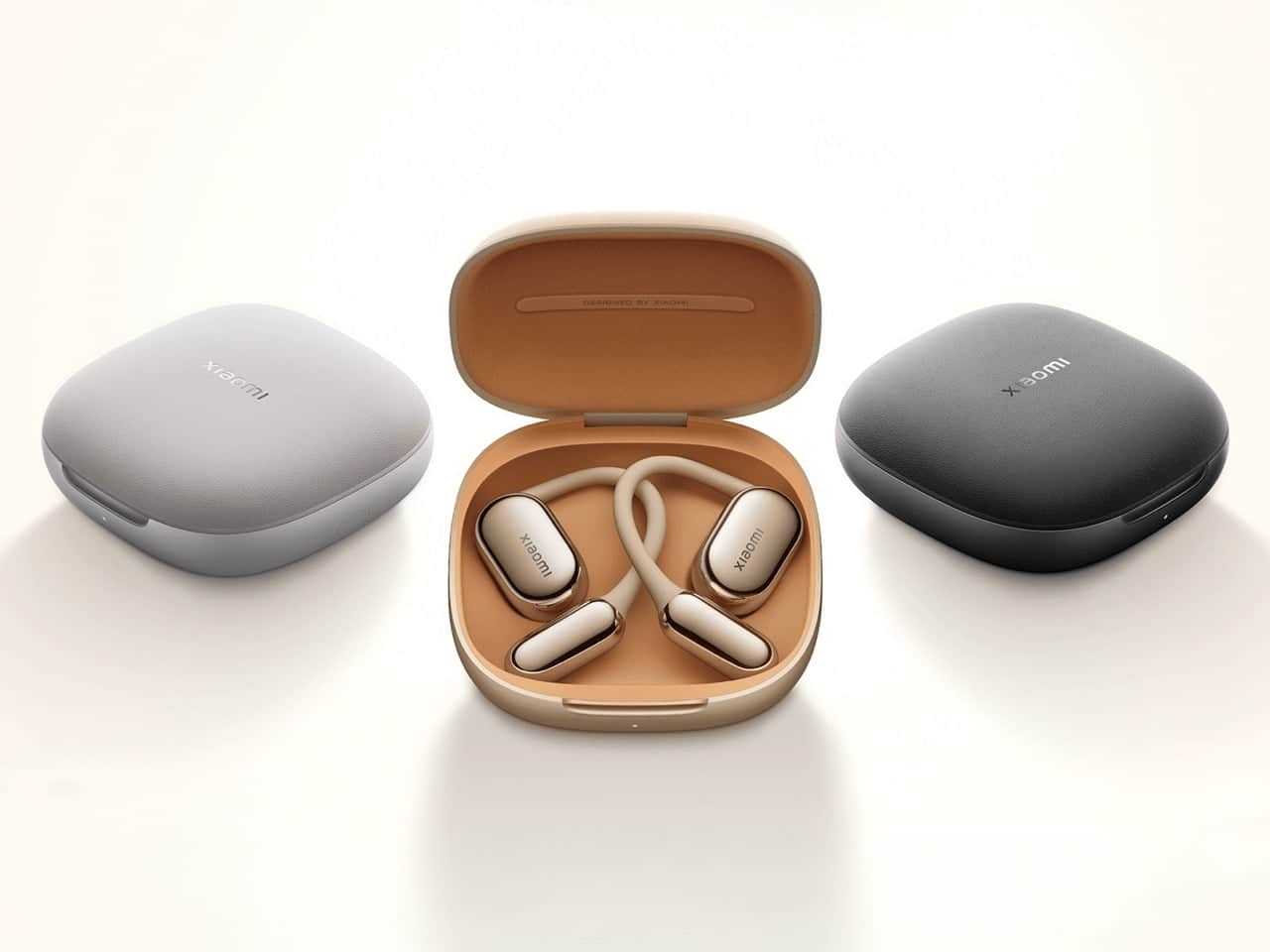
These Xiaomi open earbuds trade the usual anonymous plastic look for polished metal, sculptural ear hooks, and a case that feels more like a miniature leather accessory than a charging box. They launched last fall, but the design still has that rare “wait, what are those?” quality that makes you pause mid-scroll.

The overall idea is refreshingly simple: keep the ear open, make the hardware look intentional, and give the carrying case enough personality to deserve space beside your watch and wallet. In a category crowded with tiny black buds, Xiaomi has gone in the opposite direction. These are meant to be seen.
A Five-Driver Setup in a Jewelry-Like Shell
The visual polish is only half the story. Each 9.7-gram, or 0.34-ounce, earbud contains four drivers aimed toward the listener, along with a fifth driver that sends anti-noise outward.
That outward-facing driver is designed to reduce sound leakage, helping keep the person sitting beside you on the train from hearing every twist in your true-crime podcast. It’s a clever response to one of the unavoidable compromises of open-ear audio: if the ear canal isn’t sealed, some sound can escape.
Xiaomi says the OpenWear Stereo Pro delivers 60 percent better sound-leakage reduction than the original OpenWear Stereo. The goal isn’t to create total silence around the wearer. Rather, it’s to make open listening more considerate in shared spaces while preserving awareness of your surroundings.
Inside each pod, the audio arrangement includes:
- A 0.71-by-0.51-inch, or 18-by-13-millimeter, dynamic driver for bass
- Two balanced-armature drivers for detail
- A piezoelectric ceramic tweeter for high frequencies
- A 10-millimeter outward-facing driver for reverse-phase anti-leakage sound
Balanced-armature drivers are the tiny precision components often associated with more expensive in-ear monitors, while the dynamic driver handles the larger, weightier part of the sound. The ceramic tweeter then steps in for the upper frequencies, giving the system a three-part approach to the sound itself.
Xiaomi says Harman assisted with the tuning, and the Xiaomi Earbuds app includes two dedicated EQ profiles for both iPhone and Android users. That gives listeners at least some room to shape the sound rather than accepting one fixed audio signature.

The Ear Hook Is Designed to Disappear
The hardware looks dramatic in photos, but the fit is intentionally understated. A mirror-polished metallic finish covers each pod, while a soft cream-colored silicone hook curves behind the ear. The result is a neat visual trick: the shiny part catches the eye, and the pale hook fades into the background.
Beneath the silicone sits a 0.6-millimeter, or 0.024-inch, memory titanium wire. It flexes around the ear and springs back toward its original shape, helping the earbuds maintain their position without looking bulky.
Xiaomi builds the fit around three contact points to distribute pressure. The pod is also angled outward so it doesn’t press directly against the tragus, the small flap at the front of the ear canal. That detail matters because open-ear products can become uncomfortable when they constantly push against the ear’s more sensitive areas.
The slim hook is designed to leave room for glasses, too. That might sound like a minor consideration, but anyone who has tried stacking glasses, sunglasses, and headphones knows that small changes in shape can make a surprisingly large difference.

On a model wearing the earbuds with her hair pulled back, the effect is almost more fashion accessory than audio device. They read like boutique ear cuffs that happen to play a playlist. That’s precisely the kind of visual shift this category has needed for years.
A Charging Case That Feels Like a Watch Box
The charging case continues the same design language. It measures 2.68 inches square and just over an inch thick, with dimensions of 68 by 68 by 26.3 millimeters.
Rather than using the familiar glossy plastic pebble shape, Xiaomi wraps the exterior in pebbled vegan leather. Inside, a tan faux-suede lining gives the case the feel of a compact watch box. It’s a small theatrical touch, but it changes the experience of opening the product. Pulling out earbuds suddenly feels a little more ceremonial.
A magnetic lid keeps the case closed, while a small “DESIGNED BY XIAOMI” tab inside nods toward Apple’s well-known design sign-off. The earbuds sit in a figure-eight arrangement with their hooks overlapping. The nesting is so precise that removing them almost feels like disturbing a carefully arranged display.

That contrast is especially noticeable beside ordinary earbud cases. Most are glossy plastic objects that begin collecting scratches as soon as they share a pocket with keys. Xiaomi’s case looks more at home on a nightstand, next to a wallet, watch, or favorite cologne.
Of course, appearance doesn’t make a case more practical on its own. But it does make the everyday ritual feel less disposable. The case becomes something you might actually enjoy carrying instead of another little container to forget in the bottom of a bag.
Battery Life for Commutes, Flights, and Forgetful Mornings
The OpenWear Stereo Pro is rated for up to 8.5 hours of listening on a single charge. With the charging case, that total rises to 45 hours.
That’s enough capacity for several days of commuting and plenty of casual listening before you start searching for a USB-C cable. It also makes the earbuds more forgiving when you forget to charge them overnight, which, speaking from experience, is exactly when battery anxiety likes to appear.
A 10-minute quick charge provides up to two hours of listening. That kind of top-up is particularly useful before a flight, a long walk, or a workday when the earbuds suddenly announce that they’re running low just as you’re heading out the door.

The open-ear format also gives the battery story a practical context. These aren’t positioned as complete isolation headphones. They’re made for listeners who want music, podcasts, and calls while remaining aware of what’s happening around them.
That makes the design suitable for commutes, desk work, walks, and other moments when full in-ear sealing would feel excessive. The fifth driver’s anti-leakage work attempts to solve the social side of that equation, while the open fit handles the awareness side.
Color Choices, Pricing, and the Competition
The earbuds are available in Sand Gold, Titan Gray, and Graphite Black. All three are understated, but Sand Gold is the obvious standout. It leans into the jewelry-inspired concept instead of trying to disguise it.
Xiaomi lists the OpenWear Stereo Pro at €149.99 in Europe and £139 in the United Kingdom. There’s no official U.S. release, so American buyers would need to consider importing a pair, which could change the overall cost and convenience.
For context, Bose’s Ultra Open Earbuds cost $299, Shokz’s OpenFit Pro is listed at $249.95, and the OpenFit 2+ is priced at $179.95. Against those figures, Xiaomi’s European price looks appealing, although international shipping and import expenses can alter the calculation.
Xiaomi later followed up in May 2026 with the Ear Clip, a cuff-style design that moves even closer to Bose’s approach. Still, the hook-style Pro remains the more distinctive option for anyone who wants open-ear audio without settling for gear that looks purely utilitarian.
Why the Design Still Stands Out
The OpenWear Stereo Pro succeeds because it treats earbuds as something people carry and wear, not just something they hide in a pocket. The five-driver system gives the product technical substance, while the titanium-reinforced hook and three-point fit address everyday comfort.
Then there’s the styling. The reflective pods, soft silicone, vegan leather, faux-suede lining, and carefully arranged charging case all work toward the same impression. Nothing feels like an accidental afterthought.
That coherence is unusual. Plenty of tech products have one memorable feature and a handful of compromises surrounding it. Here, the visual design, fit, case, and audio architecture all tell the same story: open-ear listening can be practical without looking plain.
And that’s why these Xiaomi open earbuds remain so easy to remember. They don’t pretend to be invisible. They make the case that audio gear can be functional, comfortable, and just a little bit glamorous.
FAQ
- What makes the Xiaomi OpenWear Stereo Pro different from regular earbuds?
The earbuds use an open-ear design, so they rest around the ear instead of sealing the ear canal. They also combine a jewelry-inspired finish with five-driver audio hardware. - How many drivers are in each Xiaomi OpenWear Stereo Pro earbud?
Each earbud contains four drivers for the listener, including a dynamic driver, two balanced-armature drivers, and a piezoelectric ceramic tweeter. A fifth, outward-facing driver helps reduce sound leakage. - How long does the battery last?
Each earbud is rated for up to 8.5 hours of listening. The charging case extends total battery life to 45 hours, and a 10-minute charge can provide up to two hours of playback. - Can the earbuds work with glasses?
The slim ear hook is designed to leave room for glasses. Its memory titanium wire flexes around the ear while helping the earbuds stay in place. - Where are the Xiaomi OpenWear Stereo Pro earbuds available?
Xiaomi lists them in Europe for €149.99 and in the United Kingdom for £139. There is no official U.S. release mentioned, so importing them may be necessary for American buyers.
If beautifully designed audio gear speaks to your style, take a look at our favorite album cover posters. They’re a warm, music-inspired way to give your listening space the same personality as your playlist.
 | DISCOUNTGET 30% OFF*Use code on your next order:
|
* This post may contain affiliate links, meaning we earn a commission if you make a purchase through these links, at no additional cost to you.