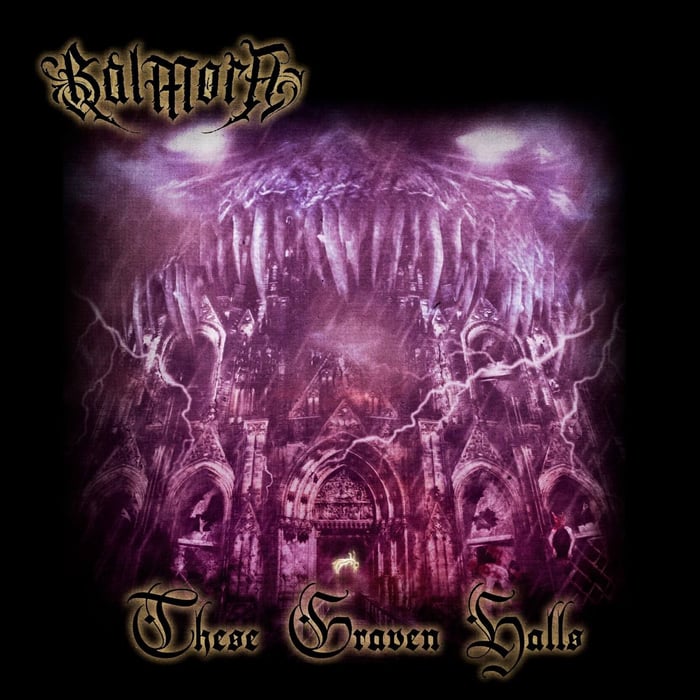
These Graven Halls Review: Balmora Builds a Dungeon, Trips Over It


 See more Architeg Prints stories on Google.
These Graven Halls Review: Balmora Builds a Dungeon, Trips Over It
These Graven Halls is Balmora’s bold metalcore world-build—collabs, riffs, samples, and a few too many “wait, why?” left turns.
A record that kicks the door in before you’re even inside
Balmora’s These Graven Halls doesn’t “introduce itself.” It lunges. The first thing I noticed was how little this debut cares about easing a listener into the band’s identity—this is a full inventory dump of every weapon they’ve collected from 00s metalcore, melodeath, deathcore, and horror-fantasy theatrics.
That confidence is real, and it’s also the album’s problem. The pacing and density make it feel like Balmora is trying to win the argument right now, in the first 30 seconds, with the sonic equivalent of a collapsing ceiling. I respect the swing. I’m not convinced the room survives it.
The collabs aren’t decoration—they’re the album’s spine
Here’s the part that actually lands cleanly: when These Graven Halls brings other voices into the frame, the album suddenly snaps into focus, like Balmora needed an extra body in the room to stop stacking ideas on top of each other.
“Ophelia” (ft. HOLDER) is the “main character” moment
“Ophelia” comes off cinematic but not in a corny way—more like the band is deliberately framing scenes: sharp pinch harmonics that feel metallic and precise, then breakdowns that don’t just hit, they drop the floor out. What surprised me is how the track keeps finding little upward “breathers,” like it wants to feel brutal without being one-note about it.
If this is the single, it’s because Balmora knows it’s the cleanest argument they make: not just heavy, but heavy with architecture.
“The Beautiful Writing” (ft. I PROMISED THE WORLD) is where the 00s obsession pays off
“The Beautiful Writing” has those soaring, chantable stretches that feel like they were built for a tiny club full of people yelling the same line back at the stage. The riffs don’t relax—if anything they’re more relentless—but the melody gives the violence a shape. This is where Balmora’s 00s metalcore grounding actually feels like a choice rather than a reference list.
And yeah, it’s a little on-the-nose about it. But I’d rather hear a band commit than politely hint.
The album wears its influences like armor (and sometimes like clutter)
Balmora has never been shy about what they love, and These Graven Halls treats influence the way some bands treat distortion: always on, always present, part of the texture.
I heard the fingerprints of The Black Dahlia Murder in that melodic-black-metal-meets-melodeath intensity, and the blunt metalcore aggression that nods toward bands like On Broken Wings. But the bigger tell is how much this album wants to be a place, not just a set of songs.
The references aren’t only musical either. The vibe pulls from mixed media—Silent Hill dread, Death Note moodiness, and even the fact that “Balmora” itself points to The Elder Scrolls. The album doesn’t “mention” these things outright as much as it builds a hallway where those posters would logically hang.
That’s the intent I keep hearing: Balmora isn’t chasing nostalgia for the 2000s. They’re using it like a palette to paint a dark-fantasy interior.
Theatrics: when it works, it’s transportive
The opening of “The Day You Died” hits fast and dramatic—less “warm-up track,” more “curtain ripped open.” It’s fueled by theatrics, and the band clearly wants that theatrical framing to be part of the listening experience, not a side garnish.
Then later, “Timor Mortis” (sitting right near the end) brings in a string section. In isolation, it’s a flex—one of those moves that says, “We’re building lore here.” And the instrumental interludes—“…an apology everlasting…” and “…an effigy to the star of all sorrow…”—function like corridor scenes between fights. They’re not trying to be singles; they’re trying to make the album feel like one continuous space.
On first listen, I honestly rolled my eyes a bit at the sheer dedication to mood-setting. But on second listen, I got what they were doing: they aren’t padding runtime. They’re insisting the listener stay inside the world long enough to start believing it.
And when it hits, it hits hard—those moments where a skull-crushing breakdown slams right next to a searing riff and your body reacts before your brain can argue. That adrenaline spike feels designed, like the band knows exactly which lever to pull.
Samples and sound design: church bells, film audio, and the risk of “too much”
The album stitches in spliced sounds—church bells and audio samples (including snippets tied to the 1985 film Legend). That kind of sampling can be cheap if it’s tossed in to sound “spooky.” Here, it mostly reads as an attempt to make the record feel like it has objects in it—metal scraping against stone walls, mythic dread, a little ritual grime.
But there’s a fine line between atmosphere and noise, and These Graven Halls spends a lot of time tap-dancing on it.
I kept waiting for a moment where Balmora would let a section breathe—just let a riff sit in the room without throwing another reference, another texture, another pivot on top of it. Sometimes they do. Often they don’t.
The second half starts tossing every trick into the fire
This is the point where my enthusiasm started to wobble.
By the time the album slides into its back half, the world-building starts feeling less like intentional architecture and more like a band emptying a bag of parts onto the floor. I’m not saying the ideas are bad—some of them are genuinely cool on their own—but the sequencing makes it feel like Balmora is testing what lands instead of guiding you.
That “throw everything at the wall” energy can be thrilling if the album’s main identity is chaos. But These Graven Halls clearly wants to be more than chaos—it wants to be mythic. Myth needs negative space. This record doesn’t always allow it.
“Needles & Rags” gets swallowed
Tracks like “Needles & Rags” end up feeling lost in the noise—not because the performance is weak, but because there’s so much happening around it that the track struggles to carve out a silhouette. I could tell the band wanted it to hit as part of the bigger world, but it didn’t stick to my ribs the way the earlier highlights did.
That’s my mild complaint here: some of these songs don’t fail on songwriting so much as they fail at being seen.
“NGV” pulls the album out from under itself
Then there’s the closer, “NGV,” which veers hard into a Bladee homage. It’s a bold move, sure. But at the end of this particular album, it feels disjunct—like you stepped through a final door expecting the last chamber of the dungeon and instead you’re suddenly outside under fluorescent lights.
I’m not totally sure if that’s the point—maybe the whiplash is meant to feel like breaking the spell. But if it is, it still leaves the ending feeling less like resolution and more like a hard cut.
So what is Balmora actually doing on this debut?
Balmora has been building momentum for a reason: the band knows how to make heavy music feel urgent, and they’ve got a sharp instinct for what to pull from. These Graven Halls proves they can swing big—breakdowns that actually crush, riffs that burn, and a clear desire to build an aesthetic you can walk around inside.
But ambition isn’t the same as clarity.
What I hear is a band with a strong aesthetic vision and a pile of strong ingredients, but not quite enough restraint to let the best ones carry the meal. There’s an album inside These Graven Halls that feels definitive—brutal, theatrical, melodic in the right places, and weird in a way that serves the mood. Right now, it’s partially buried under extra layers that didn’t need to make the final cut.
And yeah—if I’m forced to put a neat little number on it, this lands around a 6/10 experience for me: exciting in flashes, messy in total, and frustrating mainly because the potential is obvious.
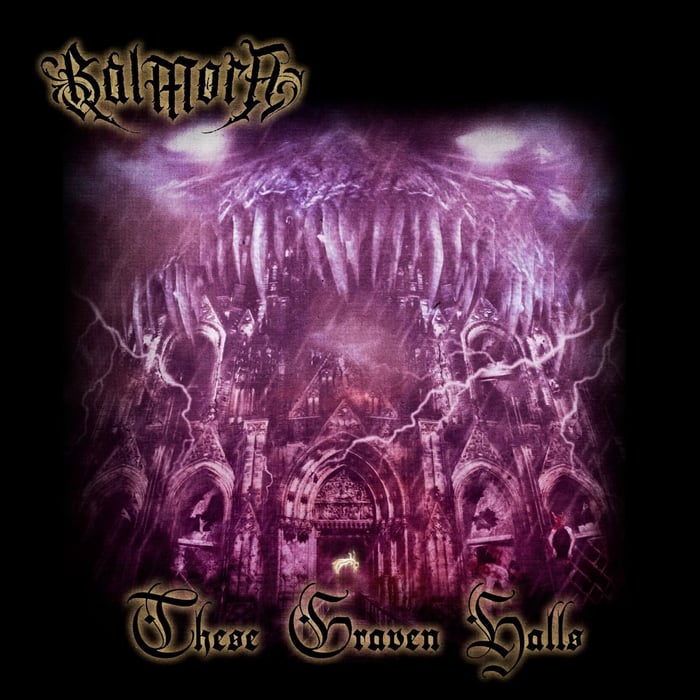
These Graven Halls is out now via DAZE.
Follow Balmora on Instagram: https://www.instagram.com/balmora.ct
Conclusion
Balmora made These Graven Halls like they were terrified of leaving any favorite idea unused—collabs, interludes, strings, samples, riffs from three adjacent universes. When it connects, it’s genuinely transporting. When it doesn’t, it feels like being trapped in an over-decorated room where the best painting is hanging behind six curtains.
Our verdict: People who like metalcore when it’s theatrical, referential, and a little overloaded will have a great time with These Graven Halls—especially if you live for collabs and don’t mind a crowded mix of influences. If you need albums to pick one lane and commit, this closer-to-a-moodboard approach is going to test your patience. And if you want a tidy ending, “NGV” basically laughs and walks away.
FAQ
- What’s the core keyword for this review?
These Graven Halls. - Is These Graven Halls more about songs or atmosphere?
Atmosphere first. Even the hardest breakdowns feel placed to serve a larger dark-fantasy “world,” not just pit energy. - Which track feels like the clearest mission statement?
“Ophelia” (ft. HOLDER) — it balances brutality and cinematic pacing without getting buried under extra ideas. - Do the interludes add something or just pad the runtime?
They add to the sense of place, but they also contribute to the feeling that the album rarely takes a clean breath. - Does the closer fit the album’s vibe?
Not neatly. “NGV” swerves into a Bladee homage that can feel like an intentional spell-break—or just a puzzling last turn.
If you want a physical reminder of the album’s whole “world-building” obsession, a poster of your favorite album cover isn’t a bad way to keep the mood on the wall. You can browse options at our store: https://www.architeg-prints.com/
 | DISCOUNTGET 30% OFF*Use code on your next order:
|
* This post may contain affiliate links, meaning we earn a commission if you make a purchase through these links, at no additional cost to you.