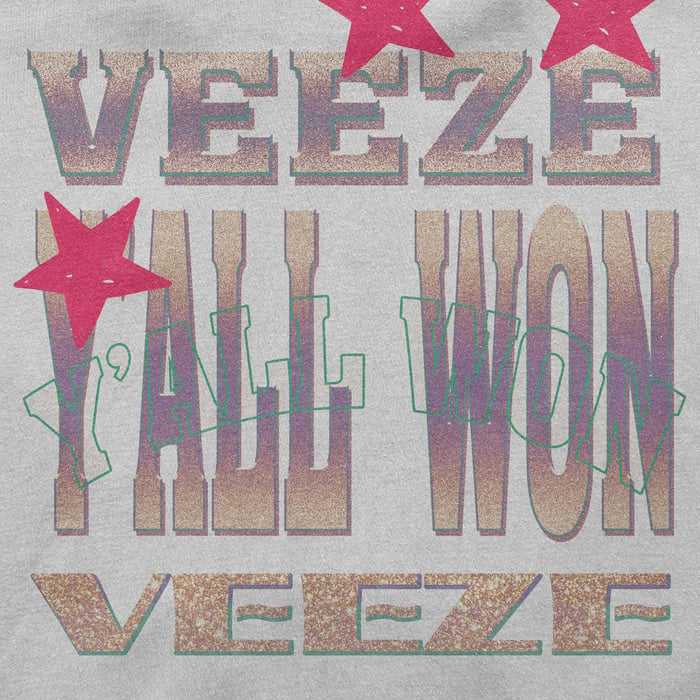
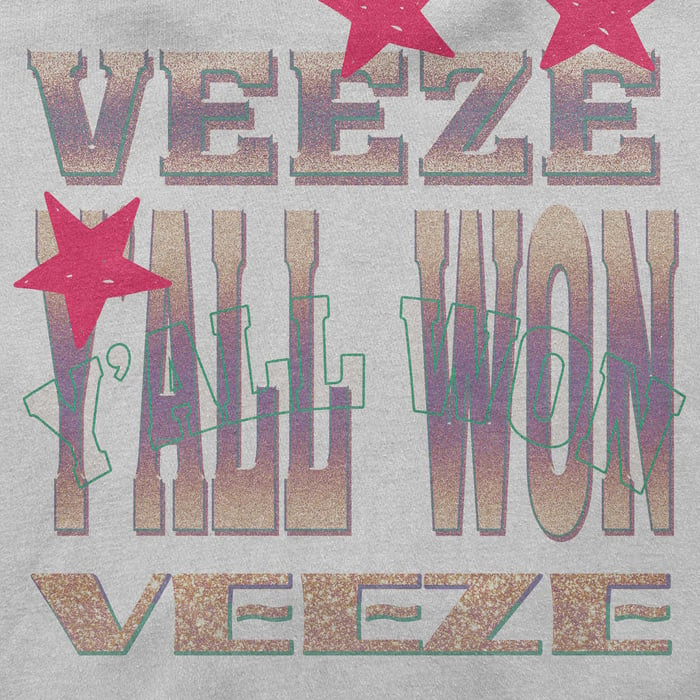
Y’all Won Review: Veeze Flexes So Hard He Forgets to Enjoy It


 See more Architeg Prints stories on Google.
Y’all Won Review: Veeze Flexes So Hard He Forgets to Enjoy It
Y’all Won sounds like victory music played under your breath—Veeze buys the world, then raps like it still might rob him back.
The first thing it tells you: winning is a cramped room
This album opens like walking into a luxury watch store where nobody makes eye contact because everybody’s busy pretending they aren’t impressed. That’s the vibe Veeze picks on purpose: high-end objects, low emotional volume, and a voice that acts like excitement is a tax he refuses to pay.
The flexes land, but they land softly—like he’s placing expensive things on a glass counter, not throwing them in the air. On “Tesla Pill,” he’s got that perpetual-motion Detroit style where the money talk is casual, almost smeared into the beat. Lines about wiping your nose with a hundred and starting a non-profit sit next to each other like they’re both just errands. That’s not an accident. He’s making the point that morality and flexing can share a couch as long as neither one talks too loud.
And the weird part is: he doesn’t even punch the jokes. A White Chicks reference can share space with a death threat, and he delivers both at the same near-whisper. A reasonable person could argue that’s lazy rapping. I think it’s control. He’s showing off how little he needs to raise his voice to make the room listen.
The “same room” problem is real—and he knows it
Here’s the part skeptics latch onto: at first, this thing can feel like eleven nearly identical rooms in the same mansion. Same decor. Same lighting. Same flex framed from a slightly different angle.
“New Clothes” is basically the open invitation to that complaint. He chants:
- “I’m too cold on ‘em”
- “Got two hoes on me”
- “I’m goin’ on shoppin’ sprees”
- “Puttin’ new clothes on me”
…then loops it like a man pacing in front of his closet mirror, checking the fit again, checking the fit again, checking the fit again.
On my first pass, I took that as filler—like he had a hook and just decided repetition counts as structure. But on second listen, the repetition starts to feel like the point: the shopping spree isn’t joy, it’s compulsion. He circles the same four lines because he’s trapped in them.
And then he slips the real line in there, half-buried: “A junkie gettin’ lonely.” That confession doesn’t arrive with violins or a dramatic pause. It lands at the same pitch as “I used to be broke, no longer,” except he says it like he doesn’t fully trust that headline anymore. The album keeps doing that: it will hand you a trophy, then quietly tell you the trophy doesn’t fix the part that’s shaking.
Arguable take: the “monotony” isn’t a flaw here—it’s the sound of someone trying to convince himself the lifestyle is working.
The Detroit origin story, kept sharp instead of polished
Veeze taps the standard Detroit rapper mythology—poverty, hustle, designer denim, dreaming past the block—but he refuses to sand it down into a motivational poster.
He raps like someone who used to fantasize about robbing people in True Religions and also used to picture himself as an NBA point guard. That contrast matters. It’s not a tidy “came up” story. It’s two different escape plans running at the same time.
“Old Shit” lands the joke that the Pistons could’ve used him… except the drug test comes back dirty every time. It’s funny until it isn’t, because that punchline doubles as the reason the basketball dream never had a chance. That’s what Veeze does when he’s at his best: he’ll give you a bar that seems like a toss-off, then you realize it’s actually the explanation for the whole life.
He’s not rapping addiction like a PSA. He’s rapping it like household math. An aunt gets an “eight” a month while her nephew waits on her refill. Painkillers ride in the Goyard like a first-aid kit. That image sticks because it’s calm. Too calm, honestly. And I’m not sure whether I respect that calmness or find it a little chilling—maybe both.
Then he mutters, present tense, “They should write my name in the Naismith.” Not “they should’ve.” Not “they would’ve.” Present tense. Still claiming a Hall of Fame that nobody was going to hand him. That’s the album in one move: demanding recognition for a version of his life that got derailed, and doing it without ever sounding like he’s begging.
Arguable take: the most emotional moments on Y’all Won aren’t the sad lines—they’re the lines he refuses to dramatize.
When the slur loosens, you hear the engine
“BirdMan” is where he actually sounds energized—like the words are finally keeping up with his brain. His slur loosens, the flow comes out easier, and for a minute it feels like he’s enjoying being good at this instead of treating it like inventory.
That track also makes clear what Veeze is really obsessed with: not money as fun, money as consequence. He shows off a fortune he doesn’t seem to spend time with. He raps about someone who “just went platinum and now he in the federal prison” like platinum and prison are two price tags for the same purchase. Not even a metaphor—just a shrugging equation.
He paints the “nice view” house as something closer to a pressure chamber. Surrounded by gunmen, it doesn’t sound like a reward. It sounds like a place you can’t relax inside. He pours another drink to sleep, and whatever stash is behind him doesn’t even read as pleasure anymore—more like equipment. The win becomes a maintenance routine.
“I wonder if God ever forgave this much sinnin’,” and the way he delivers it… he already knows the answer. He doesn’t ask like a man hoping. He asks like a man keeping score.
Arguable take: “BirdMan” isn’t a victory lap—it’s Veeze admitting the prize feels like a locked door.
Where it drifts: the bargain of “unfinished” freedom
Not everything here hits with that same sharpness. “Still Grinding” is the clearest example of the album treading water. The line “Came from seven mile, then he crossed the seven seas” reaches for status he already nailed earlier—especially compared to “Bruce Wayne Coupe,” where he says similar things with more bite.
“Still Grinding” isn’t terrible; it’s just… weighty in the wrong way. The looseness that makes the best moments breathe also lets some dead weight hang around. A whole song can pass where he’s in the same emotional stance, same cadence, same temperature, and you start waiting for the scene to change.
That’s my mild criticism: there are moments where Y’all Won mistakes numbness for momentum. The aesthetic is controlled, yes, but control can start to feel like the music is refusing to risk anything.
Still, I can’t fully call it a failure, because that drag also feels like a creative choice—like he’s letting you sit in the boredom of having everything you said you wanted.
Arguable take: the album would be “better” with edits, but it would be less honest.
The loner pose turns into a smell you can’t wash off
Somewhere in the background of all this is the reality that he’s built his world to be isolated. He got his own label in 2023, and the energy afterward feels like someone ducking the public on purpose. He runs from interviews, buries himself in the studio, plays “studio rat,” and the solitude isn’t treated like a tragedy—it’s treated like a preference that’s aged into a problem.
That’s when the mistrust lines start to feel less like tough talk and more like a daily condition. On “Rubber Band,” he says, “I don’t even know these niggas, nigga, I don’t even trust these niggas,” and the words shrink into monotone until the whole track feels like one man measuring everyone at arm’s length just to confirm nobody gets in.
There’s even a moment where a laughing Lil Wayne is in the car with him—and somehow, the sound still feels like Veeze is the only passenger. That’s kind of impressive in a bleak way. A guest presence doesn’t break the shell. The shell is the concept.
Arguable take: the album’s real flex isn’t money—it’s emotional unavailability turned into brand consistency.
“Lose It All Today” is where the mask slips the most
By the time “Lose It All Today” hits, the exhaustion isn’t implied anymore; it’s spoken plainly.
“I gotta go to sleep just to sober up.”That line doesn’t sound poetic—it sounds like a workaround. Like his body is a device that won’t reset unless he powers it down.
Earlier, he drops
“But I ain’t no role model,”and it barely lands like a confession should. Not because it’s untrue, but because he sounds past the point of caring whether you expected better. The winning has turned into fatigue. He’s not warning you off. He’s just stating the weather.
And I kept thinking: this album isn’t trying to convince you he’s happy. It’s trying to convince you he’s fine with not being happy—as long as the numbers keep going up.
Arguable take: “Lose It All Today” is the closest the record gets to rest, and even that rest sounds like a chemical strategy.
Favorite tracks (the ones that actually bite)
Not every moment is equally sharp, but a few songs cut through the fog and make the album’s purpose obvious:
- “Wrong Place, Wrong Time” — feels like the thesis in motion: paranoia as a lifestyle tax.
- “Old Shit” — jokes that bruise when you press them.
- “Lose It All Today” — the clearest snapshot of the cost of “winning.”
Conclusion
Y’all Won doesn’t sound like celebration music; it sounds like a man stacking proof on the table and realizing proof doesn’t hug back. Veeze raps expensive life details with the bored precision of someone who’s already done the math—and the total still doesn’t equal peace. I’m not totally sure whether the album is meant to feel this emotionally airless, but the longer it plays, the more it feels like the whole point: he won, and now he has to live inside the win.
Our verdict: People who like Detroit rap when it’s muted, detail-heavy, and a little haunted will actually love this—especially if you enjoy flex rap that’s secretly a stress test. If you need big hooks, obvious emotional arcs, or a narrator who sounds like he’s having fun, this album will feel like being trapped in a luxury elevator with someone quietly listing their problems.
FAQ
- Is Y’all Won more about flexing or consequences?
Both, but the consequences leak through constantly—especially on “BirdMan” and “Lose It All Today.” - Does the album sound repetitive?
Sometimes, yes. The repetition feels intentional in places (“New Clothes”), but a couple tracks drift like they didn’t get fully tightened. - What’s the most human moment on the record?
“I gotta go to sleep just to sober up” on “Lose It All Today” hits because it’s not dressed up. - Do the jokes undercut the seriousness?
No—if anything, the jokes make it worse. The humor arrives at the same volume as the threats, which makes the darkness feel normal. - Which track should I start with if I’m unsure?
Start with “Old Shit” if you want the story knots, or “BirdMan” if you want the clearest view of the money-cost equation.
If this record’s icy luxury aesthetic stuck in your head, it’s the kind of vibe that looks strangely perfect on a wall. If you want to grab a favorite album cover poster, our store is here: https://www.architeg-prints.com
 | DISCOUNTGET 30% OFF*Use code on your next order:
|
* This post may contain affiliate links, meaning we earn a commission if you make a purchase through these links, at no additional cost to you.